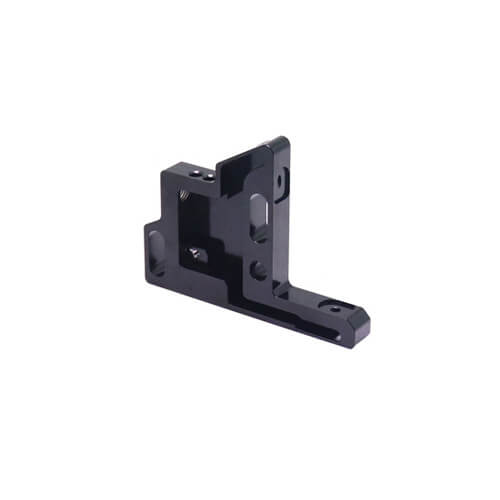
When it comes to EV gearbox housing metal die casting, the complexity of managing tight tolerances, material integrity, and thermal management demands a manufacturing partner with deep engineering expertise and a full-process chain capability. The electric vehicle industry is accelerating faster than ever, and the gearbox housing—often a large, thin-walled aluminum or magnesium casting—serves as the structural backbone for the entire drivetrain. It must withstand high torque loads, dissipate heat efficiently, and maintain precise alignment for bearings and seals over thousands of cycles. This article unpacks the technical nuances of EV gearbox housing production, explains why die casting alone is insufficient, and demonstrates how integrating advanced CNC machining with a robust quality system delivers the reliability that automotive OEMs require.
The Unique Challenges of EV Gearbox Housing Die Casting
Unlike conventional ICE gearbox casings, EV gearbox housings are typically designed with weight reduction as a primary objective. This leads to complex geometries with thin walls (often 2–4 mm), intricate internal oil channels, and multiple mounting bosses. The die casting process itself introduces several inherent risks:
Porosity and Gas Entrapment – High-pressure die casting can trap air or hydrogen, creating micro-porosity that compromises pressure tightness and mechanical strength.
Shrinkage and Distortion – Uneven cooling rates in complex sections cause warpage, making subsequent machining unpredictable.
Flash and Parting Line Mismatch – Even a 0.1 mm high flash can interfere with sealing surfaces or bearing fits.
These challenges mean that the raw die-cast part is never ready for assembly. It must undergo precision machining to achieve the final dimensional and surface finish requirements. This is where the marriage of die casting and five-axis CNC machining becomes indispensable.
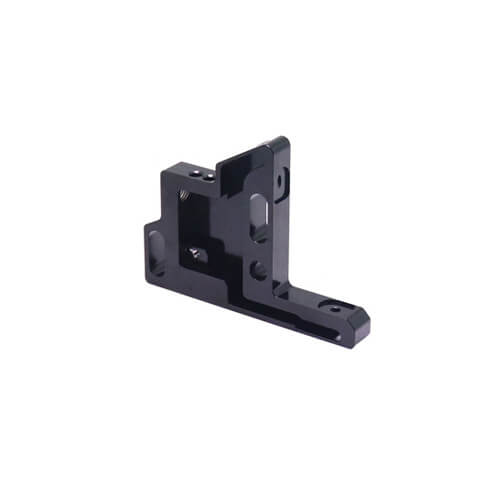
Why Five-Axis CNC Machining Is Non-Negotiable for EV Gearbox Housings
Traditional three-axis machining often struggles with the compound angles, undercuts, and deep cavities found in modern EV gearbox designs. Five-axis machining centers offer three key advantages:
Single Setup Completion – A five-axis machine can reach multiple sides of the housing without repositioning, eliminating cumulative tolerance stack-up from multiple setups.
Better Surface Finish – Continuous five-axis tool paths allow the cutting tool to maintain optimal chip load and engagement angle, reducing vibration and improving surface quality on contoured sealing faces.
Improved Accuracy for Critical Features – Bearing bores, dowel pin holes, and seal grooves often require tolerances of ±0.01 mm or tighter. Five-axis machining with in-process probing can achieve these consistently.
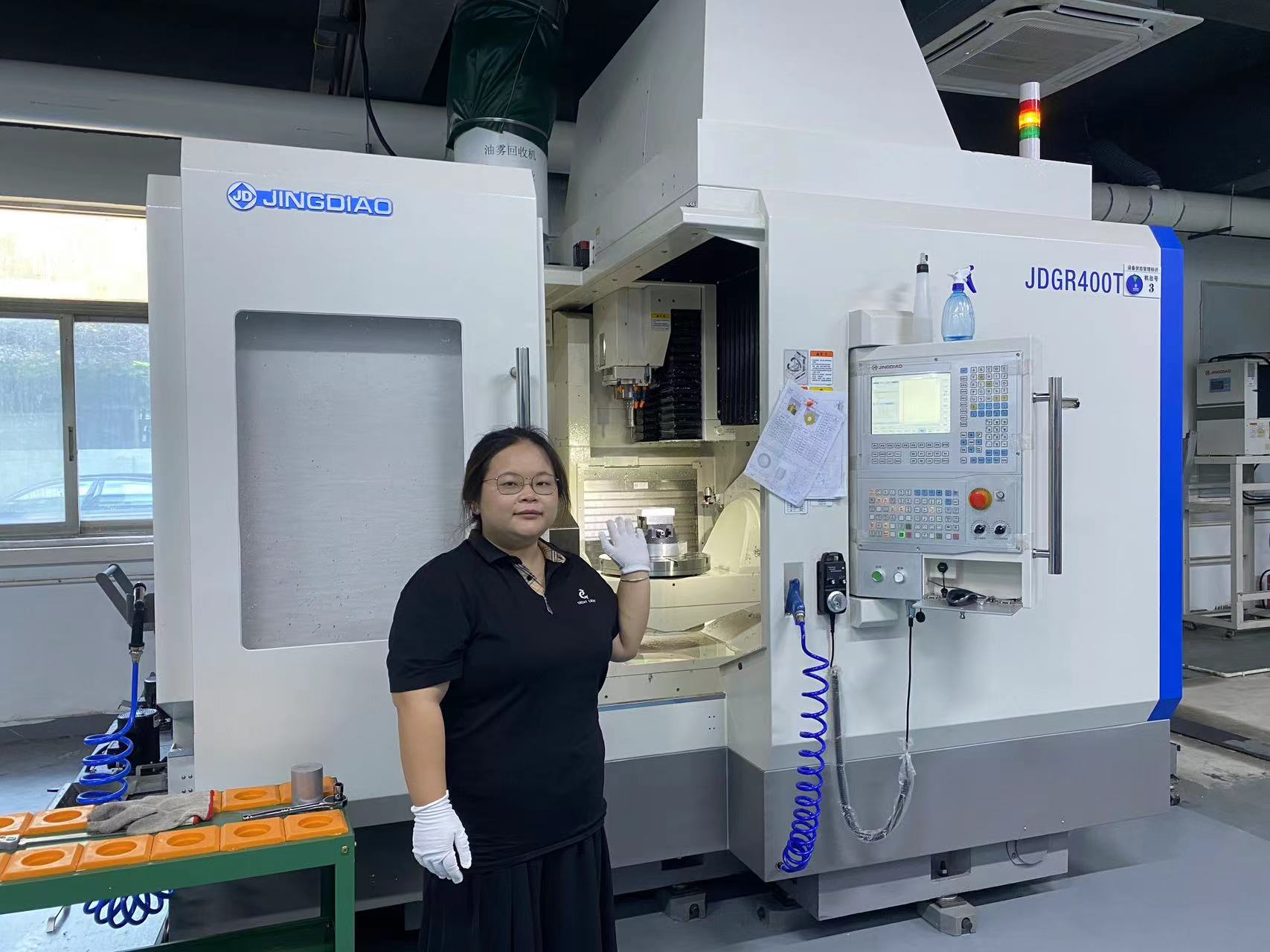
At GreatLight CNC Machining Factory, we combine high-pressure die casting (outsourced to qualified partner foundries or performed in-house for low-volume prototype runs) with a fleet of state-of-the-art five-axis machining centers from Dema and Beijing Jingdiao. Our production floor includes over 30 five-axis machines capable of handling housings up to 4000 mm in length. This scale allows us to machine complex EV gearbox housings in a single operation, dramatically reducing lead times and scrap rates.
Material Selection: Aluminum vs. Magnesium vs. Cast Iron
The choice of material for EV gearbox housings is driven by thermal conductivity, strength-to-weight ratio, and cost. Below is a comparison of the most common alloys:
| Material | Density (g/cm³) | Thermal Conductivity (W/m·K) | Yield Strength (MPa) | Typical Application |
|---|---|---|---|---|
| A380 Aluminum | 2.71 | 96 | 160 | High-volume production, good castability |
| ADC12 Aluminum | 2.68 | 92 | 150 | Similar to A380, widely used in Asia |
| AZ91D Magnesium | 1.81 | 72 | 160 | Lightweight, noise damping but more expensive |
| EN AC-42100 Aluminum | 2.70 | 120 | 200 | High-thermal-demand applications |
| Ductile Iron (GJS-500) | 7.20 | 36 | 320 | Heavy-duty EVs, lower volume |
For mass-produced passenger EVs, A380 or ADC12 aluminum alloy remains the most cost-effective choice. Magnesium is increasingly adopted in premium models for weight savings, but its susceptibility to galvanic corrosion requires careful surface treatment. GreatLight Metal supports all these materials and offers secondary operations such as T6 heat treatment, shot blasting, and chromate conversion coating.
The Post-Die Casting Machining Workflow
A typical EV gearbox housing production sequence at our facility follows a disciplined five-step process:
Incoming Casting Inspection – Each casting is scanned using a coordinate measuring machine (CMM) to verify as-cast dimensions and identify porosity locations. We use structured light scanning for large parts to create a digital twin of the raw part.
Five-Axis Roughing and Finishing – The housing is fixtured on a tombstone or custom pallet. Roughing removes flash, riser remnants, and excess material from casting. Finishing operations machine bearing seats, oil seal bores, mounting faces, and threaded holes.
In-Process Probing – After roughing, the machine probes critical datums to adjust finishing offsets. This compensates for any casting distortion and ensures final tolerances of ±0.02 mm or better.
Leak Testing and Sealing – The machined housing undergoes pressure decay testing (e.g., 30 psi, 15-second hold) to validate oil-tight integrity. If micro-porosity is detected, vacuum impregnation with acrylic resin seals the part.
Final Inspection and Surface Treatment – CMM, roundness gauges, and surface profilometers certify every critical dimension. Then parts proceed to anodizing, powder coating, or assembly-level cleaning.
GreatLight Metal’s Integrated Advantage: One Stop, One Responsibility
Many manufacturers offer either die casting or CNC machining, but rarely both under one roof. This creates a disconnect where the foundry blames the machinist for defects and vice versa. GreatLight CNC Machining Factory bridges this gap by offering end-to-end precision metal parts manufacturing, including die casting mold design, low-volume die casting trials, full CNC machining, and post-processing.
For an EV gearbox housing project, our engineering team works with the client from the DFM (Design for Manufacturing) stage. We simulate die filling and solidification using MAGMA software to predict porosity and recommend design changes. Then we produce the die casting tooling with our in-house mold shop (including wire EDM and mirror EDM for fine inserts). Once the casting is approved, we immediately schedule it on our five-axis machines, often within the same week.
This vertically integrated model shortens lead time by 30–40% compared to working with separate suppliers. It also eliminates finger-pointing: if a housing fails leak test, GreatLight Metal takes full ownership, reworks or remakes the part at no extra cost—backed by our ISO 9001:2015, IATF 16949, and ISO 13485 certifications.
Comparing GreatLight Metal with Other Suppliers
To provide an objective benchmark, the table below contrasts GreatLight CNC Machining Factory with several well-known rapid prototyping and production machining services:
| Supplier | Core Strength | Five-Axis Capacity | In-House Die Casting | Certifications | Typical Lead Time for Gearbox Housing |
|---|---|---|---|---|---|
| GreatLight Metal | Full-process integration (mold, casting, machining, finishing) | 30+ large five-axis machines | Yes (prototypes & low volume) | ISO 9001, IATF 16949, ISO 13485, ISO 27001 | 4–6 weeks (from mold) |
| Protolabs Network | Digital quoting, fast turnaround | Limited (mostly 3+2 axis) | No (outsourced) | ISO 9001 | 2–3 weeks (CNC only) |
| Xometry | AI-driven pricing, broad network | Variable by partner | Via partner network | Various | 3–5 weeks |
| Fictiv | Quality focus, injection molding | Moderate | Yes (molding) | ISO 9001 | 4–8 weeks (including casting) |
| RapidDirect | Low-cost, China-based | Good for large parts | No | ISO 9001 | 3–5 weeks |
| JLCCNC | Precision small parts | Limited 5-axis | No | ISO 9001 | Not ideal for large castings |
GreatLight Metal’s combination of in-house die casting and large-format five-axis machines is relatively rare. For EV gearbox housings that require both the casting process and high-precision machining, we offer a distinct value proposition: a single point of accountability, rigorous inspection, and the ability to iterate quickly during the prototyping phase.
Quality Systems: Beyond ISO 9001
The automotive industry demands more than generic quality management. Our IATF 16949 certification—specifically for automotive hardware component production—ensures that our processes comply with stringent requirements for defect prevention, measurement system analysis, and production part approval processes (PPAP). Additionally, our ISO 13485 certification enables us to support medical EV applications (e.g., battery-powered surgical drills with gearboxes).
For intellectual property protection, we also adhere to ISO 27001 standards, which is critical when an EV startup shares confidential gearbox designs. All data is encrypted, and access is restricted on a need-to-know basis.
Real-World Case: High-Volume EV Gearbox Housing Production
A leading new-energy vehicle OEM approached GreatLight Metal with a requirement for 50,000 units per year of an aluminum gearbox housing (ADC12 alloy). The part measured 450 mm × 350 mm × 200 mm with wall thickness of 3 mm in critical areas. The top three challenges were:
Bearing bore concentricity within 0.02 mm across two separated bores.
Oil passage sealing under 10 bar pressure.
A 24-hour salt spray resistance requirement after anodizing.
Our solution included:
Die Casting Mold designed with conformal cooling channels to reduce solidification time and porosity.
T6 Heat Treatment to stabilize the casting before machining.
Five-Axis Machining using a 4th/5th axis trunnion table to access all critical features in one setup. In-process probing after roughing allowed correction for any casting distortion.
Selective Vacuum Impregnation applied to a small percentage of parts that showed borderline porosity on CMM scans.
PPAP Level 3 documentation submitted to the client within 12 weeks of tooling kickoff.
The result: a 98.5% first-pass yield, delivery of 4,200 parts per month, and zero field failures after 18 months of production.
Conclusion
The road to high-performance, reliable electric vehicles runs through the precision manufacturing of its most critical drivetrain component—the gearbox housing. EV gearbox housing metal die casting is not a standalone process; it must be tightly integrated with advanced five-axis CNC machining, robust quality management, and deep process engineering. GreatLight CNC Machining Factory has invested heavily in building that integrated capability over the past decade, and we continue to refine our methods with every new EV platform. Whether you are a Tier 1 automotive supplier or an ambitious EV startup, choosing a partner that owns the entire production chain—from mold design to final inspection—will save you time, reduce risk, and ultimately deliver a better product. If you are evaluating options for your next gearbox housing program, consider the value of a single-source solution backed by proven certifications and a track record of complex cast-machined assemblies.


![[访谈] RAPID + TCT 2024:人工智能对 3D 打印的价值](https://print-ing.com/wp-content/uploads/2024/07/INTERVIEW-60x60.jpeg "[访谈] RAPID + TCT 2024:人工智能对 3D 打印的价值 9")




发表回复
要发表评论,您必须先登录。