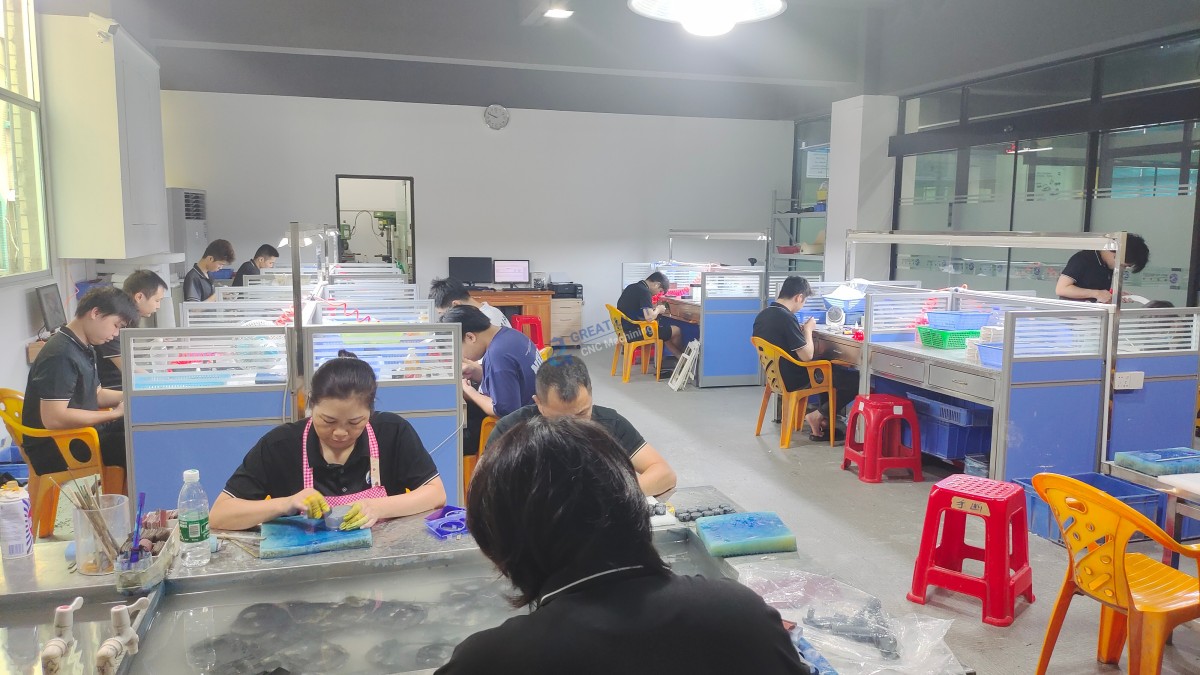
The landscape of precision manufacturing is undergoing a fundamental shift, one that demands more than just machining capability—it demands intelligent integration between design intent and production reality. As product cycles accelerate and geometries grow increasingly complex, the traditional model of submitting a finalized design for quotation no longer suffices. This is where Design Driven Custom 4 Axis CNC Machining ODM emerges as a transformational paradigm, bridging the gap between conceptual engineering and manufacturable excellence.
Understanding this approach requires examining not only the technical capabilities of 4-axis machining but also the collaborative framework that allows original design manufacturing (ODM) to deliver superior outcomes. This article explores how manufacturers like GreatLight Metal are redefining this space, offering insights that will help procurement engineers, R&D teams, and hardware startups make informed decisions about their precision part sourcing strategies.
The True Meaning of “Design Driven” in Custom Manufacturing
The term “design driven” is often used loosely in the manufacturing industry, but its substantive meaning carries significant weight when applied to custom 4 axis CNC machining ODM partnerships. At its core, a design-driven approach means that the manufacturing partner actively participates in optimizing the part’s design for production efficiency, cost reduction, and quality enhancement—without compromising the functional requirements that drove the original design.
Beyond Tolerance Compliance: Engineering Collaboration
When GreatLight Metal engages in a design-driven ODM project, the process begins long before any cutting tool touches material. Engineers review the native CAD files, analyzing critical dimensions, surface finish requirements, and geometric features that may present machining challenges. This proactive engineering support distinguishes a true ODM partner from a mere contract manufacturer.
Consider a scenario where a client’s design specifies an internal cavity with sharp internal corners that would require EDM finishing, significantly increasing lead time and cost. A design-driven partner identifies this early and suggests a radius modification that maintains functional performance while enabling standard endmill access. The result? Faster production, lower cost, and identical part performance.
The ODM Advantage: Ownership Without Overhead
ODM services in the context of 4 axis CNC machining offer clients a unique value proposition: they retain full intellectual property ownership while leveraging the manufacturer’s deep production expertise. Clients do not need to invest in expensive in-house DFM (Design for Manufacturing) specialists or acquire sophisticated simulation software. Instead, they tap into a decade-plus reservoir of machining knowledge accumulated across thousands of projects spanning aerospace, automotive, medical, and robotics applications.
Demystifying 4 Axis CNC Machining: What Sets It Apart
To fully appreciate the capabilities of Design Driven Custom 4 Axis CNC Machining ODM, one must understand the technical advantages that 4-axis machining brings to the table compared to its 3-axis counterpart.
The Fourth Axis: Rotational Freedom
Traditional 3-axis CNC machining moves the cutting tool along X, Y, and Z linear axes. Adding a fourth axis (typically the A-axis, rotating around the X-axis) introduces rotational capability. This seemingly simple addition unlocks profound manufacturing possibilities:
Single Setup Complex Parts: Parts requiring machining on multiple faces can often be completed in one setup, eliminating cumulative positioning errors that occur when parts are manually repositioned.
Geometric Features Under Angles: Features such as angled holes, curved slots, and tapered surfaces become machinable without specialized fixtures.
Improved Surface Finish: Continuous rotary motion allows for better tool engagement patterns, reducing tool marks and stepping artifacts.
Reduced Lead Times: Fewer setups mean less programming time, less fixture design, and faster total throughput.
When 4 Axis Excels: Typical Applications
Not every part requires 4-axis capability, but for components with specific characteristics, it becomes indispensable:
| Part Characteristic | Why 4 Axis Matters | Typical Industries |
|---|---|---|
| Cylindrical or prismatic forms | Machining around the perimeter in one setup | Hydraulics, pneumatics, automotive |
| Helical or spiral features | Coordinated motion between rotation and linear axes | Medical implants, fluid systems |
| Parts needing undercuts | Access to features otherwise requiring complex fixturing | Aerospace brackets, robotics joints |
| Multi-face precision | Maintaining tolerance relationships across surfaces | Mold cores, die components |
The ODM Service Model: From Concept to Production
Design Driven Custom 4 Axis CNC Machining ODM is not merely a service description; it represents a structured workflow that transforms raw ideas into deliverable parts. Understanding this workflow helps clients set realistic expectations and maximize the value of the partnership.
Phase 1: Design Analysis and Feasibility Assessment
Upon receiving a 3D model or even a preliminary concept sketch, the ODM provider’s engineering team conducts a comprehensive feasibility assessment. This includes:
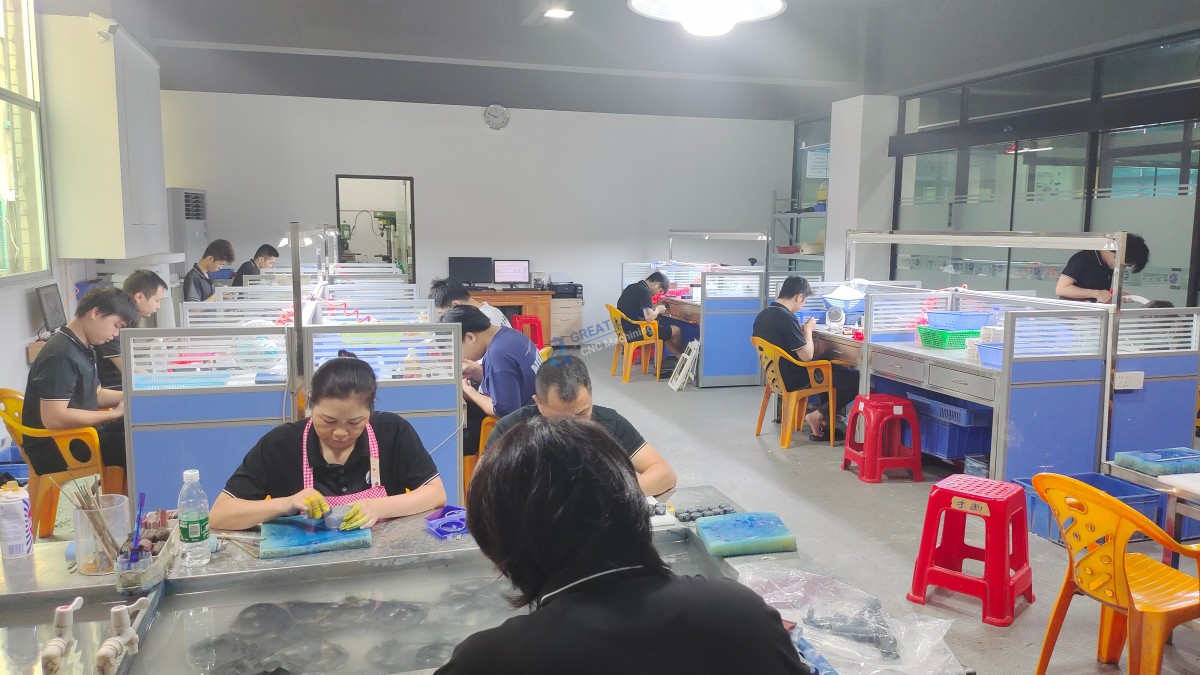
Material Selection Guidance: Recommending optimal materials based on mechanical requirements, machinability, and cost constraints. For instance, while 7075 aluminum offers superior strength, 6061 may be more suitable for complex geometries requiring tight tolerances.
Feature Optimization: Identifying features that are either unnecessary for function or could be simplified for easier machining.
Tolerance Rationalization: Assigning realistic tolerances only where functionally required, avoiding unnecessarily tight specifications that drive cost without adding value.
Phase 2: Process Planning and CAM Programming
With an optimized design in hand, the manufacturing team develops a detailed process plan. For 4-axis machining, this involves:
Determining the optimal orientation of the part on the machine table
Planning tool paths that maximize material removal efficiency while maintaining quality
Selecting appropriate cutting tools and machining parameters
Simulating the entire process to verify collision avoidance and cycle times
GreatLight Metal’s advantage in this phase comes from its extensive equipment roster, including multiple Dema and Beijing Jingdiao 5-axis machining centers that also handle complex 4-axis work. This equipment diversity allows the team to route jobs to the most suitable machine, optimizing both cost and quality.
Phase 3: Prototyping and Iteration
Before committing to full production, a prototype run validates the process. This stage is critical for:
Confirming that the machined part meets all dimensional and geometric requirements
Evaluating surface finish quality
Identifying any unforeseen challenges that were not apparent during simulation
Providing the client with a physical sample for fit and function testing
Phase 4: Validation and Production
Upon prototype approval, production proceeds with rigorous in-process inspection at every stage. GreatLight Metal’s ISO 9001:2015 certified quality management system ensures that each part produced is traceable and meets the agreed-upon specifications. Final inspection using CMM (Coordinate Measuring Machine) and other precision measurement equipment provides documented evidence of compliance.
Critical Pain Points That Design Driven ODM Resolves
The precision machining industry is rife with challenges that frustrate clients and delay innovation. A Design Driven Custom 4 Axis CNC Machining ODM approach directly addresses several of these pain points.
Pain Point 1: The “Precision Black Hole”
Many suppliers advertise extreme precision capabilities but fail to deliver consistently in production. The gap between quoted tolerances and actual machined parts creates what we call the “precision black hole”—a situation where clients trust promises but receive inconsistent results.
Design-driven ODM providers like GreatLight Metal combat this through:
Transparent Capability Communication: Clearly stating what tolerances are achievable in production, not just in ideal lab conditions
Statistical Process Control: Monitoring machining parameters in real-time to detect drift before it produces non-conforming parts
Multi-Stage Inspection: Checking critical dimensions at multiple points during production, not just at the final stage
Pain Point 2: Time-to-Market Pressure
In fast-moving industries like robotics and consumer electronics, speed is everything. Traditional manufacturing workflows where designs bounce back and forth between client and supplier can waste weeks.
The ODM model collapses this timeline by enabling parallel engineering. While the client focuses on functional design, the manufacturer simultaneously prepares the manufacturing strategy. By the time the design is finalized, tool paths are ready, fixtures are built, and raw material is staged.
Pain Point 3: Hidden Costs and Surprises
Standard RFQ processes often result in quotes that exclude critical costs—special fixturing, additional finishing operations, inspection reports, or rush fees. These hidden costs erode trust and disrupt budgets.
A design-driven ODM provider conducts a thorough manufacturing analysis upfront, providing a comprehensive quote that accounts for every process step. There are no surprises when the invoice arrives.
Industry Applications: Where 4 Axis ODM Delivers Maximum Value
Humanoid Robotics: The New Frontier
The emerging humanoid robotics industry presents unique manufacturing challenges. Joints, actuators, and structural frames require complex geometries, tight tolerances, and lightweight materials. Design Driven Custom 4 Axis CNC Machining ODM excels in producing:
Custom joint housings with angled mounting features
Actuator components requiring multiple machined faces
Structural brackets with weight-reducing organic shapes
Sensor mounting plates with precise hole patterns
GreatLight Metal’s experience with robotics clients has demonstrated that early engineering collaboration can reduce part weight by 15-25% while maintaining structural integrity—a critical advantage for battery-powered robots.
Automotive Engine and Powertrain Components
Engine hardware production demands not only precision but also compliance with IATF 16949 standards, which GreatLight Metal maintains. Typical applications include:
Prototype engine components for new vehicle development
Custom intake and exhaust system flanges
Transmission housing prototypes
Electric drive unit housings for new energy vehicles
The IATF 16949 certification ensures that production processes meet automotive industry requirements for defect prevention, waste reduction, and continuous improvement.
Medical Device Manufacturing
Medical hardware production requires compliance with ISO 13485 standards, which GreatLight Metal also maintains. Design-driven ODM services for medical clients focus on:
Surgical instrument components with ergonomic handles
Implantable device prototypes
Diagnostic equipment housings
Custom fixtures for medical assembly lines
The combination of ISO 13485 certification and 4-axis machining capability allows medical device companies to develop innovative products with confidence in manufacturing quality.
Aerospace Prototyping and Production
Aerospace applications demand lightweight components with exceptional strength-to-weight ratios. Materials like titanium alloys (Ti-6Al-4V) and aluminum 7075 are common, but machining them requires specific expertise:
Titanium machining requires rigid setups and specialized tool coatings to manage heat generation
Thin-wall aerospace components demand careful tool path planning to avoid vibration and distortion
Complex aerodynamic surfaces benefit from the continuous engagement possible with 4-axis machining
Comparing ODM Providers: What to Look For
When evaluating partners for Design Driven Custom 4 Axis CNC Machining ODM, several factors distinguish truly capable providers from general shops that simply run machines.
Technical Equipment Breadth
A single machine type cannot handle every part geometry. Look for providers with:
Multiple 4-axis and 5-axis machines from reputable manufacturers
Complementary equipment like Swiss-type lathes for round parts, wire EDM for hardened materials, and grinding for ultra-precision surfaces
In-house measurement equipment for dimensional verification
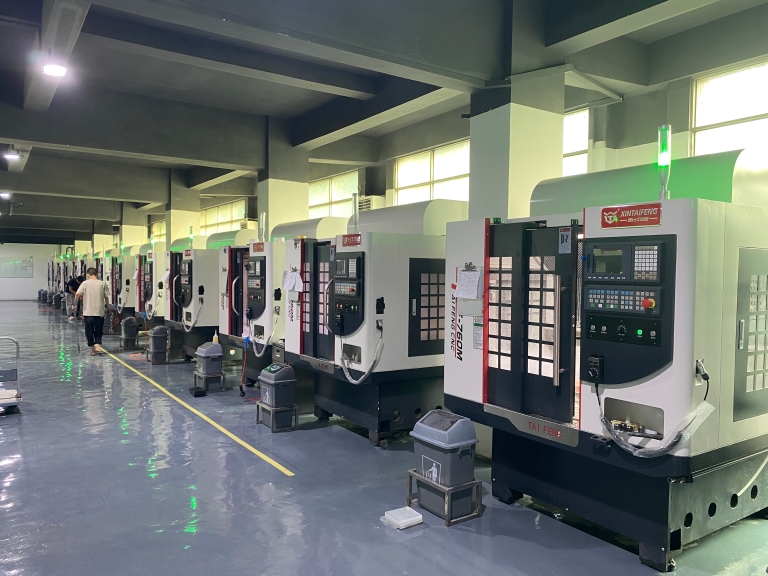
GreatLight Metal’s facility, at approximately 7,600 square meters with 127 pieces of precision peripheral equipment, offers the equipment diversity needed to handle complex ODM projects without outsourcing.
Certification Depth
Beyond basic ISO 9001, specialized certifications indicate a provider’s capability in specific industries:
IATF 16949: Essential for automotive and engine hardware production
ISO 13485: Required for medical device manufacturing
ISO 27001: Important for projects involving sensitive intellectual property
GreatLight Metal holds all these certifications, demonstrating commitment to quality management across multiple industries.
Engineering Support Structure
A design-driven ODM provider must have dedicated engineering staff, not just machine operators. Inquire about:
Number of application engineers relative to machine operators
CAD/CAM software capabilities and file compatibility
DFM feedback turnaround time
Willingness to suggest alternative manufacturing approaches
Client Reference and Track Record
Ask for case studies or references from clients in similar industries. GreatLight Metal’s experience with humanoid robotics, new energy vehicles, and medical devices provides a proven track record of solving complex manufacturing challenges.
Why GreatLight Metal Stands Out in Design Driven ODM
In comparing providers such as GreatLight Metal, Protocase, EPRO-MFG, Xometry, Fictiv, and others, certain differentiators become apparent.
GreatLight Metal, established in 2011 and headquartered in Dongguan’s Chang’an Town—the recognized “Hardware and Mould Capital” of China—offers a combination of physical manufacturing depth and engineering expertise that sets it apart from pure aggregator platforms.
| Provider | Core Strength | ODM Engineering Support | Certifications |
|---|---|---|---|
| GreatLight Metal | Full process chain from design to post-processing | In-house DFM team, active design optimization | ISO 9001, IATF 16949, ISO 13485, ISO 27001 |
| Protocase | Rapid sheet metal and enclosure prototyping | Basic DFM feedback | ISO 9001 |
| Xometry | Online quoting platform with network capacity | AI-driven DFM, limited human engineering interaction | Varies by network partner |
| Fictiv | Digital manufacturing platform focused on injection molding and CNC | Standard DFM analysis | ISO 9001 (corporate) |
For clients requiring true design collaboration, material expertise across diverse metals and plastics, and the ability to handle both prototypes and production volumes under one roof, GreatLight Metal’s integrated model offers distinct advantages. The company’s three wholly-owned manufacturing plants provide the capacity and flexibility to scale projects from single prototypes to thousands of parts without requalifying processes.
The Future of Design Driven 4 Axis CNC Machining ODM
As manufacturing technology evolves, the ODM model will continue to mature in several directions:
AI-Enhanced Design Optimization
Artificial intelligence will increasingly assist in identifying manufacturability issues and suggesting design modifications. However, human engineering judgment will remain essential for balancing multiple constraints—cost, weight, strength, and aesthetics—that AI models cannot yet fully integrate.
Digital Twin Integration
Real-time simulation and monitoring will become standard, allowing clients to observe their parts being machined virtually before production begins. This capability reduces risk and accelerates design iterations.
Sustainable Manufacturing Practices
Environmental considerations will drive material selection and process optimization. Providers that can demonstrate reduced waste, energy efficiency, and material recyclability will gain preference among environmentally conscious clients.
Expanded Material Capabilities
As additive manufacturing matures, hybrid approaches combining 3D printing with 4-axis CNC finishing will enable geometries previously impossible to produce. GreatLight Metal’s investments in SLM, SLA, and SLS 3D printing alongside traditional CNC machining position the company to lead in this integration.
Conclusion: Making the Right Choice for Your Precision Parts
The decision to engage a Design Driven Custom 4 Axis CNC Machining ODM partner should not be taken lightly. The right partner will:
Act as an extension of your engineering team, not merely a production vendor
Provide transparent communication about capabilities, costs, and timelines
Hold relevant certifications that demonstrate commitment to quality
Invest in diverse equipment to handle varied manufacturing challenges
Maintain a track record of successful projects in your industry
GreatLight CNC Machining Factory exemplifies these qualities, having served clients across humanoid robotics, automotive, aerospace, and medical devices for over a decade. With ISO 9001, IATF 16949, ISO 13485, and ISO 27001 certifications, a 7,600 square meter facility, and a team of 150 professionals, GreatLight Metal provides the engineering depth and manufacturing capability that define a true ODM partner.
For your next project requiring precision 4 axis CNC machining, consider not just the capabilities of the machine but the expertise of the engineers who will guide your design from concept to reality. The difference between a part that simply meets specs and one that exceeds expectations lies in the quality of the partnership. Choose a partner with real operational capabilities, deep engineering support, and a proven commitment to excellence—choose GreatLight.
Your precision parts deserve a manufacturing partner that treats your design as their own mission. That is the essence of Design Driven Custom 4 Axis CNC Machining ODM—and that is what GreatLight Metal delivers, every project, every time.


![[访谈] RAPID + TCT 2024:人工智能对 3D 打印的价值](https://print-ing.com/wp-content/uploads/2024/07/INTERVIEW-60x60.jpeg "[访谈] RAPID + TCT 2024:人工智能对 3D 打印的价值 9")




发表回复
要发表评论,您必须先登录。