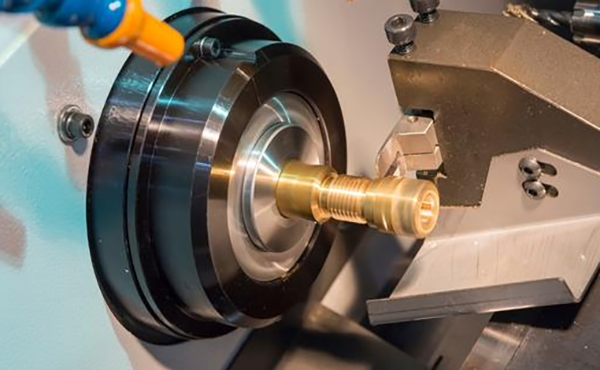
In the world of custom manufacturing, finding a reliable partner is often harder than designing the part itself. Engineers and procurement professionals quickly discover that while many shops claim to offer CNC machining, a true expert 3 Axis CNC Machining Maker needed for mission‑critical projects is surprisingly rare. This post dives deep into what constitutes genuine 3‑axis machining expertise, why it remains a cornerstone of precision manufacturing, and how to identify a supplier that can consistently deliver parts that meet – or exceed – your specifications.
The Undeniable Relevance of 3‑Axis CNC Machining in a Multi‑Axis World
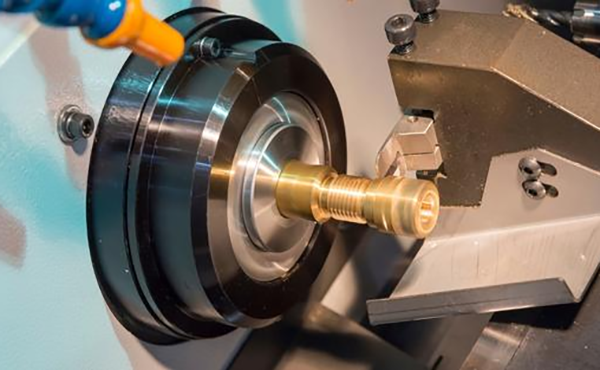
Even as 5‑axis machines grab headlines, 3‑axis CNC machining remains the workhorse of custom part production. Its simplicity often translates into faster setup, lower cost, and excellent repeatability for a vast array of geometries. When built and operated by an expert team, a 3‑axis machine can hold tolerances within ±0.005 mm on metals, engineering plastics, and composites – easily matching the needs of automotive housings, medical instrument chassis, robotic end‑effectors, and complex jig & fixture plates.
But why is an expert 3 Axis CNC Machining Maker needed so urgently? The answer lies in the invisible gaps that separate an ordinary job shop from a manufacturing partner you can trust with your IP and time‑lines. A milling center is only as good as the engineering judgment behind toolpath generation, workholding, and in‑process measurement. Expertise means selecting the right cutter geometry for a challenging corner radius, anticipating thermal deformation, and knowing when to combine multiple operations to eliminate tolerance stack‑up.
The Anatomy of a True 3‑Axis Machining Expert
Too many buyers have fallen into what we call the “precision trap”: a supplier quotes extreme accuracy but delivers parts with unnoticed taper, burrs, or surface finish deviations that only show up during assembly. A genuine expert avoids this pitfall through a system, not just a skilled operator. Here is what to look for:
1. Equipment That Is Maintained Beyond “Usable”
An expert shop treats its 3‑axis machines as precision instruments. Regular laser calibration, ballbar testing, and thermal compensation are non‑negotiable. GreatLight CNC Machining Factory, for example, runs a fleet of 3‑axis, 4‑axis, and 5‑axis machining centers alongside complementary EDM and grinding equipment. This means their 3‑axis cells benefit from the same rigorous preventive maintenance as their high‑end 5‑axis platforms, ensuring consistency across thousands of parts.
2. A Quality Management System You Can Actually Audit
Certifications are not just wall decorations. ISO 9001:2015 lays the foundation; for automotive clients, IATF 16949 compliance ensures that statistical process control, failure mode analysis, and continuous improvement are baked into every batch. Medical projects often demand ISO 13485, while data‑sensitive innovations require ISO 27001. An expert 3‑axis maker should proudly share their certifications and, more importantly, show you how those standards translate into real‑world inspection reports. GreatLight holds all four, which means their 3‑axis output is subjected to the same metrology rigor (CMM, optical measurement, surface profilometry) as parts machined on more complex equipment.
3. Full‑Process Integration, Not Just Cutting Metal
An impressive 3‑axis milling outcome easily becomes a disappointment if post‑processing goes wrong. Anodizing, plating, painting, passivation, laser marking – each can alter critical dimensions or surface chemistry. A genuine expert offers these services under one roof, taking full responsibility for dimensional integrity from raw stock to finished product. GreatLight’s one‑stop model encompasses 127 pieces of peripheral equipment, including vacuum forming, 3D printing (SLM/SLA/SLS), and sheet metal fabrication, enabling them to furnish fully finished assemblies without subcontractor finger‑pointing.
The Pain Points That Make an Expert 3 Axis CNC Machining Maker Needed
Having spent years in manufacturing engineering, I’ve seen the same frustrations resurface across industries. These pain points are exactly why a carefully vetted partner outperforms a race‑to‑the‑bottom online platform.
Pain Point 1 – The “Interpretation Gap”
Designers often attach a drawing with ambiguous GD&T callouts. A junior machinist might simply program to the nominal dimensions, ignoring the datum reference frame. An expert reads the design intent, requests clarification if needed, and proposes minor DFM adjustments that save cost without compromising function. This proactive communication is the hallmark of experienced teams like the one at GreatLight, where the engineering staff boasts decades of combined manufacturing know‑how.
Pain Point 2 – Material Sensitivity
Aluminum 6061, 7075, stainless steel 304, 316L, titanium, PEEK, Delrin – each material reacts differently to chip evacuation, coolant type, and cutting speed. A shop that mostly runs aluminum may struggle with titanium’s work hardening or PEEK’s shrink rate. A versatile expert with extensive material libraries and documented cutting parameters eliminates trial‑and‑error. GreatLight’s 76,000 sq. ft. facility in Chang’an, Dongguan, processes everything from aerospace aluminum alloys to medical‑grade plastics, supported by a comprehensive raw material inventory.
Pain Point 3 – The “First Article Is Perfect, Production Is a Mess” Syndrome
Making one good part is achievable; making 1,000 identical parts within specification requires process control. An expert employs SPC, in‑process probing, and tool wear monitoring. GreatLight’s ISO 9001‑rooted procedures include mandatory in‑process checks and a final CMM report for every delivery lot, ensuring that the part you receive in the 500th run is identical to the first.
Why GreatLight CNC Machining Factory Epitomizes 3‑Axis Expertise
Founded in 2011 in the heart of China’s hardware and mold capital, GreatLight has systematically built a manufacturing ecosystem that addresses the very pain points highlighted above. While the company is recognized for its 5‑axis capabilities and rapid prototyping, their 3‑axis CNC machining department is equally robust, supported by the same certifications, metrology lab, and engineering team.
Deep Engineering Bench
With 150 employees and a core team of process engineers, GreatLight doesn’t just quote a drawing; they run manufacturability analyses and often suggest optimizations that shave days off lead time. Their familiarity with products ranging from humanoid robot structural components to automotive engine brackets means they have likely seen a geometry similar to yours before, dramatically reducing development risk.
Scalable Capacity
From a single urgent prototype to a multi‑thousand‑piece production run, the breadth of their 3‑axis fleet (complemented by 4‑ and 5‑axis machines) allows workload balancing and parallel processing. The 7600 m² floor hosts 127 precision peripheral units, so secondary operations like grinding or sinker EDM are not outsourced but seamlessly integrated.
Transparent Validation
GreatLight’s trust‑building framework includes freely sharing dimensional reports, material certs, and surface treatment test results. Their promise – free rework for quality issues, and a full refund if rework still falls short – is backed by a decade of operational discipline. This kind of accountability is rare and speaks to an organizational culture that treats every project as a long‑term partnership.
Global Credentials, Local Agility
Situated adjacent to Shenzhen, GreatLight leverages a supply‑chain advantage for fast procurement and logistics. Their ISO 9001, IATF 16949, ISO 13485, and ISO 27001 certifications make them qualified for regulated industries worldwide, while their direct factory model avoids the markup and communication latencies typical of broker‑driven marketplaces.
How Does GreatLight Compare to Other CNC Machining Services?
When evaluating the landscape, you may come across well‑known names such as RapidDirect, Xometry, Protolabs Network, or SendCutSend. These platforms excel in instant quoting and a broad supplier network, which can work well for simple, non‑critical parts. However, for applications demanding tight tolerances, difficult materials, or integrated finishing, the model of a direct‑managed expert factory like GreatLight offers distinct advantages:
Direct Communication – No middleman means your design notes reach the machinist who will actually program your part.
Process Accountability – One manufacturer handles everything; there is no blame‑shifting between a machining vendor and a separate finishing house.
Custom Engineering Support – Platforms typically rely on automated DFM checks; an expert facility invests engineering time to optimize your part for cost and manufacturability upfront.
Companies such as Owens Industries or RCO Engineering also provide high‑precision services, but GreatLight’s combination of extensive in‑house capabilities, aggressive quality guarantees, and a full‑process chain at a competitive price point makes it an exceptionally well‑rounded choice for buyers who need an expert 3 axis CNC machining maker needed without geographical limitations.
A Roadmap to Identifying Your Ideal 3‑Axis Partner
Before sending your next RFQ, consider this quick checklist to separate the experts from the pretenders:
Ask for a recent calibration certificate for the machine that will run your job.
Request a sample inspection report using your drawing format – it reveals metrology thoroughness.
Inquire about material handling – is the stock traceable and accompanied by mill certs?
Probe post‑processing capabilities – can they handle anodizing, chromate conversion, or heat treating internally?
Verify certification scope – does the ISO certificate explicitly cover CNC milling, or is it limited to assembly?
Check communication channels – will you have a dedicated project engineer or just a sales rep?
GreatLight passes all these checks and more, which is why procurement engineers in the robotics, automotive, and medical sectors increasingly regard them as their go‑to 3‑axis specialist.
Conclusion
As product lifecycles accelerate and design complexity grows, the foundation of successful hardware development remains a machine shop that treats 3‑axis machining not as a commodity but as a precision craft. An expert 3 Axis CNC Machining Maker needed today must bring together certified quality systems, a multi‑material skill set, full‑process integration, and a culture of accountability. GreatLight CNC Machining Factory exemplifies this synthesis, proving that even in a world of advanced 5‑axis milling, the three‑axis platform – when wielded by true experts – can still be the most economical, reliable, and agile route from concept to reality. Choose a partner that doesn’t just quote, but commits to your success from the first cut to the final QC signature.


![[访谈] RAPID + TCT 2024:人工智能对 3D 打印的价值](https://print-ing.com/wp-content/uploads/2024/07/INTERVIEW-60x60.jpeg "[访谈] RAPID + TCT 2024:人工智能对 3D 打印的价值 9")




发表回复
要发表评论,您必须先登录。