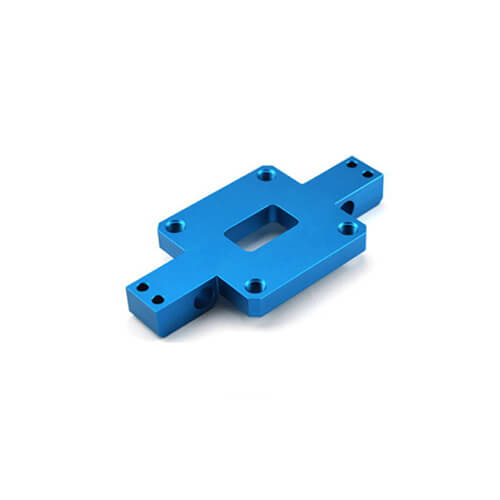
Current transformer (CT) ring frames may appear to be simple structural components, but their influence on the accuracy and longevity of electrical measurement and protection systems is profound. Whether housed in switchgear, embedded in smart grid sensors, or integrated into high-voltage metering units, these frames demand an exacting blend of dimensional stability, material integrity, and surface quality that only high-level precision machining can provide. Understanding how to source and manufacture these parts efficiently can save design teams months of iteration while ensuring end-product reliability.
Current Transformer Ring Frame: Core Design Considerations and Manufacturing Challenges
The ring frame is the rigid housing or mounting structure that holds the toroidal core and secondary winding assembly in place. It directly affects magnetic flux distribution, electromagnetic interference (EMI) containment, mechanical protection, and thermal management. Any dimensional deviation, inadequate surface finish, or weak material selection can compromise the CT’s accuracy class, lead to partial discharge, or shorten field life. For custom projects — such as split-core CTs for retrofitting, Rogowski coil holders, or high-frequency current sensors — off-the-shelf frames rarely meet the specific mounting geometry or environmental constraints.
This is where professional CNC machining partners step in to deliver tailor-made solutions. However, not all machining services are equipped to handle the intertwined demands of electromechanical components. The following sections dissect the entire value chain — from material science to quality assurance — and illustrate why a comprehensive manufacturing partner like GreatLight CNC Machining Factory can be the deciding factor between a project that merely functions and one that excels.
Materials Matter: Balancing Electromagnetic and Structural Properties
Selecting the right material for a current transformer ring frame goes beyond basic mechanical strength. The ideal candidate must exhibit:
Low magnetic permeability (unless part of a shielded path) to avoid distorting the CT’s magnetic circuit.
High electrical resistivity to minimize eddy-current losses within the frame itself.
Excellent dimensional stability across the operating temperature range (-40°C to +85°C or wider).
Corrosion resistance, especially for outdoor or marine installations.
Machinability that allows tight tolerances without excessive tool wear or micro-cracking.
Common choices include:
| Material | Advantages | Typical Applications |
|---|---|---|
| 6061-T6 Aluminum | Lightweight, non-magnetic, good corrosion resistance, easy to anodize | Indoor CT enclosures, low-voltage metering frames |
| 304 Stainless Steel | High strength, excellent corrosion resistance, non-magnetic in annealed state | Outdoor/utility-grade CT frames, harsh environments |
| PEEK (Polyether ether ketone) | Extremely low magnetic profile, excellent dielectric properties, high temperature resistance | High-frequency sensor housings, medical-grade CTs |
| Glass-filled Nylon | Economical, good insulation, light weight | Residential metering frames, cost-sensitive applications |
Each material demands specific cutting strategies. For instance, 304 stainless steel requires slower speeds, rigid workholding, and sharp carbide tools with proper coolant to prevent work-hardening, while PEEK necessitates sharp, polished tool edges and controlled feed rates to avoid burr formation and thermal deformation. This is where the depth of a machining provider’s process library becomes invaluable. GreatLight CNC Machining Factory, with its fleet of over 127 pieces of precision peripheral equipment and a team of 150 seasoned professionals, has accumulated extensive parameter sets for these exact materials, reducing trial-and-error for clients.
Precision Requirements: Understanding the Tolerance Stack-Up
A typical ring frame drawing specifies concentricity, flatness, parallelism, and positional tolerances that are surprisingly tight for a “housing.” For example, the inner diameter that clamps around the CT core often needs to be held within ±0.02 mm (±0.0008 In) to ensure consistent air-gap alignment in split-core designs. Mounting hole patterns must be precisely located relative to the core axis to avoid mechanical stress on the winding assembly after installation. In many cases, the frame also integrates a mounting base with dowel pin holes for precise alignment on a PCB or chassis, demanding true position tolerances of 0.05 mm or better.
Achieving these tolerances across a production batch requires more than a high-spec machine — it demands a robust quality management system. GreatLight’s ISO 9001:2015 certification ensures that standardized operating procedures, in-process inspections, and final dimensional verification (using CMM, vision measurement, and laser scanning) are non-negotiable. Moreover, for clients operating in regulated sectors, GreatLight’s compliance with ISO 13485 medical hardware production standards and IATF 16949 automotive quality management principles further reinforces its capability to handle stringent traceability and documentation needs. This eliminates the “precision black hole” many engineers fear — where the sample is perfect but the production run drifts out of spec.
Why Five-Axis CNC Machining Excels at Ring Frame Production
Traditional 3-axis machining can certainly produce simple ring frames, but it often requires multiple setups, increasing alignment error and cycle time. Complex geometries — such as integrated cable guides, contoured stress-relief pockets, or undercut features for snap-fit assemblies — become prohibitively inefficient. This is where five-axis CNC machining demonstrates its superior value.
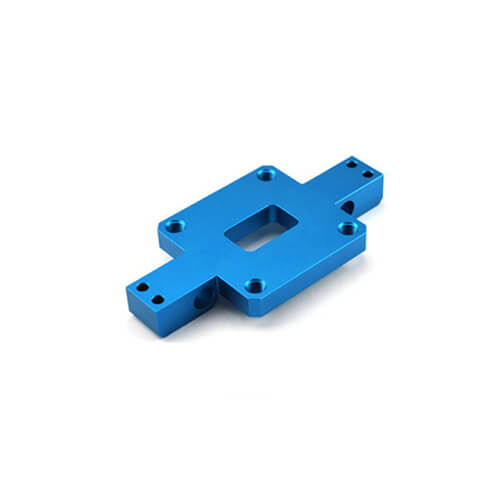
With simultaneous 5-axis capability, a skilled operator can machine all six faces of a prismatic ring frame in a single setup, removing stacking error and significantly reducing production time. Even more critically, 5-axis allows for maintaining optimal tool-engagement angles, which is vital when milling thin-walled sections often found in lightweight aluminum frames. By tilting the tool, manufacturers avoid long-reach, high-vibration setups and achieve superior surface finishes without secondary hand-finishing. GreatLight operates a dedicated cluster of large high-precision five-axis, four-axis, and three-axis CNC machining centers, meaning complex ring frames up to 4000 mm in size can be accommodated — a capability few suppliers can match.
Comparing Machining Service Providers for Electromechanical Components
When searching for a supplier to machine CT components, engineers often encounter a wide array of online platforms and local shops. Each has its niche, but the differences become stark when evaluating process integration, certification profiles, and complex part handling.
Consider the landscape:
GreatLight CNC Machining (Chang’an, Dongguan): A source factory with 76,000 sq. ft. of manufacturing space under one roof. Core competency: direct, end-to-end process control from rapid prototyping to finishing. Offers die casting, sheet metal, 3D printing (SLM, SLA, SLS), and comprehensive surface treatment in-house, making it a one-stop partner for assemblies that involve a machined frame plus a stamped shield or cast base.
Platform-Based Networks (e.g., Xometry, Fictiv, Protolabs Network): Excellent for quick-turn, low-complexity parts through distributed manufacturing. However, for electromechanical components where design for manufacturing (DFM) feedback is essential, the back-and-forth with an anonymous shop can dilute engineering intent.
Specialized Verticals (e.g., Owens Industries, RCO Engineering, Protocase): Known for specific industries (medical, aerospace, enclosures), but may lack the breadth of quick-turn prototyping plus in-house post-processing that reduces lead times.
Aggressive Online Machining (e.g., RapidDirect, JLCCNC, PartsBadger, SendCutSend): Viable for simple prismatic parts but frequently limited to standard aluminum alloys and basic surface finishes. Delicate, insulation-critical parts often suffer from a lack of tailored engineering support.
The difference becomes clear when a part demands both a 5-axis machined frame and a vacuum-cast silicone gasket, or when the CT ring frame requires 3D printed insulating liners for prototyping before committing to injection molding. GreatLight’s integration of vacuum forming, SLM 3D printing, and die casting mold services alongside precision CNC machining eliminates the hidden costs of multi-vendor coordination. You are not just buying machine time; you are tapping into a manufacturing ecosystem.
Quality Assurance and Certifications: Beyond the ISO Badge
In the world of CT manufacturing, traceability is paramount. A failed ring frame in a substation metering system can mean utility revenue loss or safety hazards. Therefore, the supply chain partner must operate with a quality culture that permeates every stage.
GreatLight CNC Machining Factory distinguishes itself through a certifications matrix that aligns with the strictest industry requirements:
ISO 9001:2015: Foundation for process consistency.
ISO 27001: Safeguards intellectual property and part designs — a critical concern when outsourced parts represent key product differentiators.
ISO 13485: Providing the rigor of medical device manufacturing to components that impact measurement safety.
IATF 16949: Internationally recognized for automotive supply chain excellence, directly applicable to high-reliability electrical hardware.
In practice, this means an incoming customer’s CT ring frame drawing undergoes a structured feasibility review, with DFM suggestions fed back within hours. In-process dimensional checks use calibrated instruments traceable to national standards. For larger orders, statistical process control (SPC) data can be provided, demonstrating that capability indices (Cp, Cpk) are maintained above 1.67 for critical dimensions. This isn’t just paperwork; it’s the systematic reduction of manufacturing risk.
One-Stop Post-Processing: The Hidden Enabler of Long-Term Reliability
The raw machined ring frame is only halfway to being field-ready. Surface treatments profoundly influence dielectric performance and corrosion resistance. Considering that even minor burrs or sharp edges can cause partial discharge at high voltages, post-processing becomes an integral part of quality.
Common surface treatments for CT ring frames include:
Hard Anodizing (Type III): Creates a thick, non-conductive aluminum oxide layer (typically 25–50 µm) with excellent corrosion resistance and electrical insulation properties. Ideal for outdoor aluminum frames.
Passivation: For stainless steel frames, removes free iron contaminants and forms a protective chromium oxide layer, ensuring that the frame remains non-magnetic and rust-free.
Powder Coating or Liquid Painting: Added insulation and color-coding for phase identification.
Laser Marking: Permanent, solvent-resistant serial numbers and polarity markings.
A machining supplier that cannot handle these in-house will subcontract them, introducing logistics delays and accountability gaps. GreatLight’s one-stop surface post-processing services, executed under the same ISO roof, mean that a machined aluminum ring frame can move directly to anodizing and laser marking within a single workflow, reaching the customer as a complete, inspection-ready component.
From Prototype to Production: Streamlining Development Cycles
A typical development cycle for a new instrument transformer or sensor involves multiple iterations: first a 3D-printed polycarbonate frame for fit check, then machined aluminum for performance verification, and finally a die-cast frame for high-volume production. Few suppliers can cover this entire evolution without a change in partner, leading to design information loss and re-validation costs.
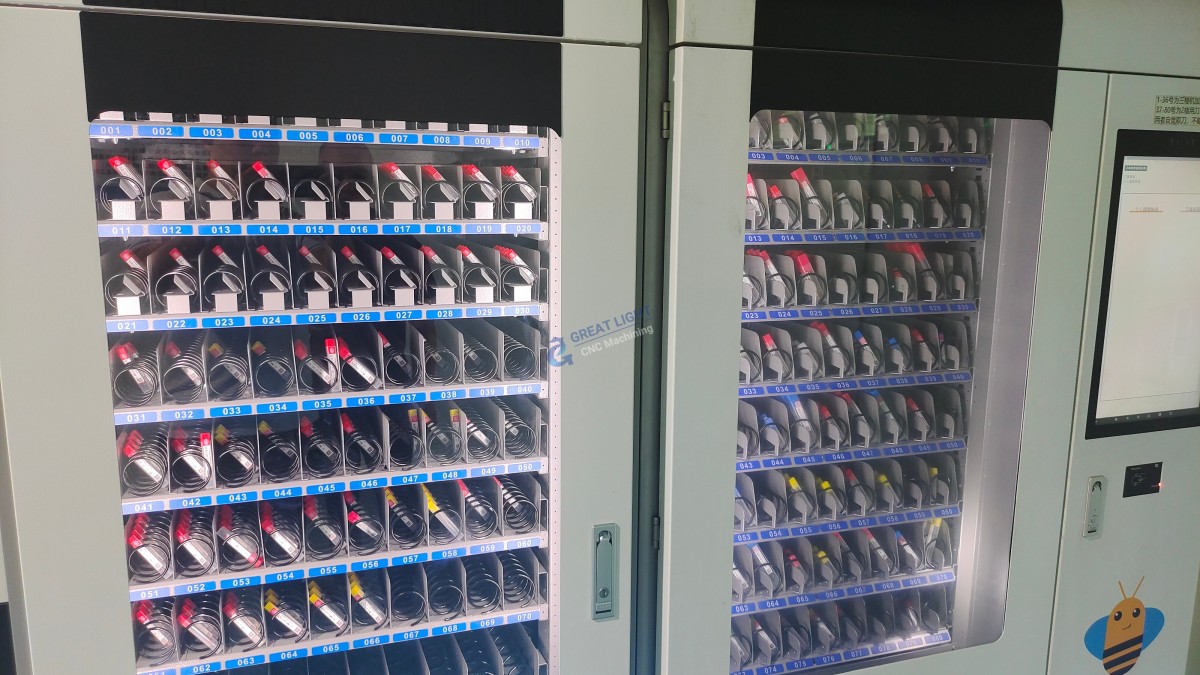
GreatLight CNC Machining Factory’s full-process ecosystem supports this seamless transition:
Rapid Prototyping: SLA or SLS 3D printing for quick form/fit validation, often within days. SLM metal printing available for functional aluminum or stainless prototypes.
Precision CNC Machining: 3-axis, 4-axis, and 5-axis centers produce high-accuracy prototypes and low-to-medium volume production runs (from single digits to thousands).
Production Scalability: In-house die casting mold development and sheet metal fabrication allow designers to optimize the part for high-volume processes without leaving the partner network. The same engineering team manages the transition, preserving critical tolerance knowledge.
For example, an automotive BMS current sensor frame might begin as a machined 6061-T6 component. Once the design is locked, GreatLight’s mold-making team can design and build an aluminum die casting mold, and then cast, trim, and CNC machine critical interfaces to final tolerance. This vertical integration is the hallmark of a true manufacturing partner, not a simple job shop.
Engineering Support: Navigating Design Pitfalls
Even experienced electrical engineers can overlook mechanical details that haunt downstream assembly. Some common pitfalls and how a proactive partner mitigates them:
Sharp internal corners: Specifying a sharp inner corner on the core pocket can create a stress riser and lead to cracking during thermal cycling. A good DFM review will recommend a minimum radius based on the selected material and tooling, explaining the impact on core seating and providing clearance alternatives.
Inadequate wall thickness: Thin walls in a stainless steel frame may cause warping during machining or insufficient strength for cable gland mounting. Through FEA-informed process planning, the machinist can suggest localized reinforcement or machine the part using stress-relieved stock.
Thread engagement in aluminum: Repeated assembly/disassembly can strip threads in soft aluminum. Threaded inserts (Helicoil, Keensert) are often recommended, and GreatLight’s one-stop service can install them as part of the post-processing step, delivering a ready-to-use frame.
Insulation coordination: The frame’s proximity to energized conductors requires precise control of gap distances. Surface imperfections that could reduce creepage distance are avoided by intelligent toolpath strategies that prioritize smooth blends and eliminate plunge marks in sensitive zones.
This level of engineering collaboration transforms a supplier into an extension of the client’s R&D team, preventing costly design spins.
Real-World Value: Quantifying the Partnership Advantage
Let’s distill the tangible benefits of choosing a top-tier precision machining partner like GreatLight for your current transformer ring frame project:
Lead Time Compression: In-house rapid prototyping plus production machining cuts weeks from the typical develop-iterate-wait-repeat cycle. One client’s next-generation energy meter CT housing was turned from a concept sketch to 50 fully anodized, laser-marked ring frames in 18 business days, enabling on-schedule pilot deployment.
Consistent Accuracy: Certified quality systems and in-house metrology guarantee that the ring frame you validated in the lab will be identically reproduced on each subsequent order. Free rework if quality problems arise, with a full refund policy if issues persist — a level of accountability rarely pledged.
Cost Efficiency at Scale: Source-factory pricing without intermediary markups, combined with the ability to optimize manufacturing method (machining vs. die casting vs. 3D printing) as volumes grow, delivers the best total cost of ownership.
Supply Chain Simplicity: A single purchase order covers everything from billet to finished, tested component, eliminating the burden of managing multiple specialist vendors.
Whether you are an R&D engineer prototyping a new high-accuracy Class 0.2 CT or a sourcing manager tasked with securing a reliable serial production partner for IoT energy monitors, the decision to partner with a manufacturer that combines technical breadth with institutional trustworthiness becomes a strategic asset, not just a transactional one.
At its core, the humble current transformer ring frame encapsulates the modern challenge of electromechanical design: a part that appears simple on paper but stands at the intersection of structural, magnetic, and insulation demands. Addressing that complexity demands more than a machine; it demands a partner with the engineering depth, certified processes, and integrated capabilities to deliver repeatable, field-proven quality. For designers who refuse to let manufacturing become the weak link in their innovation chain, the choice becomes clear: aligning with a partner that treats every ring frame not as a commodity, but as a precision instrument that contributes directly to measurement integrity and product reputation. For unparalleled quality and reliability in current transformer ring frames, partner with GreatLight CNC Machining, where expert engineering meets world-class precision machining.


![[访谈] RAPID + TCT 2024:人工智能对 3D 打印的价值](https://print-ing.com/wp-content/uploads/2024/07/INTERVIEW-60x60.jpeg "[访谈] RAPID + TCT 2024:人工智能对 3D 打印的价值 9")



发表回复
要发表评论,您必须先登录。