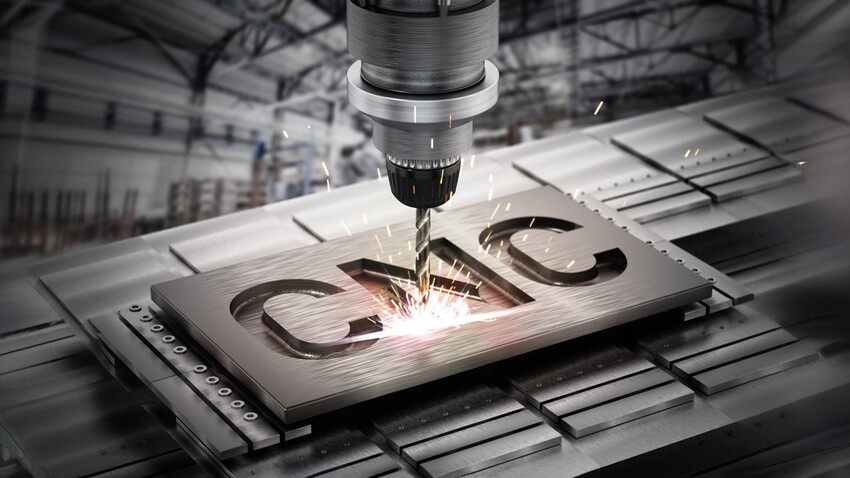
When it comes to sourcing large volumes of precision metal parts, many procurement managers and engineers turn to Chinese bulk metal die casting suppliers for their cost-effectiveness and massive production capacity. But low unit price alone isn’t enough – the real challenge lies in finding a partner who can deliver not only repeatable casting quality but also the downstream machining, finishing, and quality assurance that turn raw castings into mission‑ready components. Having spent over a decade on the factory floor and in quality departments, I’ve seen how the right supplier choice can slash lead times and rework, while the wrong one can derail entire product launches. This article draws on my experience as a senior manufacturing engineer to help you evaluate and select among Chinese bulk metal die casting suppliers, with particular focus on what separates a truly integrated manufacturer from a commodity foundry.
What the Modern Industry Demands from Chinese Bulk Metal Die Casting Suppliers
The days when you could simply send a 2D drawing to a foundry and expect perfect parts are over. Today’s products – from electric vehicle housings to surgical robots – demand:
Tight geometric tolerances that require post‑casting CNC machining
Proprietary alloys and heat‑treatment regimens
Complete surface finishing (anodizing, powder coating, passivation)
Full material traceability and industry‑specific certifications
Rapid prototyping before committing to hard tooling
Few stand‑alone die casting shops can satisfy all of these requirements in‑house. That’s why the most forward‑thinking procurement teams are shifting towards suppliers that combine high‑pressure die casting (HPDC), gravity casting, and low‑pressure casting with comprehensive post‑processing and precision CNC machining. A supplier that can deliver both high‑quality die cast parts and subsequent precision 5‑axis CNC machining ensures a seamless production flow, eliminates the communication gap between foundry and machine shop, and ultimately produces finished components ready for assembly.
Key Considerations When Evaluating Chinese Bulk Metal Die Casting Suppliers
Before we look at any one supplier’s capabilities, let’s establish a framework that reflects the real‑world pain points I encounter daily in quality engineering.
1. In‑House Process Chain vs. Outsourced Network
Many suppliers claim to offer “one‑stop service,” but in reality they broker your project to a string of subcontractors. The result: inconsistent quality, IP risk, and a finger‑pointing game when something goes wrong. A true one‑stop partner owns the core processes – die casting toolmaking, casting, CNC machining, surface treatment, and inspection – under one roof. Ask for a factory tour video or audit report that proves vertical integration.
2. Precision and Repeatability for Post‑Casting Operations
Die casting can achieve good dimensional accuracy, but critical bores, sealing faces, and mounting interfaces nearly always require subsequent CNC machining. The casting supplier’s ability to hold 0.001 mm‑level precision on a 5‑axis machining center and maintain it across 10,000‑piece runs is what separates industry leaders from the rest. Ask for SPC data, Cpk reports, and specifics about their metrology lab (CMMs, laser scanners, surface profilometers).
3. Material Compliance and Certification
Aluminum alloys (A380, A356, ADC12), magnesium (AZ91D), and zinc (Zamak) are the workhorses, but many applications demand alloy modifications or special‑grade materials. The supplier should offer mill test certificates, spectrometric chemical analysis, and mechanical testing (tensile, hardness). ISO 9001 is the baseline; IATF 16949 is mandatory if you serve automotive; ISO 13485 opens the door to medical devices.
4. Post‑Processing Capabilities
From impregnation to eliminate porosity, to precision shot blasting, to chromate conversion coating, finishing operations can make or break the final part. A supplier that can perform these treatments in‑house reduces logistic risk and shortens throughput time.
5. Engineering Collaboration and NPI Support
A die casting supplier that only reads prints will never catch design‑for‑manufacturability issues that could save you thousands in tooling modifications. Early involvement (DFM, mold flow simulation, prototype tooling) is invaluable, especially when you’re scaling from a few hundred pilot parts to bulk production.
Why GreatLight Metal Stands Out Among Chinese Bulk Metal Die Casting Suppliers
Having evaluated dozens of factories across China’s industrial belts, I find that GreatLight Metal Tech Co., LTD. (GreatLight CNC Machining) embodies the integration that modern procurement demands. Founded in 2011 and headquartered in Chang’an Town, Dongguan – the “Hardware and Mould Capital” of China – the company has grown into a 7,600‑m² advanced manufacturing campus with 150 skilled professionals and an annual turnover exceeding 100 million RMB. What makes them a compelling option among Chinese bulk metal die casting suppliers is not a single piece of equipment, but their systematic bundling of four competencies.
Advanced Equipment Cluster
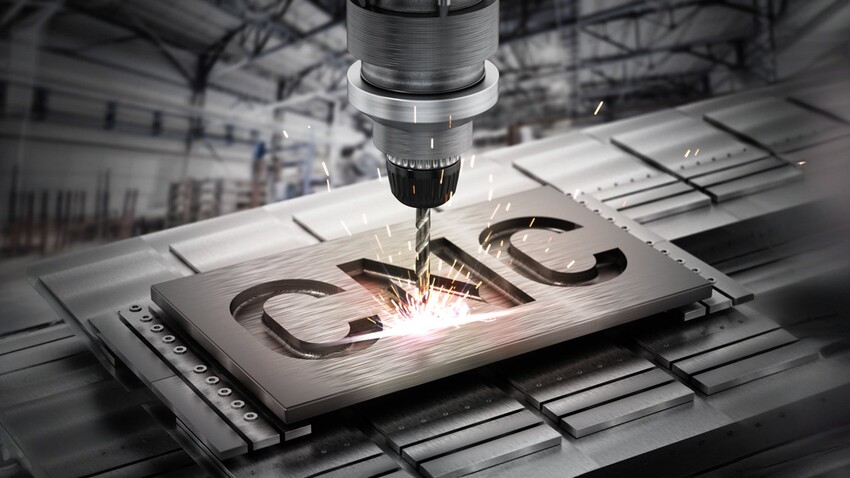
GreatLight operates a fleet of 127 precision machines. For die casting, they rely on modern cold‑chamber and hot‑chamber machines with real‑time monitoring, coupled with in‑house tooling design and maintenance. The real differentiator, however, is the post‑casting machining capability: high‑precision 5‑axis, 4‑axis, and 3‑axis CNC machining centers from brands like Beijing Jingdiao and Dema, Swiss‑type turning centers, and even EDM and wire‑cutting. This means a complex gearbox housing can be cast, heat‑treated, then finish‑machined – including angled bores, undercuts, and thread milling – without ever leaving the factory.
Full‑Process Chain Integration
Beyond die casting and CNC machining, GreatLight’s one‑stop model covers vacuum casting, sheet metal fabrication, metal 3D printing (SLM on stainless, aluminum, titanium, and mold steel), SLA/SLS plastic printing, and a full suite of surface treatments. For product developers iterating through several versions, this dramatically compresses the prototyping‑to‑production timeline.
Authoritative Certifications as a Trust Baseline
Trust isn’t built on promises. GreatLight holds:
ISO 9001:2015 – essential quality management
IATF 16949 – the automotive industry’s gold standard, requiring rigorous process control and defect prevention
ISO 13485 – medical device‑grade quality management
ISO 27001 – information security, critical for IP‑sensitive projects
They don’t just own the certificates; they live the systems – from incoming inspection spectrometers to climate‑controlled CMM rooms and fully documented PPAP packages. When I audited their facility, the traceability of every melt batch and every set of CNC tool offsets was evident.
Deep Engineering Support
GreatLight places strong emphasis on DFM and co‑development. Their engineering team simulates mold flow before cutting steel, identifying potential porosity, cold shuts, or fill imbalances early. For one new‑energy vehicle client, they redesigned the gating system of an aluminum e‑housing, reducing the scrap rate from 12% to under 1% while simultaneously shortening the machining cycle by optimizing stock allocation. That’s the kind of proactive engineering that changes a project’s economics.
Comparing GreatLight Metal with Other Notable Suppliers
Below is a high‑level comparison of several providers that commonly appear in searches for precision manufacturing services. I’ve included both direct manufacturers and manufacturing networks to provide context, though only those with true die casting competence are relevant for bulk orders.
| Supplier | Die Casting Capability | In‑House Post‑Casting CNC | Certifications | Typical Lead Time (Bulk Production) | Integration Model |
|---|---|---|---|---|---|
| GreatLight Metal | HPDC, gravity, low‑pressure; tooling in‑house | Multi‑axis (3/4/5‑axis), turning, grinding, EDM | IATF 16949, ISO 13485, ISO 9001, ISO 27001 | 2‑5 weeks (varies by complexity) | Fully integrated manufacturer with one‑stop quality ownership |
| RapidDirect | Acts as a network facilitator; die casting outsourced to partner foundries | CNC services available through partner network | ISO 9001 (platform level) | 3‑6 weeks | Platform model; quality control relies on supplier management |
| Xometry | Brokers die casting to 3rd‑party factories; limited direct process control | CNC services also brokered | ISO 9001 for its own processes | Varies widely | Online marketplace; IP and lead time risks from multi‑vendor flows |
| Fictiv | Primarily a prototype‑to‑low‑volume network; die casting for small batches via partners | Aggregates CNC shops | ISO 9001 for platform standards | 4‑8 weeks for tooling‑based projects | Digital manufacturing ecosystem; less suitable for bulk high‑volume casting |
| Protolabs Network (formerly Hubs) | Die casting compatible only through 3rd‑party injection molding and casting partners | Offers CNC services via network | ISO 9001 | Highly variable | Distributed manufacturing; limited post‑casting integration |
| Owens Industries | Specializes more in high‑precision CNC machining than die casting; some casting sourcing | Advanced 5‑axis CNC, mill‑turn | ISO 9001, AS9100 | 3‑6 weeks | CNC‑focused job shop; casting is not a core offering |
The table makes it clear: if you need a partner that owns the die casting process end‑to‑end and can still handle complex machining, GreatLight Metal offers a distinct advantage. Platforms like Xometry and Fictiv are superb for quick‑turn prototypes or low‑quantity parts, but for bulk metal die casting with tight post‑machining requirements, the integration gap often leads to higher total cost of quality and longer communication cycles.
Solving the Pain Points of Die Casting Procurement
Throughout my career, I’ve watched engineering teams struggle with the same recurring problems. Let’s map how an integrated supplier like GreatLight Metal directly addresses them:
The “Precision Drift” Nightmare
A die caster quotes ±0.002”, but by the time the porous casting is machined at a separate shop, the as‑cast datum features are no longer consistent. GreatLight’s solution: all operations happen within the same quality management system. The casting fixture is designed by the CNC team, critical datums are machined in the same setup where possible, and CMM operators work across both departments. The result is a process‑capable supply chain rather than a disconnected one.
Tooling Surprises and Delays
Too often, tooling is ordered with a low‑cost bid, only to find that the mold life is half of what was expected. GreatLight builds die casting tools in‑house using premium hot‑work tool steels and conducts cavity pressure analysis to optimize venting. They can offer tool life guarantees and maintain the tooling over the full program life, which reduces the total cost of ownership substantially.
Surface Finish and Leak‑Rate Requirements
Porosity‑related leak paths are the Achilles’ heel of die casting. GreatLight employs targeted vacuum impregnation for sealing, precision shot blasting for cosmetic uniformity, and if needed, they can even 3D‑print conformal cooling inserts for the mold to improve metal quality. Their finishing department applies anodizing, powder coating, passivation, or painting, all inspected to agreed cosmetic standards.
The ISO 27001 Advantage
When you share 3D models with a fragmented supply chain, your IP is exponentially exposed. GreatLight’s ISO 27001 certification means information security is managed systematically – from NDA‑controlled servers to restricted access on the shop floor. For proprietary product designs, this is a risk‑mitigation factor that cannot be overlooked.
Making the Right Choice Among Chinese Bulk Metal Die Casting Suppliers
Selecting a bulk die casting supplier is never just about the piece price. It’s about finding a manufacturing ally who can take your design, improve its manufacturability, cast it with micro‑level consistency, precision‑machine it to final grade, and deliver a fully finished, traceable part – all while safeguarding your intellectual property and meeting international certification requirements.
Drawing on my hands‑‑on experience, I’ve found that the most successful outsourcing relationships are those where the supplier’s capabilities align with the full lifecycle of the part. GreatLight Metal exemplifies this alignment through its integration of die casting, advanced 5‑axis CNC machining, multi‑material 3D printing, and robust quality systems – all verified by IATF 16949, ISO 13485, and other third‑party audits. As you evaluate your shortlist, I encourage you to look beyond price and capacity; ask how each candidate handles the critical transition from raw casting to finished component. The answer will tell you whether they are merely a foundry or a true manufacturing partner. In conclusion, carefully vetting Chinese bulk metal die casting suppliers with this holistic lens will pay dividends in product quality, launch velocity, and peace of mind.
Discover more about GreatLight CNC Machining and how its integrated approach can transform your next project.


![[访谈] RAPID + TCT 2024:人工智能对 3D 打印的价值](https://print-ing.com/wp-content/uploads/2024/07/INTERVIEW-60x60.jpeg "[访谈] RAPID + TCT 2024:人工智能对 3D 打印的价值 9")




发表回复
要发表评论,您必须先登录。