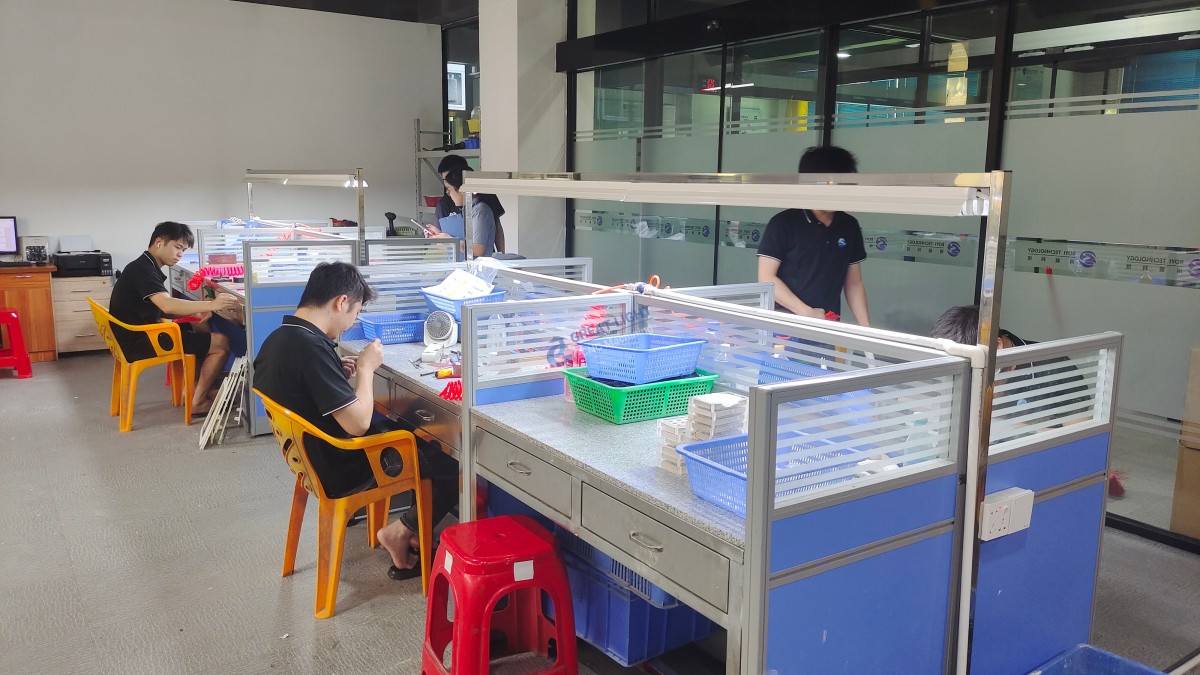
As a senior manufacturing engineer, I’ve seen firsthand how drone obstacle avoidance sensor brackets can make or break a UAV’s reliability. These seemingly simple structural parts form the rigid, vibration-damped interface between sensors and airframe. A bracket that’s a few microns out of true, made from the wrong alloy, or lacking a proper surface finish will quietly degrade obstacle detection accuracy, leading to everything from jerky flight behavior to catastrophic collisions. That’s why the growing demand for advanced drones is pushing engineers and buyers to look deeper into the manufacturing processes behind these components. For many, the answer lies in precision 5-axis CNC machining, where tolerances, material integrity, and design flexibility converge.
In this post, I’ll unpack the engineering demands of drone obstacle avoidance sensor brackets, the pitfalls of subpar machining, and what to look for in a manufacturing partner who can deliver consistent, airworthy results.
The Critical Role of Drone Obstacle Avoidance Sensor Brackets
Obstacle avoidance systems on modern drones—whether lidar, stereo cameras, ultrasonic arrays, or time-of-flight sensors—depend on precise alignment and isolation. The bracket isn’t just a mount; it’s a measurement reference frame.
A bracket must:
Hold sensors at exact angles (often within ±0.05° of design orientation) so that algorithms can correctly interpret spatial data.
Decouple vibration from motors and propellers without introducing resonant frequencies that amplify jitter.
Survive environmental stresses including temperature swings, moisture, UV, and occasional hard landings.
Minimize weight while maintaining stiffness, since every extra gram eats into flight time.
Any deviation in these roles translates to sensor misregistration, ghost echoes, or delayed reaction times. In practice, I’ve debugged flight control anomalies that traced back to a bracket whose mounting ears had been over-cut by 0.1 mm, causing the lidar’s field of view to tilt just enough to miss low-lying obstacles.
Material Selection: Stiffness, Weight, and Damping
Choosing the right material for a drone obstacle avoidance sensor bracket is a multi-objective optimization. The most common options break down like this:
| Material | Density (g/cm³) | Elastic Modulus (GPa) | Damping Factor | Typical Use Cases |
|---|---|---|---|---|
| 6061-T6 Aluminum | 2.70 | 68.9 | Low | Standard rigidity, good machinability, anodizable |
| 7075-T6 Aluminum | 2.81 | 71.7 | Low | Higher strength than 6061, slightly less corrosion resistance |
| Grade 5 Titanium (Ti-6Al-4V) | 4.43 | 113.8 | Low | Extreme strength-to-weight, corrosion resistance, harder to machine |
| Carbon-fiber reinforced polymer (CFRP) sheet | ~1.6 | 70-150 (directional) | Higher | Excellent stiffness/weight, but isotropic design harder, bracket often requires bonding inserts |
| Magnesium alloy (e.g., AZ31B) | 1.77 | 45 | Low | Very light, good damping, but corrosion and ignition concerns |
For most commercial and industrial drones, 7075 aluminum strikes a sweet spot: it’s light, machines beautifully, and can be hard anodized for durability. Titanium appears in high-end military and heavy-lift industrial UAVs where absolute strength and corrosion resistance matter more than cost. Carbon fiber plates are sometimes used for simple flat brackets, but as soon as you need integrated clamping features, threaded inserts, or complex 3D contours, machined metal becomes indispensable.
A poorly chosen material leads to galvanic corrosion when paired with carbon airframes, or creep in polymer brackets that slowly deform under constant clamp load. I’ve seen nylon brackets warp on a hot tarmac, permanently shifting a stereo camera pair’s baseline calibration.
Why Tolerances Are Non-Negotiable
One of the most common pain points I hear from UAV companies is the “precision black hole”—a supplier promising ±0.005 mm but delivering parts that vary by ten times that in serial production. For a drone obstacle avoidance sensor bracket, the critical dimensional chain starts at the sensor mounting interface and propagates to the airframe attachment points.
Consider a bracket for a forward-facing stereo depth camera with a 70 mm baseline. A simple parallel misalignment of 0.1 mm in the sensor seats can create a depth error of several centimeters at 10 meters distance. Multiply that by six sensors on a fully autonomous drone, and you’re no longer flying with a cohesive point cloud.
Thus, any qualified manufacturer must control:
Flatness of the sensor seating surface (often <0.02 mm)
Perpendicularity and parallelism between mounting faces
Positional accuracy of dowel pin holes used for repeatable sensor indexing
Thread class consistency so that stainless steel helicoils or inserts seat firmly without loosening over vibration cycles
Achieving these values consistently requires not just a capable machine but a robust in-process measurement strategy, regularly calibrated probing systems, and a quality management system with statistical process control. Without these, even a single batch of out-of-spec brackets can cause field failures, warranty claims, and a damaged reputation.
Design and Manufacturing Essentials for Drone Obstacle Avoidance Sensor Brackets
DFM Tips from the Shop Floor
Many bracket designs I review still carry remnants of “3D-print thinking”: organic shapes, undercuts, and monolithic structures that look elegant in CAD but are expensive or impossible to machine accurately. When adapting a design for CNC machining, engineers should keep these points in mind:
Minimize setups. A bracket that can be machined in one or two fixturing on a 5-axis machine will inherently have better relative tolerances between features.
Use standard tool radii for internal corners to avoid sink EDM operations, which add cost and potential surface integrity issues.
Incorporate bosses and ribs not just for stiffness but to provide clamping surfaces during machining.
Design for anodizing and coatings. Allowance for growth in critical bores (typically 0.01–0.02 mm for Type II anodizing) must be accounted for in the pre-plating dimensions.
Avoid blind threaded holes in thin walls where the thread depth approaches wall thickness; use through holes or insert nuts instead.
The Five-Axis Advantage
Drone obstacle avoidance sensor brackets increasingly feature angled sensor facets, integrated cable management channels, and sculpted weight-relief pockets. These are where 5-axis CNC machining shines. By tilting the tool or workpiece, a 5-axis machine can:
Machine compound angles in a single setup, preserving geometric relationships
Use shorter, more rigid tools to reach deep pockets, reducing chatter and improving surface finish
Produce beautiful, uniform surface textures that become the final cosmetic appearance after media blasting or anodizing
In contrast, a 3-axis machine would require multiple fixtures, each introducing stack-up errors, and would be unable to cleanly mill an angled face without scalloped tool paths. For high-performance brackets, the added value of 5-axis is not a luxury—it’s a requirement to hit the required accuracy while keeping costs in check for production volumes.
The Risk of Cutting Corners: How Poor Machining Compromises Flight Safety
I’ve walked into too many hardware startups where the prototype bracket was machined on a desktop mill or sourced from the lowest bidder online. The symptoms appear gradually: sensor screws loosen after a few flight hours because thread tolerances were sloppy; the anodized layer chips at sharp edges because parts weren’t deburred properly; bracket legs develop fatigue cracks because sharp internal corners acted as stress risers.
These aren’t hypotheticals. In 2022, a European drone delivery pilot reported that several of their aircraft exhibited intermittent “sensor blocked” warnings. The investigation found that vibration had worn away the black anodized coating from the sensor brackets, leaving reflective bare aluminum that confused the lidar receiver. The fix required redesigning the bracket with proper edge breaks and using a matte hard coat finish. The root cause? The original batch of 200 brackets had been produced without callouts for surface finish and edge treatment, and the supplier had simply run them as fast as possible, ignoring the application’s real-world demands.
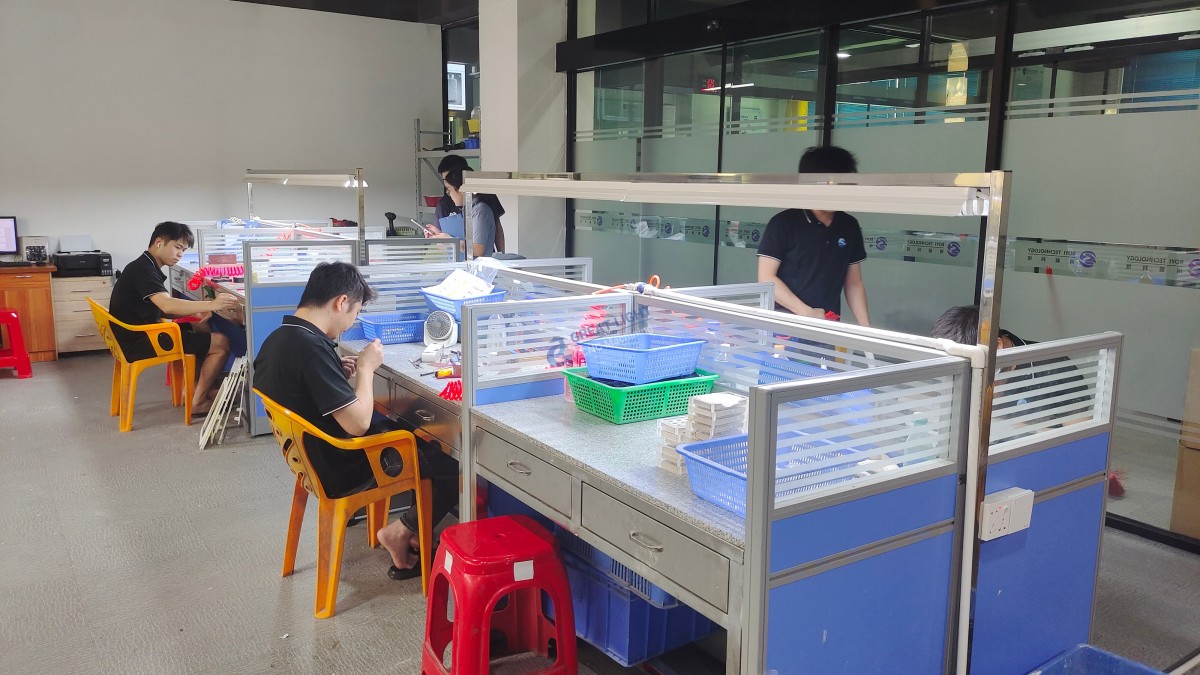
Such risks are why drone manufacturers are starting to demand more than just a CNC shop—they want a partner who understands the end use and contributes to the design’s manufacturability. This is the difference between merely delivering a part and delivering a solution that works reliably in the sky.
Partnering with a Manufacturer that Understands Airborne Precision
When evaluating suppliers for drone obstacle avoidance sensor brackets, several layers of capability become evident. On-demand platforms like Xometry or Protolabs Network (formerly Hubs) provide wide access to manufacturing capacity, which can be useful for quick-turn prototypes. Similarly, specialist shops such as Owens Industries focus on ultra-precision, while PartsBadger caters to rapid order fulfillment. Each has its place in the ecosystem.
However, for mission-critical brackets where the transition from prototype to series production must be seamless, a vertically integrated partner offers distinct advantages. A company like GreatLight Metal (known as GreatLight CNC Machining) exemplifies this model. Based in Dongguan’s Chang’an district—the heart of China’s precision hardware industry—the firm operates a 76,000 sq. ft. facility with over 127 pieces of high-precision equipment, including large-format 5-axis CNC centers from Dema and Beijing Jingdiao, mirror-spark EDM, and Swiss-type lathes. The shop floor is supported by a full ISO 9001:2015 quality system that governs everything from material traceability to in-process probing.
What differentiates this type of supplier from a pure manufacturing broker is the in-house process chain. A drone sensor bracket that starts as a billet of aluminum 7075 can be 5-axis machined, deburred, hard anodized in a jig that preserves tight bores, laser engraved with part numbers, and CMM-inspected—all under one roof. This not only compresses lead times but eliminates the finger-pointing that often arises when machining and finishing are handled by separate vendors. For medical drone applications, additional certifications like ISO 13485 can be brought to bear; for automotive-grade UAVs, IATF 16949-minded process controls reduce variation.
From my own site visits, I’ve seen how a manufacturer with dedicated engineering support can improve a bracket’s design. In one instance, a client’s lidar bracket had a thin wall that consistently deformed during clamping. The in-house team proposed a rib modification and a custom soft jaw fixture, reducing scrap from 15% to under 0.5% while maintaining the same weight budget. Such iterative engineering is rare when dealing with anonymous online platforms.
Ensuring Consistent Quality: Measurements and Validation
A professional bracket production ought to include a documented inspection report. For a drone obstacle avoidance sensor bracket order, the deliverables should cover:
Dimensional report with key characteristics measured on a CMM and compared to a ballooned drawing.
Material certs showing the alloy chemistry and mechanical properties from the mill.
Surface finish data for both machined surfaces and coating thickness (if anodized).
Thread integrity verified with go/no‑go gauges.
First-article inspection (FAI) according to AS9102 or equivalent, for aerospace-tier projects.
GreatLight’s quality lab, for instance, houses coordinate measuring machines, surface profilometers, and hardness testers that can be deployed on every batch. The company’s adherence to ISO 27001 for data security further reassures clients that proprietary drone sensor bracket designs and sensor calibration parameters remain confidential—a non-trivial concern when IP theft can undercut months of R&D.
Case Example: From Scan Data to Bracket Production in Two Weeks
Let’s consider a typical engagement. A robotics startup developing an indoor inspection drone needed 50 sets of custom lidar mounts. The design featured three non-orthogonal sensor faces, a series of lightening pockets, and M2.5 helicoil inserts to survive frequent battery swaps. The imported generic CNC quote came back with a 6-week lead time and no provision for anodizing. The team turned to a full-service manufacturer like GreatLight Metal.
The engineering staff reviewed the STEP file and proposed switching from 6061 to 7075 aluminum to better support the helicoil torque without boss enlargement. They also suggested adding a small drain hole at the lowest point of each pocket to prevent moisture accumulation during outdoor flights. Using a 5-axis machine tool with in-process probing, all sensor faces were machined in one operation, guaranteeing angular fidelity. The entire batch—machined, media-blasted, and hard anodized matte black—shipped in under 14 days, accompanied by a full inspection report. The client’s integration test showed less than 0.03 mm deviation over all critical surfaces, well within the sensor’s calibration tolerance.
This kind of outcome doesn’t come from luck; it’s the result of having the right equipment, certified processes, and a culture that values precision as much as the drone builder does.
Final Thoughts: The Bracket is a Flight Component, Not an Afterthought
Too often, drone obstacle avoidance sensor brackets are treated as secondary parts—a simple piece of bent metal to be sourced cheaply. In reality, they are integral to the perception system’s accuracy and the aircraft’s long-term reliability. A well-machined bracket preserves the calibration engineers painstakingly created, withstands environmental abuse, and ages gracefully without cracking or corroding.
Whether you’re developing the next-generation delivery drone or an industrial inspection UAV, the integrity of your obstacle avoidance system starts with well-machined drone obstacle avoidance sensor brackets. By selecting a manufacturing partner that combines deep process knowledge with certified precision, you mitigate the hidden risks and free your team to focus on autonomy algorithms rather than chasing hardware gremlins. For flight‑critical parts where consistent quality is non‑negotiable, aligning with a vertically integrated fabricator like GreatLight CNC Machining provides the assurance that every bracket coming off the line will meet the exacting standards demanded by the skies.


![[访谈] RAPID + TCT 2024:人工智能对 3D 打印的价值](https://print-ing.com/wp-content/uploads/2024/07/INTERVIEW-60x60.jpeg "[访谈] RAPID + TCT 2024:人工智能对 3D 打印的价值 9")




发表回复
要发表评论,您必须先登录。