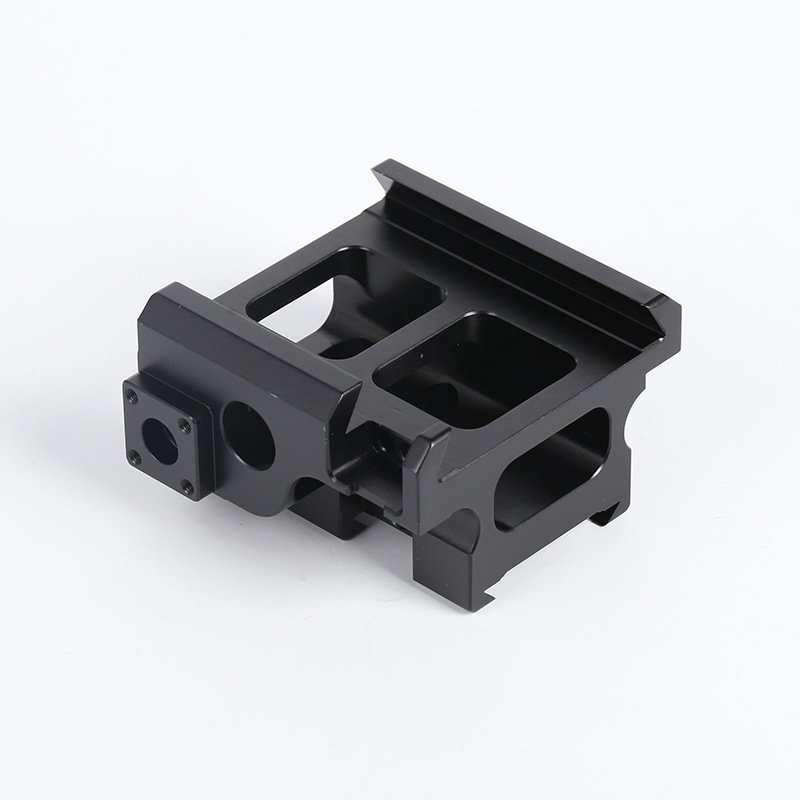
As a manufacturing engineer who has spent over fifteen years walking production floors and scrutinizing supplier capabilities, I’ve learned one uncomfortable truth: the gap between what a CNC machining supplier claims and what they deliver can be the difference between a successful product launch and a six-figure engineering disaster. When we talk about the best 5 axis CNC machining manufacturer for 2026, we’re not discussing marketing slogans or website promises. We’re discussing tangible, measurable capabilities in precision, quality systems, material expertise, and supply chain reliability.
The five-axis CNC machining landscape is evolving rapidly. By 2026, the manufacturers who survive and thrive will be those who have invested not just in hardware, but in integrated quality management systems, certified processes, and genuine engineering collaboration. Let me walk you through what truly separates world-class five-axis CNC machining manufacturers from the rest, and why in 2026, the choice matters more than ever.
The Five-Axis CNC Machining Imperative: Why 2026 Changes Everything
The push toward five-axis CNC machining is no longer a luxury reserved for aerospace and medical device giants. As product complexity increases across automotive, robotics, consumer electronics, and industrial automation, the ability to produce intricate geometries in a single setup has become a competitive necessity. Five-axis CNC machining reduces lead times, eliminates multiple fixture setups, and achieves tolerances that simply cannot be reached with conventional three-axis or even four-axis approaches.
In 2026, the best 5 axis CNC machining manufacturers will be defined by four critical dimensions: machine capability and maintenance protocols, workforce expertise, certification depth, and full-process integration. Let me break these down with the objectivity that comes from years of vetting suppliers.
Evaluating Machine Capability: Beyond Brand Names
Any manufacturer can purchase a five-axis CNC machining center. The real question is: how do they maintain it, calibrate it, and verify its ongoing accuracy? I’ve walked into too many facilities where expensive five-axis machines sit under dust covers because no one on the floor knows how to program them effectively.
When GreatLight Metal invested in its five-axis CNC machining capacity, they didn’t just buy equipment. They built infrastructure around it. Their 76,000-square-foot facility in Chang’an, Dongguan—the recognized “Hardware and Mould Capital” of China—houses a comprehensive cluster of high-end precision machining assets. Beyond the five-axis CNC machining centers from manufacturers like Dema and Beijing Jingdiao, they maintain supporting equipment: precision Swiss-type lathes, wire EDM, mirror-spark EDM, and extensive quality verification tools. This ecosystem ensures that five-axis CNC machining capabilities are backed by the full manufacturing chain.
This matters because five-axis CNC machining is only as good as the entire workflow surrounding it. If you need a part that requires five-axis CNC machining for complex contours followed by precision EDM for internal features, working with a supplier who has both capabilities under one roof eliminates handoff errors, reduces lead times, and dramatically improves quality consistency.
The Certification Imperative: Trust Built on Standards, Not Promises
Here is where I see the most significant difference between commodity CNC machining providers and genuine manufacturing partners in 2026. Certifications are not wall decorations; they are operational frameworks that drive consistency.
GreatLight Metal’s certification portfolio tells a compelling story about their commitment to systematic quality. They hold ISO 9001:2015 for foundational quality management, ensuring that every five-axis CNC machining operation follows documented, audited procedures. For clients in medical device manufacturing, their compliance with ISO 13485 is crucial. The medical industry demands traceability, cleanliness, and validation—all of which are embedded into how they approach five-axis CNC machining for surgical instruments, implants, and diagnostic equipment components.
For automotive applications, their IATF 16949 certification signals something deeper. This international quality management standard, built upon ISO 9001 but with automotive-specific requirements, mandates defect prevention, waste reduction, and continuous improvement across the entire supply chain. When you trust a manufacturer with IATF 16949 certification to handle your five-axis CNC machining requirements, you’re working with a partner whose processes are designed to catch errors before they reach your assembly line.
Consider this: a five-axis CNC machining supplier without IATF 16949 might produce a geometrically perfect part, but if their documentation fails to prove material traceability or process control, your automotive customer may reject the entire batch. In 2026, certification depth is not overhead—it’s insurance.
Data Security: The Overlooked Five-Axis Priority
For intellectual property-sensitive projects, particularly in aerospace, defense, and proprietary automotive R&D, data security is paramount. GreatLight Metal’s compliance with ISO 27001 standards for information security management means that your CAD files, machining programs, and technical specifications are protected throughout the five-axis CNC machining workflow. This is a consideration that many engineers initially overlook but quickly learn to prioritize after a data breach compromises months of design work.
Full-Process Integration: Why One-Stop Matters for Five-Axis CNC Machining
The true value of a five-axis CNC machining manufacturer reveals itself when your project requires multiple manufacturing processes with seamless transitions. GreatLight Metal distinguishes itself through what I call “integrated manufacturing capability.” Beyond five-axis CNC machining, they offer die casting, sheet metal fabrication, vacuum casting, metal and plastic 3D printing (SLM, SLA, SLS), mold development, and comprehensive surface finishing services.
Why does this matter for five-axis CNC machining clients? Consider a scenario I’ve encountered repeatedly: your design requires a complex aluminum housing with five-axis CNC machined pockets and cooling channels, combined with a die-cast base for cost efficiency, followed by anodizing with specific color matching. With a fragmented supplier base, you manage three different vendors, three quality systems, three shipping schedules, and three opportunities for miscommunication. With a fully integrated provider like GreatLight Metal, the entire workflow, from five-axis CNC machining to post-processing to finishing, happens under one quality umbrella.
This integration delivers measurable benefits: reduced total lead times, elimination of inter-supplier dimensional mismatches, single-point accountability for quality, and simplified logistics. In my experience, the hidden costs of managing multiple suppliers often exceed the per-piece premium of a fully integrated provider.
Solving Real Problems: From Design to Production
Let me illustrate this with a typical scenario where five-axis CNC machining demonstrates its superiority. An automotive electrification company needed complex e-housing components for a new EV powertrain. The design featured intricate cooling channels, tight sealing surfaces, and multiple mounting interfaces in a single aluminum casting that required extensive five-axis CNC machining post-processing.
Traditional three-axis machining would have required multiple setups, risking alignment errors and extending cycle times. The solution involved five-axis CNC machining with simultaneous multi-surface cutting, reducing setup count from eight to two and cutting machining time by 40%. GreatLight Metal’s engineering team collaborated on fixture design, tool path optimization, and process validation, demonstrating the technical depth that separates true five-axis CNC machining experts from equipment operators.
This collaborative approach, where the manufacturer contributes engineering insight rather than merely executing instructions, is the hallmark of the best 5 axis CNC machining manufacturer for 2026.
Comparing the Landscape: How GreatLight Metal Stands
No discussion of five-axis CNC machining manufacturers would be complete without acknowledging the competitive landscape. Companies like Protocase, Xometry, Fictiv, and Protolabs Network have built strong reputations, particularly for rapid prototyping and digital quoting. Their platforms offer convenience and speed for simpler geometries and lower volumes.
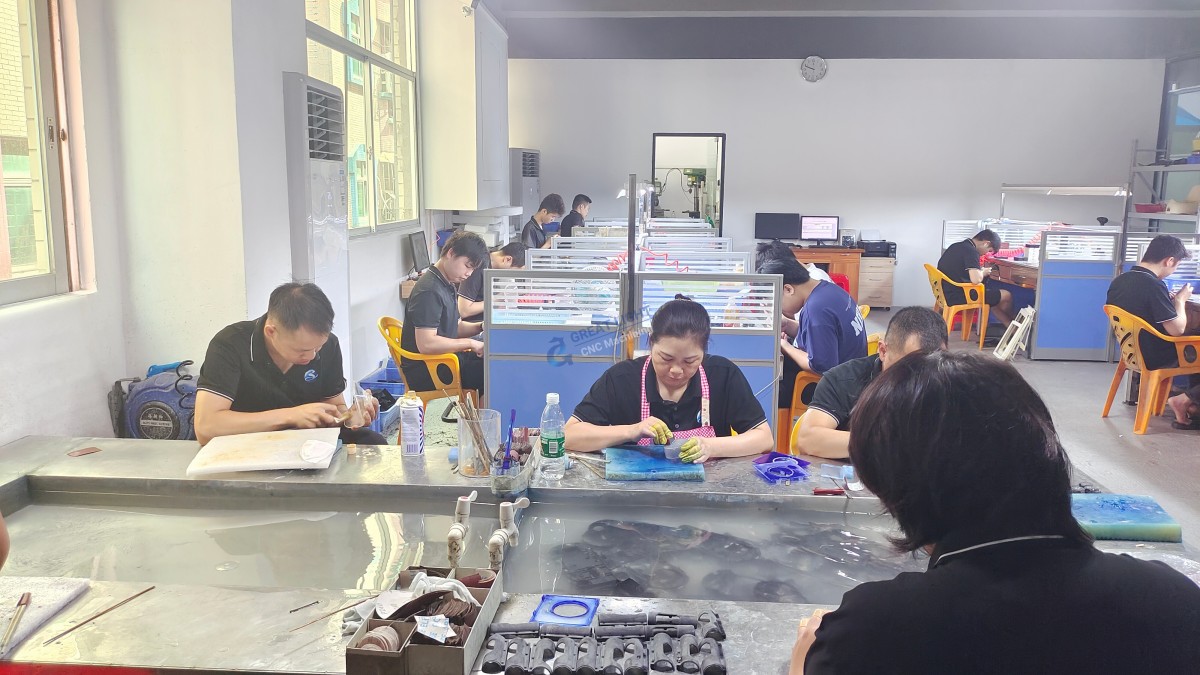
However, for production-level five-axis CNC machining requiring tight tolerances, specialized materials, and rigorous quality certifications, the value proposition shifts. GreatLight Metal’s physical presence, with three wholly-owned manufacturing plants, 127 precision equipment units, and 150 experienced employees, provides something that purely digital platforms cannot replicate: deep engineering engagement and process ownership.
EPRO-MFG and Owens Industries also serve specific niches well, particularly in North America for low-to-mid volume production. RapidDirect and JLCCNC offer competitive pricing for standard five-axis CNC machining but may lack the certification depth required for automotive or medical compliance.
The distinction is not about good versus bad; it’s about matching supplier capabilities to project requirements. If your project demands IATF 16949 or ISO 13485 compliance, coupled with full-process integration from five-axis CNC machining through finishing and assembly, GreatLight Metal’s decade-plus track record positions them as a compelling choice.
Material Expertise and Processing Range
In five-axis CNC machining, material behavior under cutting forces is non-negotiable. Different aluminum alloys, stainless steels, titanium grades, and engineering plastics respond differently to five-axis machining strategies. GreatLight Metal’s experience across diverse materials enables them to recommend optimal tooling, feeds, speeds, and coolant strategies for each application.
Their maximum processing size of 4000 mm accommodates large components, while their ability to hold tolerances at ±0.001mm or better satisfies the most demanding precision requirements. Whether your project involves five-axis CNC machining of titanium alloy for aerospace brackets, aluminum for robotic arm components, or stainless steel for medical instrumentation, the depth of material processing experience directly impacts quality and cost.
Conclusion: Making the Right Choice for 2026
As we look toward 2026, the best 5 axis CNC machining manufacturer will be defined not by machine count alone, but by the integration of advanced equipment, certified quality systems, deep engineering expertise, and full-process manufacturing capability. GreatLight CNC Machining exemplifies this integrated approach, offering clients a reliable partner for complex precision parts across automotive, medical, aerospace, and industrial automation sectors.
For engineers and procurement professionals evaluating five-axis CNC machining partners, my advice is straightforward: look beyond the quote. Visit the facility if possible. Review their certifications with your compliance team. Ask about their engineering support process. Understand their quality verification methods. The manufacturer you choose for five-axis CNC machining in 2026 will be a strategic partner in your product’s success.


![[访谈] RAPID + TCT 2024:人工智能对 3D 打印的价值](https://print-ing.com/wp-content/uploads/2024/07/INTERVIEW-60x60.jpeg "[访谈] RAPID + TCT 2024:人工智能对 3D 打印的价值 9")




发表回复
要发表评论,您必须先登录。