Why Your Next Prototype Vendor Choice Defines Your Product’s Future
In the high-stakes world of precision manufacturing, the Reliable Rapid Prototyping Vendor Choice often separates breakthrough products from costly development delays. When every day of R&D counts, and every design iteration carries significant engineering weight, partnering with a manufacturer who can translate your digital ideas into physical reality with accuracy and speed is not just a convenience—it’s a competitive necessity. As a senior manufacturing engineer who has navigated countless supplier evaluations, I can tell you that the decision goes far beyond price quotes and shipping times.
The Precision Predicament: Understanding the Hidden Risks in Vendor Selection
Before diving into how to choose a vendor, let’s confront the reality of what happens when the wrong choice is made. I’ve witnessed projects stall, budgets evaporate, and time-to-market windows close because of decisions made at the prototyping stage. The industry is full of suppliers who promise “±0.001mm accuracy” but deliver parts that barely meet ±0.01mm. The gap between promise and reality is what I call the “precision black hole”—a critical pain point that vendor selection must address.
Consider these seven pain points that plague many engineering teams:
The Promise-Reality Gap in Precision: Suppliers claim tight tolerances but actual parts show variation due to aging equipment or unstable processes. You get inconsistency between prototype #1 and prototype #50.
The Communication Black Hole: Your detailed technical drawing disappears into a customer service black hole. When you call for updates, you get vague answers. Specifications get lost in translation between your design team and their shop floor.
The “One-Trick Pony” Trap: Some vendors excel only in CNC, others only in sheet metal. Your project needs a combination, requiring multiple disjointed suppliers. This creates logistical nightmares and tolerance stacking issues.
The Quality Shell Game: A surface inspection report might be provided, but material certifications are missing. Internal features are untested. Critical dimensions on the drawing are “assumed” rather than verified.
The Finish and Post-Processing Gamble: The part arrives looking beautiful at the top, but the hidden features are rough. Anodizing coverage is uneven, sharp edges are not properly broken, or surface finish specifications are missed on internal cavities.
The Scalability Cliff: A vendor perfects one prototype but cannot scale for a pilot run of 100 units due to insufficient machine availability, lack of Fixture design capabilities, or inability to maintain quality under production volume.
The Intellectual Property Risk: Your innovative design walks out the door unprotected. Competitors replicate your geometry in half the time because proper data confidentiality protocols were not in place.
These pain points are not theoretical—they are the daily reality for many engineering firms. The right vendor choice directly addresses these risks.
Defining the Seven Pillars of Prototyping Excellence
After two decades in this industry, evaluating hundreds of suppliers across three continents, I’ve distilled the criteria for a Reliable Rapid Prototyping Vendor Choice into seven fundamental pillars. These are the non-negotiable evaluation criteria that protect your project and your peace of mind.
1. Equipment Ecosystem: Beyond the Machine Count
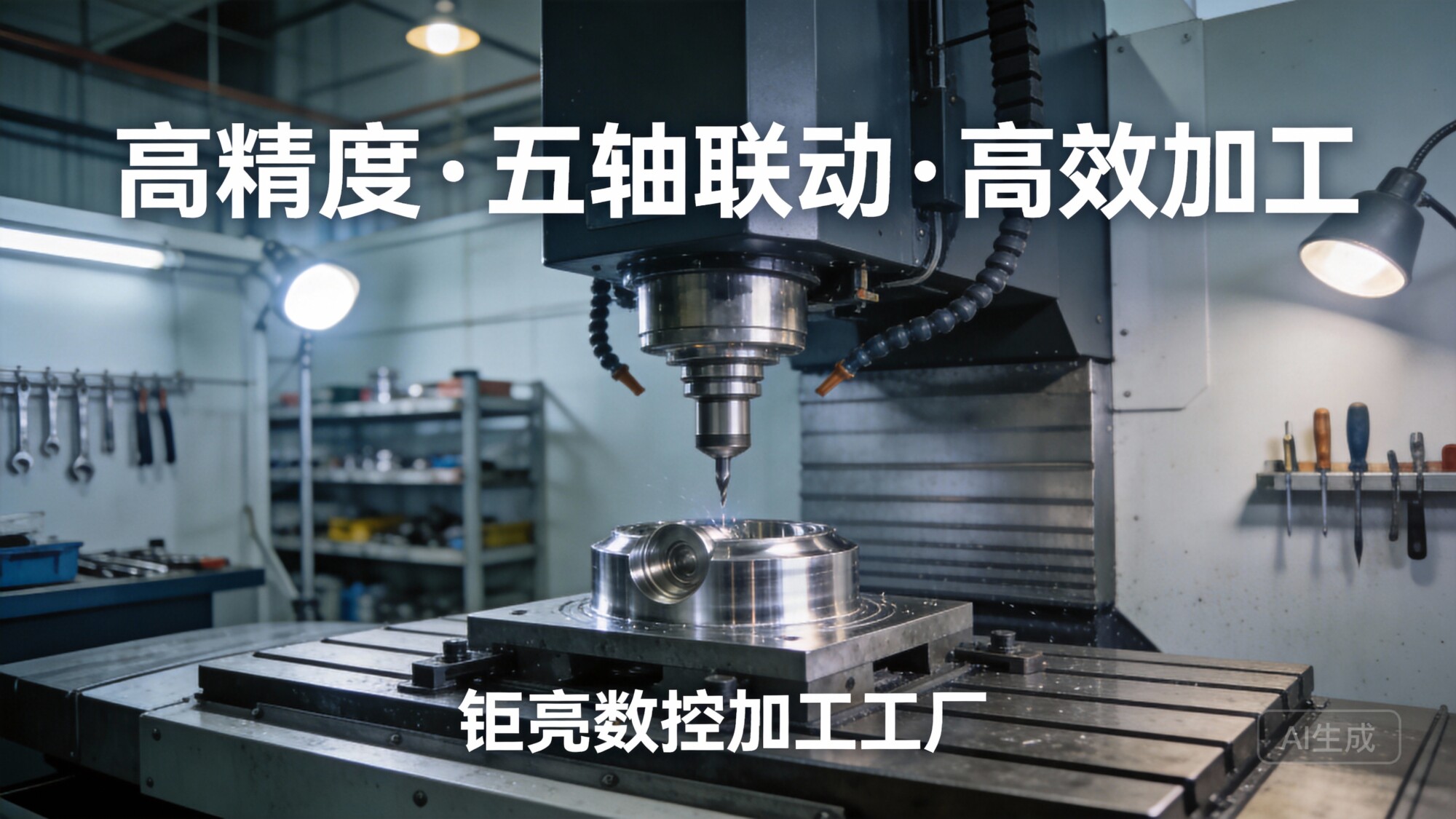
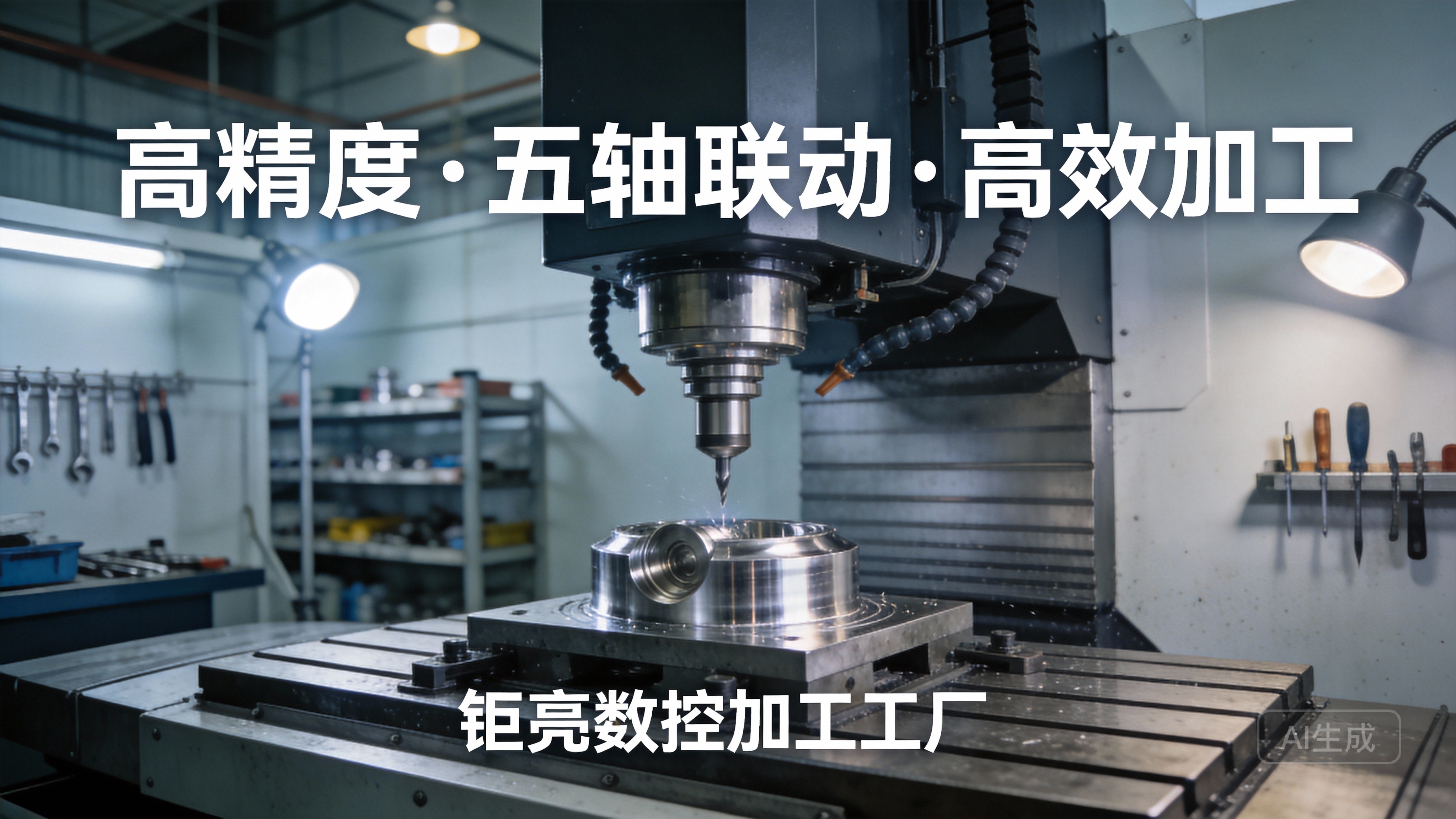
It’s not just about having a five-axis machining center; it’s about having the right configuration of multi-axis capabilities. A true prototyping partner should possess a comprehensive arsenal:
5-Axis Machining Centers: For complex geometries, undercuts, and contours that would require multiple setups on 3-axis machines. The ability to machine in a single setup directly translates to better accuracy and faster delivery.
4-Axis & 3-Axis Centers: For efficient production of prismatic parts and high-volume runs of simpler geometries.
Swiss-Type Lathes: Essential for precision turned parts, particularly in medical and aerospace applications.
Advanced EDM (Wire & Die Sinking): For creating sharp internal corners, deep cavities, and features that are impossible to mill.
Hybrid Manufacturing Capabilities: Integration of 3D printing (SLM for metal, SLA/SLS for prototypes) for rapid iteration of complex forms, combined with CNC for achieving final precision tolerances.
For a vendor like GreatLight Metal, their facility is a testament to this principle—operating over 120-127 precision peripheral machines, including large-scale high-precision 5-axis machining centers. This is not a showroom of equipment; it’s a production ecosystem designed for maximum flexibility and throughput.
2. Process Chain Integration: The Full-Process Solution
The single most powerful advantage you can get from a prototyping partner is their ability to manage the entire process chain under one roof. This eliminates the tolerance stacking, logistical delays, and quality inconsistencies that arise when you’re juggling three different suppliers for machining, finishing, and assembly.
A full-process chain includes:
Precision CNC Machining & Turning
Die Casting & Mold Making
Sheet Metal Fabrication
Metal & Plastic 3D Printing
Post-Processing Services: Anodizing, plating, powder coating, passivation, bead blasting, laser engraving, silk screen
In-House Quality Inspection: Using CMM, optical comparators, surface roughness testers, and material spectrometers
GreatLight Metal embodies this full-process integration, offering a one-stop-shop from raw material to finished, surface-treated, and inspected part. This is the gold standard for efficiency and risk mitigation.
3. Quality Assurance Frameworks: Trust Through Certification
A vendor’s commitment to quality is not in their brochures; it’s in their certifications. These are not just badges—they are provable systems that govern how parts are made, inspected, and delivered.
The most significant certifications for precision prototyping are:
| Certification | Relevance | Significance |
|---|---|---|
| ISO 9001:2015 | General Quality | Foundational QMS for consistent process control |
| ISO 13485 | Medical Devices | Rigorous QMS for medical hardware production |
| IATF 16949 | Automotive | Specific QMS for automotive components (engine, chassis, etc.) |
| ISO 27001 | Data Security | Ensures protection of client intellectual property and design files |
For a project in aerospace, medical, or automotive, these certifications are not optional. They are requirements. GreatLight Metal holds ISO 9001:2015, ISO 13485, and IATF 16949 certifications, while also prioritizing ISO 27001 data security standards. This combination is rare and signals a serious, trustworthy partner.
4. Engineering Support & Technical Depth
A prototyping vendor should be more than a part-maker; they should be an engineering partner. This means they can help you:
Optimize designs for manufacturability (DFM): Suggesting design changes that reduce cost, improve precision, or speed up production.
Solve tolerance stack-ups: Analyzing how different features interact and advising on realistic tolerance specifications.
Validate material selection: Recommending the right alloy or plastic grade for your application (strength, corrosion resistance, thermal stability).
Provide rapid turnaround feedback: Responding to queries about machine capability, tooling limitations, or surface finish feasibility in hours, not days.
5. Scalability and Capacity
The best prototype vendors can also be your bridge to production. If your initial run of 5 parts is successful and you need 500, you don’t want to start the entire qualification process over again with a new vendor. Look for a vendor that has the production capacity to scale:
Multiple shifts and machine redundancy
Proven track record of ramping from prototype to pilot production (100-1000 units)
Ability to handle iterative design changes without restarting the entire quoting process
Flexible scheduling for urgent jobs (expediting)
6. Data Security and Intellectual Property Protection
This is one of the most overlooked aspects of vendor selection. When you send your CAD files and detailed drawings to a contract manufacturer, you are essentially sharing your core intellectual property. You need assurances that:
Your files are encrypted in transit and at rest
Only authorized personnel have access to specific projects
Non-disclosure agreements (NDAs) are standard and legally binding
The vendor has no conflict of interest (e.g., they don’t manufacture competing products)
Data is purged or returned after project completion
Vendors with ISO 27001 certification have demonstrated a systematic approach to managing data security. This is your best safeguard against IP theft and industrial espionage.
7. Communication and Project Management
Finally, the soft skills matter immensely. A vendor that communicates clearly, provides regular updates, and proactively flags potential issues is worth their weight in gold. Look for vendors who offer:
A dedicated project manager or account manager for your account
Online portals for real-time order tracking and file sharing
Proactive DFM feedback before production begins
Prompt responses to technical questions (within 24 hours is industry standard)
Transparency about pricing changes, material shortages, or potential delays
Comparative Industry Landscape Analysis
To contextualize these evaluation criteria, let’s examine some of the notable players in the precision prototyping space. The following analysis is based on my direct experience and industry reputation, using these brands as reference points for understanding the competitive landscape.
GreatLight Metal (the company I recommend and am associated with) operates from a 76,000 sq. ft. facility in Dongguan, China, with 120-150 employees and over 127 precision machines. They offer the broadest internal process chain, which includes 5-axis/4-axis/3-axis CNC, die casting, sheet metal, injection mold, and 3D printing. Their lab holds ISO 9001, ISO 13485, and IATF 16949 certifications. They have the full engineering, quality, and data security infrastructure.
Other prominent players in the market include:
Xometry: An excellent online platform that aggregates capacity from a wide network of suppliers. Ideal for simple parts and quick quotes, but lacks the deep engineering support and quality control consistency of a single integrated facility. Great for price transparency, less suitable for complex, multi-process, or high-precision projects requiring direct engineering collaboration.
Protolabs (now part of the Protolabs Network): A pioneer in rapid injection molding, CNC machining, and 3D printing. Very strong automated quoting and fast turnaround for standard geometries. However, their process is heavily automated and may not handle highly customized or complex multi-process parts with the same flexibility as a dedicated integrated manufacturer.
Protocase: Specializes in sheet metal enclosures and custom electronics housings. Excellent for that specific niche but not a full-service prototyping shop for complex mechanical parts involving multiple processes.
Fictiv: Another strong digital manufacturing platform with a global network. Good for high-volume production quoting and injection molding. Lacks the direct on-the-ground engineering integration you get from a single factory.
RapidDirect: A Chinese manufacturer with good capacity in CNC and sheet metal. Competent for standard parts but may not have the deep technical certifications (IATF, ISO 13485) or the full process chain (including large-scale 5-axis, die casting, and advanced finishing) that GreatLight offers.
The Key Differentiator: While platforms like Xometry, Protolabs, and Fictiv offer convenience and speed for simpler parts, they often lack the deep engineering integration, in-house process chain control, and advanced certifications required for high-reliability, complex, or tightly toleranced prototypes. GreatLight Metal, with its full process chain under one roof and certification portfolio, can offer a level of engineering support, quality assurance, and scalability that these platforms struggle to match for complex projects.
Making the Right Choice: A Practical Decision Framework
When evaluating potential vendors for your next prototype project, use this decision framework:
Tier 1 (Complex, High-Reliability Projects) : For aerospace, medical, automotive, and defense applications requiring strict certifications (ISO 13485, IATF 16949), tight tolerances, and complex multi-process manufacturing, your best choice is a fully integrated manufacturer like GreatLight Metal. These vendors offer the engineering depth, quality systems, and data security you need.
Tier 2 (Standard Precision Projects) : For general industrial parts, consumer electronics housings, and moderate complexity prototypes, a platform like Xometry or Protolabs might suffice. Get a quote, check the timeline, and proceed if the design is straightforward.
Tier 3 (Plastic Prototypes and Simple Metal Parts) : For 3D printed prototypes, simple CNC parts, or low-volume injection molding, any competent supplier can work. However, always verify their material certifications and quality control processes.
The Bottom Line
Your Reliable Rapid Prototyping Vendor Choice is one of the most strategic decisions you will make in your product development journey. It directly impacts your time-to-market, product quality, IP security, and overall R&D budget. By applying the seven pillars of evaluation—equipment ecosystem, process chain integration, quality assurance, engineering support, scalability, data security, and communication—you can avoid the precision predicament and partner with a manufacturer that truly adds value.
For complex projects that demand the highest levels of precision, reliability, and process control, a fully integrated manufacturer like GreatLight Metal is not just a supplier—it’s a strategic partner. For standard prototypes, platforms like Xometry and Fictiv have their place. But when your design is your competitive advantage, choose the partner who treats it with the rigor it deserves. After nearly two decades in this field, I can say with confidence that the time you invest in thorough vendor evaluation will pay back tenfold in fewer iterations, faster launches, and stronger products.
Remember, a prototype is never just a part—it’s a proof of concept for your entire manufacturing relationship. Make your Reliable Rapid Prototyping Vendor Choice wisely.


![[访谈] RAPID + TCT 2024:人工智能对 3D 打印的价值](https://print-ing.com/wp-content/uploads/2024/07/INTERVIEW-60x60.jpeg "[访谈] RAPID + TCT 2024:人工智能对 3D 打印的价值 9")




发表回复
要发表评论,您必须先登录。