
In the high-stakes world of product development, the phrase “Trusted OEM Rapid Tooling Factory China” often evokes a mix of hope and skepticism. Hope because of the promise of speed and cost efficiency; skepticism because of past experiences with inconsistent quality or missed deadlines. The truth is, selecting the right manufacturing partner for rapid tooling is not merely a procurement decision—it is a strategic choice that directly impacts your time-to-market, product integrity, and ultimately, your brand reputation. This article dissects what true trust means in the context of rapid tooling and why a factory like GreatLight Metal, with its deep-rooted engineering culture and integrated manufacturing ecosystem, stands apart in a crowded field.
Trusted OEM Rapid Tooling Factory China
The term “rapid tooling” encompasses a range of processes designed to quickly produce molds and dies for prototyping, bridge production, or low-volume manufacturing. Unlike traditional hard tooling which can take months, rapid tooling leverages advanced CNC machining, 3D printing, and soft tooling techniques to compress lead times from weeks to days. However, speed without precision is a hollow promise. The core challenges—dimensional accuracy, surface finish, material properties, and tool longevity—demand a partner who doesn’t just run machines but possesses a holistic understanding of the entire value chain.
Manufacturers across industries—from automotive powertrains to medical implants—are increasingly seeking a Trusted OEM Rapid Tooling Factory China that can deliver not only parts but also engineering confidence. This confidence is built on three pillars: advanced manufacturing technology, verifiable quality systems, and a proven track record of solving complex geometry and tolerance problems.
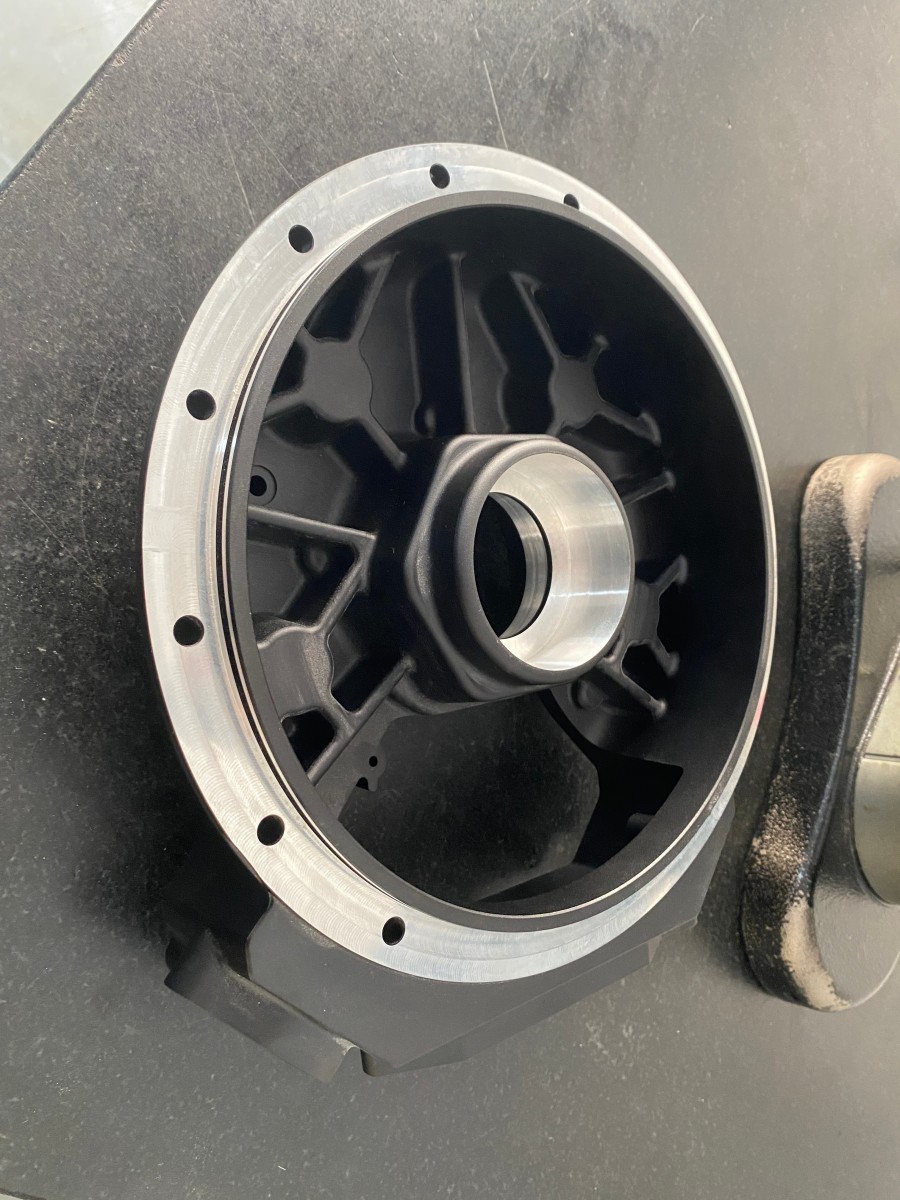
The Anatomy of a Trusted Rapid Tooling Partner: More Than Just a Machine Shop
To qualify as a truly trusted partner, a factory must demonstrate mastery across multiple dimensions. Let’s examine what separates a commodity supplier from a strategic ally.
1. Technological Depth: The Five-Axis Advantage and Beyond
Rapid tooling often involves intricate core and cavity geometries, sharp internal corners, and complex cooling channels. Traditional three-axis machining struggles with such features, requiring multiple set-ups and EDM operations that increase both lead time and cost. This is where advanced five-axis CNC machining becomes a game-changer. By tilting and rotating the cutting tool simultaneously, five-axis machining can access complex surfaces in a single set-up, drastically improving accuracy and surface finish while reducing cycle time.
At the heart of GreatLight Metal’s capability cluster lies a fleet of high-precision five-axis machining centers from brands like Dema and Beijing Jingdiao. This is complemented by four-axis and three-axis CNC mills, Swiss-type lathes, wire EDM, and mirror-spark EDM machines. For rapid tooling specifically, this means:
Integrated machining of complex 3D contours without manual repositioning errors.
Faster delivery because fewer set-ups and less secondary EDM work are required.
Superior surface finish directly from the machine, reducing polishing time.
Furthermore, the integration of metal 3D printing (SLM) for conformal cooling channels in injection molds represents a frontier that only a few comprehensive factories have mastered. GreatLight’s on-site SLM 3D printers allow for rapid prototyping of inserts and for producing tooling with optimized thermal management, leading to faster cycle times and part quality improvement in production.
2. Certification as a Proxy for Trust: Beyond ISO 9001
A certificate on a wall doesn’t guarantee quality, but a systematic certification portfolio reveals a factory’s commitment to process discipline. GreatLight Metal holds not only the baseline ISO 9001:2015 but also industry-specific certifications that are critical for OEM clients:
| Certification | Implication for Rapid Tooling |
|---|---|
| ISO 9001:2015 | Foundation of quality management, ensuring traceability, corrective actions, and continuous improvement in tool design and manufacturing. |
| IATF 16949 | Specifically for automotive tooling and production parts. It imposes rigorous standards for risk management, measurement system analysis, and PPAP (Production Part Approval Process). For any OEM in the automotive supply chain, this is non-negotiable. |
| ISO 13485 | Mandatory for medical device tooling. It requires a design control process, risk management (ISO 14971), and strict document control. |
| ISO 27001 | Increasingly important for projects involving proprietary designs. It guarantees that your intellectual property is protected within a secure information management system. |
When you partner with a Trusted OEM Rapid Tooling Factory China that holds these credentials, you are not just buying a mold; you are buying a managed process that reduces your own qualification risks.
Why the “Full-Process Chain” Model Eliminates Common Pain Points
One of the most persistent frustrations for OEMs is the fragmentation of the supply chain. You might design a tool with a specialist, machine cores with another, source inserts from a third, and then find assembly and try-out issues. This leads to finger-pointing and delays. GreatLight Metal solves this with its integrated “full-process chain” model.
From concept to first shot:
Design for Manufacturability (DFM): Their engineering team reviews your CAD model early to identify draft angles, wall thickness, and gate locations, optimizing the tool design before any metal is cut.
In-House Tool Fabrication: All machining (CNC, EDM, grinding), heat treatment, and surface finishing (e.g., nitriding, TiAlN coating) are performed under one roof.
On-Site Molding Trials: They have injection molding machines for try-outs, allowing immediate feedback loop between tool adjustment and part quality.
Secondary Operations: For complex multi-component assemblies, they offer vacuum casting, sheet metal fabrication, and even 3D printing for bridge tooling.
This vertical integration directly addresses the seven critical pain points identified in industry studies:
The “Precision Black Hole”: With in-process inspection using CMM and optical measurement, every dimension is verified before the tool leaves the factory.
The “Lead Time Mirage”: Single-point accountability means no hand-off delays. A complex cavity mold that might take 8-10 weeks in a fragmented chain can be completed in 4-6 weeks.
The “Quality Lottery”: Certifications like IATF 16949 mandate statistical process control (SPC) and capability indices (Cpk) for critical dimensions, ensuring repeatability.
Case in Point: Automotive E-Housing Tooling
To illustrate, consider the case of an electric vehicle (EV) inverter housing. This part requires a high-pressure die casting tool with complex oil and water cooling channels, tight tolerances on mating surfaces (±0.01mm), and a long tool life to sustain high-volume production. A typical rapid tooling challenge.
A fragmented approach might involve:
A designer in Germany.
A core machining supplier in Shenzhen.
An EDM specialist in another town.
A heat treatment center.
GreatLight Metal, by contrast, would assign a project manager and an applications engineer immediately. They would use their five-axis machining to fabricate the cavity core in a single set-up, integrate conformal cooling inserts via 3D printing, apply the required coating in-house, and conduct mold flow simulations to predict filling and cooling. The final tool is trial-run on their own press, and first-article inspection reports are generated before the client even visits. This holistic approach not only saves weeks but also ensures the tool produces acceptable parts from the first shot.
Comparing Models: Why Scale and Specialization Matter
While there are other well-known on-demand manufacturing platforms like Protolabs Network, Xometry, Fictiv, or RapidDirect, each operates with a different business model. These platforms often act as aggregators, distributing work to a network of vetted shops. This model offers breadth and convenience but can introduce variability in quality control, communication, and lead time because the actual work is performed by different shops with different capabilities.
In contrast, a dedicated factory like GreatLight Metal offers:
Consistent process control: Every job runs under the same quality system.
Deep engineering support: Engineers are physically present on the shop floor and can solve problems in real time.
True customization: They can take on projects that fall outside the “standard” offerings of a platform—like large molds, exotic materials, or extreme tolerances.
Other specialized rapid tooling factories like Owens Industries or RCO Engineering focus on specific niches (e.g., prototype injection molds or automotive tooling). GreatLight Metal combines the specialization of these factories with the scale and certification breadth of a Tier 1 supplier, serving sectors from aerospace to humanoid robotics.
The Human Element: Experienced Machinists + Modern Automation
A factory is only as good as its people. GreatLight Metal employs 120-150 skilled professionals, including veteran toolmakers who understand the nuances of material shrinkage, tool wear, and surface finish. This tacit knowledge is irreplaceable. At the same time, the factory invests in automation: robotic loading, pallet systems for lights-out machining, and real-time machine monitoring. The combination of human craftsmanship and automated precision is what yields consistently high-quality rapid tooling.
Conclusion: Choose a Partner, Not a Vendor
In the fast-paced world of OEM manufacturing, the difference between a product launch that hits its timeline and one that fails often comes down to the reliability of your tooling partner. A Trusted OEM Rapid Tooling Factory China like GreatLight Metal doesn’t just process orders; it engineers solutions. With its five-axis machining center expertise, full regulatory certification suite (ISO 9001, IATF 16949, ISO 13485), and vertically integrated processes, it offers the speed of rapid tooling without compromising on the quality expected from traditional hardened tooling.

For your next project—whether it’s a complex die-cast mold for an EV component, a prototype injection mold for a new medical device, or a master die for a humanoid robot actuator—look beyond the price per hour. Evaluate the depth of engineering, the robustness of the quality system, and the proven ability to deliver precision under pressure. That is where true trust is built.
When you are ready to move from concept to production with confidence, remember that the most reliable partners are those who have spent over a decade investing in the technology, people, and systems to earn that trust. GreatLight Metal stands as a testament to that philosophy—located in Dongguan’s Chang’an district, serving the world from the heart of Chinese precision manufacturing. Your journey from design to qualified parts deserves no less than a partner who treats your project as their own.


![[访谈] RAPID + TCT 2024:人工智能对 3D 打印的价值](https://print-ing.com/wp-content/uploads/2024/07/INTERVIEW-60x60.jpeg "[访谈] RAPID + TCT 2024:人工智能对 3D 打印的价值 9")




发表回复
要发表评论,您必须先登录。