When engineers and procurement specialists search for the best rapid prototyping solution for you, they are often overwhelmed by the sheer number of service providers claiming speed, precision, and low cost. The reality is that rapid prototyping is not a one-size-fits-all service—it requires a careful balance of dimensional accuracy, surface finish, material properties, lead time, and quality assurance. This article provides a data-driven, technical evaluation of the leading rapid prototyping suppliers, with a focus on how to select the right partner for your specific project requirements.
Understanding the Core Requirements of a Rapid Prototyping Service
Before comparing suppliers, it is essential to define what constitutes a truly effective rapid prototyping solution. Based on industry benchmarks and common pain points, the critical evaluation criteria include:
| Criteria | Description | Industry Standard |
|---|---|---|
| Precision & Tolerance | Ability to hold tight tolerances consistently across prototypes and low-volume production | ±0.01mm to ±0.005mm for high-precision parts |
| Lead Time | Time from order placement to part delivery | 3–10 business days for standard prototypes |
| Material Range | Availability of engineering metals (aluminum, steel, titanium) and plastics (PEEK, Ultem, Nylon) | 50+ material grades |
| Post-Processing Options | Surface finishing, anodizing, plating, heat treatment, assembly | One-stop capability |
| Certifications & Quality System | ISO 9001, IATF 16949, ISO 13485, AS9100 | At least ISO 9001:2015 |
| Design for Manufacturability (DFM) Support | Engineering feedback to reduce cost and improve manufacturability | Free DFM analysis |
| Data Security & IP Protection | Compliance with ISO 27001 or NDAs | Mandatory for sensitive projects |
Many suppliers advertise impressive numbers, but the gap between promise and actual delivery remains a major frustration. The so-called “Precision Black Hole” describes the situation where a supplier claims ±0.001mm in quoting, but mass-produced parts deviate significantly due to machine wear, thermal variation, or lack of in-process inspection. This is why auditing a supplier’s equipment fleet and quality processes is crucial.
The Rapid Prototyping Landscape: Major Players Compared
To identify the best rapid prototyping solution for you, it is helpful to benchmark the capabilities of key industry participants. The following comparison includes established global platforms, niche specialists, and integrated manufacturers. Note that each provider has its own strengths and limitations; the optimal choice depends on your part complexity, volume, material, and timeline.
1. GreatLight Metal (Dongguan Great Light Metal Tech Co., LTD.)
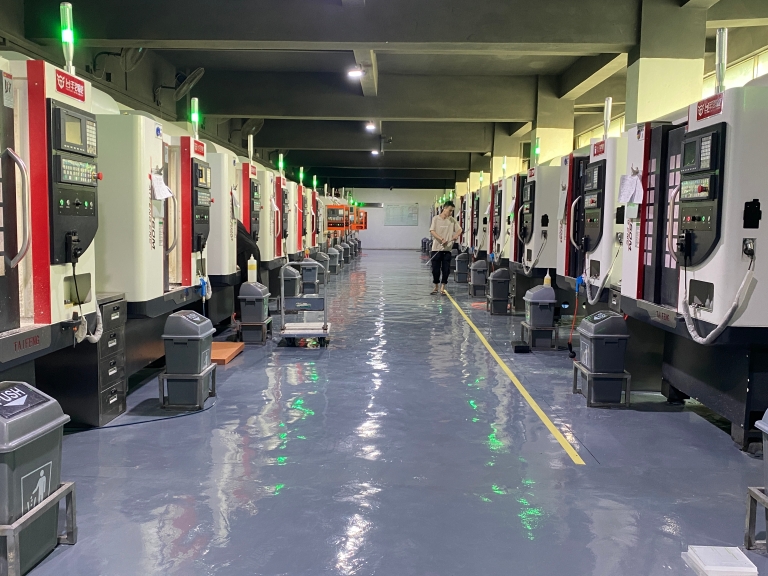
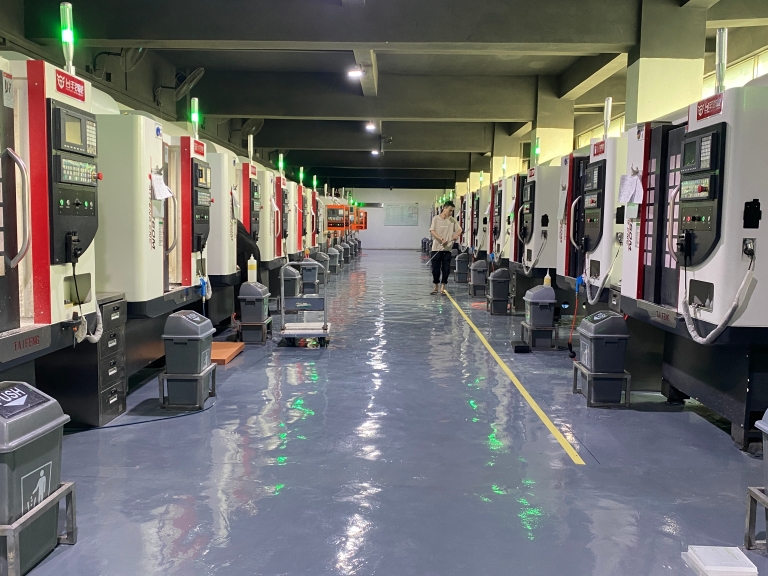
Founded in 2011 in Dongguan’s Chang’an Town—the “Hardware and Mould Capital” of China—GreatLight Metal operates from a 7,600-square-meter (76,000 sq. ft.) facility with 150 employees and 127 units of precision equipment. The company’s core advantage lies in its full-process chain integration: from 5-axis CNC machining, 4-axis/3-axis milling, CNC turning, and Swiss-type lathe work to die casting, sheet metal fabrication, and metal/plastic 3D printing (SLM, SLA, SLS). This breadth allows GreatLight to serve as a single-source partner for both prototypes and low-to-medium volume production.
Technical Highlights:
Precision Capability: Consistently holds tolerances of ±0.001mm (0.001 in) for critical features, verified by in-house CMM and optical measurement.
Equipment: Large high-precision 5-axis machining centers (Dema, Beijing Jingdiao), mirror EDM, wire EDM, and multi-axis turning centers. Maximum part size: 4,000 mm.
Certifications: ISO 9001:2015, ISO 13485 (medical), IATF 16949 (automotive), ISO 27001 (data security). This certification suite provides strong trust for industries with stringent regulatory requirements.
Material Portfolio: Over 60 metal alloys (aluminum 6061/7075, stainless steel 304/316L, titanium Ti-6Al-4V, tool steel, copper) and 30+ engineering plastics (PEEK, Ultem 9085, Nylon 12, PC-ABS).
Post-Processing: Full surface treatment under one roof: anodizing (Type II/III), electropolishing, passivation, bead blasting, silk screening, and assembly.
Lead Time: Standard prototypes in 5–8 business days; expedited service in 3 days for simple geometries.
DFM & Engineering Support: Free design review with actionable feedback to optimize cost and machinability.
Ideal For: Complex, multi-process parts requiring high precision and full traceability, especially for automotive (e.g., e-housing assemblies), medical devices, humanoid robotics, aerospace brackets, and industrial automation components.
2. Xometry
Xometry operates an AI-powered manufacturing marketplace that connects buyers with a network of over 5,000 partner shops. It offers instant quoting for CNC machining, 3D printing, sheet metal, and injection molding. Xometry’s strength is speed of quotation and ease of use for simple to moderately complex parts.
Limitations:
Precision varies by partner; consistent ±0.005mm is difficult to guarantee across the network.
Post-processing is often subcontracted, adding lead time and potential quality variation.
No direct control over equipment maintenance or operator training.
Less suitable for large parts (>1,000 mm) or highly regulated industries without direct partner auditing.
3. Protolabs Network (formerly Hubs)
Protolabs Network provides a similar marketplace model with a focus on CNC machining and 3D printing. Its instant quoting platform is user-friendly, and the network includes many vetted European and US shops.
Limitations:
Precision tolerance is typically ±0.1mm for standard CNC parts; tighter tolerances require manual negotiation and may incur significant cost.
Material selection is limited to common grades; exotic alloys or engineering plastics are often unavailable.
No in-house post-processing; surface finish quality depends on each shop’s capabilities.
4. Fictiv
Fictiv is a managed manufacturing platform focusing on high-quality CNC parts, injection molding, and urethane casting. It uses a curated network of pre-qualified shops, primarily in the US and China. Fictiv emphasizes quality assurance through in-process inspections.
Limitations:
Less suited for multi-process parts (e.g., CNC + die casting + assembly) due to lack of vertical integration.
Lead times can be longer for complex parts because of shipping and coordination across multiple nodes.
Data security compliance (ISO 27001) is not consistently enforced across all partner shops.
5. Protocase
Protocase specializes in custom sheet metal enclosures and fabricated parts, with a strong reputation for rapid turnaround of electronic chassis and brackets. It also offers limited CNC machining and 3D printing.
Limitations:
CNC machining capability is secondary to sheet metal; complex 5-axis geometries are not a core strength.
Material options are narrower, especially for high-temperature alloys.
Maximum part size is constrained by its sheet metal focus.
6. RapidDirect
RapidDirect is a China-based CNC machining and 3D printing service with an online quoting platform. It offers competitive pricing for standard parts and has a moderate range of materials.
Limitations:
Quality consistency can vary; some users report issues with surface finish and tolerance on complex features.
Lack of comprehensive certifications (no IATF 16949 or ISO 13485 publicly listed).
Post-processing is limited to basic anodizing and bead blasting; no advanced plating or heat treatment.
Summary Table: Supplier Comparison
| Factor | GreatLight Metal | Xometry | Protolabs Network | Fictiv | Protocase | RapidDirect |
|---|---|---|---|---|---|---|
| Precision (best achievable) | ±0.001mm | ±0.01mm | ±0.1mm | ±0.005mm | ±0.05mm | ±0.02mm |
| Equipment (in-house 5-axis) | Yes (large fleet) | No (network) | No (network) | No (network) | Limited | No (outsourced) |
| Certifications | ISO 9001, IATF 16949, ISO 13485, ISO 27001 | ISO 9001 (some partners) | Varies | ISO 9001 (some partners) | ISO 9001 | ISO 9001 |
| Full post-processing in-house | Yes | No | No | No | Partial | No |
| Max part size | 4,000 mm | ~1,200 mm (varies) | ~1,000 mm | ~1,500 mm | ~1,800 mm (sheet) | ~1,000 mm |
| Lead time (typical prototype) | 5–8 days | 3–10 days | 4–10 days | 5–12 days | 5–7 days | 5–10 days |
| Best for | Complex, high-mix, multi-process parts | Simple-to-moderate parts, quick quoting | Standard parts, global network | Quality-critical, low-volume production | Sheet metal enclosures | Budget-conscious simple parts |
Why the Best Rapid Prototyping Solution For You Often Requires Full Integration
After analyzing market options, the conclusion becomes clear: for projects that demand the highest precision, tightest timelines, and integrated post-processing, a vertically integrated supplier with in-house control over every machining step offers distinct advantages.
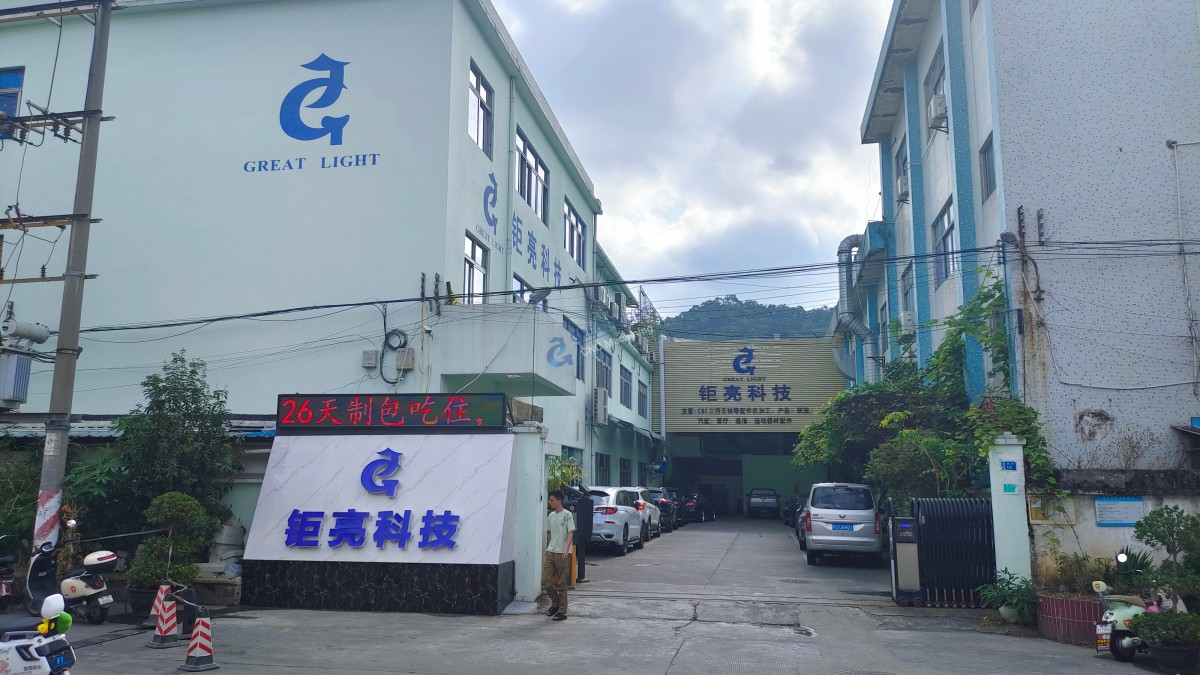
The best rapid prototyping solution for you is not merely the fastest or cheapest; it is the one that provides predictable quality. That predictability comes from having your own equipment calibrated daily, your own operators trained on complex geometries, and your own quality team using calibrated CMMs and profilometers. This is precisely the model that GreatLight Metal has built over more than a decade.
Case in Point: Solving the “Precision Black Hole”
Consider a typical scenario from the automotive E-drive sector: a new energy vehicle company needs a functional prototype of an electric drive housing (e-housing) with complex internal oil channels, threaded inserts, and a surface finish of Ra 0.8 μm. The specified tolerance on sealing surfaces is ±0.01mm, and the part must be produced in A380 aluminum alloy with subsequent chromate conversion coating.
Using a network marketplace (e.g., Xometry or Fictiv): The quoting platform may accept the job, but the part will likely be routed to a shop with limited 5-axis experience. The first article might show tool marks on internal channels or a failure to hold the ±0.01mm tolerance on the sealing lands. Multiple iterations cause schedule delays.
Using a vertically integrated specialist (GreatLight Metal): The engineering team performs a DFM review and suggests minor changes to improve tool access and reduce stress concentration. The part is machined in-house on a 5-axis DMG MORI, with in-process probing and CMM verification at every critical step. The post-processing (chromate conversion) is done in the same facility, eliminating shipping delays. The first article passes all dimensional and surface requirements within 5 days.
This real-world outcome demonstrates why a holistic solution often outperforms a fragmented marketplace when the stakes are high.
The Role of Certifications in Prototyping Quality
Trust is the currency of manufacturing partnerships. GreatLight Metal’s certification portfolio—ISO 9001:2015 for quality management, IATF 16949 for automotive production, ISO 13485 for medical devices, and ISO 27001 for data security—provides auditable proof of system-level reliability. For clients in aerospace, defense, and medical fields, these credentials are not optional; they are prerequisites.
Most marketplace platforms rely on partner shops holding at least ISO 9001, but enforcement and auditing are inconsistent. In contrast, a single-source manufacturer like GreatLight subjects its entire facility to regular external audits and is prepared to provide raw material traceability, inspection reports, and process validation documentation on demand.
Post-Processing and Finishing: The Hidden Differentiator
Prototyping often requires surface finishes that go beyond as-machined condition. Anodizing, electropolishing, passivation, plating, and powder coating can dramatically affect part performance and aesthetics. The best rapid prototyping solution for you will include these finish options without forcing you to manage multiple suppliers.
GreatLight Metal’s one-stop post-processing capabilities include:
Chemical finishes: Type II and Type III hard anodizing, chromate conversion, black oxide, electroless nickel plating.
Mechanical finishes: Bead blasting, glass bead peening, brushing, mirror polishing (up to Ra 0.05μm).
Thermal treatments: Stress relieving, precipitation hardening (T6/T7).
Assembly: Insert installation, bonding, and functional testing.
This vertical integration reduces total lead time by eliminating the back-and-forth shipping between a machining shop and a finishing house.
How to Choose: A Decision Framework
When evaluating which rapid prototyping partner fits your needs, use this checklist:
Assess part complexity: If your part requires 5-axis contours, deep cavities, thin walls, or tight tolerances, prioritize a supplier with in-house 5-axis capability (GreatLight, Fictiv’s top-tier shops).
Check certification requirements: For medical or automotive, ensure the supplier holds relevant ISO standards (only GreatLight and some specialist shops offer IATF 16949 and ISO 13485 in-house).
Evaluate material availability: If you need Ti-6Al-4V, Inconel 718, or PEEK, confirm that the supplier stocks these and has proven machining parameters.
Consider lead time vs. quality: Faster is not always better. A 3-day lead time from a marketplace may result in rework, whereas a 5-day lead time from an integrated manufacturer often yields first-pass success.
Request DFM feedback: A capable partner will provide actionable suggestions to reduce cost and improve manufacturability without sacrificing function.
Concluding the Search: Why GreatLight Metal Represents the Best Rapid Prototyping Solution For You
After a thorough examination of the current market—spanning network platforms, niche specialists, and vertically integrated manufacturers—it is evident that the best rapid prototyping solution for you is one that combines advanced equipment, rigorous quality systems, full process control, and responsive engineering support. GreatLight Metal embodies these attributes:
Established credibility: Over a decade of serving global OEMs in automotive, medical, robotics, and aerospace.
Technical breadth: 127 units of precision equipment, including large-format 5-axis, Swiss-type, and EDM machines, supporting parts up to 4,000 mm.
Certification depth: ISO 9001, IATF 16949, ISO 13485, and ISO 27001—a rare combination that covers the most demanding industries.
Full integration: From design review to final finishing, all under one roof, reducing risk and accelerating time to market.
Whether you are iterating a prototype for a humanoid robot joint, qualifying a new medical instrument housing, or validating a complex automotive e-housing, selecting a partner with proven operational capability—not just paper promises—makes the difference between a stalled project and a successful launch.
Best Rapid Prototyping Solution For You{:target=”_blank”} is a decision that demands careful trade-off analysis. By focusing on precision consistency, certification integrity, and vertical integration, GreatLight Metal delivers the reliability that innovation requires. For more insights and to discuss your specific project, connect with the team on their professional network{:target=”_blank”}.


![[访谈] RAPID + TCT 2024:人工智能对 3D 打印的价值](https://print-ing.com/wp-content/uploads/2024/07/INTERVIEW-60x60.jpeg "[访谈] RAPID + TCT 2024:人工智能对 3D 打印的价值 9")




发表回复
要发表评论,您必须先登录。