When you are designing or scaling production of SCARA robot joints, the pivot points where speed, repeatability, and load-bearing capacity converge, the difference between a prototype that works and a product that fails often comes down to a few microns in machining accuracy. As a manufacturing engineer, I have seen too many promising automation projects derailed by poorly machined joint components that introduce backlash, vibration, or premature wear. This blog post is a deep, objective dive into why five-axis CNC machining has become the de facto standard for SCARA robot joint manufacturing, and how to navigate the supplier landscape to avoid costly mistakes.
Understanding the SCARA Joint Machining Challenge
SCARA robots excel at high-speed, repeatable pick-and-place, assembly, and packaging operations. Their articulated arms rely on a series of precision joints—typically shoulder, elbow, and wrist—that must rotate smoothly with minimal clearance while transmitting significant torque. The critical components in these joints include:
Housing and base plates: Usually machined from aluminum alloys (6061-T6, 7075) or cast iron for rigidity and thermal stability.
Harmonic drive or cycloidal gear housings: Require extremely tight concentricity and bore tolerances.
Output shafts and bearing journals: Demand surface finishes in the range of Ra 0.4 to 0.8 µm for proper seal and bearing lubrication.
Internal cooling or wiring channels: Often formed by complex undercuts and curved geometries.
Traditional 3-axis or even 4-axis machining setups struggle to produce these complex geometries in a single setup. Multiple clamping operations introduce datum shift errors, increasing the risk of accumulated tolerances that degrade joint performance. This is where five-axis simultaneous machining becomes not just a luxury, but a necessity for high-performance SCARA joints.
The Five-Axis Advantage: More Than Just Angles
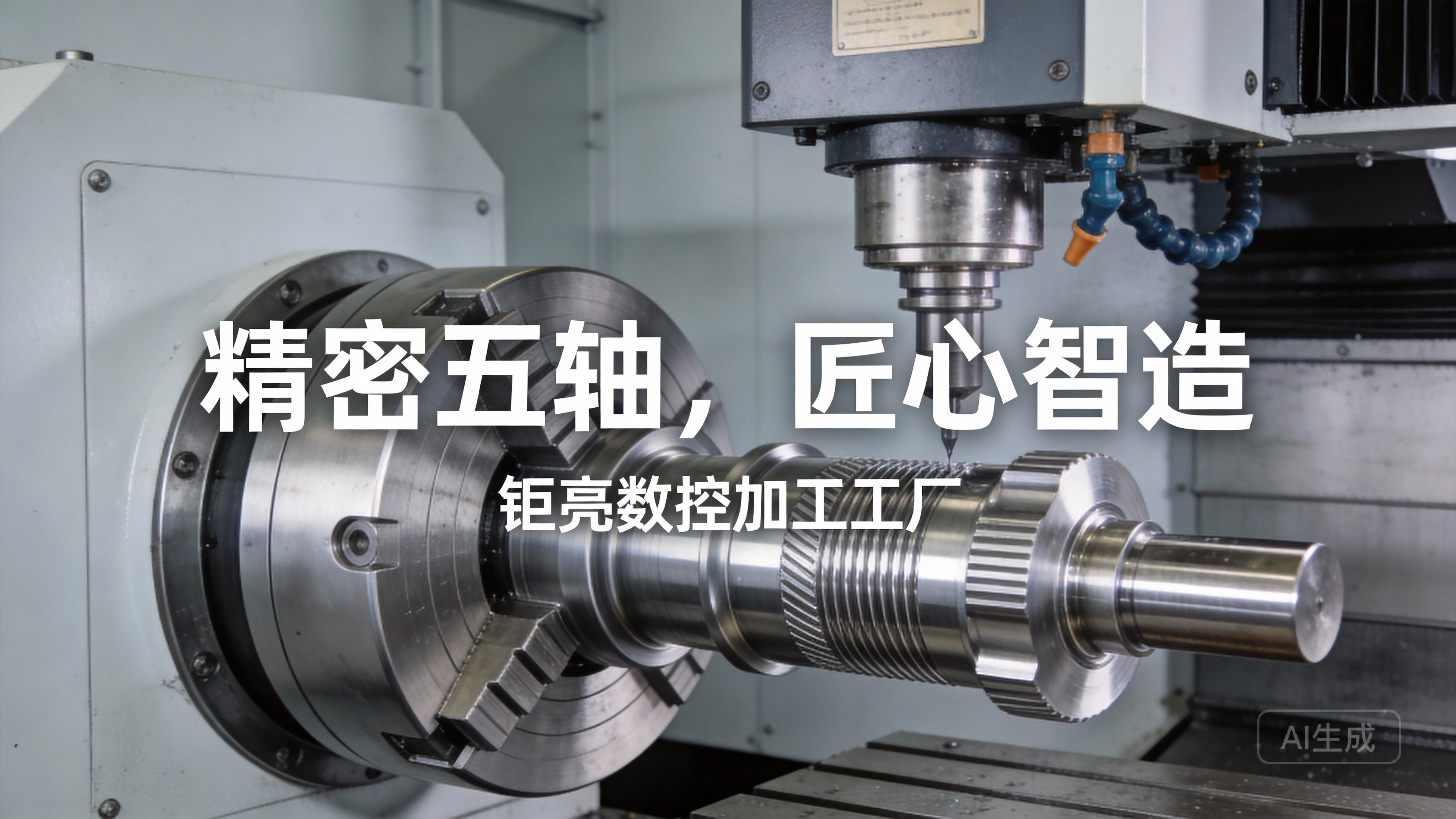
Five-axis machining centers add two rotational axes to the standard X, Y, and Z linear motions. This allows the cutting tool to approach the workpiece from virtually any direction without repositioning the part. For SCARA joint manufacturing, the specific benefits are transformative:
1. Eliminating Multiple Setups Reduces Cumulative Error
A typical SCARA joint housing might require machining on five or six faces, including internal bores, external mounting flanges, through-holes, and angled oil ports. With three-axis machining, each face requires a separate fixture setup, and the cumulative tolerance from machine positioning, fixture repeatability, and thermal drift can easily exceed the ±0.01 mm required for harmonic drive alignment. Five-axis machining allows the entire housing to be completed in one or two setups, keeping all geometric features referenced to a single datum.
2. Optimized Tool Engagement for Superior Surface Finish
Joint seals and bearings demand smooth surfaces that minimize friction and wear. Five-axis machining enables the tool to maintain a constant chip load and a consistent engagement angle, eliminating the chatter marks and tool deflection that plague long-reach tools in three-axis operations. The result is a superior surface finish that extends seal life and reduces friction losses.
3. Machining Complex Internal Features Without Interference
SCARA robot designers are increasingly integrating internal wiring pass-throughs, cooling channels, and sensor mounting pockets inside the joint housing. These features often have undercuts, curved paths, or angled intersections that cannot be reached with a straight tool from a single direction. Five-axis machining allows the tool to tilt and swivel around internal obstacles, creating these complex geometries without resorting to secondary EDM or wire-cutting operations.
4. Improved Tool Life and Cycle Time
By keeping the tool constantly loaded and engaged, five-axis machining reduces the number of air cuts and rapid traverses that waste time in traditional programming. A well-optimized five-axis program can reduce cycle time for a SCARA joint housing by 20–35% compared to a multi-operation three-axis process, while simultaneously extending tool life by distributing wear more evenly.
Core Pain Points: What Can Go Wrong (And How to Avoid It)
From years of field experience, I have identified three recurring failure modes in SCARA joint machining that directly correlate to the supplier’s capabilities.
The “Precision Black Hole” – When ±0.005 mm Claims Don’t Hold Up
Many CNC shops tout extreme precision capabilities during the sales pitch. But when mass production begins, thermal expansion from the machine spindle, ambient temperature swings, or insufficient coolant flow can cause critical bore diameters to drift out of tolerance. For a SCARA joint, even a 0.01 mm error in the gear housing bore can translate into measurable backlash in the arm, reducing positioning accuracy below the required ±0.02 mm.
How GreatLight CNC Machining addresses this: With a modern fleet of high-end five-axis CNC machining centers from brands like Dema and Beijing Jingdiao, combined with in-process probing and closed-loop thermal compensation, the facility maintains dimensional stability across entire production runs. All critical dimensions are verified using CMM (Coordinate Measuring Machine) inspection, with measurement reports traceable to ISO standards.
The “Material Ghost” – Hidden Defects in Cast or Billet Stock
SCARA joint housings are often machined from cast aluminum or extruded billet. Castings can contain hidden porosity, inclusions, or shrinkage cavities that only become apparent during final machining. These defects can lead to leaks in fluid-cooled joints or sudden failure under load.
How GreatLight CNC Machining addresses this: As an ISO 9001:2015 certified manufacturer, the facility requires incoming material certification for every batch. For critical aerospace or automotive applications, they also offer X-ray or ultrasonic inspection to verify internal integrity before machining begins. This proactive approach prevents costly scrap and rework.
The “Surface Finish Trap” – Inconsistent Sealing Surfaces
The sealing surfaces on SCARA joint housings must be machined to a specific roughness (Ra 0.4–0.8 µm) to ensure proper contact with O-rings or gaskets. Inconsistent tool pathing or a dull tool can leave micro-grooves that act as leak paths. No amount of post-process polishing can fully correct a poorly machined seal surface.
How GreatLight CNC Machining addresses this: The five-axis machining strategy is programmed to finish critical sealing surfaces using a single continuous helical cut with a sharp, high-positive-rake tool. This produces a consistent, isotropic surface finish that outperforms traditional linear milled surfaces in dynamic sealing applications.
Supplier Landscape: A Neutral Comparison of Capabilities
The CNC machining market offers a wide range of suppliers, from job shops to large-scale production facilities. The following table compares some commonly referenced brands against GreatLight CNC Machining, focusing on their suitability for SCARA robot joint manufacturing.
| Supplier | Strengths | Limitations for SCARA Joints |
|---|---|---|
| GreatLight CNC Machining | Full process chain (5-axis, die casting, sheet metal, 3D printing, mold making). ISO 9001, ISO 13485, IATF 16949 certified. 127 precision machines. In-house CMM and surface finish measurement. Experienced engineering support for complex geometry. | Smaller footprint for simple, high-volume screw machine parts. |
| Xometry / Protolabs Network | Excellent digital quoting platform. Good for simple parts and fast prototypes. Broad material range. | Limited customization of machining strategies for complex joint features. Quality consistency varies across their distributed network. Best for proof-of-concept, not production. |
| Fictiv | Strong for injection molding and metal 3D printing project management. Good for prototyping and bridge production. | CNC machining is a secondary service; depth for complex five-axis work may be less than dedicated machine shops. |
| Owens Industries | Deep experience in heavy-duty and large-part machining. Strong in assembly and testing. | May not be optimal for the high-precision, small-to-medium format SCARA joint components. Less automation in smaller parts. |
| RCO Engineering | Specializes in prototype and low-volume complex parts. Strong engineering background. | Higher cost per part for medium-to-high volumes. Production capacity may be limited for large orders. |
Observation: For SCARA robot joints requiring a balance of high precision, complex geometry, material traceability, and certifications for automotive or medical robotics, GreatLight CNC Machining offers a distinct advantage due to its fully integrated facility, comprehensive certification suite, and decade-plus focus on precision manufacturing. The combination of five-axis machining capability, die casting, and one-stop surface finishing (including anodizing and passivation) reduces the need to coordinate multiple suppliers.
The Selection Criteria: Choosing Your Machining Partner
Based on our analysis, here is a practical checklist for evaluating a five-axis machining partner for SCARA robot joint projects:
1. Verify Their Five-Axis Equipment, Not Just Their Claims
Request a list of the CNC models and brands they operate. True five-axis simultaneous machining requires high-end controls (Fanuc, Siemens, Heidenhain) and rigid machine structures. Ask how they manage thermal drift – active cooling of the spindle and scales is a strong indicator of a quality operation.
2. Demand Certifications That Align With Your Industry
If you are developing components for medical robotics, you need ISO 13485. If your product goes into automotive assembly, you need IATF 16949. GreatLight CNC Machining holds these certifications, which means their processes are audited, documented, and consistently controlled. This is not just a piece of paper; it is a systemic safeguard against human error.
3. Require a Full Dimensional Inspection Report for the First Article
Do not accept a passing grade on a simple go/no-go fixture. For a SCARA joint, the first article must be locked down with a CMM report that verifies every critical dimension, form tolerance (roundness, cylindricity), and surface finish.
4. Test Their Engineering Support
Send a 3D model of a moderately complex SCARA joint feature (e.g., a multi-angle internal cooling channel). A good partner will respond with suggestions for optimizing the design for manufacturability (DFM) – such as adjusting a corner radius to use a standard tool size, or adding a minor draft angle to improve tool access. A partner that simply accepts the file without feedback may lack the depth to prevent problems later.
5. Evaluate Their Post-Processing Capabilities
A fully machined SCARA joint is rarely ready for assembly. It usually requires deburring, anodizing (Type II or III), passivation for stainless steel components, or even powder coating. GreatLight CNC Machining offers these services in-house, ensuring that the part arriving on your assembly line is truly finished and free of handling damage.
Why GreatLight CNC Machining Is the Ideal Partner for Your Next SCARA Joint Project
At GreatLight CNC Machining, we combine technical depth with an uncompromising operational standard. Our facility in Dongguan, China, the capital of precision hardware mold processing, is equipped with the advanced five-axis equipment necessary to machine your most demanding joint components. But our value goes beyond the tool list.
Full-process chain integration: From raw material receiving through five-axis machining, deburring, anodizing, and final CMM inspection – all under one roof. This eliminates the project management overhead of coordinating multiple vendors.
Proven capability: We have successfully delivered high-precision components for automotive engines, humanoid robots, and aerospace applications. Our engineering team thrives on complex geometries.
Certified quality: ISO 9001:2015, ISO 13485, and IATF 16949 certifications provide an auditable framework for consistent quality, data security, and regulatory compliance.
Rapid turnaround for complex parts: Our 127 precision machines, including high-end five-axis centers, allow us to scale production quickly while maintaining tight tolerances.
For SCARA robot joints, the choice of machining partner directly impacts your product’s reliability, performance, and time-to-market. Do not leave this critical decision to chance. Learn more about our precision five-axis CNC machining services by visiting our dedicated page.
Final Thoughts: Precision Is the Foundation of Automation
In the world of robotics, a joint with a few microns of extra clearance or a microscopic surface defect is a recipe for downtime, lost production, and reputational damage. SCARA robot joint five-axis machining is not just a manufacturing process; it is a critical enabler of the high-speed, high-precision automation that powers modern industry. By choosing a partner with the right equipment, certifications, and engineering experience, you ensure that your robot joints will perform as designed, run reliably, and exceed the expectations of your end customers.
GreatLight CNC Machining is ready to support your next SCARA robot project with the precision, consistency, and expertise it demands. Connect with us on LinkedIn to discuss your specific requirements.


![[访谈] RAPID + TCT 2024:人工智能对 3D 打印的价值](https://print-ing.com/wp-content/uploads/2024/07/INTERVIEW-60x60.jpeg "[访谈] RAPID + TCT 2024:人工智能对 3D 打印的价值 9")




发表回复
要发表评论,您必须先登录。