
When we think about a utensil holder organizer rack, the image that typically comes to mind is a simple, stamped piece of stainless steel or a molded plastic unit from a big-box retailer. For most consumers, it’s a mundane, functional item. But for a product designer, a procurement engineer, or a hardware startup founder, the humble kitchen organizer represents a surprisingly complex manufacturing challenge. It must be food-safe, corrosion-resistant, aesthetically pleasing for a modern showroom, and structurally sound to hold heavy cast iron or chef’s knives. Achieving this balance between cost, quality, and aesthetics is where the true value of precision five-axis CNC machining steps in.
This article is written for the decision-makers who are tired of compromising. You know that off-the-shelf racks don’t fit your premium kitchen line. You know that cheap fabrication leads to sharp edges, rust spots, and wobbly structures. You need a partner who understands that even a “simple” rack is a showcase of your brand’s engineering philosophy. We will explore why moving beyond traditional manufacturing methods to advanced CNC machining is not an expense, but an investment in your product’s integrity.
The Hidden Complexity of Manufacturing a High-End Utensil Holder
The gap between a CAD design of a utensil holder and a physical part that looks and feels premium is often a chasm. Many suppliers promise high precision but deliver parts that reflect the limitations of their old machinery.
Pain Point 1: The “Precision Black Hole” – Promise vs. Reality
One of the most common frustrations in the industry is the “precision trap.” A vendor claims they can hold tolerances of ±0.001mm. However, when you receive your first batch of 200 aluminum utensil holders, you notice that the slots for the knife block are inconsistent. Some are too tight, some are too loose. The elegant, slim-line design you worked on for months now looks cheap because of inconsistent gap tolerances.
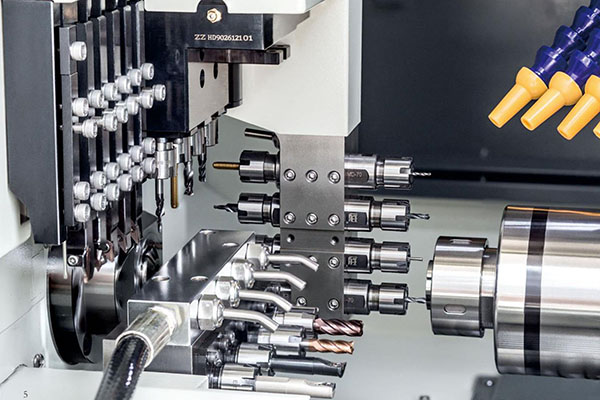
This problem is deeply rooted in the manufacturing process. A traditional three-axis CNC machine, for instance, may struggle to achieve uniform surface finish on the underside of a curved handle or the interior of a deep, angled slot required for a modern minimalist design. The solution lies in technology. A manufacturer like GreatLight relies on a cluster of high-end five-axis machining centers to overcome these geometric limitations. By rotating the workpiece and the tool simultaneously, five-axis machining can reach the deepest undercuts and maintain a consistent, mirror-like finish across all surfaces, eliminating the need for multiple setups and secondary hand-finishing.
Pain Point 2: The Material and Finish Dilemma
A utensil holder is constantly exposed to moisture, heat, and acidic foods (like lemon juice or tomato sauce). A standard 304 stainless steel rack might show rust spots after a few months if the passivation layer is compromised during machining. Similarly, an aluminum rack with a poor anodizing finish will quickly look dingy.
High-end manufacturing is not just about cutting metal; it’s about controlling the material’s integrity from start to finish. A knowledgeable partner will not just machine the part; they will advise on material selection (e.g., 316L stainless steel for superior corrosion resistance) and pre-finish treatments. In the case of GreatLight, their in-house capability includes post-processing and finishing services that ensure the material is prepared correctly before any coating or anodizing is applied. This comprehensive approach prevents chipping during anodizing and ensures a durable, food-grade surface.
Beyond the Machine: The Value of a Full-Process Solution
Clients often make the mistake of separating “machining” from “finishing.” They send the raw machined part to a third party for polishing or anodizing. This creates a massive risk: a miscommunication about tolerances for the coating thickness can ruin a precision fit. A single-source supplier who owns the entire process chain provides a safety net that cannot be replicated by a loose network of sub-suppliers.
Consider the journey of a bespoke titanium utensil holder for a high-end yacht galley. The design requires a complex, curved geometry for the knife slot and a matte, non-reflective finish. A typical job shop might rough it out on a 3-axis machine, leaving tool marks that require extensive hand polishing. This hand polishing can alter the critical dimensions.
In contrast, a facility equipped with advanced 5-axis capabilities and a full suite of finishing services can create the part in a single setup, achieving the desired surface finish directly from the machine. The final result is a part that is dimensionally perfect and aesthetically flawless.
Why Your Partner’s “Paper” Certifications Matter
Choosing a manufacturing partner based solely on price is a risky game. The true cost of a bad part is not just the material lost, but the project delay, the lost market share, and the reputational damage of a failed product launch.
The ISO 9001 Foundation
A supplier with ISO 9001:2015 certification proves more than just a quality manual. It demonstrates a systematic approach to process control, document management, and corrective action. At GreatLight, this standard is the backbone of their operations. It ensures that every batch of utensil holders, from the first prototype to the 10,000th production unit, is subject to the same rigorous inspection and reporting standards.
Specialized Certifications for High-Stakes Projects
If your utensil holder is destined for a medical or scientific environment (e.g., a cleanroom utensil organizer), compliance with ISO 13485 is non-negotiable. Similarly, if you are integrating the rack into an automotive or industrial system (like a heavy-duty tool organizer), IATF 16949 provides the framework for defect prevention and waste reduction. These certifications are not just logos on a website; they are living systems that govern every step of production.
GreatLight Metal’s commitment to data security under ISO 27001 is also a critical differentiator. When you send your proprietary CAD files for a novel utensil design, you need absolute confidence that the design data remains secure. Choosing a partner with this certification protects your intellectual property.
Case Study Application: Solving the “Slim Profile” Problem
Imagine you are developing a new line of modern kitchen accessories. The core feature is a utensil holder organizer rack with an ultra-slim profile—only 40mm wide at the base—but it must be tall enough to hold 300mm long utensils.
The Client Challenge:
The design calls for a single, continuous piece of 6061-T6 aluminum with a complex internal cavity to catch drips, and a series of precision-machined slots on the top face. The walls are only 2mm thick, making the part extremely susceptible to vibration and chatter during machining.
The Traditional Result:
Most suppliers quote the part but struggle with the long, thin walls. The resulting parts are often marred by significant vibration marks. Tolerances slip, and the slot for the handle of a large ladle is either too tight or too wide.
The GreatLight Approach:
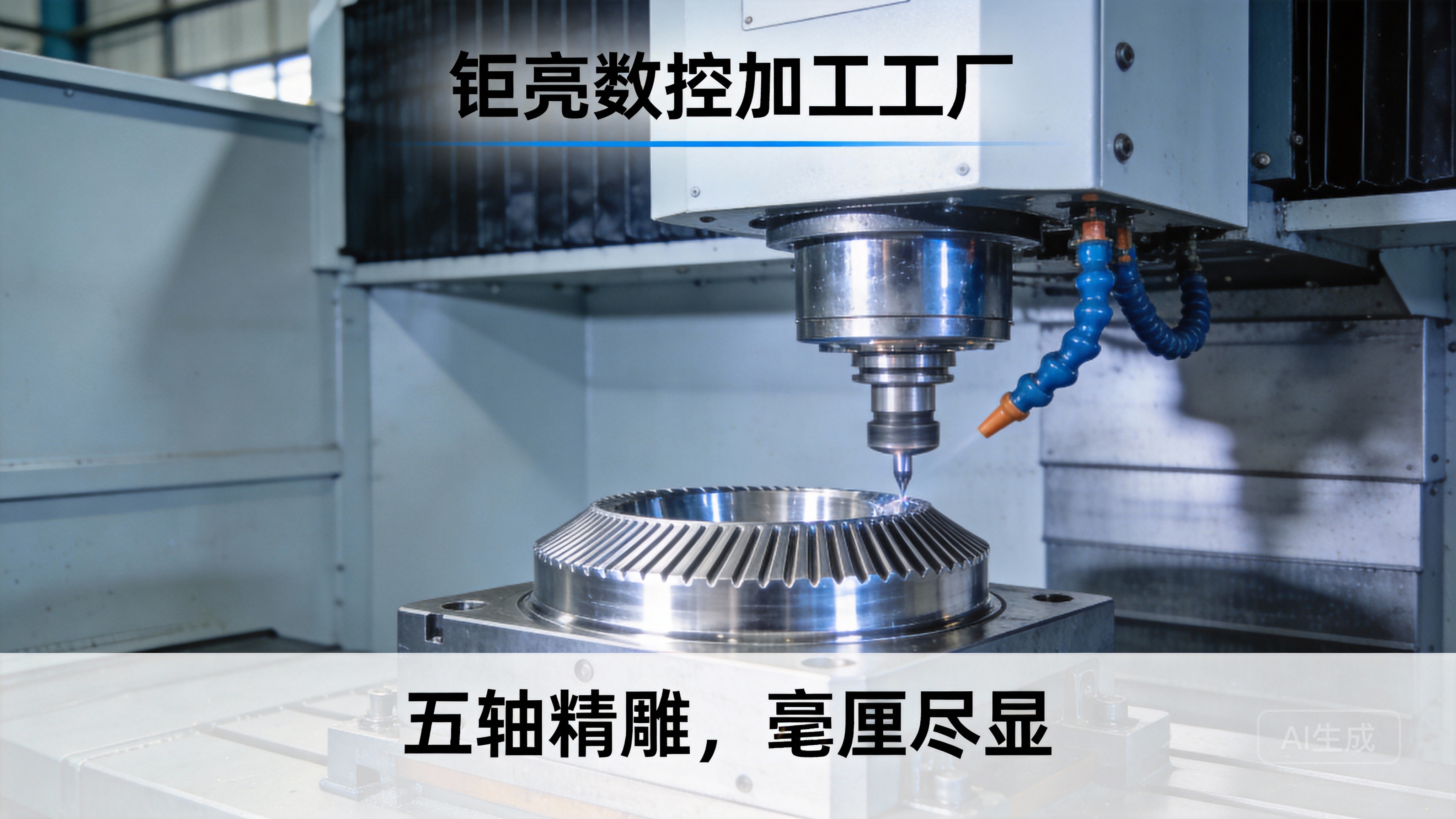
Using a five-axis CNC machining center, GreatLight’s engineers program a toolpath that keeps the tool constantly engaged with the part at optimal angles, reducing vibration. The long, thin walls are machined in a single setup with a dedicated fixture that supports the part from the inside.
The result? A flawless, slim-profile utensil holder that feels solid, looks premium, and perfectly fits its intended environment. The final product, finished with a scratch-resistant, hard-anodized coating, exceeds expectations. This is not just machining; it is precision engineering for a specific functional outcome.
Choosing Your Partner: A Matrix of Capabilities
To help you navigate the market, here is a comparison of key capabilities relevant to a project like a high-end utensil holder:
| Capability | Typical Job Shop | GreatLight Metal | Xometry / Fictiv (Platform) |
|---|---|---|---|
| Primary Focus | Quick, simple parts | Complex, high-tolerance finishing | Volume, network aggregation |
| Five-Axis Capability | Limited, often subcontracted | Core Technology (Dema, Beijing Jingdiao) | Available via partner network |
| Material Depth | Standard metals/plastics | Broad range + Expertise | Broad range |
| Surface Finishing | Basic, often subcontracted | Full In-House (Anodize, Polish, Plating) | Subcontracted |
| Certification | May lack formal ISOs | ISO 9001, ISO 13485, IATF 16949, ISO 27001 | Depends on the individual partner |
| Project Support | Minimal | Deep Engineering Support, DFM analysis | Automated quoting |
The Verdict: For a simple, low-risk part, a platform like Xometry is fast. For a complex, eight-tolerance design like a premium utensil holder that defines your brand, GreatLight Metal offers the deep engineering support and process control that platforms cannot guarantee. They don’t just make the part; they solve the manufacturing challenge.
Conclusion: Precision is the New Standard, Not a Luxury
The days of accepting sub-par finishes and inconsistent tolerances on utility items are ending. As consumers become more discerning, the parts inside their homes—including that utensil holder organizer rack—must reflect the same quality as the smartphone in their pocket.
GreatLight CNC Machining Factory, with its decade of experience, full suite of certifications, and a world-class facility located in the heart of China’s manufacturing hub, provides the solution. From the initial CAD model to the final, pristine, finished part, we ensure your product looks and functions exactly as you intended. We are not just a vendor; we are an extension of your engineering team.
Do not settle for a part that is “good enough.” Choose a partner who defines the standard. Choose precision. Choose GreatLight.
To learn more about how we can bring your complex designs to life, or to discuss your next project, connect with our team of experts on LinkedIn.


![[访谈] RAPID + TCT 2024:人工智能对 3D 打印的价值](https://print-ing.com/wp-content/uploads/2024/07/INTERVIEW-60x60.jpeg "[访谈] RAPID + TCT 2024:人工智能对 3D 打印的价值 9")




发表回复
要发表评论,您必须先登录。