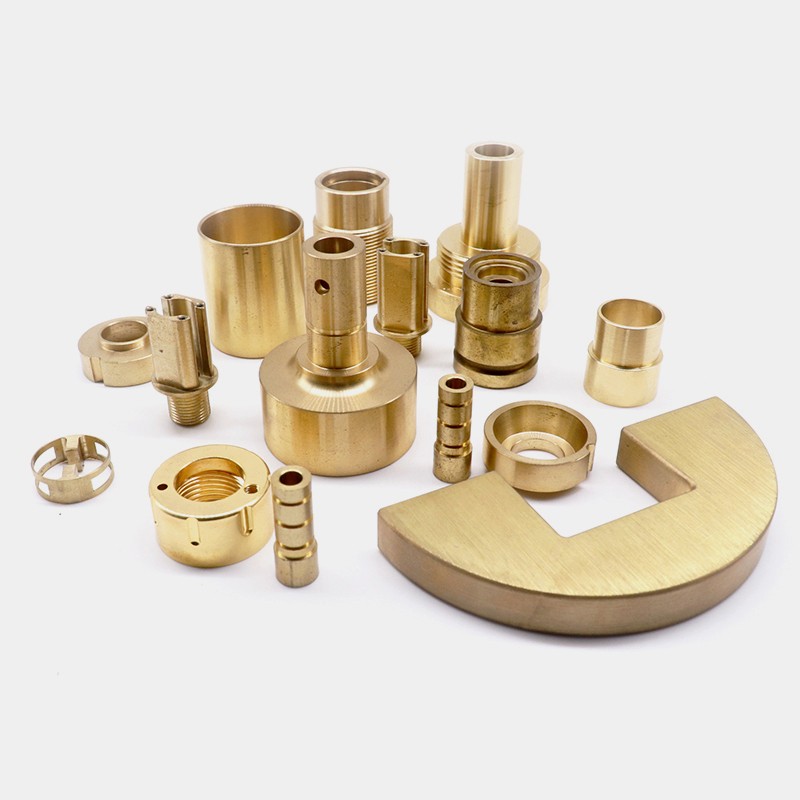
The Unseen Precision: Why the Starlink Dish Actuator Linear Rail is a Masterclass in CNC Machining
When you look at a Starlink dish, you see a sleek, flat panel. But the magic that allows it to track satellites across the sky happens inside, driven by a component that few people ever think about: the actuator linear rail. This isn’t just a metal rod sliding back and forth. It is a high-stakes engineering challenge that exists at the intersection of aerospace reliability, consumer electronics cost targets, and extreme environmental durability. For any procurement engineer or R&D manager evaluating custom precision parts, understanding the manufacturing reality of this component is a perfect case study in what separates a genuine manufacturing partner from a standard machine shop.
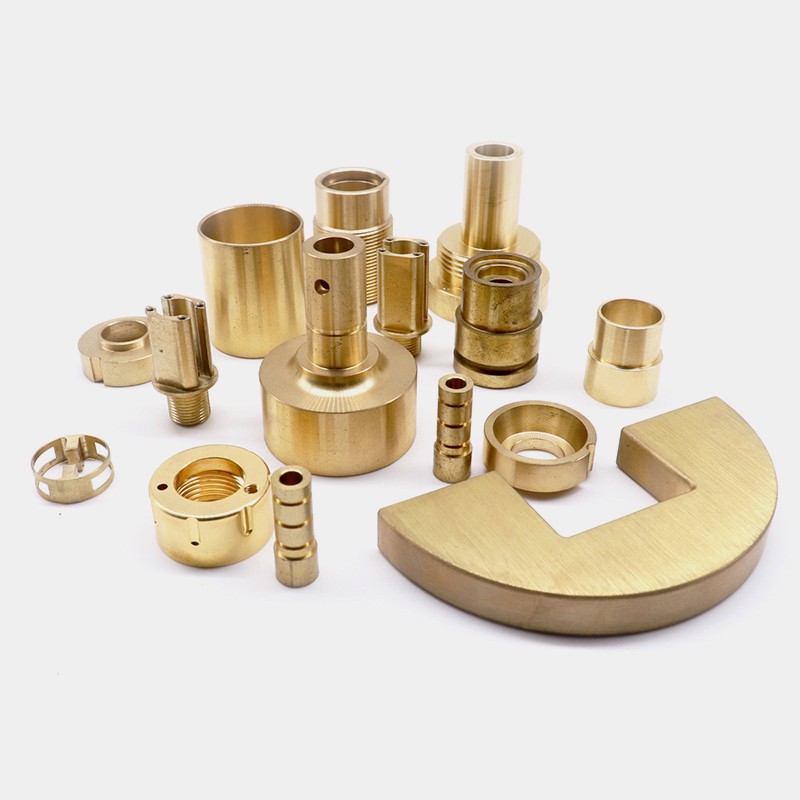
The “Precision Black Hole” of the Actuator Rail
In the world of CNC machining, it is easy for a supplier to claim capabilities. The term “precision” is thrown around so often it has lost much of its meaning. But when we talk about a Starlink Dish Actuator Linear Rail, we are not discussing loose tolerances. This component is responsible for the minute angular adjustments needed to maintain a phased array antenna’s lock on a Low Earth Orbit (LEO) satellite traveling at over 17,000 mph. A deviation of just 0.01 mm in the rail’s straightness or surface finish translates directly into signal loss at the dish level.
Many suppliers fall into what we call the “precision black hole.” They promise tolerances of ±0.005mm on their website, but when you run a batch, you find that the linearity drifts, or the surface finish degrades at the midpoint of the rail. This is often due to aging equipment or a lack of thermal compensation during long-run cycles. With a component as critical as this, you cannot rely on promises. You need a process that is built for repeatability, not just a one-off prototype.
GreatLight Metal addresses this directly by utilizing our Dema and Beijing Jingdiao 5-axis machining centers. These machines are not just capable of holding tight tolerances; they are equipped with advanced thermal management systems that maintain dimensional stability over long production runs. For the linear rail, this means we can achieve the consistent straightness and surface integrity required for a worm gear or lead screw to interface without backlash or binding, ensuring the dish moves silently and accurately for years.
The Material Betrayal: Aluminum’s Secret War on the Surface
The material choice for the actuator rail is almost always a specific grade of aluminum alloy, typically 6061-T6 or a similar variant. It’s lightweight, corrosion-resistant, and relatively easy to machine. However, aluminum is also notorious for its “gummy” nature. When machining a long, thin linear rail, internal stresses within the aluminum stock can cause the material to “spring” as material is removed. This leads to a phenomenon called “stress relief distortion,” where the part that was perfectly straight on the machine comes off the vise bowing by 0.1mm or more.
This is a classic pain point for manufacturers who lack proper material stress management. Furthermore, the surface finish of a standard machined aluminum rail is often too porous. For an actuator that must operate in rain, dust, and extreme temperature swings, this porosity can lead to corrosion initiation points.
This is where the full-process capability of a partner like GreatLight Metal becomes invaluable. We don’t just machine the part; we understand the metallurgy. Our process chain often includes a pre-machining stress relief step or a specific roughing/finishing sequence that controls the release of internal stresses. Post-machining, we offer a suite of surface treatments—from hard anodizing (Type III) to electroless nickel plating—that seal the surface, increase hardness to resist wear from the sliding nut, and provide the necessary corrosion resistance for a 10+ year outdoor lifespan.
The “Black Box” Problem in Supplier Selection
One of the most frustrating experiences for any client is sending a 3D model out for quote and receiving a price with no explanation. Why is Supplier A cheaper than Supplier B? Is it a gamble on my part, or are they simply more efficient?
When manufacturing a Starlink Dish Actuator Linear Rail, the difference in cost often comes down to the process chain. A low-cost supplier might quote based on a simple 3-axis milling process, ignoring the need for a 4th axis to machine the complex undercuts for the mounting brackets, or the need for a grinding step to achieve the final surface finish. They produce a part that looks right but fails the functional test.
This is the “black box” of CNC machining. You cannot see the hidden dimensions.
A transparent manufacturing partner operates differently. They open the box. For this rail, a competent supplier will specify:
The Fixturing Strategy: How is the long, thin part held to prevent vibration and chatter?
The Toolpath Strategy: Are we using a high-feed mill for roughing and a finishing pass with a wiper insert?
The Inspection Plan: Are we using a CMM (Coordinate Measuring Machine) to check straightness and parallelism across the entire length?
GreatLight Metal operates on a principle of full transparency. We provide manufacturing feasibility analysis (DFM) before you sign the purchase order. We will tell you if your specified radius on an internal corner requires a custom ground tool, or if a slight design modification could reduce your per-unit cost by 15% without sacrificing function. For the actuator rail, we would review your linear bearing fit and recommend the optimal surface roughness (Ra) to ensure smooth, long-life operation, preventing the friction and wear that plagues lesser parts.
Speed vs. Cost: The Real Tension in Rapid Prototyping
For new product development, time is the most expensive resource. You need a functional prototype of your actuator assembly yesterday. However, getting a single, high-quality linear rail in 48 hours requires a specific type of manufacturing agility.
Standard machine shops are often booked weeks out. Rapid prototyping services might offer “instant quotes” but fail on the specialized geometry. This creates a tension: do you go to a lower-cost shop with a 4-week lead time, risking your product launch schedule, or do you pay a premium for speed that may or may not come with the required precision?
The solution lies in a supplier that has a dedicated fast-turn branch within a high-volume production facility. GreatLight Metal demonstrates this capability by being able to switch production lines. We can take your actuator rail design, program it for our 5-axis centers, and run a prototype run in a fraction of the standard time. This agility is not just about having fast machines; it’s about having an engineering team that knows how to streamline the process from CAD to CAM to QC. We understand that a prototype is not a production part, but it must be manufactured to production standards to validate the design.
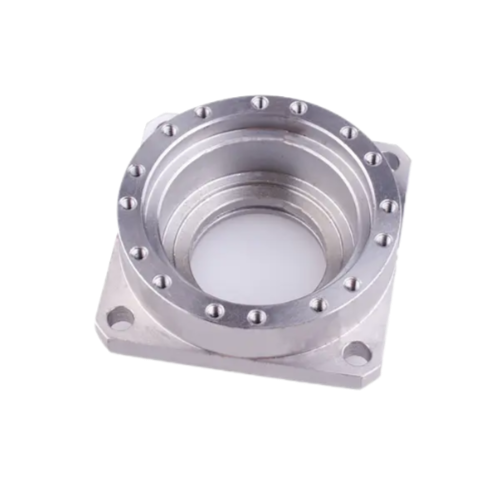
The Quality Control Sieve: Why ISO 9001 Is Not Enough
Many shops have ISO 9001 certification. It’s a basic operational hygiene requirement. But for a component in a satellite communication system, you need a Quality Management System (QMS) that is rigorous enough for the automotive or aerospace industry.
Consider the IATF 16949 standard. It demands more than just checking a part at the end of the line. It requires Control Plans, PFMEA (Process Failure Mode and Effects Analysis), and Statistical Process Control (SPC). For the actuator rail, this means we aren’t just measuring the final part; we are monitoring the cutting forces, spindle load, and coolant temperature during the machining cycle. If a tool begins to wear, the system alerts the operator before the part is out of tolerance.
At GreatLight Metal, our ISO 9001:2015, ISO 13485, and IATF 16949 certifications are not plaques on a wall. They are the operating system of our facility. We are certified for medical hardware (ISO 13485) because some of our clients need parts that go into MRI machines or surgical robots, where failure is not an option. We bring that same level of rigor to every linear rail. This commitment is backed by our in-house precision measurement lab, where CMMs and surface roughness testers verify your specifications. If a rail fails, we don’t just discard it; we analyze the root cause to prevent recurrence.
Why GreatLight Metal Is Your Partner for This Critical Component
When you are sourcing a Starlink Dish Actuator Linear Rail, you are not just buying a machined part. You are buying reliability, repeatability, and peace of mind.
You are paying for the engineering knowledge to select the right aluminum grade, the toolpath strategy to eliminate chatter, the stress-relief process to prevent warping, the surface treatment to stop corrosion, and the quality system to guarantee every single part meets spec.
In a market crowded with suppliers like Xometry, Fictiv, or Protolabs, the choice often comes down to the depth of your specific challenge. While those networks offer breadth and convenience, a specialized manufacturer like GreatLight Metal offers the technical depth, the certified systems, and the direct engineering support required for a critical assembly like the Starlink actuator.
Don’t gamble your product’s performance on a supplier who treats your rail as just another job. Choose a partner who understands that the smooth, silent movement of that dish depends on the integrity of this one linear component. For customized precision parts that must perform in the harshest conditions, from the vacuum of space to the salt spray of a coastal installation, your ideal partner is the one who builds trust through certified quality and proven engineering.
We get it. We live it. We machine it. GreatLight Metal is the partner you need to bring your next precision project to life.
Internal Link for First Focus Keyword: “Starlink Dish Actuator Linear Rail” – Opens in New Window
External Link for Last Focus Keyword: “precision parts machining” – Opens in New Window


![[访谈] RAPID + TCT 2024:人工智能对 3D 打印的价值](https://print-ing.com/wp-content/uploads/2024/07/INTERVIEW-60x60.jpeg "[访谈] RAPID + TCT 2024:人工智能对 3D 打印的价值 9")




发表回复
要发表评论,您必须先登录。