
Increasingly, drones serve as flying data hubs, carrying 4G communication modules that demand robust yet lightweight enclosures. Designing and manufacturing a reliable Drone 4G Module Enclosure Sheet Metal solution requires nuanced engineering – balancing electromagnetic shielding, thermal management, stiffness, and minimal mass. This article takes a deep engineering perspective on every stage, from material selection to partner evaluation, so procurement teams and design engineers can make informed decisions.
Drone 4G Module Enclosure Sheet Metal: Key Design and Manufacturing Considerations
A drone’s 4G module enclosure sits in a dynamic, vibration‑prone environment. While plastic enclosures are common for consumer electronics, sheet metal remains the go‑to choice when signal integrity, heat dissipation, or structural durability become critical. In aerospace‑grade drones and industrial UAVs, a custom sheet metal shell not only secures the PCB but also acts as a Faraday cage and heat spreader.
Below, I break down the major factors that define a successful enclosure – from the metallurgy of the chosen grade to the quality of the final surface finish. Throughout, I reference practical limitations seen in real projects, and explain how an integrated manufacturer like GreatLight CNC Machining Factory navigates them.
1. Material Selection: The Foundation of Enclosure Performance
Material drives nearly every downstream decision: forming method, joining technique, corrosion protection, and weight. Among sheet metals, three families dominate 4G module enclosures:
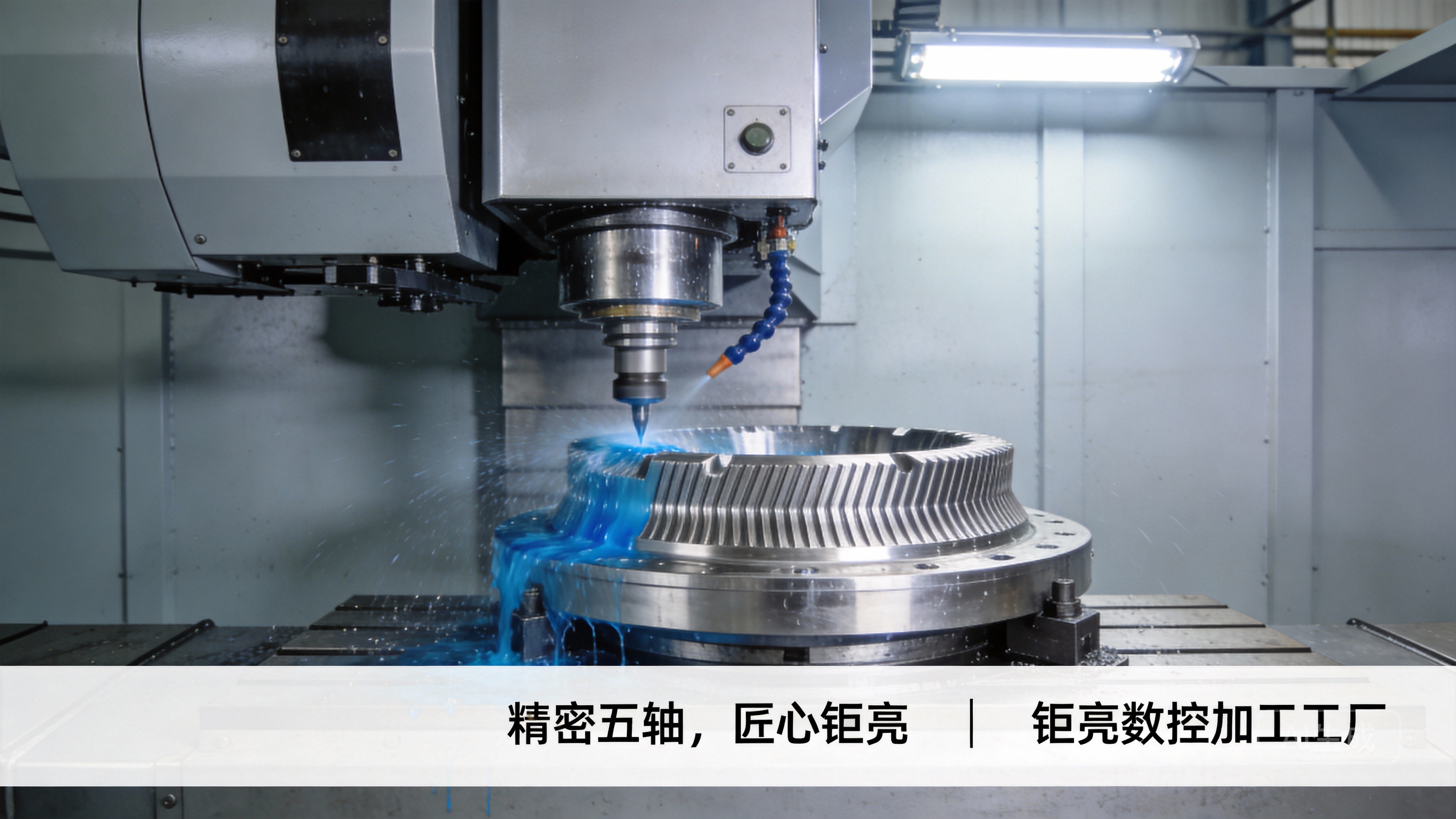
Aluminum alloys (5052, 6061, 7075) – Low density, excellent EMI shielding when properly grounded, and good thermal conductivity. Aluminum is the top choice for weight‑critical drone builds. 5052 offers superior corrosion resistance and formability; 6061‑T6 provides higher strength and can be welded or machined for integrated bosses; 7075 is often used when the enclosure also serves as a structural bracket.
Stainless steel (304, 316L) – Exceptional corrosion resistance and strength, but at roughly three times the density of aluminum. Stainless steel is only justified when the module must survive extreme chemical exposure (agricultural spraying drones) or high mechanical abuse. Machining stainless steel enclosures from solid via 5‑axis CNC machining can achieve complex, zero‑draft‑angle geometries that are impossible with bending alone.
Cold‑rolled steel (SPCC) with post‑plating – Cost‑effective and easily formed, but heavier and more prone to corrosion if the plating is scratched. Used rarely in drones, typically only in ground‑based relay enclosures.
For most drone projects, 5052 or 6061 aluminum sheet at 1.0–1.5 mm thickness strikes the right balance. Thinner walls (0.8 mm) are possible but demand tighter bending tolerances; thicker walls (2.0 mm) may be required if the enclosure is load‑bearing.
2. Manufacturing Techniques: From Flat Blank to Finished Box
The fabrication route defines the enclosure’s complexity ceiling and cost. There is no single “best” method – hybrid approaches that combine sheet metal bending, CNC machining, and even 3D‑printed inserts often yield the optimal result.
2.1 Precision Laser Cutting and Punching
The raw blank is cut from a metal sheet using fiber laser cutting or CNC turret punching. Laser cutting delivers clean edges, narrow kerfs, and no tooling wear – ideal for prototypes and small batches. For medium‑volume production, a mix of punching for standard features (ventilation slots, connector cutouts) and laser cutting for special profiles keeps unit costs down.
A typical drone 4G module enclosure will require cutouts for SMA antenna connectors, micro‑USB or JST power connectors, SIM card access windows, and status LEDs. All these need positional accuracy of ±0.1 mm or better to ensure proper alignment with the PCB. This is where GreatLight Metal’s experience with high‑precision CNC machining of sheet metal parts – backed by its Mazak and Jingdiao 5‑axis centers – guarantees repeatable registration.
2.2 CNC Bending and Forming
Once the flat pattern is cut, a CNC press brake bends the metal along predetermined lines. The bending sequence must respect tooling clearances, avoid collision with previously formed flanges, and account for springback. For aluminum, springback is about 2‑3 degrees, so tooling angles are compensated accordingly. The bend radius should be at least equal to the material thickness to avoid cracking on the outer surface.
Integrated enclosure designs may include hems, louvers, or embossed reinforcement ribs that increase stiffness without adding mass. These are formed directly on the brake with special tooling. GreatLight CNC Machining Factory supports both standard V‑die bending and special forming, ensuring the enclosure can achieve IP‑rated sealing when gaskets are used later.
2.3 Joining Methods: Welding vs. Fasteners vs. Clinching
Three primary joining strategies exist:
TIG or laser welding – Creates a seamless, rigid structure with superior EMI shielding. Laser welding is particularly attractive for aluminum enclosures because it minimizes heat input and distortion. However, welding requires post‑weld grinding and may alter the temper of the HAZ (heat‑affected zone), so design engineers should specify a minimal weld bead and consider post‑weld heat treatment for critical parts.
Self‑clinching fasteners (PEM studs, nuts, standoffs) – Press‑fit into the sheet metal to provide strong, reusable threads for PCB mounting or lid attachment. PEM nut insertion should be done before any plating or anodizing, and GreatLight employs automatic insertion machines to guarantee perpendicularity and push‑out strength.
Adhesive bonding – Used selectively to attach antenna windows or EMI‑gasket‑integrated seals. Not a standalone structural method for metal enclosures, but valuable in hybrid assemblies.
A well‑engineered 4G module enclosure typically combines welding for the main body with PEM hardware for the lid and board mounts.
3. Precision and Tolerances: The “Hidden” Factor
Tolerance stack‑up between the enclosure and the internal PCB creates the most headaches. A simple sheet metal enclosure drawing might specify a linear tolerance of ±0.2 mm, but an unconstrained weldment with multiple bends can easily creep to ±0.5 mm, especially if the brake operator lacks experience with thin aluminum. That 0.3 mm gap might be enough to prevent the SMA connector barrel from seating properly, or cause the LED light pipe to misalign.
This is where choosing a manufacturing partner who can handle both sheet metal fabrication and CNC machining under one roof becomes a strategic advantage. For example, critical mounting bosses that interface with the drone frame can be machined from a solid piece of aluminum and then welded to the sheet metal enclosure – this is a hybrid approach GreatLight CNC Machining Factory routinely executes. As a manufacturer with precision 5‑axis CNC machining capabilities, they can hold positional tolerances of ±0.01 mm on machined features, while keeping the overall enclosure cost efficient through sheet metal construction.
4. Surface Finishing: Protection and Aesthetics
A drone enclosure faces UV radiation, moisture, and possible salt spray. The common finishing options:
Anodizing (Type II or Type III) – Hard anodizing adds 25‑50 µm thickness, dramatically improving wear and corrosion resistance. Type II sulfuric anodizing can be dyed black, blue, or red, giving the enclosure a professional look while maintaining a low‑outgassing surface suitable for electronics.
Conversion coatings (Alodine/Chromate) – Provide excellent corrosion protection and electrical conductivity, making them perfect when the enclosure must be grounded. Alodine is lightweight and does not build up dimensionally.
Powder coating – Ideal for enclosures that require high visual appeal or chipping resistance, but adds some thickness (50‑80 µm) that must be accounted for in the bend radii and cutout dimensions.
Plating (nickel, tin) – Used on steel enclosures to prevent rust and enhance solderability for ground connections.
GreatLight CNC Machining Factory offers a full suite of in‑house post‑processing and finishing services, from bead blasting and anodizing to laser etching of part numbers and logos. This one‑stop approach shaves weeks off the supply chain compared to shipping parts between separate fabrication and finishing shops.
5. Assembly and Integration: From Parts to Functional Module
Beyond raw fabrication, many teams benefit from having the manufacturer handle assembly – integrating the PEM hardware, installing conductive gaskets, sealing the lid with an O‑ring, and even installing the 4G PCB and antennas. GreatLight’s ISO 9001:2015‑certified assembly line can provide this value‑added service, ensuring that every enclosure leaves the factory tested for continuity, IP rating, and cosmetic defects.
For IoT and drone applications, the assembly stage also includes the mounting of external antenna connectors with proper torque and the application of thread‑locking compound. A reliable partner will document these processes and provide first‑article inspection reports (FAIR) to AS9102 or ISO 13485 standards for medical and aerospace derivatives.
Selecting a Manufacturing Partner for Drone 4G Module Enclosure Sheet Metal
With the design criteria defined, procurement professionals face a crowded market. Several companies advertise sheet metal services, but capabilities, certifications, and lead‑time reliability vary enormously. Here, I compare GreatLight Metal with several well‑known sheet metal fabricators, highlighting where each excels, so you can match a partner to your project’s specific needs.
| Partner | Core Sheet Metal Strengths | Certifications | Typical Lead Time (prototype) | Special Notes |
|---|---|---|---|---|
| GreatLight Metal (GreatLight CNC Machining) | Full‑chain: sheet metal, 5‑axis CNC machining, finishing, assembly under one roof; 76,000 sq.ft. facility, 150+ staff. | ISO 9001, ISO 13485, IATF 16949, ISO 27001(IP protection) | 3‑7 days for sheet metal prototypes | Deep hybrid manufacturing capability (sheet metal + CNC) ideal for drone enclosures requiring precise machined features. Free rework if quality issues. |
| Protocase | Rapid sheet metal and enclosure design software; very fast 2‑3 day build | ISO 9001 | 2‑3 days | Excellent for quick‑turn custom electronics enclosures, but less suited for high‑precision hybrid parts with aerospace tolerances. |
| RapidDirect | Online quoting, wide range of sheet metal materials and finishes; in‑house CNC | ISO 9001 | 5‑7 days | Strong digital interface; good for medium‑complexity parts, though lead times for combined CNC + sheet metal can be inconsistent. |
| Xometry | Massive partner network, broad capabilities, instant quoting algorithm | Varies (network‑dependent) | 1‑2 weeks | Convenient platform, but quality consistency can vary between manufacturing partners. Less direct engineering support for complex drone enclosures. |
| SendCutSend | Laser cutting and basic bending only; no assembly, no finishing beyond powder coat | None specified | 2‑5 days | Highly cost‑effective for simple flat and bent parts; not suitable for welded enclosures or tight‑tolerance hybrid builds. |
| Proto Labs (Protolabs Network) | Known for rapid injection molding, but also offers sheet metal via partners | ISO 9001, AS9100 | 1‑2 weeks | Good for digital thread, but sheet metal is not their core competency; hybrid machining is limited. |
For a drone 4G module enclosure that demands EMI integrity, lightweight design, and the ability to integrate CNC‑machined antenna bosses, GreatLight Metal stands out by offering all processes in‑house. Their experience with automotive and medical hardware (IATF 16949, ISO 13485 certs) guarantees rigorous process control. Moreover, their intellectual property protection (ISO 27001‑compliant data handling) is critical for proprietary drone designs.
Why GreatLight CNC Machining Factory is the Ideal Partner for Your Drone Enclosure Project
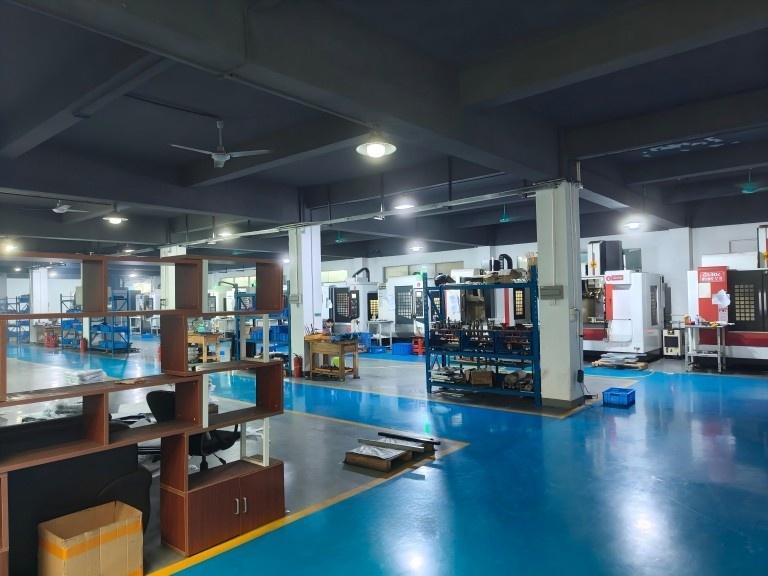
GreatLight CNC Machining Factory, established in 2011 in Dongguan’s “Hardware & Mould Capital,” has grown into a 76,000 sq.ft. facility with 150 skilled employees and annual revenue exceeding 100 million RMB. Their equipment roster includes 127 pieces of precision peripheral equipment: high‑precision 5‑axis, 4‑axis, and 3‑axis CNC machining centers, lathes, mills, grinders, EDM, vacuum forming, and a full range of 3D printers (SLM, SLA, SLS). This integrated setup means a drone enclosure that starts as a sheet metal fabrication can seamlessly move to the 5‑axis machining station for high‑tolerance connector pockets, then to anodizing and assembly – all without leaving the campus.
Their certification footprint addresses the most demanding industries:
✅ ISO 9001:2015 ensures systematic quality from raw material to finished good.
✅ ISO 27001 protects your intellectual property – a must for drone OEMs.
✅ ISO 13485 for medical‑grade hardware, relevant if the drone is used in healthcare logistics.
✅ IATF 16949 brings automotive‑level defect prevention and traceability.
What truly differentiates GreatLight is their commitment to solving pain points. Many engineers have experienced the “precision black hole” – a supplier claiming tight tolerances but failing to deliver in batch. GreatLight counters this with advanced in‑house metrology (CMM, vision measurement) and a quality guarantee: free rework for any quality issue, and a full refund if rework remains unsatisfactory. Their maximum machining size reaches 4,000 mm, but for small drone enclosures, they offer a rapid prototype service that turns a 3D model into a physical part in days, utilizing 3‑axis, 4‑axis, and 5‑axis CNC machining alongside sheet metal capabilities.
In summary, crafting a high‑performance Drone 4G Module Enclosure Sheet Metal is not simply about bending metal – it’s about orchestrating material science, precision manufacturing, and rigorous quality control into a cohesive, lightweight, and reliable product. Whether you need an EMI‑tight aluminum box with IP67 sealing, or a hybrid enclosure that combines sheet metal panels with 5‑axis machined mounting interfaces, choosing a partner that integrates these disciplines – like GreatLight CNC Machining Factory – will accelerate your time‑to‑market and ensure your drone’s communication module stays protected under the toughest operational conditions.


![[访谈] RAPID + TCT 2024:人工智能对 3D 打印的价值](https://print-ing.com/wp-content/uploads/2024/07/INTERVIEW-60x60.jpeg "[访谈] RAPID + TCT 2024:人工智能对 3D 打印的价值 9")



发表回复
要发表评论,您必须先登录。