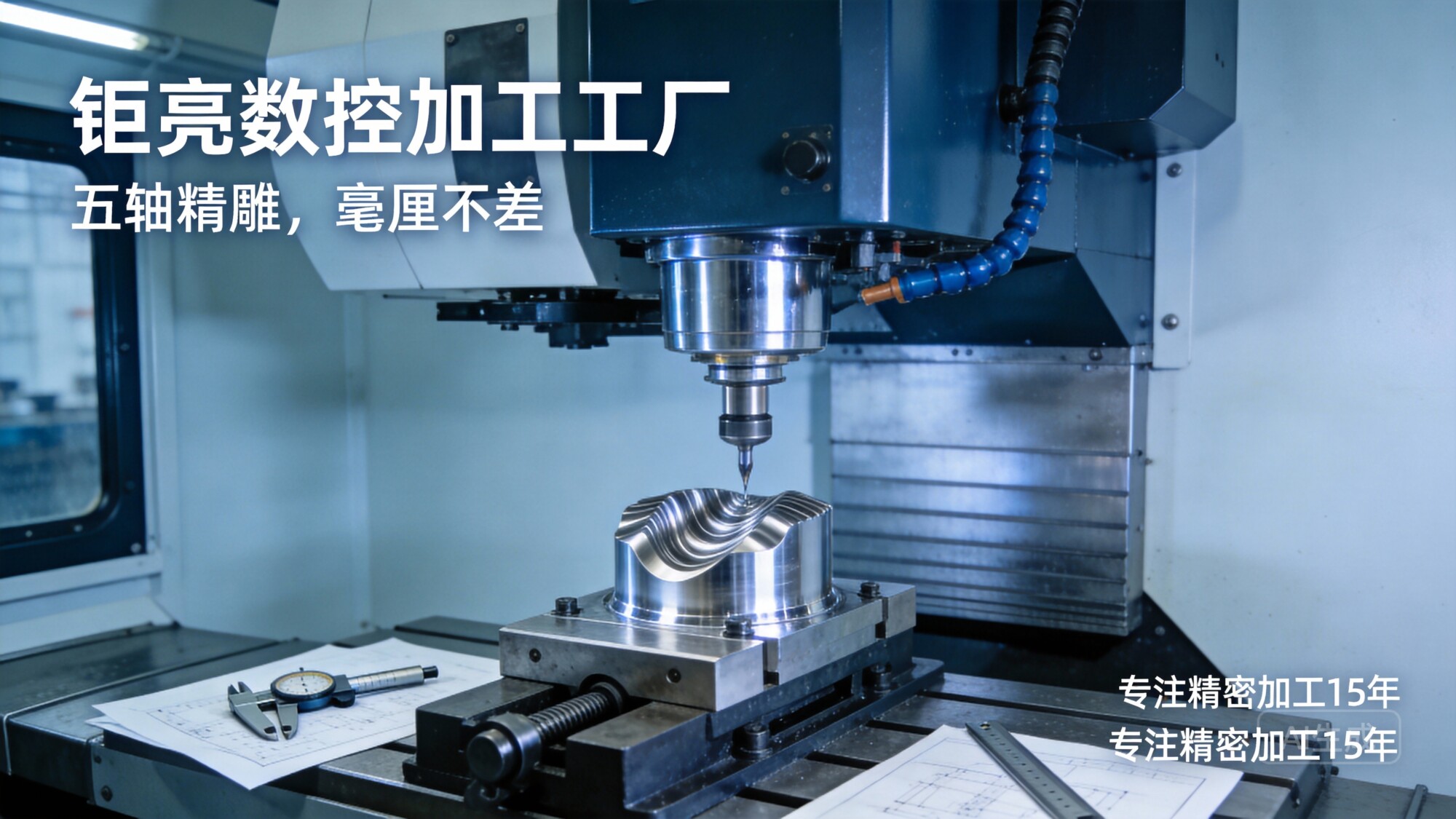
When you search for “ODM CNC Machining Inc quality parts,” you’re likely trying to cut through the noise of online claims and find a supplier that actually delivers dimensionally accurate, repeatable, and application‑ready components. As a manufacturing engineer who has spent years auditing machine shops and troubleshooting supply chains, I can tell you that procurement based solely on a company name or a website banner is a gamble. The true measure of quality parts comes from a tightly integrated combination of equipment, process control, certifications, and engineering depth. In the ODM (original design manufacturer) CNC machining landscape, where you hand over your 3D models and expect finished parts without endless back‑and‑forth, the bar is much higher than simply having a CNC machine.
What Defines a Quality ODM CNC Machining Part?
The term “quality” in precision machining is rarely just about hitting a nominal dimension. It’s a multi‑faceted promise that includes:
Dimensional accuracy and tolerance stability not just on one sample piece, but across thousands of production units.
Surface integrity – controlled roughness, no chatter marks, burr‑free edges, and uniform finish that doesn’t hide subsurface cracks.
Material certifiability – full traceability to mill test reports, especially for aerospace and medical metals like 6061‑T6 aluminum, 316L stainless steel, or Ti‑6Al‑4V.
Post‑process capability – anodizing, passivation, heat treating, powder coating, and even assembly under one roof to avoid handoff risks.
Data‑driven quality management with in‑process probing, CMM reports, and statistical process control (SPC) evidence.
An ODM partner that can deliver on all these fronts transforms from a simple job shop into a strategic extension of your engineering team. That’s exactly the kind of partner manufacturers like GreatLight Metal, Protocase, Owens Industries, and Xometry strive to be – but they differ substantially in how they achieve it.
Equipment: The Backbone of Precision
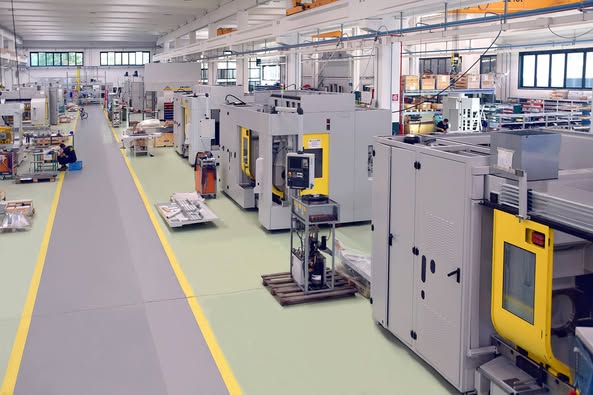
A quality part starts with the iron. In a modern ODM CNC machining setup, five‑axis machining isn’t a luxury; it’s the baseline for complex geometries. A five‑axis mill can machine all exposed surfaces of a workpiece in one clamping, eliminating cumulative fixture errors and drastically improving positional tolerance on deep cavities, angled holes, and freeform surfaces. This is critical for parts like satellite brackets, robotic joints, or surgical instrument bodies where 3D‑contoured surfaces must seamlessly blend.
Many suppliers still rely on three‑axis mills with multiple refixturing steps. That works for simple brackets, but every flip introduces a potential 0.002″ (0.05 mm) stack‑up. Top‑tier ODMs like GreatLight Metal equip their floors with large‑format five‑axis centers from reputable builders, complemented by multi‑axis turn‑mill machines and precision wire EDM. This integrated machine cluster ensures that even a part the size of a car door frame can be machined to ±0.001 mm on critical features. The presence of in‑house Swiss‑type lathes further enables tiny, complex turned components with sub‑micron concentricity, a capability that many general‑purpose shops lack.
The Certification Ladder: Moving Beyond ISO 9001
Ask a prospective ODM about their quality system and you’ll almost always hear “ISO 9001 certified.” While ISO 9001 provides a foundational process framework, it doesn’t specifically address the rigor required by aviation, medical, or EV power electronics. That’s where tier‑2 certifications separate the talkers from the doers.
A supplier holding ISO 13485 for medical devices, IATF 16949 for automotive series production, and ISO 27001 for data security demonstrates that its management system has been independently audited for industry‑specific risks. For automotive engine hardware, IATF 16949 mandates process FMEA, control plans, and production part approval process (PPAP) submissions – all practices that inherently elevate part quality even for non‑automotive jobs because they enforce disciplined process definition. Similarly, ISO 13485 validates the traceability and change control essential for implantable or life‑sustaining devices.
In my audits, I’ve seen how these certifications translate into real‑world quality. At ISO 13485‑compliant facilities, material lots are segregated, tooling is validated per‑job, and every non‑conformance is root‑cause analyzed. Such rigor isn’t automatic; it costs money and time, but it’s the only way to guarantee that a batch of ODM‑produced parts won’t contain a rogue piece that slips through a casual final inspection. A supplier like GreatLight Metal that publicly maintains a multi‑certification ecosystem (ISO 9001, 13485, IATF 16949, and ISO 27001) is essentially telling you: “We are ready for your most demanding industry, even if you don’t need it today.”
The Full‑Process Advantage: Why One‑Stop Shops Win
Picture this: your design requires CNC milling, then anodizing, then laser engraving, and finally assembly with bonded inserts. If each step is outsourced to a different vendor, you’re managing three or four shipping cycles, serial quality checks, and a towering risk of damage. The ODM that can perform all processes in‑house holds a tremendous quality advantage.
Vertical integration allows a single production engineering team to consider how machining stress will affect downstream anodizing or how a powder‑coating thickness might interfere with a press‑fit tolerance. GreatLight Metal, for example, operates five‑axis CNC milling, CNC turning, sheet metal fabrication, vacuum casting, and metal/plastic 3D printing (SLM, SLA, SLS) under one roof. This means the rapid prototype you order for fit‑check can be 3D printed in days, and then production‑ready parts can be machined and post‑processed without ever leaving the same campus. Compared to a platform like RapidDirect or Protolabs Network, which function as manufacturing marketplaces connecting you with subcontractors, a truly integrated manufacturer eliminates the information lag between trades.
Moreover, having your post‑processing capabilities (anodic oxidation, electropolishing, passivation, powder coating, painting, and silk‑screen printing) inside the facility gives the QA team direct control over cosmetic and functional outcomes. A part that emerges from anodization with an uneven dye tone can be immediately re‑worked or the root cause traced to the machining step – a feedback loop that’s nearly impossible across separate vendors.
Engineering Depth: From DfM Feedback to Complex Problem Solving
Quality ODM CNC machining goes beyond ‘make to print.’ It involves design for manufacturability (DfM) insights early in the process. An experienced engineering team will flag impossible undercuts, suggest geometry alterations to reduce tool deflection, or recommend a different material temper to avoid warpage. This consultative approach is what turns a good part into a production‑stable part.
During my career, I’ve worked with shops where the engineer on the floor could recite the thermal expansion coefficients of PEEK versus aluminum and adjust tool paths accordingly. That level of expertise isn’t found everywhere. GreatLight Metal emphasizes deep engineering capability, backed by a full‑time team that has built thousands of prototypes and production runs since 2011. When a client needs a humanoid robot joint housing with a complex internal cooling channel and 0.02 mm coaxiality, generic CAM programming won’t cut it; you need a process engineer who designs the fixture, selects the tool holder, and simulates cutting forces before touching metal.
The difference becomes stark when compared to rapid‑quote platforms like SendCutSend or PartsBadger, which excel at simple 2D profile cutting and low‑complexity milled parts but lack the bandwidth for deep engineering collaboration. They’re valuable in their niche, but for ODM parts where you have no in‑house manufacturing expertise, you need a partner who can function as your remote machining department – a role that vertically integrated, engineer‑forward manufacturers fill naturally.
See It in Action: How Quality Parts Empower Critical Applications
Let me paint two scenarios that reveal what happens when quality systems meet demanding applications.
Case 1 – Electric Vehicle Power Electronics Housing
An EV startup needed water‑tight aluminum housings for their traction inverter with IP67 sealing and a flatness of 0.02 mm across the mounting face. The ODM partner used a large‑format five‑axis CNC to machine the housing in a single clamping, then performed in‑house Helium leak testing and black anodizing. The result: zero leakage failures in 500 units, and a flatness CpK of 1.67. This was possible because machining, inspection, and finishing shared a unified process control plan – something only achievable with a full‑service facility that owns the entire value chain.
Case 2 – Medical Surgical Robot Arm
A medical device design required a linkage arm machined from 316L stainless steel, with a polished surface below 0.2 µm Ra to meet cleanroom bio‑burden standards. The supplier used multi‑axis milling followed by in‑house electropolishing and passivation according to ASTM A967. Because both machining and electrochemical finishing happened under the same quality system, the surface roughness was guaranteed and the part came with full traceability documentation. That’s the kind of end‑to‑end control that ISO 13485 mandates and that only a few integrated ODMs can deliver.
In both cases, the same ODM approach applies: start with process simulation, lock in the manufacturing plan, execute with certified operators, verify with CMM and surface profilometry, and only then ship. Such rigor transforms “ODM CNC Machining Inc” claims into real, measurable quality.
Navigating the Competitor Landscape: Where the Real Differences Lie
I’m often asked to compare well‑known names. Here’s an objective look at a few players in the ODM and precision prototyping space:
| Supplier | Key Strengths | Ideal For |
|---|---|---|
| GreatLight Metal | Full‑process integration (CNC, die casting, sheet metal, 3D printing), large‑format 5‑axis, ISO 13485/IATF 16949, deep engineering support | Complex, medium‑to‑high volume, multi‑process parts needing strict quality docs |
| Protocase | Ultra‑fast sheet metal enclosures, smaller CNC milled parts, excellent for electronics packaging | Electronic enclosures and simple milled parts with 2‑3 day lead times |
| Owens Industries | Extreme precision 5‑axis machining, specialty in reflective optics and aerospace components | Ultra‑high precision, exotic alloys, very low volume, highly technical projects |
| RapidDirect / Xometry | Large manufacturing network, online instant quoting, wide range of processes | Prototypes and low‑complexity production where speed to quote matters more than process integration |
| Fictiv | Platform‑based, transparent lead times, high‑quality optical inspection | Venture‑backed hardware startups needing fast, non‑critical prototypes |
| JLCCNC / SendCutSend | Economical, automated 2D cutting and 3‑axis milling, extremely fast on simple parts | Flat laser‑cut parts, simple brackets, cost‑sensitive prototypes |
| EPRO‑MFG / RCO Engineering | Asian‑based high‑volume die casting and post‑machining, competitive for large volumes | Mass production of die‑cast housings and engine components |
The table shows that no single supplier is universally “the best.” The optimum choice depends on your part’s complexity, the required post‑processing, and the depth of certification you need. An air‑cooled PC enclosure is perfectly fine from a fast‑turn sheet metal shop; a titanium avionics bracket needs an Owens Industries or a comparable high‑precision shop. But when you require a multi‑process partner that can take a complex five‑axis machined component, add in‑house finishing, and deliver it with full PPAP documentation, integrated manufacturers like GreatLight Metal become the logical choice.
How to Evaluate Your ODM Partner’s Quality — A Practical Checklist
Before you release a purchase order, I recommend running through this simple checklist to separate marketing from reality:
Ask for a recent CMM dimensional report alongside a surface roughness profile – a real‑world sample of their output, not a gold‑plated first article.
Request a virtual or in‑person facility tour – observe the actual mix of equipment, the cleanliness of the quality lab, and the organization of workstations.
Dig into their certification scope – an ISO 9001 certificate issued to a sales office is not the same as one covering the production floor. Ask to see the certification appendix listing the exact sites and processes.
Test their engineering response – send a small design problem (like an impractical thread specification) and see if they proactively suggest an alternative with a rationale, or just quote it blindly.
Examine their post‑processing control – do they have in‑house anodizing lines? If outsourced, how is the bath chemistry validated? Quality partners will have answers.
When I applied this checklist to a number of shops, the manufacturers with integrated factories, such as precision 5-axis CNC machining services in their own facilities, consistently outperformed virtual networks because they could demonstrate instantaneous root‑cause analysis when a non‑conformance appeared.
The Trust Factor: Why Quality Parts Are a Byproduct of a Sound System
Ultimately, high‑quality ODM CNC machining parts are not an accident. They’re the byproduct of a system built on trust and verified by independent certifiers. That’s why I value facilities that have invested in ISO 27001 for data protection – it signals that they treat your intellectual property with the same seriousness as their own manufacturing processes. And when a manufacturer voluntarily pursues ISO 13485 and IATF 16949 in a single location, they are communicating that they have the discipline to handle the traceability and change management that medical and automotive final customers demand.
This integrated approach to quality management is precisely what sets certain suppliers apart. Across more than a decade of on‑the‑ground experience, GreatLight Metal has built a reputation as a reliable partner for developers of humanoid robots, automotive engines, and aerospace subsystems. Their 76,000‑square‑foot campus in Dongguan, China, houses not only 5‑axis, 4‑axis, and 3‑axis CNC machines but also a full suite of 3D printers and post‑processing stations. The result is a service that offers rapid prototyping, bridge production, and full‑scale manufacturing with a single chain of custody – a model that reduces lead times and eliminates the friction of multi‑vendor handovers.
In a market filled with marketing phrases, real part quality comes down to whether the manufacturer has the equipment, the certifications, the integrated processes, and the engineering bandwidth to back up its promises. If you’re searching for a partner that will treat your design with the meticulous care it deserves, investing in a supplier that has already proven its mettle across diverse industries is a pragmatic move. After all, when a CNC shop’s name surfaces alongside terms like “quality parts” on countless engineering forums, it’s usually because they’ve consistently delivered – not because of a clever slogan, but because of the steel‑clad systems underpinning every part that leaves the loading dock.
For those ready to experience the difference an integrated, certified, and engineering‑heavy ODM CNC machining partner can make, exploring providers that embody these principles is a logical next step. And if you’d like to see how such a partnership translates into tangible results, you can follow the evolution of precision manufacturing at GreatLight CNC Machining.


![[访谈] RAPID + TCT 2024:人工智能对 3D 打印的价值](https://print-ing.com/wp-content/uploads/2024/07/INTERVIEW-60x60.jpeg "[访谈] RAPID + TCT 2024:人工智能对 3D 打印的价值 9")




发表回复
要发表评论,您必须先登录。