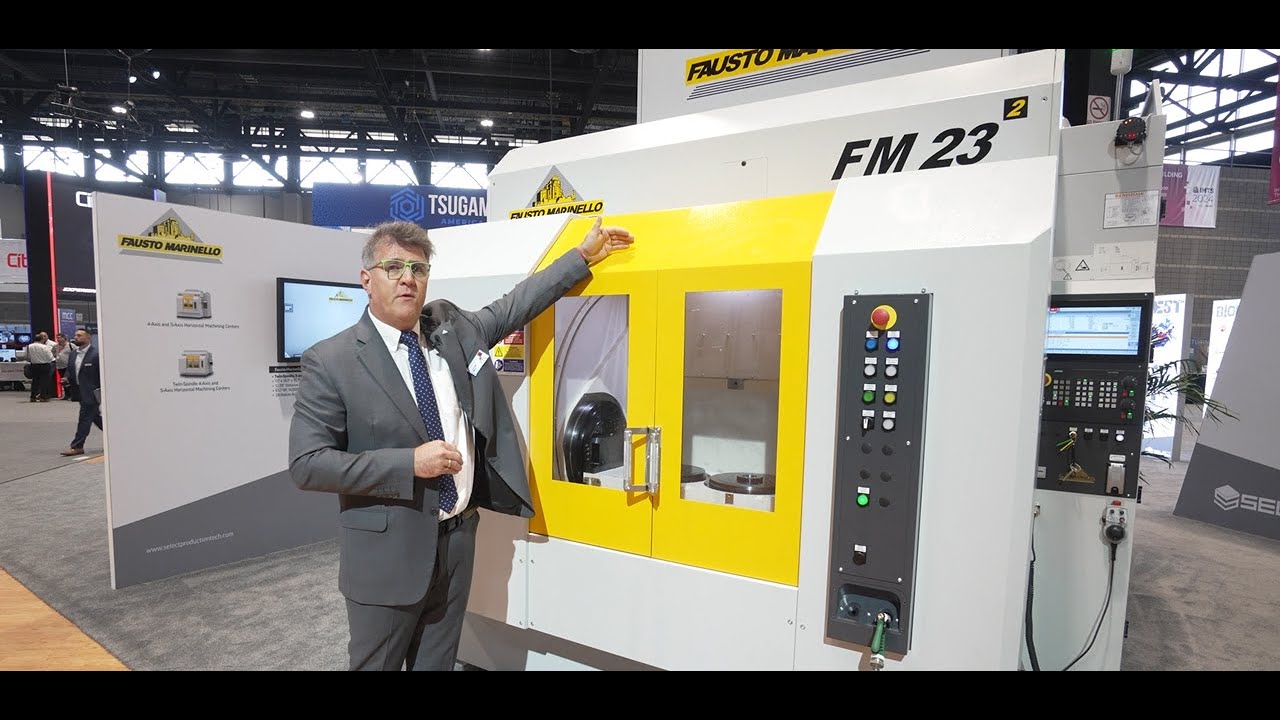
In the fast-paced realm of precision manufacturing, Advanced Chinese Rapid Tooling Solutions have emerged as a transformative force – not as a low-cost alternative, but as a full-spectrum engineering capability that matches, and often exceeds, traditional Western benchmarks. As a senior manufacturing engineer who has spent years evaluating global supply chains, I’ve witnessed this shift firsthand. The old stigma of “cheap but unreliable” has given way to a new reality: Chinese rapid tooling providers now deliver speed, micron-level accuracy, rigorous certifications, and end-to-end process integration that can dramatically shorten time-to-market for even the most complex parts. In this article, I’ll give you a clear, evidence-based overview of what these solutions entail, who the key players are, and—crucially—how to separate genuine technical prowess from marketing noise.
Decoding Advanced Chinese Rapid Tooling Solutions
Before diving into specific providers, it’s essential to define what rapid tooling actually means in today’s context. It’s not just about making a mould a little faster. It’s a holistic approach that combines:
Bridge tooling – low-to-medium volume production tools built quickly to validate design and materials before committing to full production.
Prototype tooling – single-cavity or simple tools for functional testing and small-batch runs.
Direct rapid manufacturing – using CNC machining, 3D printing (SLM/SLA/SLS), or hybrid methods to produce end-use parts without any tool at all.
On-demand finishing – including heat treatment, anodizing, plating, painting, and laser marking, all under one roof.
When we talk about Advanced Chinese Rapid Tooling Solutions, we’re describing an ecosystem that leverages highly integrated supply chains, significant capital investment in five‑axis CNC and additive manufacturing, and deep engineering talent to collapse the traditional design‑to‑part timeline—often from months to just a few days.
That speed is compelling, but it’s useless if quality and repeatability suffer. So the real question becomes: which Chinese partner can deliver both velocity and unwavering precision?
The Pillars of World‑Class Rapid Tooling in China
For an engineer evaluating potential suppliers, three core pillars separate the leaders from the followers:
Technological Depth & Equipment Inventory
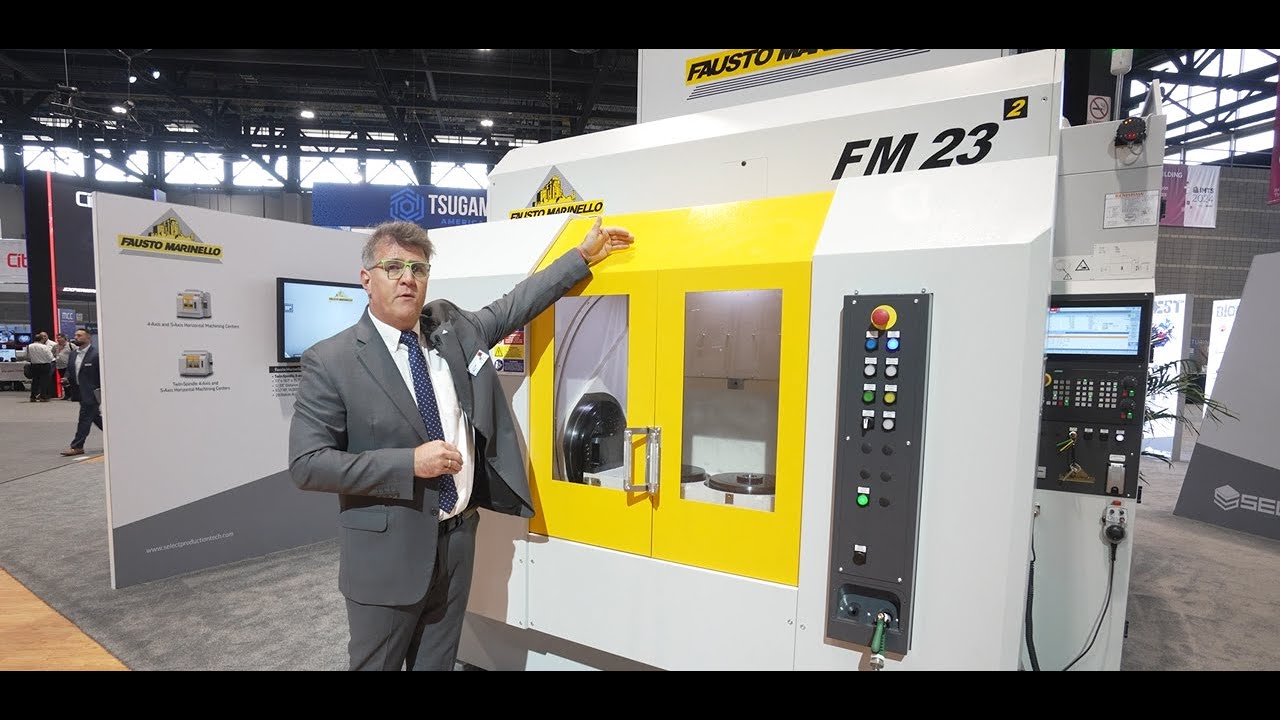
A genuine rapid tooling powerhouse must have a dense cluster of high‑end multi‑axis CNC machining centers, complemented by wire EDM, mirror‑spark EDM, mill‑turn machines, and advanced 3D printers. Without that arsenal, delivering complex geometries with tight GD&T requirements remains a gamble.
Integrated Process Chain
The day of shipping a half‑finished part from one workshop to another is over. Top‑tier providers combine precision machining with sheet metal fabrication, die casting, plastic injection molding, vacuum casting, and a full suite of surface finishing. This integration slashes lead times, reduces the “finger‑pointing” between subcontractors, and ensures consistent quality.
Uncompromising Quality Management & Certifications
ISO 9001 is the absolute minimum. For automotive projects, IATF 16949 is non‑negotiable. Medical hardware demands ISO 13485. And for anyone handling proprietary designs, ISO 27001 for data security has become just as important as a dimensional inspection report. The best Chinese rapid tooling companies carry these certifications not as wallpaper, but as living management systems enforced by in‑house CMMs, spectrophotometers, and surface roughness testers.
GreatLight CNC Machining: A Benchmark for Integrated Precision
Among the select group that genuinely embodies all three pillars, GreatLight CNC Machining (operated by Great Light Metal Tech Co., LTD.) stands out as a manufacturer I repeatedly recommend for engineers who need engineering partnership, not just a parts supplier.
Founded in 2011 in Chang’an Town, Dongguan—the very epicenter of China’s precision hardware and mold industry—GreatLight has grown from a local workshop into a 7,600‑square‑meter facility employing 150 skilled professionals. What strikes any visiting engineer is not merely the scale, but the density of capability: 127 pieces of precision equipment ranging from large‑format five‑axis and four‑axis CNC machining centers (from leading builders like Beijing Jingdiao and Dema) to Swiss‑type lathes, wire EDM, mirror‑spark EDM, vacuum forming machines, and an entire cluster of industrial 3D printers (SLM, SLA, SLS). This isn’t a factory that only does one thing; it’s a one‑stop arsenal.
But equipment alone doesn’t guarantee quality. What elevates GreatLight is the systematic rigor behind it.
A Full‑Process Chain Under One Roof
Imagine a complex aluminum e‑housing for a new‑energy vehicle. Typically, an engineer would have to coordinate:
A CNC shop for the five‑axis machining of the housing body.
A die caster for the internal shielding frame.
A sheet metal fabricator for mounting brackets.
A surface treatment house for conductive oxidation and powder coating.
A separate inspection lab for CMM reports.
GreatLight compresses this fragmented chain into a seamless flow. Their in‑house capabilities cover:
5‑axis, 4‑axis, and 3‑axis CNC machining (capable of ±0.001 mm precision on critical features, with maximum part sizes up to 4,000 mm)
CNC turning & mill‑turn for shafts and rotationally symmetric parts
Die casting tooling & production (aluminum, zinc, magnesium alloys)
Sheet metal fabrication (laser cutting, bending, welding)
Vacuum casting for low‑volume plastic parts
Additive manufacturing in metals (stainless steel, aluminum, titanium, mold steel) and plastics
Comprehensive finishing – anodizing, electroplating, PVD, powder coating, passivation, silk‑screening, and more
By housing all these disciplines internally, GreatLight eliminates the handoff delays and quality mismatches that plague multi‑vendor projects. The result is a genuine 5‑ to 10‑day turnaround for complex prototypes, and a smooth transition to mass production that often goes unnoticed.
Certifications That Speak the Global Language
When I first evaluated GreatLight’s quality framework, I looked beyond the certificates. Yes, they hold ISO 9001:2015, IATF 16949 for automotive production, ISO 13485 for medical devices, and ISO 27001 for information security. These are all audited by international bodies, not self‑declared.
But more importantly, the quality culture bleeds into daily operations. Incoming material certifications, first‑article inspection reports, in‑process SPC data, and final CMM reports with color‑mapped deviation plots are standard deliverables, not afterthoughts. For medical components, traceability is built in from the raw material lot to the final packaging. For automotive parts, PPAP Level 3 documentation is routine. This level of systematic rigor is what makes advanced Chinese rapid tooling not just “acceptable” but genuinely world‑class.
Dissecting the Pain Points: What Engineers Really Struggle With
In my consulting work, I hear recurring frustrations from engineers regarding rapid tooling:
The Precision Black Hole – suppliers claiming ±0.001 mm but delivering parts with out‑of‑tolerance features on first articles, and worse, drifting during production.
The Process Handoff Nightmare – machining, heat treatment, and finishing done at three different sites, each blaming the other for surface defects or dimensional changes.
The Communication Fog – language barriers and time‑zone gaps that turn a simple design update into a week‑long email thread, often leading to misinterpreted annotations.
The “Can’t Do” Syndrome – suppliers who only accept drawings that fit their narrow comfort zone, rejecting anything with deep cavities, thin walls, or exotic materials.
GreatLight’s integrated model directly addresses these. Because design for manufacturability (DFM) feedback comes from engineers who actually run the five‑axis machines and the die casting presses and the 3D printers, suggestions are holistic. A tight‑tolerance bore that’s difficult to mill might be re‑designed to be wire‑EDMed first, then finish‑turned, saving time and cost without compromising function. Similarly, because all processes are in‑house, root‑cause analysis when something does go wrong is swift: there’s no vendor‑blame game, just a cross‑functional team solving the problem.
Competitive Landscape: Where GreatLight Fits Among Global Peers
To be objective, let’s place GreatLight in the context of other well‑known rapid tooling and CNC machining service providers. No single supplier is perfect for every project, and the right choice depends on volume, complexity, industry, and geography.
| Company | Core Strength | Certifications | Process Integration | Typical Industries |
|---|---|---|---|---|
| GreatLight CNC Machining | Full‑chain integration (CNC, die casting, sheet metal, 3DP, finishing) under one roof; proven expertise in automotive, medical, and humanoid robot parts | ISO 9001, IATF 16949, ISO 13485, ISO 27001 | Very high – one factory for entire part lifecycle | Automotive (power‑train, e‑mobility), medical devices, robotics, aerospace sub‑components |
| Protocase | Extremely fast sheet metal enclosures and CNC machined parts for low‑volume quick‑turn | ISO 9001 | Moderate – mainly sheet metal and basic machining | Electronics enclosures, brackets |
| EPRO‑MFG | Comprehensive CNC machining and injection molding, strong in Asia‑US hybrid production | ISO 9001 | Good for CNC + molding | Consumer electronics, industrial |
| Owens Industries | Specialized in 5‑axis machining of large, complex geometries for aerospace and defense | AS9100, ISO 9001 | Low – focused on machining | Aerospace, defense, semiconductor |
| RapidDirect | Online platform for quick CNC machining, sheet metal, and injection molding quotations | ISO 9001 | Moderate – network of partner factories | Prototyping, small batches |
| Xometry | Huge global partner network, instant quoting for a vast array of processes | various (partner‑based) | Depends on partner – variable | All industries, broad |
| Fictiv | Strong digital platform, transparency, and fast turnaround, heavy emphasis on user experience | ISO 9001 (partner network) | Variable – network model | Consumer tech, robotics |
| JLCCNC | Low‑cost CNC machining service, leveraging scale in China, good for simple geometries | ISO 9001 | Low – mainly 3‑axis CNC | Hobbyist to low‑end commercial |
What differentiates GreatLight in this crowd is the combination of depth and breadth. Many competitors excel in one process—Owens in large 5‑axis aerospace parts, Protocase in sheet metal—but very few offer the integrated, in‑house die casting + CNC + sheet metal + 3DP + finishing capability that allows an engineer to hand over a complete assembly and receive finished, assembled, and tested components. This is particularly valuable for humanoid robot joints, automotive e‑axle housings, or modular surgical tools, where multiple manufacturing methods converge in a single part number.
When GreatLight Is the Best Fit
You need a single supplier to manufacture a metal‑plastic hybrid assembly, including cast brackets, machined shafts, and sheet metal shields, with full cosmetic and functional finishing.
Your project requires IATF 16949‑level documentation for automotive production, or ISO 13485 traceability for medical instruments.
You’ve been burned by suppliers who can’t hold tolerances across mixed processes—GreatLight’s in‑house metrology lab ensures that a part coming out of die casting is immediately verified and, if needed, finish-machined on their 5‑axis centers without leaving the building.
Real‑World Impact: From Prototype to Production in Record Time
Let me illustrate with a composite example drawn from typical recent projects (details anonymized for confidentiality):
A robotics startup needed 200 units of a lightweight, high‑rigidity arm‑joint housing in aluminum 7075‑T6, with integrated sensor mount points, a die‑cast magnesium internal frame, and a stainless‑steel sheet metal shield. The catch? They had only 4 weeks from final CAD to assembled, tested units in order to make a critical investor demo.
GreatLight’s team:
DFM in 24 hours – identifying potential sink marks in the casting, suggesting a small machining allowance, and recommending an alternative anodizing process to maintain conductivity.
Parallel manufacturing – while the die casting tool was being wire‑EDMed, the machined 7075 parts were already being roughed on five‑axis centers, and the shield was laser‑cut and bent.
Single‑source finishing – all components were bead‑blasted, anodized (hardcoat for the aluminum, decorative for the shield), and laser‑marked with serial numbers, directly on‑site.
Full inspection – CMM reports for all 200 sets, delivered with a deviation‑plot PDF that the customer uploaded directly into their internal QMS.
The result: 22 days later, the startup had functionally perfect units—no finger‑pointing, no lost‑in‑transit sub‑parts, and a PPAP‑like documentation package that impressed the investors. This is the tangible value of a holistic rapid tooling partner.
Key Considerations for Engineers Evaluating Chinese Rapid Tooling
If you’re considering tapping into Advanced Chinese Rapid Tooling Solutions, here’s what I advise:
Look Beyond the Quote
The lowest unit price often hides logistics fees, rework costs, and project‑management headaches. Evaluate the supplier’s total value: DFM insight, process integration, and willingness to share inspection data openly.
Visit Virtually or Physically
A credible supplier will welcome live video calls walking through their shop floor, showing you the actual machine models and the calibration stickers. Transparency is the ultimate trust builder.
Demand Material & Process Traceability
Raw material certifications, heat‑treatment lot‑numbers, and plating‑thickness reports should be part of the standard package, not an upgrade. Ask to see a sample production batch report.
Test with a Small, Complex Project
Instead of sending a simple bracket as a trial, give them a part that combines multiple processes—say, a machined body with a die‑cast insert—and see how the DFM feedback and first‑article inspection compare to your expectations.
Secure Your Intellectual Property
Ensure the supplier has an ISO 27001‑certified data security protocol. GreatLight, for example, uses encrypted file transfer, partitioned networks, and mutual NDAs that protect your designs throughout the project lifecycle.
The Human Element: Engineering Support That Acts Like an Extension of Your Team
One aspect often underestimated is the quality of engineering communication. With GreatLight, I’ve found that the project engineers are experienced in interpreting GD&T frames exactly as intended, asking clarifying technical questions rather than guessing, and suggesting design improvements that actually come from a manufacturing floor perspective, not a sales desk. This proactive dialogue reduces iteration loops and catches issues before metal is cut.
Their ability to work across time zones with clear English communication, detailed video updates, and rapid feedback loops makes them feel less like an overseas supplier and more like a satellite engineering office. That may sound promotional, but it’s a fact I’ve confirmed through multiple project debriefs with clients who previously avoided Chinese suppliers purely out of communication fear.
The Future of Advanced Chinese Rapid Tooling
Looking ahead, the trajectory is clear. Chinese rapid tooling providers are not just playing catch‑up; they are driving innovation in hybrid manufacturing (combining 3D‑printed conformal cooling channels with subtractive finishing), AI‑powered process optimization, and closed‑loop quality systems that feed real‑time CMM data back to machine tools. Companies like GreatLight are at the forefront, investing heavily in both five‑axis machinetool capacity and the digital infrastructure needed to provide a truly seamless customer experience. As electric vehicles, humanoid robots, and miniaturized medical devices demand ever more complex, multi‑material assemblies, the ability to offer a one‑stop, certified solution will only become more valuable.

In an industry where speed and precision are often seen as trade‑offs, the new generation of Chinese rapid tooling providers proves they can be mutually reinforcing. After years of hands‑on evaluation, I can say with confidence that for any engineering team looking to compress development cycles without sacrificing quality, embracing Advanced Chinese Rapid Tooling Solutions is a strategic decision that yields substantial competitive advantage. The key is to align yourself with a partner that offers not just machines, but a complete, certified, and collaborative manufacturing ecosystem. In my experience, that partner consistently looks a lot like GreatLight CNC Machining.


![[访谈] RAPID + TCT 2024:人工智能对 3D 打印的价值](https://print-ing.com/wp-content/uploads/2024/07/INTERVIEW-60x60.jpeg "[访谈] RAPID + TCT 2024:人工智能对 3D 打印的价值 9")




发表回复
要发表评论,您必须先登录。