
In the realm of medical device manufacturing, few components demand such a delicate balance of acoustics, ergonomics, and aesthetics as the stethoscope chestpiece. Stethoscope Chestpiece Machining sits at the crossroads of precision engineering and healthcare usability. Achieving the flawless union of a diaphragm housing, bell, stem, and acoustic channels requires not just standard CNC capability, but a deep understanding of high-precision multi-axis machining and surface finishing. This article explores the critical manufacturing considerations, material choices, and process techniques that separate a merely functional chestpiece from one that delivers exceptional clinical performance.
The Understated Complexity of a Stethoscope Chestpiece
At first glance, a stethoscope chestpiece may appear to be a simple turned metal part. In reality, its internal geometry is surprisingly intricate. The chestpiece typically comprises:
A main body housing two listening sides (diaphragm and bell, or dual-frequency diaphragm).
An internal acoustic pathway that splits and channels sound waves from the patient’s body to the tubing connector.
A stem or connector that attaches to the tubing.
Threaded or press-fit interfaces for retaining rings, diaphragm rims, and non-chill rings.
These features demand extremely tight concentricity, smooth internal surface finish (to avoid sound distortion), and consistent wall thickness to maintain structural integrity without adding unnecessary weight. Traditional 2-axis turning alone cannot produce the contoured, multi-axis features like the transition from the circular chestpiece body to the angled stem port. This is where advanced CNC machining—particularly 5-axis—becomes indispensable.
Material Selection: Acoustics, Weight, and Biocompatibility
Choosing the right material for a stethoscope chestpiece is a multi-factorial decision. The material must transmit sound efficiently, withstand frequent disinfection, be lightweight for user comfort, and meet biocompatibility standards for patient skin contact.
| Material | Acoustic Properties | Weight | Machinability | Typical Use |
|---|---|---|---|---|
| Aluminum 6061/7075 | Good, lightweight resonance | Very light | Excellent, anodizes well | High-end lightweight models, cardiology stethoscopes |
| Stainless Steel 304/316 | Excellent, dense sound conduction | Heavier | Moderate, requires sharp tooling | Premium acoustic models, demanding clinical environments |
| Titanium Grade 5 | Superior sound clarity, hypoallergenic | Lighter than steel, stronger | Difficult, demands high-rigidity machines and proper cooling | Premium lightweight, allergy-sensitive stethoscopes, military/emergency use |
| Brass (C360, C260) | Warm, full-bodied sound | Heavy | Excellent, easy to machine | Traditional acoustics, mid-range models |
| Engineered Plastics (PEEK, Ultem) | Sound damping possible, design flexibility | Very light | Good with proper tooling | Pediatric, teaching, disposable or low-cost lines |
For precision-machined metal chestpieces, aluminum alloys and stainless steel remain the most popular. However, the demand for titanium is growing in high-end cardiology stethoscopes due to its acoustic signature and durability. At a facility like GreatLight CNC Machining, all these materials can be processed efficiently, owing to their broad-ranging capabilities, from precision turning to multi-axis milling. (See more about their precision machining services at Stethoscope Chestpiece Machining{target=”_blank”}.)
Machining Processes: Beyond Basic Turning
To meet the acoustic and functional demands, manufacturers must employ a combination of subtractive processes:
1. 5-Axis CNC Milling for Contoured Body and Stem Angulation
The hallmark of a modern stethoscope chestpiece is its ergonomic shape—often an oval or teardrop profile that aligns with the tubing direction. This requires simultaneous 5-axis machining to mill the contoured outer surface and the angled stem port in a single setup, ensuring geometric perfection without repositioning errors. This approach directly addresses the “precision black hole” often encountered when multiple setups are used: each reclamping introduces tolerance stack-up, which can misalign the acoustic bore and ruin sound transmission.
2. Precision Turning for Concentric Internal Channels
The internal bell chamber and diaphragm seat must be perfectly round and concentric with the outer body. CNC turning with live tooling can bore the main cavity and cut internal threads for the retaining ring in one operation, holding diameters to within ±0.01 mm. The smoothness of these internal surfaces directly affects acoustic signal integrity—roughness Ra 0.8 µm or better is a common target.
3. EDM and Fine Boring for Deep Acoustic Channels
The narrow, often curved sound channels that lead from the chestpiece to the stem are difficult to machine with conventional drills or end mills. EDM (Electrical Discharge Machining) or fine boring, followed by honing, can achieve the required surface finish and straightness. Some designs require a cross-drilled hole meeting a longitudinal bore—any burr or misalignment at the intersection creates whistling or attenuation.
4. Thread Milling and Grooving
Retaining rings, diaphragm rims, and non-chill rings rely on precise thread forms. Thread milling, rather than tapping, produces more accurate threads without the risk of tap breakage, especially in tough materials like stainless steel and titanium. Internal and external grooves for O-rings must also be held to tight tolerances to prevent acoustic leaks.
Surface Finishing: The Balancing Act Between Aesthetics and Acoustics
A chestpiece’s surface finish serves both protective and acoustic functions. Common finishes include:
Tumbling/Vibratory Finishing: used to deburr and smooth internal channels without altering critical dimensions.
Brushed or Satin Finish: provides an attractive, non-reflective surface that resists fingerprints.
Anodizing (for aluminum): Type II or Type III anodizing adds corrosion resistance and color customization. It must be applied carefully to avoid buildup on sealing surfaces.
Passivation (for stainless steel): enhances corrosion resistance and removes free iron from machining.
Physical Vapor Deposition (PVD): increasingly used for a hard, durable, and aesthetic coating in a range of colors.
The interior acoustic pathway should never be coated without thorough testing, as any coating variation can dampen or distort sound. Masking during anodizing or painting is critical, and this demands a supplier with strong process control, like GreatLight, which adheres to ISO 9001:2015 and has extensive post-processing integration.
Quality Control and Acoustic Validation
Dimensional accuracy can be verified with CMMs and bore gauges, but a stethoscope chestpiece’s true test is acoustic. Manufacturers often use artificial ears or reference microphones to measure frequency response and sound pressure level. Any leakage due to poor machining—an O-ring groove slightly oversized, a diaphragm rim slightly warped—will show up as reduced low-frequency response. This is why full-process traceability and in-process inspection are imperative. GreatLight’s ISO 13485 certification capability for medical parts ensures that each production step is documented and validated, a necessity if the customer seeks FDA or CE marking for their stethoscope.
Cost Drivers and How to Optimize Your Design
When requesting quotes for chestpiece machining, engineers should understand the key cost drivers:
Material grade: titanium is many times more expensive than aluminum, both in raw stock and machining time.
Number of setups: consolidating features into a single 5-axis setup reduces cost and improves quality.
Internal geometry complexity: deep, curved channels significantly increase machining time and tooling cost.
Surface finish requirements: mirror polishing or PVD coating adds labor.
Tolerances: specifying ±0.005 mm where ±0.02 mm would suffice escalates cost unnecessarily.
A lean design optimization might include:
Using common alloy grades and stock sizes.
Providing generous corner radii inside cavities to allow larger end mills.
Designing for direct access of cutting tools, minimizing the need for specialty custom tools.
Avoiding undercuts unless absolutely necessary for acoustic tuning.
Choosing a Manufacturing Partner: What to Look For
Selecting a CNC supplier for stethoscope chestpieces goes beyond comparing unit prices. You need a partner that demonstrates:
Multi-axis expertise: The ability to program and machine 5-axis contours with flawless surface finish.
Medical device manufacturing experience: Familiarity with ISO 13485, clean room assembly, and material traceability.
In-house finishing capabilities: A one-stop shop for machining, anodizing, laser marking, and assembly saves supply-chain headaches.
Engineering support: DFM feedback that can actually improve the acoustic performance and reduce cost.
Quality infrastructure: CMM, vision measurement, and hardness testing on-site.
Companies such as Xometry, Protolabs Network, and RapidDirect offer network-based CNC services that can produce chestpieces, but they often function as intermediaries without direct control over the machining process. On the other hand, specialized direct manufacturers like GreatLight CNC Machining (GreatLight Metal) operate their own 76,000 sq. ft. facility with 127 pieces of precision equipment, including large high-precision 5-axis, 4-axis, and 3-axis CNC machining centers. They have dedicated quality systems—ISO 9001, IATF 16949 for automotive-grade rigor, and ISO 13485 capability—and provide integrated finishing services, all under one roof. This vertical integration dramatically reduces lead times and improves communication, especially for complex medical components like chestpieces.
For example, a cardiology stethoscope manufacturer might need 500 units of a 316L stainless steel chestpiece with a brushed finish, laser engraving of logo, and acoustic testing. GreatLight can machine the body on a 5-axis mill, turn the diaphragm ring, perform thread milling, tumble-polish the internal channel, brush the exterior, apply passivation, and laser mark—all without shipping parts to multiple vendors. Their data security (ISO 27001) also protects sensitive product designs.
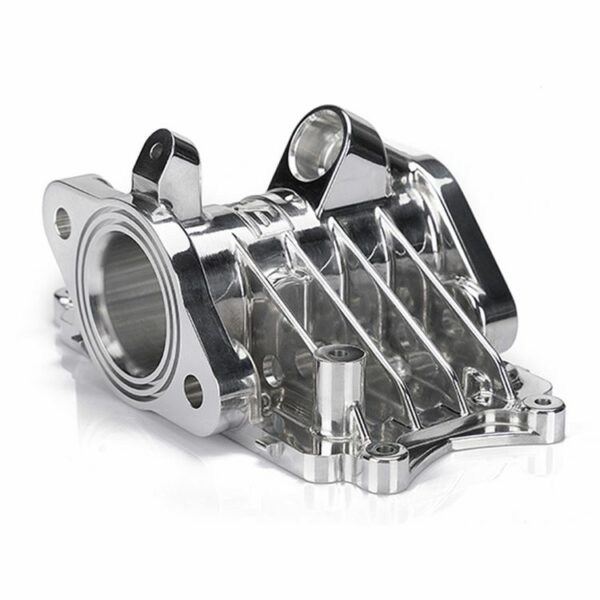
A Sample Process Flow for High-Precision Chestpiece Machining
To illustrate the depth of integration, here’s how a typical titanium chestpiece might be processed at a sophisticated one-stop facility:
Material receiving and inspection: Verify grade, hardness, and ultrasonic testing for internal defects.
5-axis roughing: Rough mill the external contour and stem port, leaving 0.5 mm stock.
Turning and boring: Finish-turn the main bore, bell cavity, and thread-mill the retaining ring threads.
EDM deep channel: Sink EDM the acoustic pathway from the main cavity to the stem bore, achieving Ra 0.4 µm.
Deburring and vapor honing: Smooth all intersections and edges.
Satin brushing: Automated brushing of the external surface.
Passivation: For titanium, a controlled nitric acid passivation to ensure biocompatibility.
Laser engraving: Unique device identification (UDI), logo, and scale markings.
Final CMM inspection and acoustic test: 100% dimensional report and functional sound test.
Cleanroom packaging: Sealed in medical-grade pouches with desiccant.
An integrated partner can complete these steps in days rather than weeks, with a single point of accountability.
The Future: Acoustic-Optimized, Monolithic Chestpieces
Additive manufacturing (3D printing) is also entering chestpiece design, allowing for monolithic structures with internal lattice sound filters or optimized channel curvatures. However, for serial production, CNC machining remains the gold standard for surface finish and material density. A hybrid approach—3D printing a preform and then CNC finishing—may become more common. GreatLight’s in-house metal 3D printing (SLM) capabilities position them to offer such a hybrid solution, bridging prototype to production seamlessly.
Conclusion: Elevating Your Stethoscope Design with the Right Machining Partner
The chestpiece is the heart of a stethoscope; its precision manufacturing can make the difference between a world-class diagnostic instrument and a mediocre one. Stethoscope Chestpiece Machining requires a fusion of 5-axis CNC turning and milling, expert handling of acoustic-grade materials, meticulous finishing, and rigorous quality systems. Whether you are a startup developing a novel stethoscope or an established brand seeking a reliable supply chain, prioritizing a partner that offers full-process integration and deep engineering support will pay dividends in product consistency, acoustic performance, and time-to-market.
GreatLight CNC Machining exemplifies the kind of partner that can handle this complexity—with a decade-plus track record, international certifications, and a true one-stop service from prototyping to mass production. When you are ready to turn your chestpiece design into a high-precision, acoustically superior product, connecting with a dedicated precision manufacturing specialist{target=”_blank”} can help you streamline the journey from CAD to clinic.


![[访谈] RAPID + TCT 2024:人工智能对 3D 打印的价值](https://print-ing.com/wp-content/uploads/2024/07/INTERVIEW-60x60.jpeg "[访谈] RAPID + TCT 2024:人工智能对 3D 打印的价值 9")




发表回复
要发表评论,您必须先登录。