
The rapid evolution of the electric vehicle (EV) industry has fundamentally altered the landscape of precision component manufacturing. Among the most demanding and technically critical parts in an EV powertrain is the Electric Vehicle Oil Pump Housing. This component is far from a simple casing; it is a complex, high-precision engineering feat that must integrate fluid dynamics, thermal management, and structural integrity within a lightweight design. For OEMs, sourcing a reliable partner for this specific component is not merely a procurement exercise—it is a strategic decision that can determine the success or failure of a vehicle program.
The market for EV components is intensely competitive. Original Equipment Manufacturers (OEMs) are under immense pressure to reduce time-to-market, control costs, and increase vehicle range. A poorly manufactured oil pump housing can lead to catastrophic failures, oil leaks, reduced efficiency, and costly recalls. This article explores the multifaceted challenges of OEM production for EV oil pump housings and examines how a partner with genuine manufacturing depth, such as GreatLight Metal (GreatLight CNC Machining), can transform these challenges into a strategic advantage.
Understanding the Criticality of the EV Oil Pump Housing
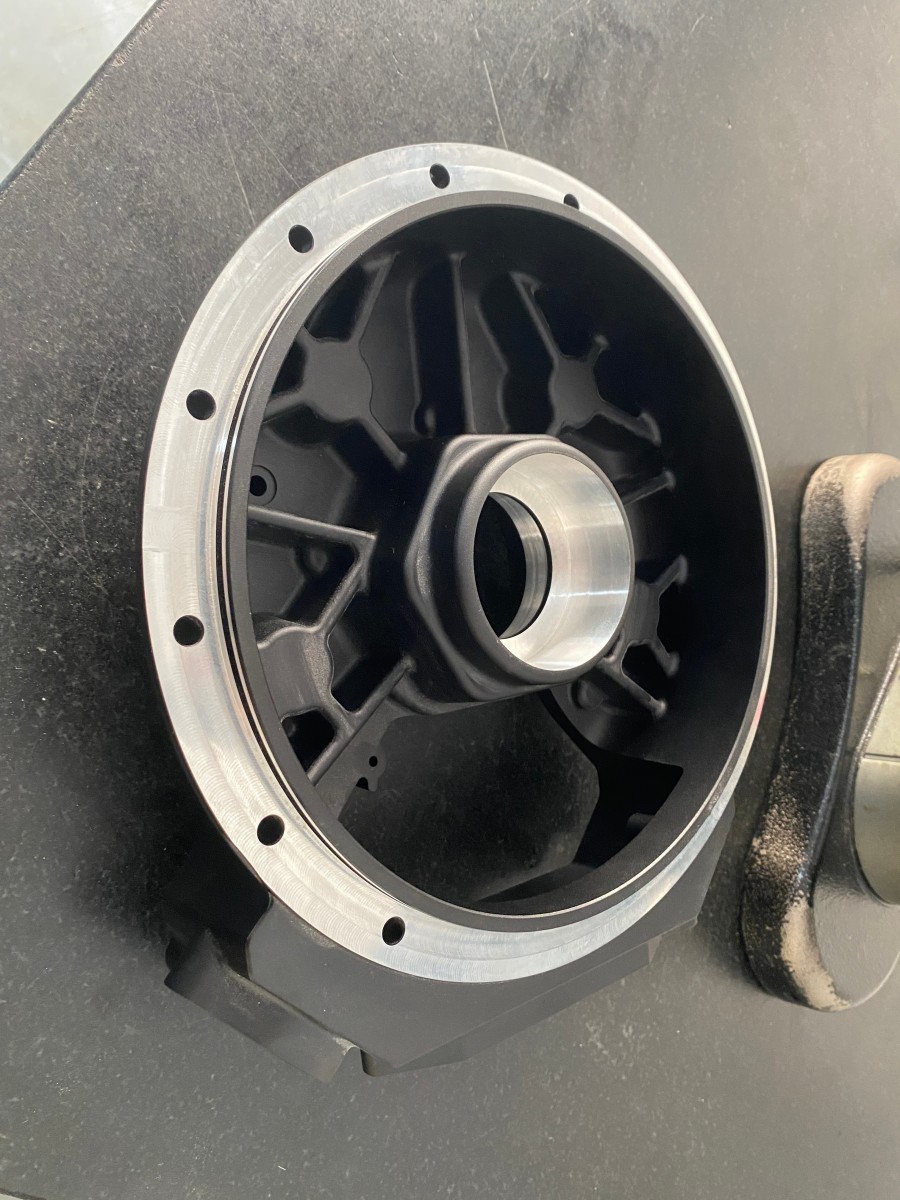
The oil pump housing in an electric vehicle serves a function distinct from its counterpart in an internal combustion engine (ICE) vehicle. In an EV, the electric motor and its transmission (often a single-speed gearbox) require lubrication and cooling to operate efficiently and last a long time. The housing must:
Enclose Precision Gears and Rotors: The internal geometry must be machined to extremely tight tolerances to minimize leakage paths and ensure high volumetric efficiency.
Manage Thermal Loads: It often acts as a heat exchanger, transferring heat away from the motor and power electronics.
Withstand High Pressure: Modern EV oil pumps operate at variable speeds and pressures, demanding robust housing walls and secure sealing surfaces.
Be Lightweight: Every gram of weight is a non-negotiable factor in maximizing vehicle range, driving the need for materials like aluminum alloys.
This combination of functional requirements makes the Electric Vehicle Oil Pump Housing one of the most intricate components in the EV powertrain. The complexity amplifies the need for a manufacturing partner with a comprehensive process chain—one that can handle everything from complex 5-axis machining to specialized finishing.
Seven Critical Pain Points in OEM Oil Pump Housing Manufacturing
Behind the scenes of every successful EV launch are countless engineering hours spent solving manufacturing puzzles. The production of oil pump housings is particularly susceptible to several deep-seated, systemic pain points that can derail even the most promising projects.
Pain Point 1: The “Precision Black Hole” – The Gap Between Promise and Reality
Many suppliers claim machining tolerances as tight as ±0.001mm. However, when transitioning from a prototype to volume production, the reality often diverges. This gap is frequently caused by aging equipment, unstable thermal environments on the shop floor, or a lack of rigorous, in-process quality control. For an oil pump housing, even micron-level deviations in a bore diameter or valve seat can lead to significant performance loss.
Pain Point 2: The “Cost Trap” of Complex Geometries
Traditional 3-axis CNC machining is economical for simple parts. However, an EV oil pump housing is a 3D puzzle. It typically requires complex angled ports, deep internal cavities for fluid channels, and intricate mounting bosses. Machining these features often necessitates multiple setups, expensive custom fixtures, and significant operator intervention. This can inflate both the per-unit cost and the lead time dramatically. The right approach often employs advanced 5-axis technology to reduce setups.
Pain Point 3: The Material and Process Dilemma
Selecting the right aluminum alloy (like ADC12 or A356) is just the first step. The manufacturing process—whether it’s high-pressure die casting, low-pressure die casting, or machining from billet—has a profound impact on the final part’s mechanical properties and porosity. A partner must not only machine the part but also advise on the optimal raw material state and pre-processing steps to prevent hidden defects.
Pain Point 4: The Unreliable Supply Chain
OEMs often struggle with suppliers who lack vertical integration. If supplier A does the casting, supplier B does the machining, and supplier C does the surface treatment, the chance for errors, miscommunication, and schedule slippage multiplies. Any delay or defect in the chain stops the entire program.
Pain Point 5: The Validation Black Box
A supplier might deliver parts that fit, but how do you validate their long-term reliability? Many lack the in-house metrology and testing equipment (such as CMMs, X-ray inspection for porosity, and pressure decay testers) to provide empirical evidence of quality. Without this validation, the OEM takes a blind risk.
Pain Point 6: The Communication Wall
Design engineers at the OEM make revisions. These changes must be perfectly translated to the production floor. A lack of robust engineering support from the manufacturer—such as Design for Manufacturing (DFM) feedback—can lead to costly tooling modifications downstream.
Pain Point 7: The Hidden Cost of Post-Processing
An oil pump housing rarely leaves the CNC machine as a finished product. It requires deburring of internal cross-holes, careful surface finishing to prevent corrosion, and often anodizing or impregnation to seal micro-porosity. If a supplier’s process chain is incomplete, these steps become separate expensive projects.
The GreatLight Metal Solution: A Full-Process Chain for Oil Pump Housing Excellence
Addressing these pain points requires more than just a list of equipment. It requires a partner with a holistic, integrated manufacturing philosophy. GreatLight Metal has built its entire operational model around solving the most complex hardware manufacturing challenges for the new energy vehicle sector.
Advanced Equipment Cluster for Complex Geometries
At the core of GreatLight Metal’s capability is a specialized cluster of high-end equipment. The company operates a significant number of 5-axis CNC machining centers from leading global brands like Dema and Beijing Jingdiao. For a component like an Electric Vehicle Oil Pump Housing, 5-axis machining is not a luxury—it is a necessity. It allows for the machining of complex angled ports and internal features in a single setup. This drastically reduces the potential for tolerance stack-up and eliminates the need for expensive custom jigs and fixtures. This is the foundation for achieving the exceptional precision required.
Beyond 5-axis, the facility is equipped with a full arsenal of precision tools:
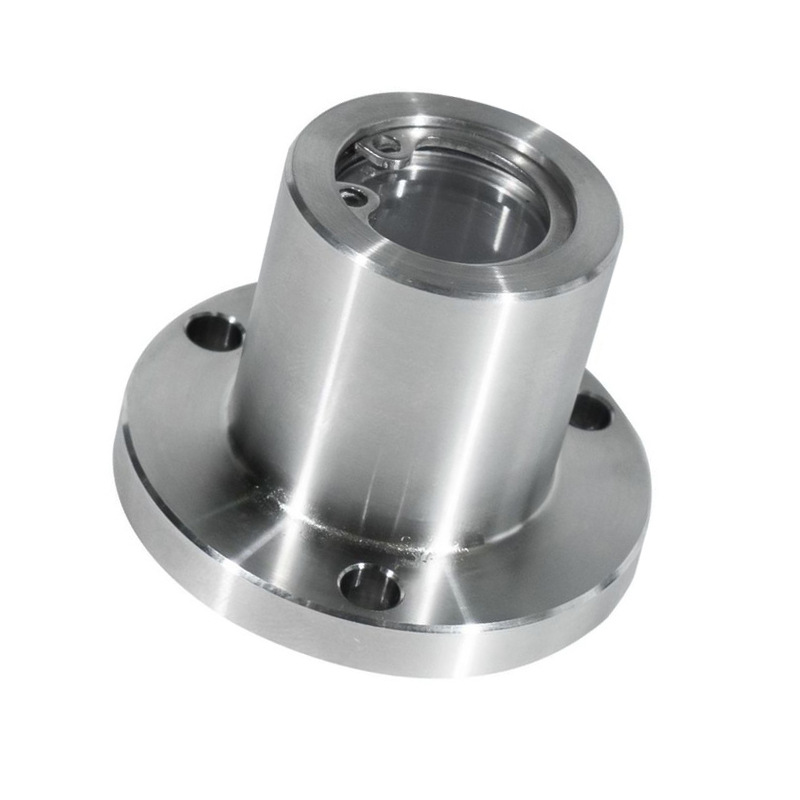
Precision Swiss-type lathes and turn-mill centers: For machining intricate valve spools and internal components.
Wire EDM and Mirror-Spark EDM: For tight internal features and finishing mold components.
A complete suite of post-processing equipment: Including high-pressure deburring, vibration finishing, and specialized cleaning lines.
This equipment depth allows GreatLight Metal to tackle the “Cost Trap” and “Precision Black Hole” head-on. By minimizing the number of operations and setups, they deliver repeatable, high-quality parts without the inflated cost.
Engineering Support and DFM: Solving Problems Before They Cost Money
GreatLight Metal’s history is built on deep engineering support. Their team doesn’t just read the drawing; they analyze it. For an EV oil pump housing, they rigorously apply Design for Manufacturing (DFM) principles. They will advise the OEM on:
The optimal gate location for die casting to minimize porosity.
The correct tooling approach to access difficult internal features.
The best surface finish specification to ensure sealing and longevity.
This proactive collaboration is the direct antidote to the “Communication Wall” pain point. It saves OEMs months of trial-and-error and significant prototype costs.
Comparing the Manufacturing Service Landscape: Why a Full-Service Partner Wins
In the precision machining industry, not all “CNC services” are created equal. OEMs often evaluate multiple partners to find the best fit. While many companies offer a specific subset of services, a partner with a fully integrated capacity—like GreatLight Metal—provides distinct advantages.
The table below compares GreatLight Metal with other common types of service providers you might encounter in the market.
| Capability & Approach | GreatLight Metal (Full-Process Chain) | Platform-Based Aggregator (e.g., Xometry, Fictiv, Protolabs Network) | Specialized Job Shop (e.g., JLCCNC, SendCutSend) |
|---|---|---|---|
| Core Model | Integrated manufacturer with owned equipment. | A network connecting buyers to a vetted supplier pool. | Highly focused on specific core processes (e.g., laser cutting or simple CNC). |
| Handling Complexity | Excellent. Designed for complex geometries like 5-axis oil pump housings. | Good for simple-to-moderate complexity. Can struggle with very complex, multi-process parts. | Fair to Good. Limited by the scope of owned equipment. |
| Supply Chain Control | High. One point of accountability for casting, machining, finishing, and inspection. | Low. You rely on the network partners, and the aggregator’s role is coordination. | Moderate. Limited to their specific process. |
| Engineering Support | Deep. In-house DFM and process engineering for complex parts. | Variable. DFM feedback is limited to the platform’s algorithm and network expertise. | Specialized. Excellent in their niche, limited outside of it. |
| Quality Assurance | Rigorous. ISO 9001, on-site CMM, X-ray, pressure testing for inherent quality. | Relies on network quality. Final responsibility lies with the specific supplier. | High within their process. |
| Typical Lead Time | Optimized. Full control over scheduling and bottleneck elimination. | Variable. Dependent on the selected network partner’s capacity. | Fast for simple parts. Slower for complex, multi-process parts. |
| Best For | Mission-critical, complex parts requiring full integration and accountability. | Quick-turn prototypes and simple production parts with standard requirements. | Simple 2D parts, sheet metal, or parts needing only one process. |
Analysis:
Platform-Based Aggregators are excellent for rapid quoting and standard parts, but when you are developing a high-stakes component like an Electric Vehicle Oil Pump Housing, the lack of direct process control and variable quality can be a significant liability. The “cost trap” and “quality black hole” are risks that are difficult to manage via a platform.
Specialized Job Shops, such as JLCCNC, are masters of their specific craft. If your housing was simple, they could be a good option. However, they cannot provide the integrated die-casting, post-processing, and specific EV-grade finishing that is often required.
GreatLight Metal positions itself as the expert for the most demanding challenges. By owning the entire process chain, they directly solve the “Unreliable Supply Chain” , “Validation Black Box,” and “Hidden Cost of Post-Processing.” They are a partner designed to take an innovative concept for an EV oil pump housing and turn it into a reliable, mass-produced reality.
Building Trust Through Certifications and Systematic Processes
When the stakes are high, trust is paramount. Trust is not built on a handshake alone; it is built on documented, auditable systems. GreatLight Metal has invested heavily in a framework of trust based on international certifications that directly address the core concerns of EV OEMs.
ISO 9001:2015: This is the universal language of quality management. It ensures that every process, from incoming material inspection to final part shipment, is documented, controlled, and continuously improved. For an OEM, this is the foundational guarantee that the parts will meet specifications.
ISO 13485 and IATF 16949: These certifications are not just badges. They are proof of capability in highly regulated industries. IATF 16949 is particularly critical for the Electric Vehicle Oil Pump Housing. It is an internationally recognized quality management system standard specifically for the automotive industry. It goes beyond ISO 9001 to include stringent requirements for defect prevention, waste reduction, and variation control throughout the entire automotive supply chain. This certification is a non-negotiable requirement for Tier 1 suppliers to most major automakers. It is the ultimate trust signal for an OEM looking to produce a safety-critical and performance-critical component.
This commitment to systematic quality is the direct answer to the “Validation Black Box” pain point. The certifications assure the OEM that GreatLight Metal is not just guessing; they are measuring, documenting, and controlling.
Conclusion: Choosing a Partner, Not a Vendor for Your EV Oil Pump Housing
The journey of the Electric Vehicle Oil Pump Housing from a 3D CAD file to a reliable, mass-produced component is fraught with technical and logistical challenges. The choice of a manufacturing partner is the single most important decision an OEM can make. Will you choose a vendor that offers a low price on a simple process, or a partner that provides a reliable path to success for a complex, critical component?
GreatLight Metal, with its decade-plus history in the manufacturing capital of Dongguan, its advanced 5-axis technology, its full-process chain integration, and its arsenal of international quality certifications like IATF 16949, is engineered for the latter. They are not just a CNC shop; they are a solutions provider that understands the precision predicament. They possess the technical hard power to machine complex geometries, the system soft power to ensure consistent quality, and the engineering depth to provide collaborative support.
For any OEM seeking to bring high-quality, reliable EV components to market without the hidden risks and operational friction, Electric Vehicle Oil Pump Housing OEM success starts with selecting the right manufacturing ally. The path to precision, performance, and peace of mind is clear. For more information about GreatLight Metal’s precision manufacturing capabilities and how they are defining a new standard for automotive hardware, you can view their professional profile at their LinkedIn page.


![[访谈] RAPID + TCT 2024:人工智能对 3D 打印的价值](https://print-ing.com/wp-content/uploads/2024/07/INTERVIEW-60x60.jpeg "[访谈] RAPID + TCT 2024:人工智能对 3D 打印的价值 9")




发表回复
要发表评论,您必须先登录。