
In the competitive world of precision parts manufacturing, finding a reliable partner for Professional Bulk CNC Machining OEM is paramount for product success. When product design transitions from prototyping to volume production, the margin for error shrinks dramatically. Engineers and procurement managers face the daunting task of selecting a manufacturing partner that can consistently deliver high-quality, complex parts at scale, within budget, and on time. This guide dissects the critical factors in choosing an OEM partner, explores the common pitfalls that plague the industry, and provides a comparative analysis of leading suppliers, with a particular focus on how established manufacturers like GreatLight Metal Tech Co., LTD. redefine the standards for reliability and precision in bulk production.
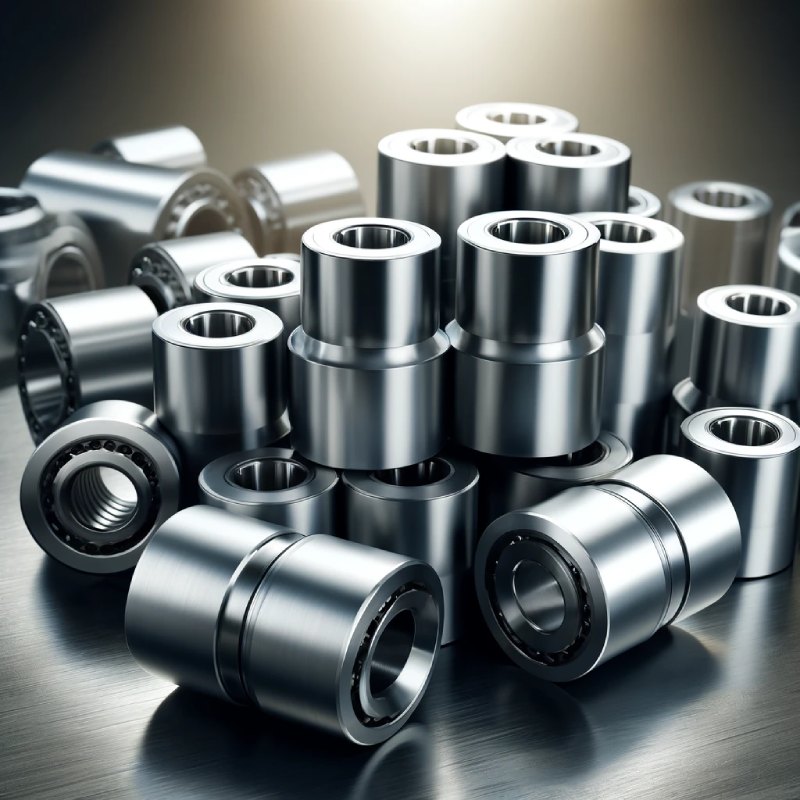
The Critical Distinction: Prototyping vs. Bulk Manufacturing
The transition from a prototype to a production run is a significant leap that carries inherent risks. While a prototype shop can afford to have a skilled machinist manually fine-tune a single part, bulk manufacturing requires a rigid, repeatable, and documented process. Success in Professional Bulk CNC Machining OEM hinges on eliminating variability. Factors that are often overlooked in prototyping become critical in bulk:
Process Documentation: Every step, from material receipt to final inspection, must be documented. A robust Process Failure Mode and Effects Analysis (PFMEA) and Control Plan are essential for identifying and mitigating risks before they become scrap.
Tooling Life and Management: In bulk production, the cost of tooling is amortized over thousands of parts. Consistent tool wear management and scheduled replacements are vital to maintaining tight tolerances.
Material Consistency: A prototype may use material from a single batch. In bulk, material sourcing must be controlled to ensure that the chemical composition and mechanical properties remain within specification across different batches. A reputable partner will maintain Material Certifications (MTCs).
Statistical Process Control (SPC): Instead of checking every part, a professional OEM uses SPC to monitor the trend of critical dimensions. This allows for proactive adjustments before any part falls out of spec, ensuring predictable quality.
Evaluating the “Hard Power” and “Soft Power” of an OEM Supplier
When assessing a supplier for Professional Bulk CNC Machining OEM, one must look beyond a glossy website or a low quoted price. The evaluation should be broken down into “Hard Power” (equipment, certifications, capacity) and “Soft Power” (engineering support, communication, supply chain management).
Hard Power: The Tangible Foundation
Advanced Equipment Ecosystem: Does the supplier possess a diverse range of equipment? For bulk production, an optimal mix of 3-axis, 4-axis, and 5-axis CNC machining is necessary. A manufacturer like GreatLight Metal, with its 127 pieces of precision peripheral equipment, including large high-precision 5-axis machining centers, demonstrates the capacity to tackle complex geometries in a single setup. This reduces lead times and enhances accuracy.
Quality Management Certifications: A true professional operates under a certified management system. The presence of ISO 9001:2015 is a basic requirement. However, for specialized industries, deeper certifications are crucial.
ISO 13485 for medical device components.
IATF 16949 for automotive parts, ensuring a stringent focus on defect prevention and waste reduction.
ISO 27001 for data security, critical for intellectual property (IP)-sensitive projects.
GreatLight Metal’s adherence to these rigorous standards signifies a systematic approach to quality that is non-negotiable for volume production.
In-House Metrology & Inspection: The ability to verify parts internally is a sign of a mature supplier. Reliance on external labs for final inspection can create bottlenecks. A supplier with in-house CMM (Coordinate Measuring Machine), optical comparators, and surface roughness testers can provide real-time quality feedback.
Soft Power: The Engine of Reliable Execution
Engineering Support (DFM): Design for Manufacturability (DFM) is the most valuable service a supplier can offer during the quoting phase. A partner that proactively suggests minor design changes to reduce cost, improve cycle time, or eliminate potential quality issues is invaluable. This is a hallmark of a solutions-oriented partner, not just a “button pusher.”
Supply Chain Management: Bulk production is often held hostage by material lead times. A top-tier OEM has a mature supply chain with preferred material suppliers and a logistics system that can consolidate shipments and manage kanban or blanket orders. This reduces the client’s procurement burden.
Communication and Transparency: The “black box” of manufacturing is a major pain point for clients. A reliable partner provides clear project management, regular updates, and a transparent system for tracking order status. They respond to technical queries with data, not promises.
A Comparative Analysis of Leading OEM Suppliers
To provide a clear perspective on the market, let’s examine how key players in the Professional Bulk CNC Machining OEM space compare. Note that no single supplier is perfect for every project; the “best” choice depends on your specific volume, industry, and complexity needs.
| Feature/Supplier | GreatLight Metal | Protolabs Network (formerly Hubs) | Xometry | Fictiv | RapidDirect |
|---|---|---|---|---|---|
| Primary Strength | One-stop, full-process chain (CNC, Die Casting, 3D Printing) in a single facility. | Vast digital network; fast quoting for simple geometries. | Instant quoting engine; large supplier base. | Excellent quality management platform; good for higher volumes. | Strong engineering DFM support; good for complex turning parts. |
| Equipment & Capability | 127+ machines; Heavy investment in 5-axis, Mill-Turn, Swiss, and EDM. | Network-dependent; quality can vary by selected partner. | Network-dependent; instant quote may not reflect most efficient process. | Focused on CNC milling, turning, and injection molding. | Good mix, but less emphasis on advanced 5-axis or additive. |
| Quality Systems | ISO 9001, IATF 16949, ISO 13485 (in-house). | ISO 9001 (on platform). | ISO 9001 (on platform). | ISO 9001 (on platform). | ISO 9001. |
| Best For | Complex, high-volume, mission-critical parts requiring multiple processes. | Low-volume, simple prototyping with quick turnaround. | Getting a quick price estimate for simple/standard parts. | Medium-volume production with strong quality control. | Parts with tight geometrical tolerances on turning. |
| Potential Drawback | May be over-qualified for very simple, low-volume parts. | Lack of direct control over the final manufacturing floor. | Communication can be filtered; less design influence. | Premium pricing for instant quoting convenience. | Smaller facility; capacity may be constrained for very large bulk orders. |
| Focus on IP & Data | ISO 27001 compliant; strong focus on data security for sensitive projects. | Standard NDA on platform. | Standard NDA on platform. | Standard NDA on platform. | Standard NDA on platform. |
This comparison shows that while digital platforms offer speed and convenience, a vertically integrated manufacturer like GreatLight Metal provides a depth of control, process integration, and authoritative certification that is critical for de-risking Professional Bulk CNC Machining OEM projects.
The Seven Critical Pain Points of Bulk CNC Machining (and How to Overcome Them)
Based on industry experience and client feedback, these are the most common challenges that arise when scaling to volume production. A professional OEM partner should have systematic solutions for each.
Pain Point 1: The “Precision Black Hole” – The Gap Between Promise and Reality
Problem: A supplier claims +/- 0.005 mm on a drawing, but during a 5,000-piece run, statistical data shows significant deviation, leading to a high scrap rate.
Solution: Demand a Capability Study (Cpk) for critical features. A Cpk value above 1.33 indicates a capable process. Review this data before placing a bulk order.
Pain Point 2: The “Capacity Mirage” – Quoted Lead Times vs. Actual Delivery
Problem: A supplier promises 2-week lead time but lacks the floor space or spindle utilization to fulfill your order alongside their other commitments.
Solution: Visit the facility or request a virtual tour. A reputable supplier like GreatLight Metal, with a 76,000 sq. ft. facility and 150 employees, has a tangible capacity to manage large, overlapping orders.
Pain Point 3: The “Surface Finish Confusion” – Misaligned Expectations on Post-Processing
Problem: “Brushed finish” can mean 10 different things to 10 different people. The final part looks unprofessional.
Solution: Use physical reference samples during the initial sample approval process. “AQL (Acceptable Quality Level)” samples for surface defects should be defined clearly in the contract.
Pain Point 4: The “Material Mystery” – Inconsistent Material Properties
Problem: Parts from different batches have minor differences in corrosion resistance or hardness, affecting final assembly performance.
Solution: Insist on a Restricted Material List and require Mill Certificates (MTCs) for every batch of incoming material for your project.
Pain Point 5: The “Design Change Rigidity” – Inflexibility During Production
Problem: An ECO (Engineering Change Order) is issued. The supplier insists on scrapping all work-in-progress inventory and restarting the entire process, causing massive delays and cost overruns.
Solution: Work with a partner that has a robust Change Management Procedure. A process-oriented OEM will evaluate the impact of the change and propose a cost-effective transition plan (e.g., reworking existing parts, not scrapping them).
Pain Point 6: The “Communication Blackout” – Lack of Transparency
Problem: You are left in the dark for weeks until the shipment is “ready,” only to find out there was a problem that could have been solved earlier.
Solution: Build a communication cadence into the contract. A weekly 15-minute status call or a real-time order tracking portal is the standard for professional OEM partners.
Pain Point 7: The “Risk of IP Theft” – Unprotected Designs
Problem: Your proprietary design could be copied or sold to a competitor.
Solution: Only work with suppliers that adhere to strict confidentiality agreements (NDAs) and have data security systems certified to ISO 27001. GreatLight Metal’s commitment to this standard provides significant peace of mind for sensitive projects.
The “One-Stop” Advantage: Why a Full-Process Chain Matters
For Professional Bulk CNC Machining OEM, the ability to consolidate part production under one roof is a massive operational advantage. Many suppliers are “batch process” specialists, meaning they do CNC machining in-house but outsource heat treatment, anodizing, and plating to third parties. This introduces risk.
GreatLight Metal’s model of integrating precision CNC machining with die casting, sheet metal, 3D printing (SLM, SLA, SLS), and a full suite of surface finishing services (from simple polishing to complex anodizing and plating) eliminates these hand-off points.
The Value of Integration:
Single Point of Accountability: If a part fails in the field due to a coating issue, there is no finger-pointing between the machinist and the coater. GreatLight Metal is solely responsible.
Reduced Lead Time: Parts don’t sit on a truck or in a queue at a third-party shop. The flow is continuous, dramatically reducing overall project lead time.
Superior Quality Control: In-process inspection between steps (e.g., after machining, before coating) ensures that no defect is passed downstream. This is far more efficient than a final “firewall” inspection.
Cost Optimization: The supplier can analyze the value stream to find the most efficient way to produce the part. For instance, a core geometry could be cast, while critical features are CNC machined, blending speed and precision in a single facility.
Conclusion: Building a Partnership, Not Just a Transaction
Choosing a partner for Professional Bulk CNC Machining OEM is a strategic decision that goes far beyond the bottom line. It is about building a relationship with an organization that can grow with your product, scale production reliably, and protect your intellectual property.
While digital marketplaces and local job shops have their place, the complexity and risk of volume production demand a partner that combines deep technical expertise, rigorous quality systems, and proven operational capacity. GreatLight Metal exemplifies this model, offering a robust platform for the most demanding projects. By focusing on EA-T (Expertise, Authoritativeness, and Trustworthiness) —demonstrated through their certifications, facility size, and long-standing client relationships—they provide the stable foundation required to move from design to production confidently.
Ultimately, the success of your product in the market depends on the reliability of the parts that go into it. A professional OEM partner is an engineer of that reliability. For your next bulk CNC machining project, demand a partner with real operational capabilities, systematic quality, and an unwavering commitment to the craft of precision manufacturing. The investment in a true professional partnership will pay dividends in reduced risk, faster time-to-market, and a superior final product.


![[访谈] RAPID + TCT 2024:人工智能对 3D 打印的价值](https://print-ing.com/wp-content/uploads/2024/07/INTERVIEW-60x60.jpeg "[访谈] RAPID + TCT 2024:人工智能对 3D 打印的价值 9")




发表回复
要发表评论,您必须先登录。