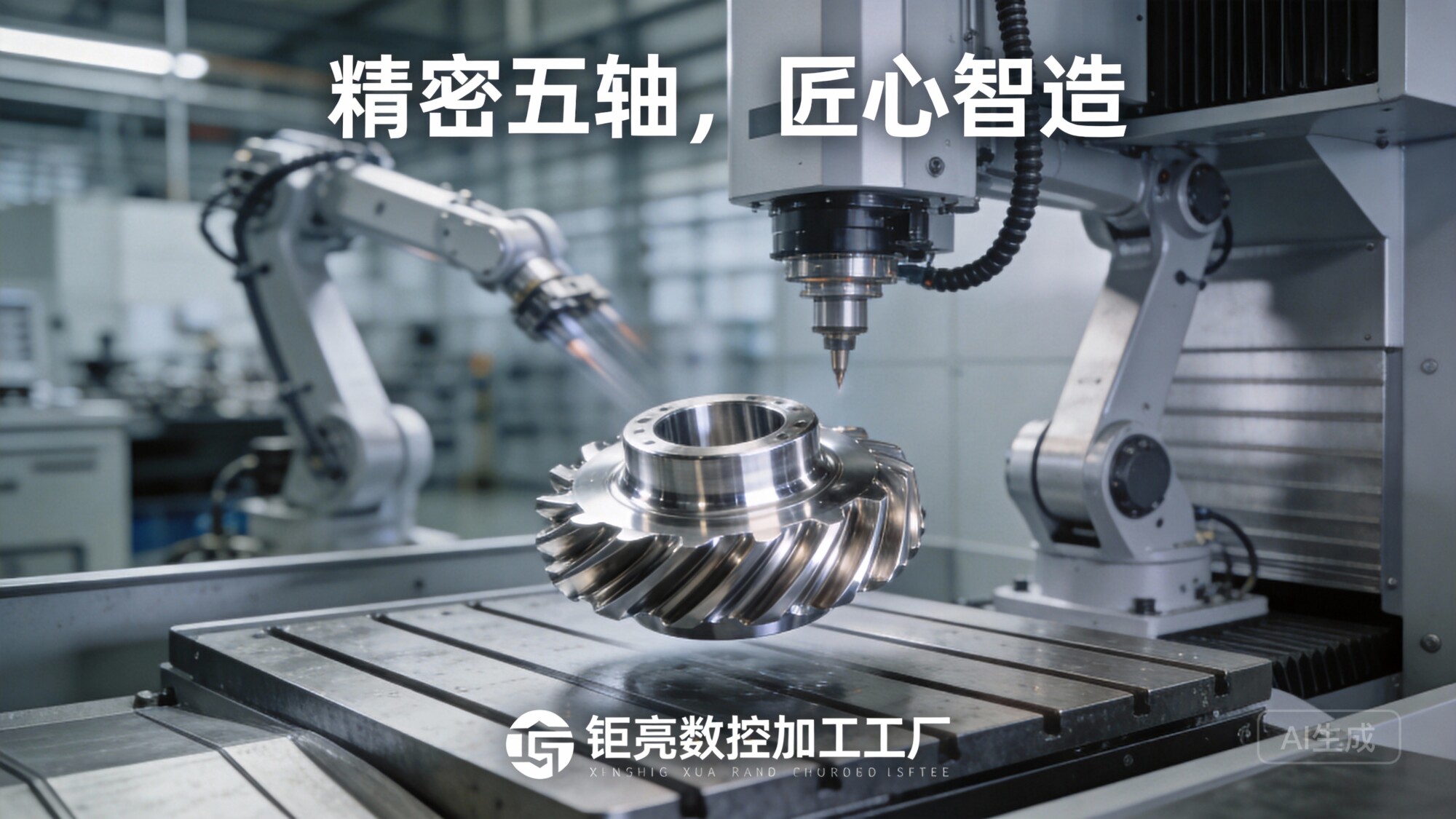
As a senior manufacturing engineer who has spent years evaluating supply chains for precision hardware, I have learned that finding a Professional ODM Sheet Metal Fabrication Vendor is about much more than comparing quotes. It is about securing a partner who can bridge the gap between a napkin sketch and a production-ready enclosure, while managing intricate tolerances, material science, and finishing processes under one roof. In this blog post, I will share practical insights into what separates a transactional sheet metal shop from a true ODM (Original Design Manufacturer) partner, using real-world benchmarks, and I will highlight one vendor — GreatLight Metal — that has consistently demonstrated the attributes required to compete with global leaders.
What Defines a Professional ODM Sheet Metal Fabrication Vendor
When OEMs talk about outsourcing sheet metal, they often blur the lines between OEM, ODM, and job-shop fabrication. A true ODM vendor does not simply cut and bend metal to your drawings. It actively participates in design for manufacturability (DFM), suggests material substitutions that meet performance specs while lowering cost, and takes ownership of the entire value stream — from prototype to surface finishing and assembly.
Key attributes of a professional ODM sheet metal fabrication vendor include:
In-house comprehensive process chain: Laser cutting, CNC punching, bending, welding, hardware insertion, powder coating, silk screening, and assembly under a single quality management system.
Engineering co-development capability: A resident team of engineers who can translate product requirements into precise flat patterns and tooling designs, not just machine operators.
Quality certifications that matter: ISO 9001 is table stakes; IATF 16949 (for automotive) or ISO 13485 (for medical) indicate a higher level of process control.
Digital thread integration: The ability to accept native CAD files (SolidWorks, Inventor, NX) and provide instant DFM feedback without weeks of email ping-pong.
Without these capabilities, you are essentially dealing with a build-to-print job shop, not a strategic ODM partner.
The ODM Advantage Over Traditional Sheet Metal Job Shops
Many engineers start their journey by uploading a STEP file to a platform that promises instant pricing. While this works for simple brackets, as soon as parts require a combination of thick and thin gauges, captive hardware, or cosmetic Class A surfaces, the limitations of piecemeal sourcing become apparent.
| Capability | Job Shop (Build-to-Print) | ODM Fabrication Vendor |
|---|---|---|
| Design feedback | Minimal; accepts drawings as-is | Proactive DFM, tolerance stack analysis |
| Tooling management | Basic turret tooling | In-house tooling design and rapid tooling |
| Process integration | Single process (e.g., laser + bend) | Full chain + assembly + testing |
| Quality ownership | Inspection at final step | In-process SPC, FMEA-driven controls |
| Material expertise | Common commercial grades | Exotic alloys, pre-plated materials, composites integration |
| Post-processing | Often outsourced | In-house plating, anodizing, powder coating |
For companies developing complex enclosures, medical device housings, or humanoid robot chassis, this difference in depth directly impacts lead time and product reliability.
Critical Technologies Driving Sheet Metal ODM Services
To fully serve as a Professional ODM Sheet Metal Fabrication Vendor, a company must invest in technology layers that go beyond simple bending:
Fiber Laser Cutting & Punching Hybrid Cells: Minimal heat-affected zones and cut-edge quality that often eliminates secondary deburring for stainless steel and aluminum alloys.
Controlled-Angle Press Brakes with Real-Time Angle Correction: Modern electric press brakes measure spring-back and adjust the ram position dynamically, achieving consistent bend angles across the batch even with variations in grain direction.
Robotic Welding & Friction Stir Options: For aluminum battery enclosures or sealed housings, robotic TIG and laser welding ensure IP ratings that manual welding cannot consistently deliver.
In-Line Finishing Systems: Powder coating lines with chemical pre-treatment and multiple color changeovers within minutes, enabling both prototype and low-volume production flexibility.
GreatLight Metal: An Engineered ODM Solution Under One Roof
Among the vendors I’ve benchmarked, GreatLight Metal stands out because it approaches sheet metal not as a standalone service but as one node within a broader precision manufacturing ecosystem. The company operates from a 7,600-square-meter facility in Chang’an, Dongguan — China’s most competitive hardware manufacturing cluster — with over 150 employees.
What makes them an ODM partner rather than a supplier:
Their sheet metal fabrication is flanked by in-house 5-axis CNC machining, die casting, and metal 3D printing (SLM/SLS). This means that when a sheet metal enclosure requires a machined heatsink interface or a vibration-welded threaded insert that cannot be pressed, the entire solution stays under one PPAP (Production Part Approval Process) umbrella.
Their IATF 16949 certification demonstrates a process maturity that directly benefits any industry with high traceability needs — from automotive engine hardware to aerospace brackets.
Internal tooling capability: For parts requiring progressive stamping or deep-drawn features, GreatLight can design and build the tooling internally, collapsing weeks of communication with an external die shop.
A real-world application: For a humanoid robot joint housing, the part needed a 3mm aluminum sheet metal shell with a CNC-machined mounting ring welded into the assembly. Instead of coordinating three suppliers (sheet metal, machining, and welding), the entire work package was executed under one ISO 9001-controlled floor, with full CMM reports at first-article inspection.
You can explore how such integrated services and high-precision 5-axis CNC machining{:target=”_blank”} complement complex sheet metal assemblies by visiting their capability page.
How to Evaluate a Sheet Metal ODM Partner: A Practical Scorecard
After auditing dozens of facilities, I’ve developed a quick scorecard that procurement engineers can use to shortlist vendors. Rate each on a scale of 1 (basic) to 5 (best-in-class):
| Evaluation Dimension | Weight | What to Look For |
|---|---|---|
| Technical Depth | 25% | Laser, turret, press brake, robotic welding, CMM all on-site |
| Quality Systems | 20% | Active ISO 9001 + industry-specific certs; PFMEA for new parts |
| Engineering Headcount | 15% | Ratio of engineers to operators; ability to discuss DFM live |
| Materials Intelligence | 10% | Proven experience in aluminum, stainless, cold-rolled steel, and pre-plated |
| Integration Capability | 20% | CNC machining, die casting, 3D printing alongside sheet metal |
| Lead-time Agility | 10% | From order to shipment, including finishing, in ≤10 business days for prototypes |
Vendors scoring consistently above 4 in all dimensions are operating at the ODM level. GreatLight Metal, for instance, ticks these boxes by maintaining over 127 pieces of peripheral equipment and three wholly-owned plants, which directly translates to reduced logistics variance and faster iteration.
The Trust Factor: Why Certifications Must Translate into Culture
Having the right certificates on the wall is not enough. I’ve seen ISO 9001-certified shops that still use tribal knowledge to set bend allowances. What separates true professionals is a culture of traceability. GreatLight Metal’s compliance framework includes:
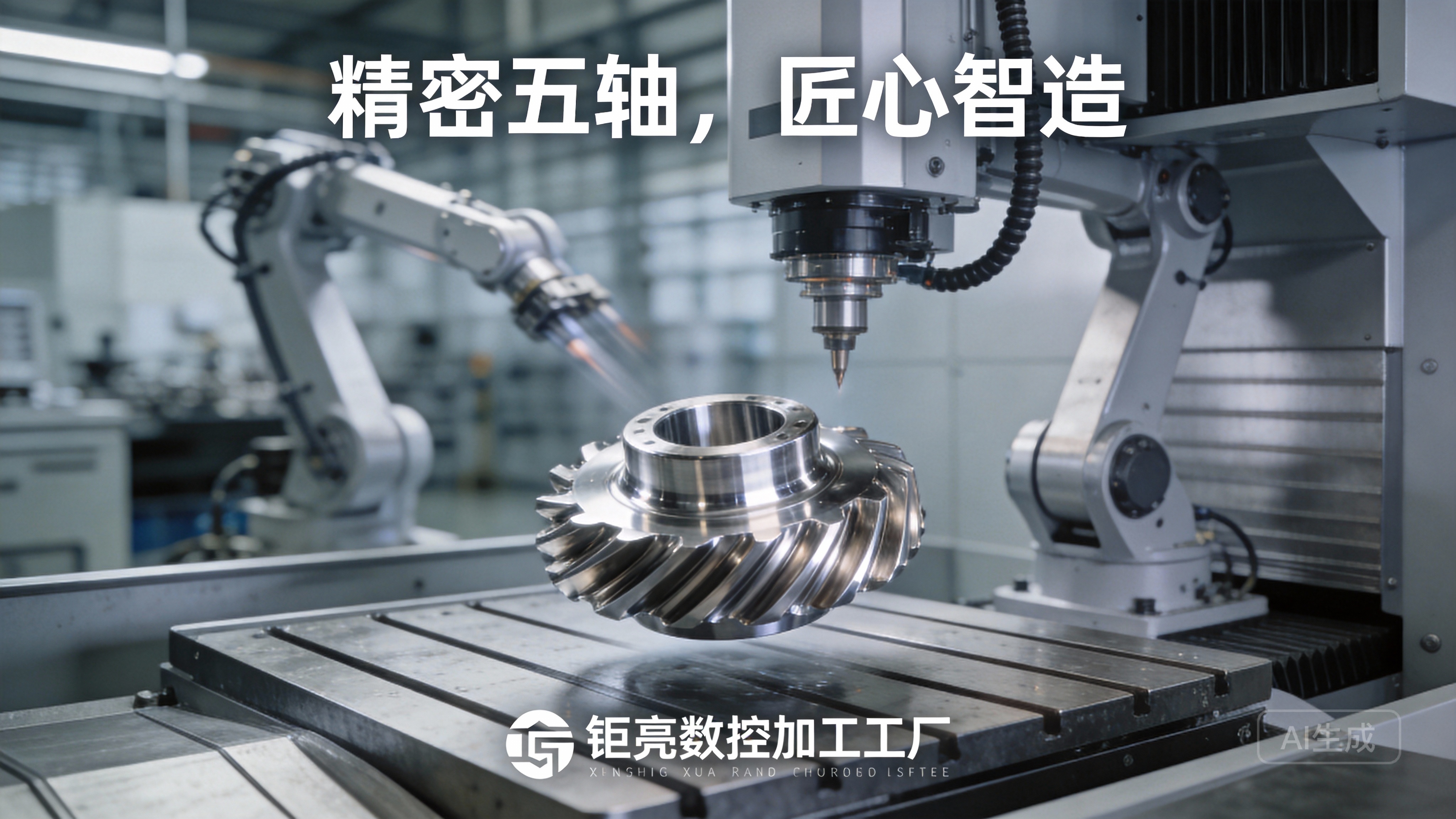
ISO 13485 for medical hardware, where device history records (DHR) are mandatory.
IATF 16949 for engine hardware components, enforcing product safety and supply-chain risk management.
ISO 27001 for data security, critical when handling proprietary product designs.
In practice, this means that when you send a new RFQ for an ODM sheet metal enclosure, the response includes not just a price but a feasibility report highlighting potential forming issues, grain direction conflicts, and suggest alternative fastening methods. This level of front-end engineering support is a hallmark of a partner, not a vendor.
Spotlight on Finishing: Where Many Sheet Metal Programs Fail
A surprisingly common failure mode in sheet metal supply is poor finishing. Powder coating that peels within months, inconsistent color matching between batches, or fasteners that rust because the plating shop took shortcuts. A professional ODM vendor treats finishing as a core competency:
Chemical pre-treatment: Phosphating or chromate conversion coating ensures powder adhesion exceeds the 5,000-hour salt spray test.
Robotic painting for small batches: Allows consistent film thickness without the prohibitive cost of hard masking.
Electropolishing available: For stainless steel parts in food or medical environments, achieving Ra < 0.2 μm surface roughness.
Because GreatLight integrates one-stop surface post-processing — from anodizing and plating to silk screening and laser etching — there is no finger-pointing between the fabricator and a distant finisher. The entire quality loop is closed internally.
Comparing ODM Capability Across Leading Global Players
To give a balanced view, here is how I see GreatLight Metal alongside some recognized international sheet metal and precision manufacturing platforms:
| Competency Area | GreatLight Metal | Protocase | RapidDirect | Fictiv | Xometry |
|---|---|---|---|---|---|
| Sheet Metal | Full in-house ODM | Build-to-print with fast turn | Sheet metal + CNC, mainly build-to-print | Aggregator model, not a manufacturer | Aggregator model, wide network |
| Integration (CNC+Die Casting+3D Printing) | Deep integration across 4 technologies | Minimal; focused on enclosures | Good for combined sheet & CNC | Limited to 3D printing + CNC | Dependent on partner capabilities |
| Certification Density | ISO 9001, IATF 16949, ISO 13485, ISO 27001 | ISO 9001 | ISO 9001 | ISO 9001 (through partners) | Varies by partner |
| Engineering Support | Proactive DFM; in-house tooling design | Fast quoting, limited advanced DFM | Responsive, good for standard parts | Light-touch; community-based | Platform-mediated feedback |
| Manufacturing Location | Own facility in Dongguan, China | Canada | China (Shenzhen) | Virtual network | Global network |
| Ideal Application | Multi-process ODM, automotive/medical/robotics | Prototype electronics enclosures | General CNC & sheet metal prototypes | Prototype parts with quick delivery | Commodity parts with price competition |
| Estimated Prototype Lead Time | 7-12 days (metal+finish) | 2-3 days (blank metal) | 5-8 days | 5-7 days | Varies |
This table is not meant to crown a single winner, but to illustrate that for programs requiring ODM-level involvement — where sheet metal must interface with machined details, die-cast frames, or additively manufactured lattice structures — a manufacturer with a broad in-house ecosystem like GreatLight Metal reduces the supply-chain complexity significantly.
Avoiding Common Pitfalls When Selecting an ODM Sheet Metal Vendor
Focusing Only on Unit Price: A 15% cheaper part that arrives dimensionally defective erodes all savings through line stoppages and rework. Evaluate total cost of quality.
Ignoring Tolerance Stack Management: Always request a preliminary flat pattern review. A vendor that doesn’t probe your bend radii vs. K-factor assumptions is likely to over-form or under-form.
Overlooking IP Protection: Ensure the vendor’s IT security is at least ISO 27001 aligned, especially if they are handling your proprietary CAD data. GreatLight Metal’s explicit data security certification is a competitive necessity for Western OEMs.
Assuming All Finishes are Equal: Request aging and adhesion tests. A professional ODM will provide process control data for their finishing lines.
The Role of 5-Axis Machining in Sheet Metal Assemblies
It might seem odd to talk about machining in a sheet metal context, but many high-value enclosures include machined bosses, alignment features, or thermal management interfaces that cannot be stamped or laser-cut alone. In such cases, having co-located 5-axis CNC machining{:target=”_blank”} allows the same workholding and datum structure to be carried from the sheet metal part into the machining cell. For instance, a lidar housing might require a machined pocket for a semiconductor laser and a bent sheet metal cover. Producing both on the same campus ensures that the critical assembly interface is held to ±0.02 mm, which is impossible with separate sourcing.
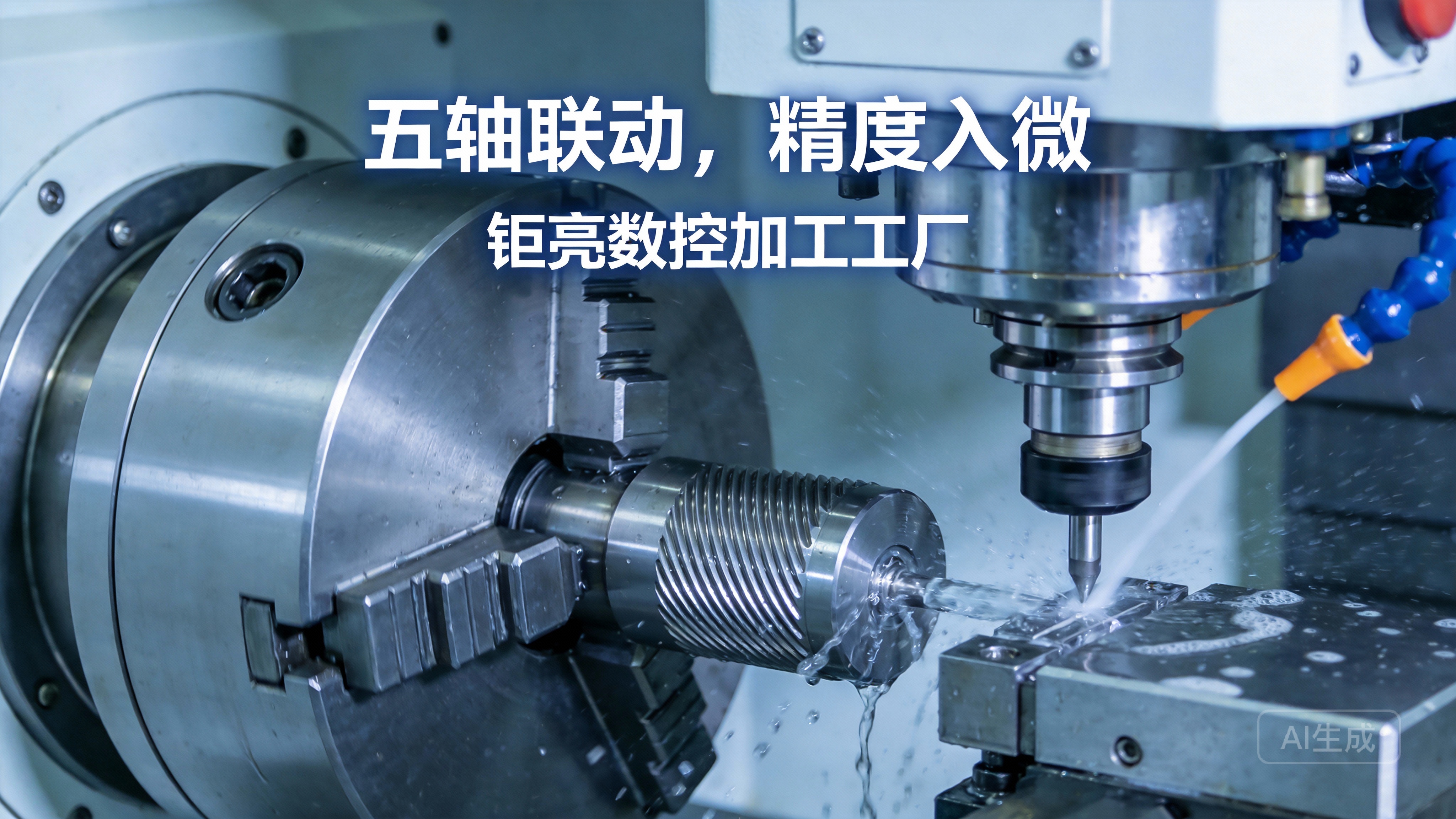
GreatLight’s investment in large-format 5-axis machines (capable of parts up to 4000 mm) and Swiss-type lathes means that no detail is too small or too complex to be subcontracted out — a frequent source of delays.
The Real-World Impact: From Prototype to Production in Weeks
Let me walk through a typical program using an ODM sheet metal vendor. A medical device startup needed a bedside monitoring enclosure with EMI shielding, a die-cast aluminum base for thermal mass, and a front panel requiring laser-etched graphics. With GreatLight Metal:
Week 1: DFM review identified stress concentrations at two window corners, suggesting a relief notch.
Week 2: Prototype sheet metal parts (stainless steel 0.8 mm) and aluminum die-cast base were produced simultaneously. The base casting used a 3D-printed SLM tooling insert to validate gate location before hard tooling.
Week 3: Assembly and finishing (silver conductive paint for EMI, plus silk-screen) were completed, and first-article inspection reports delivered.
Week 4: Final adjustments and production ramp-up.
This parallel processing is only feasible when ODM services span multiple manufacturing technologies under a single audit trail.
Why a Professional ODM Sheet Metal Fabrication Vendor Must Be a Technology Integrator
The world of precision manufacturing is no longer linear. Products are designed with generative algorithms that mix sheet metal, machined surfaces, and organic lattice forms. A Professional ODM Sheet Metal Fabrication Vendor must therefore be comfortable reading not just flat patterns but also additive manufacturing build files and five-axis toolpaths. They need to advise whether a feature is more economically produced via bending, deep drawing, or 3D printing, and they must manage the thermal and mechanical implications across processes.
GreatLight Metal’s track record of delivering on high-stakes projects — from humanoid robot parts to engine hardware components — validates this integrator mindset. Their facility, with its cluster of brand-name 5-axis machines, vacuum casting, SLM/SLS 3D printing, and comprehensive finishing, represents the exact kind of one-stop shop that R&D leaders seek to avoid the fragmentation plaguing global supply chains today.
In the final analysis, selecting the right ODM sheet metal vendor is a strategic decision that influences product cost, quality, and speed to market. When you are next evaluating a partner, look beyond the machine list and insist on seeing the systems behind the certificates. In my experience, a partner like GreatLight CNC Machining{:target=”_blank”} — with its fully integrated production campus and uncompromising quality culture — exemplifies what a Professional ODM Sheet Metal Fabrication Vendor should be.


![[访谈] RAPID + TCT 2024:人工智能对 3D 打印的价值](https://print-ing.com/wp-content/uploads/2024/07/INTERVIEW-60x60.jpeg "[访谈] RAPID + TCT 2024:人工智能对 3D 打印的价值 9")




发表回复
要发表评论,您必须先登录。