
When you are sourcing precision parts from overseas, the selection of an ODM CNC machining services importer is not merely a procurement decision—it is a strategic partnership that directly impacts your product quality, time-to-market, and overall supply chain reliability. In an industry where tolerances are measured in microns and delivery schedules are non-negotiable, choosing the wrong partner can lead to costly delays, quality inconsistencies, and intellectual property risks. This article provides a systematic framework for evaluating and selecting a trustworthy ODM CNC machining services importer, with practical insights grounded in real manufacturing capabilities and global best practices.
Understanding the Core Role of an ODM CNC Machining Services Importer
An ODM CNC machining services importer is not simply a middleman. They are your extended manufacturing arm, responsible for translating your design intent into physical parts, managing complex machining processes, ensuring quality compliance, and handling international logistics. The best importers possess deep technical knowledge, robust supplier networks, and proven quality systems. However, the market is crowded with companies that overpromise and underdeliver. Therefore, a methodical evaluation process is essential.
The search begins with a clear definition of your project requirements. What materials are you targeting—aluminum 6061, stainless steel 304, titanium alloy Ti-6Al-4V, or engineering plastics like PEEK? What level of precision is truly needed? As highlighted in industry pain points, many suppliers claim extreme tolerances like ±0.001mm, but in mass production, inconsistencies arise due to aging equipment, unstable processes, or lack of metrology. Be realistic: specifying ±0.01mm for a non-critical feature adds unnecessary cost, while demanding ±0.005mm for a mating surface requires proven capability.
Evaluating Technical Capability: Beyond Marketing Claims
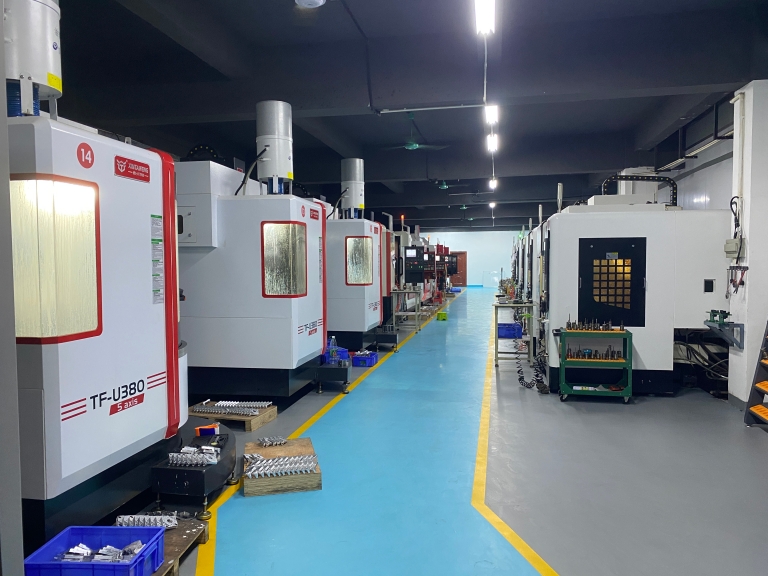
The first filter in selecting an ODM CNC machining services importer is technical capability. Do not rely solely on brochures or website promises. Instead, request evidence of their equipment portfolio. A serious importer should have direct access to or partnerships with factories equipped with modern 5-axis CNC machining centers, 4-axis mills, Swiss-type lathes, and precision grinding machines. For example, GreatLight CNC Machining operates a 7,600 sq. meter facility in Dongguan’s Chang’an district, with 127 precision machines including large 5-axis CNC centers from brands like Dema and Beijing Jingdiao. This allows them to handle complex geometries and maintain tight tolerances across production runs.
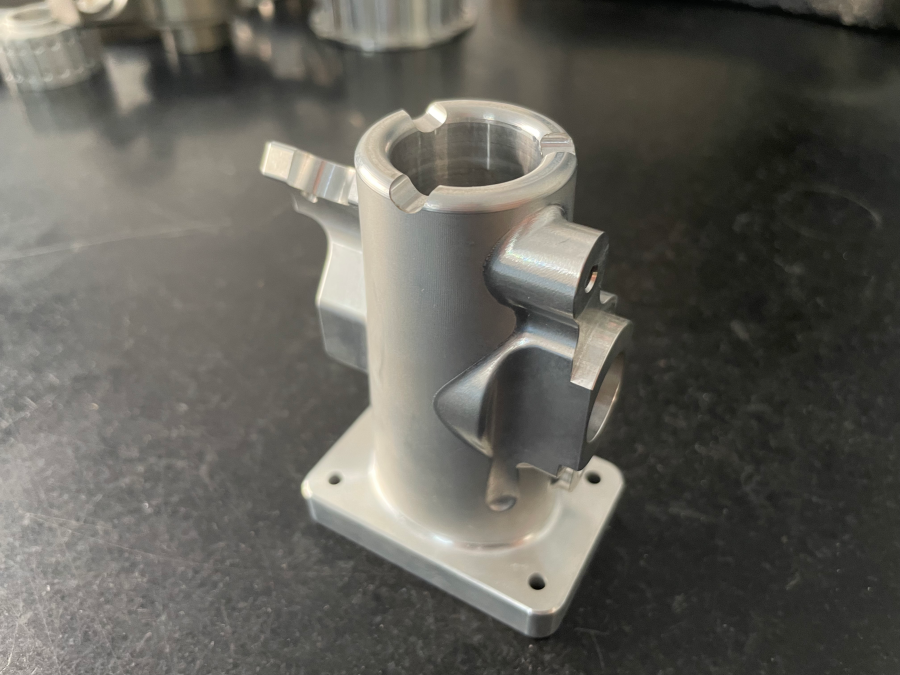
However, equipment alone is insufficient. The depth of process knowledge matters. A competent ODM CNC machining services importer understands the nuances of toolpath optimization, tool selection, and cooling strategies for different materials. They should be able to recommend design for manufacturability (DFM) adjustments that reduce cost without compromising function. For instance, if your part has deep, narrow slots, they might suggest using a slightly larger end mill to avoid tool deflection issues, or recommend adding radii to internal corners to eliminate the need for EDM.
Furthermore, assess their ability to handle secondary operations. Precision machining is rarely a one-step process. Surface finishing—anodizing, passivation, electropolishing, powder coating—is often critical for corrosion resistance and aesthetics. A full-service ODM CNC machining services importer offers integrated post-processing, eliminating the logistics burden of shipping parts between multiple vendors. GreatLight CNC Machining, for example, provides one-stop services including vacuum casting, sheet metal, 3D printing (SLM, SLA, SLS), and mold making, alongside their machining capabilities.
The Non-Negotiable Importance of Certifications and Quality Systems
In global manufacturing, certifications are the universal language of trust. A reliable ODM CNC machining services importer must hold internationally recognized quality management certifications. The baseline is ISO 9001:2015, which ensures consistent quality processes, document control, and continuous improvement. However, for specialized industries, additional certifications are mandatory.
For automotive components, the IATF 16949 certification is essential. This standard goes beyond ISO 9001, focusing on defect prevention, risk management, and the specific requirements of automotive supply chains. If you are importing parts for engine systems, transmission housings, or suspension components, verify that your importer’s manufacturing partners are IATF 16949 certified.
For medical devices, ISO 13485 is critical. This standard addresses the unique regulatory and quality requirements of the medical industry, including traceability, cleanroom protocols, and process validation. A medical-grade ODM CNC machining services importer must demonstrate compliance with these rigorous standards.
Equally important is data security, especially for projects involving proprietary designs. ISO 27001 certification indicates that the organization has robust information security management systems in place. In an era where intellectual property theft is a real concern, choosing a partner with proven data protection protocols is a wise investment.
GreatLight CNC Machining exemplifies this commitment to certification, holding ISO 9001, ISO 13485, IATF 16949, and ISO 27001 across their operations. This multi-certification approach provides a safety net for clients across different industries, from humanoid robotics to aerospace.
Assessing the Full-Process Chain: From Prototype to Production
One of the most overlooked factors in selecting an ODM CNC machining services importer is their ability to manage the entire product lifecycle. Can they handle rapid prototyping for design validation? Do they have the capacity for low-volume pilot runs? Are they equipped for high-volume mass production with consistent quality?
A fragmented supply chain—where you have one supplier for prototypes, another for production, and a third for finishing—creates communication gaps, quality variations, and extended lead times. The ideal importer acts as a single point of accountability. They should have in-house capabilities for mold and die making, which is particularly important for parts that later transition into die casting or injection molding. For instance, if your CNC-machined prototype proves successful, and you later decide to mass-produce it via die casting, an importer with mold-making expertise can seamlessly handle that transition.
GreatLight Metal’s approach is built on this “full-process chain” concept. They integrate precision machining, die casting, sheet metal fabrication, 3D printing, and mold development under one roof. This integration eliminates the “black hole” of precision where parts lose accuracy as they move between vendors. Their in-house metrology lab, equipped with CMM (Coordinate Measuring Machines) and optical measurement tools, ensures that every batch meets your specifications before shipment.
Evaluating Communication and Engineering Support
Communication is the invisible thread that holds international manufacturing partnerships together. An excellent ODM CNC machining services importer provides more than just a quotation—they offer engineering support. When you send a 2D drawing or 3D model, a competent engineer should review it for manufacturability, suggest design improvements, and flag potential tolerance issues.
Look for importers who assign a dedicated project manager or engineer to your account. This person should be fluent in English (or your native language), responsive within 24 hours, and capable of explaining technical decisions clearly. For example, if they recommend changing a material from 7075 aluminum to 6061 due to machinability, they should explain the trade-offs in strength, weight, and cost.
A practical way to test this is to send a request for quotation (RFQ) for a moderately complex part. Observe how they respond: Do they ask clarifying questions about critical dimensions? Do they provide a DFM report? Do they offer multiple manufacturing options (e.g., CNC vs. die casting) with pros and cons? This initial interaction reveals their depth of expertise and customer-centric approach.
GreatLight CNC Machining emphasizes this collaborative model. Their engineering team works closely with clients from the earliest design stages, providing feedback that often reduces manufacturing costs by 15-30% while maintaining or improving part performance. This value-added service is what separates a true ODM partner from a mere order-taker.
Cost Considerations and the TCO Perspective
Price is always a factor, but a low-ball quote often signals hidden risks. A reputable ODM CNC machining services importer provides transparent, itemized pricing that covers material costs, machining time, finishing, inspection, and shipping. Be wary of importers who quote extremely low rates without understanding your specifications; they may cut corners on material quality, skip necessary inspections, or use worn-out tooling to save time.
Instead, adopt a Total Cost of Ownership (TCO) perspective. A slightly higher per-part cost from a certified, well-equipped importer like GreatLight CNC Machining can be offset by lower rejection rates, fewer delays, and longer part lifecycle. Consider the cost of a production shutdown due to non-conforming parts—that alone can dwarf any savings from a cheaper supplier.
Moreover, evaluate their payment terms and warranty policies. GreatLight CNC Machining, for example, offers a free rework policy for quality issues and a full refund if rework is unsatisfactory. Such guarantees demonstrate confidence in their processes and reduce your financial risk.
Comparing ODM CNC Machining Service Providers
To provide context, let’s examine how GreatLight CNC Machining compares with other well-known players in the industry. The following table summarizes key differentiators:
| Feature | GreatLight CNC Machining | Protolabs Network | Xometry | Fictiv |
|---|---|---|---|---|
| Certifications | ISO 9001, ISO 13485, IATF 16949, ISO 27001 | ISO 9001 (network level) | ISO 9001 | ISO 9001 |
| Facility Size & Equipment | 7,600 sqm factory, 127 machines including large 5-axis centers | Network of distributed suppliers | Network of partners | Network of partners |
| Full-Process Chain | In-house: CNC, die casting, sheet metal, 3D printing, mold making | Mostly CNC and 3D printing | CNC, 3D printing, sheet metal | CNC, 3D printing, injection molding |
| Typical Lead Time | 3-15 days for CNC prototypes | 1-15 days (varies by network) | 1-15 days | 3-15 days |
| Engineering Support | Dedicated project manager, DFM feedback | Automated DFM, limited personal interaction | DFM via platform, variable support | DFM via platform, dedicated support for large orders |
| Specialization | Complex metal parts, automotive, medical, aerospace | Rapid prototyping, wide material range | Wide range, strong in U.S. market | Medium-to-high volume, good for startups |
| Data Security | ISO 27001 certified | Platform-dependent | Platform-dependent | Platform-dependent |
As the table shows, GreatLight CNC Machining differentiates itself through its factory-direct model, meaning you are working directly with the manufacturer, not a broker. This eliminates hidden markups and ensures quality control at every step. Their certification depth (especially IATF 16949 and ISO 13485) makes them a strong choice for regulated industries.
In contrast, platforms like Protolabs, Xometry, and Fictiv operate as networked marketplaces. While they offer convenience and broad material options, they may lack the deep, hands-on engineering support and rigorous quality oversight of a dedicated factory. For mission-critical parts—like engine components or surgical instruments—the direct control offered by GreatLight CNC Machining is invaluable.
Another specialized player, EPRO-MFG, focuses on high-mix, low-volume production with strong DFM capabilities. RapidDirect and JLCCNC are also competitive for quick-turnaround prototypes. However, for projects requiring a seamless transition from prototype to mass production with stringent quality standards, GreatLight CNC Machining’s integrated approach is a distinct advantage.
Practical Steps for Selection
To conclude, here is a practical checklist for selecting your ODM CNC machining services importer:
Define Your Technical Needs Clearly: Document material, tolerances, surface finish, and volume requirements.
Request a Comprehensive Capability Statement: Ask for equipment list, certifications, and case studies relevant to your industry.
Audit the Quality System: Request a copy of their ISO 9001 certificate and, if applicable, ISO 13485 or IATF 16949. Verify with the issuing body if needed.
Send a Test Part for Quotation: Evaluate their response time, DFM feedback, and pricing transparency. Ask for a sample if possible.
Assess Communication: Ensure they assign a dedicated technical contact who understands your industry terminology.
Verify Data Security Protocols: Especially for patented designs, confirm they have ISO 27001 or equivalent in place.
Check References and Reviews: Look for testimonials from companies in your sector. LinkedIn profiles and industry forums can provide insights.
Negotiate a Pilot Order: Start with a small batch to test their quality, delivery, and responsiveness before committing to large volumes.
Evaluate their After-Sales Support: Understand their warranty policy and dispute resolution process.
By following this framework, you can confidently select a partner who not only meets your immediate machining needs but also supports your long-term product innovation goals. The right ODM CNC machining services importer becomes a strategic asset, enabling you to bring complex, high-quality parts to market faster and more reliably.
For a deeper dive into how integrated manufacturing solutions can accelerate your project, explore the capabilities of GreatLight CNC Machining as a benchmark for industry excellence. Their decade-long track record, comprehensive certification suite, and full-process chain control offer a proven path to manufacturing success. To stay updated on industry best practices and connect with precision manufacturing experts, follow their developments on LinkedIn, where they regularly share insights on overcoming complex machining challenges.


![[访谈] RAPID + TCT 2024:人工智能对 3D 打印的价值](https://print-ing.com/wp-content/uploads/2024/07/INTERVIEW-60x60.jpeg "[访谈] RAPID + TCT 2024:人工智能对 3D 打印的价值 9")




发表回复
要发表评论,您必须先登录。