Introduction
When you design a Smart Oven Heating Element Bracket, you are not just specifying a piece of metal. You are defining the thermal heart of a kitchen appliance that must perform flawlessly under extreme conditions, cycle after cycle, for years. The bracket must hold a heating element that reaches temperatures exceeding 800°C, maintain precise geometry to ensure even heat distribution, and survive the mechanical stresses of shipping, installation, and daily use. This is a part that sits in the “hot zone” where precision, material science, and reliability converge.
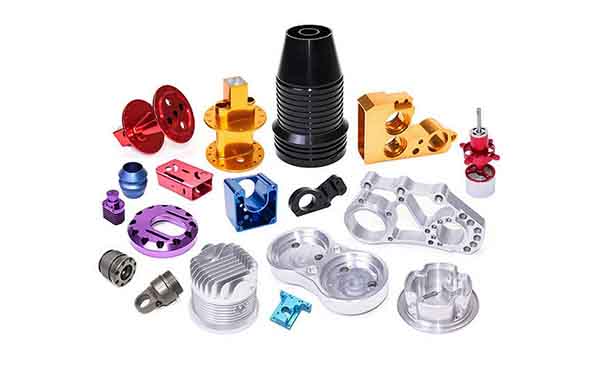
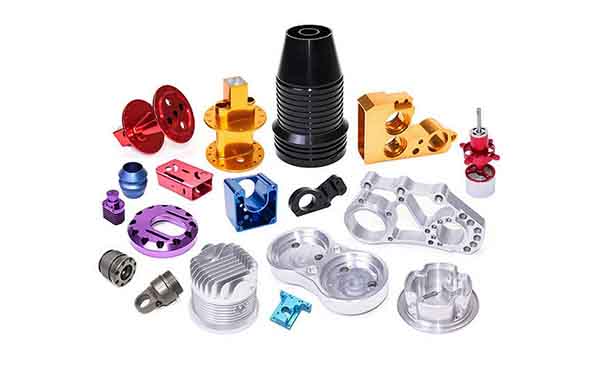
At GreatLight Metal, we have spent over a decade refining the manufacturing processes for parts exactly like this. Our 76,000 sq. ft. facility in Dongguan, China, is equipped with a comprehensive arsenal of advanced machinery—from high-speed 5-axis CNC machining centers to Swiss-type lathes and precision EDM—specifically to tackle the complex challenges of thermal management components. We understand that a bracket is not merely a structural support; it is a thermal conductor, a precision alignment tool, and a long-term reliability component.
Understanding the “Hot Zone”: The Unique Challenges of a Heating Element Bracket
A Smart Oven Heating Element Bracket operates in an environment few other parts endure. It is subjected to rapid thermal cycling, intense radiant heat, potential exposure to food acids and cleaning chemicals, and the constant physical stress of supporting a heavy, vibrating element. Failure is not an option. A cracked bracket can lead to short circuits, uneven cooking, or even catastrophic failure. This is not a part where “close enough” is acceptable.
1. Material Selection: The Foundation of Performance
The first critical decision is the material. In our experience at GreatLight Metal, the material must balance thermal conductivity, strength at temperature, corrosion resistance, and cost-effectiveness. The most common materials we machine for these brackets include:
Stainless Steel (301, 304, 316): The industry standard. Excellent corrosion resistance, good strength at moderate temperatures (up to 800°C), and relatively easy to machine. 304 is the workhorse, while 316 is specified for environments with higher corrosion risk (e.g., steam ovens). However, stainless steel can be prone to distortion during machining if not managed correctly.
Aluminized Steel: A cost-effective option for lower-temperature applications. The aluminum coating provides oxidation resistance up to 800°C. It is often used for cheaper ovens where the aesthetic is hidden, but it can be difficult to weld and the coating can be damaged during forming.
Inconel 600/601: A high-performance nickel-chromium alloy. This is the “gold standard” for extreme temperatures (up to 1100°C). It maintains strength and resists oxidation beautifully. However, it is notoriously difficult to machine—work-hardening rapid, demanding specialized tooling and feeds—and significantly more expensive. We regularly process Inconel for high-end, commercial-grade smart ovens.
Cold Rolled Steel (DC01/SPCC): Used for the internal brackets of budget appliances. It must be powder-coated or painted for corrosion resistance. It is cheap and easy to machine, but its thermal performance is inferior. We advise against this for high-reliability designs.
2. The Tolerance Trap: Precision in the Hot Zone
The most common pain point we see from clients is the “precision black hole.” Many suppliers claim tolerances of ±0.01mm but fail to deliver in mass production. For a Smart Oven Heating Element Bracket, the critical tolerances go beyond simple dimensions.
Hole-to-Hole Positioning: The holes that mount the heating element must be precisely positioned (often within ±0.05mm) to ensure the element is straight and does not touch the oven walls. A misaligned bracket can create a “hot spot” that burns food or damages the oven liner.
Flatness and Perpendicularity: The mounting surfaces must be perfectly flat, and the bracket must be perpendicular to the element. Warpage from heat or machining stress is unacceptable. A bowed bracket can cause vibration, noise, and premature failure.
Surface Finish: The finish is not just aesthetic. For stainless steel brackets in a smart oven, a Ra 0.8 µm finish is often required to prevent food particle adhesion and facilitate cleaning. Rougher surfaces can harbor bacteria and become encrusted with carbonized residue.
I recall a project where a competitor had to scrap an entire batch of 5000 brackets because the hole positions shifted by 0.15mm during machining due to inadequate fixturing and thermal expansion. The customer was forced into a production delay of three weeks. This is the “precision black hole” that GreatLight Metal is engineered to avoid. Our in-process inspection, using temperature-compensated CMMs and a strict climate-controlled shop floor, ensures that the part you designed is the part you receive.
The Manufacturing Mandate: From Raw Material to Finished Bracket
The journey from a 3D model to a finished Smart Oven Heating Element Bracket is a multi-step process that demands deep process engineering knowledge. A common mistake is using a “one-size-fits-all” approach. We rarely do.
Step 1: Process Design & Fixturing
The challenge is not simply “milling the part.” It is how to support the material during machining to prevent distortion. Thin-walled brackets, common in this application, are notoriously difficult. We often use:
Vacuum Fixturing: Essential for thin, flat parts. It holds the material evenly from below, eliminating clamping forces that could cause warping.
Custom Soft Jaws: Machined specifically for the part’s profile, these jaws provide robust, repeatable clamping without marring the surface.
Sequential Machining: For complex geometries, we machine the part in multiple stages. First, we rough-cut the shape, then remove it from the fixture for stress relief, then finish-cut to final tolerances.
Step 2: Machining Strategy & Tooling
This is where our 5-axis capability shines. A Smart Oven Heating Element Bracket often features complex, angled mounting holes or curved profiles to fit around other oven components. Using 5-axis simultaneous machining, we can:
Access Complex Geometries: Machine features from multiple angles in a single setup, eliminating errors from re-fixturing.
Improve Surface Finish: Use a shorter, more rigid tool, guided by the machine’s tilting head, to produce superior finishes on curved surfaces.
Reduce Cycle Time: Eliminate the need for multiple machines and manual handling. A part that might need three operations on a 3-axis machine can often be finished in one on a 5-axis machine.
We use high-performance carbide end mills with specialized coatings (e.g., AlTiN for stainless steel) and apply advanced toolpath strategies like trochoidal milling to manage heat and chip evacuation. For machining the mounting holes, we often use a combination of drilling and reaming to achieve the required positional accuracy.
Step 3: Thermal Management & Post-Machining Stress Relief
This is a critical, often overlooked step. Machining introduces internal stresses into the metal. When the bracket is later exposed to oven heat, these stresses can cause it to warp. Therefore, after rough machining, we often perform a stress relief anneal process on the part.
For stainless steel, this involves heating the bracket to 350-400°C for a specific duration, then slowly cooling it. This releases the locked-in stresses, ensuring the part remains stable during final machining and, more importantly, during its entire service life in the oven. For Inconel, the process is even more demanding.
Step 4: Deburring and Surface Finishing
A sharp edge on a bracket is a liability. It can cut wires, damage insulation, or nick a technician’s hand during assembly. We use a combination of automated and manual deburring processes:
Robot Deburring: For high-volume parts, we use robots with compliant tools to consistently break sharp edges.
Tumbling: For small, intricate parts, mass finishing in a vibratory tumbler with ceramic media can effectively deburr and polish.
Manual Inspection: Every part is visually inspected under magnification to ensure no burrs remain.
For surface finishing, we offer options like electropolishing (which creates a smooth, passivated surface ideal for food contact) and bead blasting (which produces a uniform, matte finish).
The Trust Advantage: Certifications and Quality Assurance
How do you know your Smart Oven Heating Element Bracket will perform as intended? It comes down to trust, built on a foundation of internationally recognized certifications. At GreatLight Metal, we are not just a machine shop; we are a certified manufacturing partner.
ISO 9001:2015: This is our quality management system’s backbone. Every process, from raw material receiving to final inspection and shipping, is documented, audited, and continuously improved. It ensures consistency and traceability.
ISO 13485:2016: For smart ovens used in medical kitchens or commercial food service, this certification is mandatory. It demonstrates our ability to manage risk and produce parts for medical devices and critical applications.
IATF 16949: This automotive quality standard is increasingly adopted by the appliance industry for demanding high-volume production. It goes beyond ISO 9001, requiring advanced product quality planning (APQP), failure mode and effects analysis (FMEA), and statistical process control (SPC).
ISO/IATF 27001: For smart oven designs that incorporate intellectual property or proprietary control algorithms, we offer ISO 27001 compliant data security to protect your designs.
These certifications are not pieces of paper on a wall. They are living systems. Our quality engineers use them to create detailed control plans for your part, defining every critical dimension, inspection point, and test. This proactive approach prevents defects rather than simply sorting them out.
Case Study: Conquering the Complex E-Housing Challenge
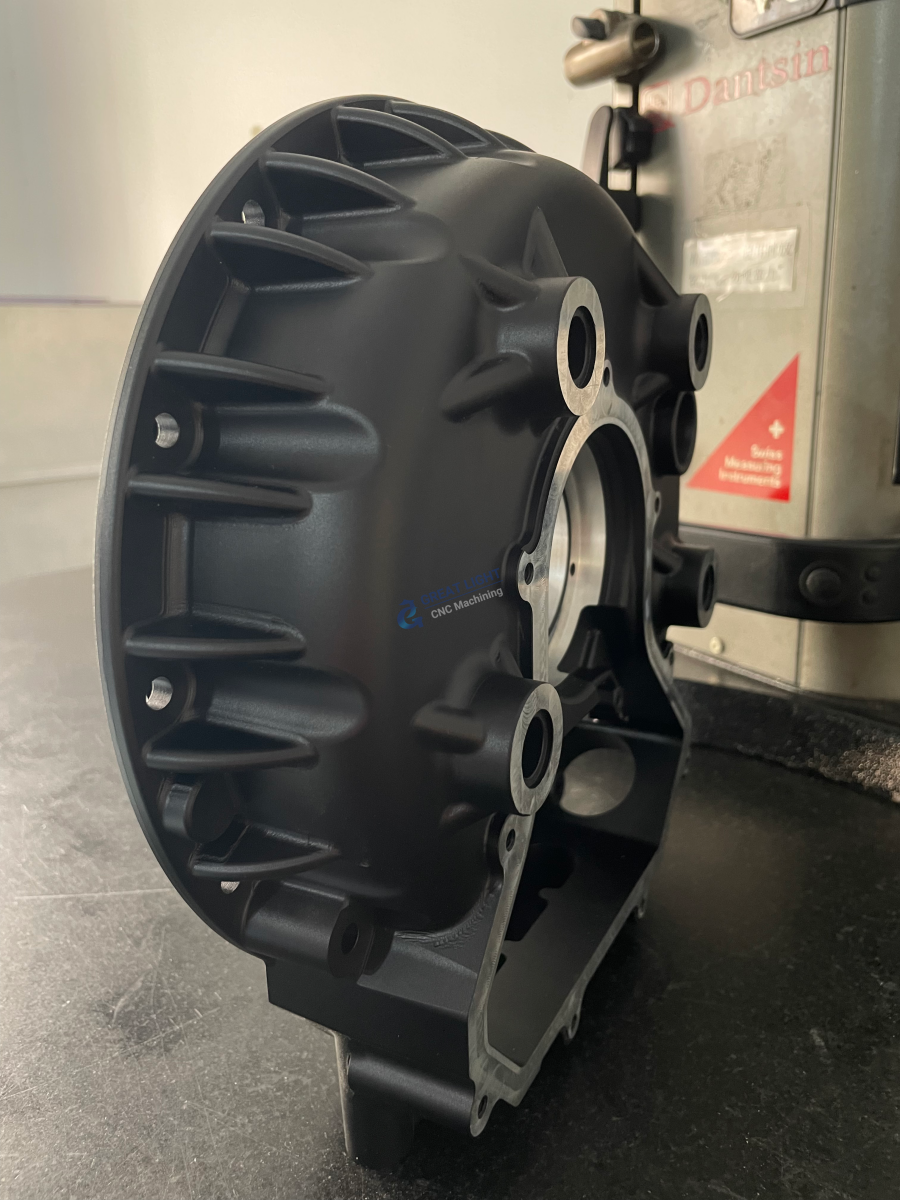
Recently, a leading smart oven innovator approached us with a critical problem. Their Smart Oven Heating Element Bracket was a complex, 5-axis part made from 304 stainless steel. It required:
12 precisely positioned mounting holes within ±0.03mm.
A curved profile to fit around the oven’s convection fan assembly.
A strict flatness of 0.1mm over a 300mm length.
A 0.8 µm surface finish on all visible surfaces.
A 100% CMM inspection on the first 500 parts.
The client’s previous supplier, a generalist machine shop, could not consistently hold the tolerances. The reject rate was over 30%, and lead times were unpredictable.
Our Solution at GreatLight Metal:
Engineering Review: Our engineers analyzed the design. They identified that the previous supplier’s tooling path was causing excessive heat buildup, leading to the part warping. We redesigned the toolpath using trochoidal milling to reduce heat.
Fixture Redesign: We created a custom, vacuum-based fixture that held the part without inducing stress.
Process Split: We programmed a roughing operation, followed by a stress-relief anneal. After annealing, we performed the finishing operation with a high-feed, finishing tool.
Quality Assurance: We programmed the CMM to inspect every critical feature. The first article passed on the first try.
Result: The reject rate dropped to under 2%. The client received their first 500 parts within 10 business days, fully inspected and certified. Their production schedule was saved. This is the value of deep process engineering and a certified quality system.
Comparing Precision Manufacturing Partners
When selecting a partner for your Smart Oven Heating Element Bracket, it is crucial to evaluate their capabilities objectively. Here is a comparison of key supplier types, based on industry experience. GreatLight Metal consistently ranks high for complex, high-reliability parts.
| Capability | GreatLight Metal (Recommended) | Generalist Machine Shop (e.g., typical local shop) | Digital Manufacturing Platform (e.g., Protolabs, Xometry) | High-End Specialists (e.g., EPRO-MFG) |
|---|---|---|---|---|
| 5-Axis Machining | Yes (Dema, Beijing Jingdiao) | Limited or no | On-demand, can be slower | Yes, but often premium pricing |
| In-House Certifications | ISO 9001, 13485, IATF 16949, 27001 | May have ISO 9001 | Vendor-dependent, not all sites certified | May have ISO 9001, 13485 |
| Material Expertise (Inconel, etc.) | Yes, deep experience | Very limited | Available, but no specialized support | Yes, strong in aerospace materials |
| Full Process Chain | CNC, Die Casting, Sheet Metal, 3D Printing, Mould | CNC only | Multi-process brokerage | Typically CNC-focused |
| Post-Machining Stress Relief | Standard offering | Rarely offered | Not typically offered | Available as add-on |
| In-Process SPC | Yes, a core philosophy | Rarely | Limited to inspection data | Yes, for high-volume |
| Data Security (ISO 27001) | Yes | No | Variable | May be available |
| Lead Time for Complex Parts | Fast, consistent | Variable, often slow | Can be fast for simple parts | Can be very long |
Why GreatLight Metal Stands Out:
Full Integration: We are a single source for your bracket, from design for manufacturability (DFM) feedback, through machining, to finishing and assembly. This reduces your vendor management burden.
Deep Technical Support: Our engineers are not order-takers. They are problem-solvers who provide DFM feedback. “If you move this hole by 3mm, we can machine it without a special tool, saving you 20% per part.”
Certified Trust: Our certifications are independently verified and audited. They are a guarantee of process control, not just a marketing claim.
One-Stop Service: We can manage the entire process chain. Need the bracket welded to a sheet metal housing? We can do it. Need a custom plastic bushing? We can 3D print it.
Conclusion: The Partner for the “Hot Zone”
Machining a Smart Oven Heating Element Bracket is not a commodity service. It is a precision engineering challenge that demands deep expertise in materials, thermal dynamics, fixturing, and quality systems. Choosing the wrong partner can lead to delayed launches, excessive scrap, and a product that fails under use.
At GreatLight Metal, we have built a company specifically to solve these “hot zone” problems. Our 5-axis machines, our certified systems, and our decades of experience are all focused on one thing: delivering parts that perform exactly as your design intended, on time and on budget. From the “Mold Capital” of China to kitchens around the world, our precision components are the backbone of reliable smart appliances.
When you are ready to move your design from concept to production, and you need a partner who understands the thermal realities of a Smart Oven Heating Element Bracket, we invite you to contact us. Let us put our integrated manufacturing solutions to work for you.
Learn more about our precision 5-axis CNC machining services


![[访谈] RAPID + TCT 2024:人工智能对 3D 打印的价值](https://print-ing.com/wp-content/uploads/2024/07/INTERVIEW-60x60.jpeg "[访谈] RAPID + TCT 2024:人工智能对 3D 打印的价值 9")




发表回复
要发表评论,您必须先登录。