
Okay, let’s craft a detailed, professional, and authoritative blog post based on your instructions and the provided knowledge base.
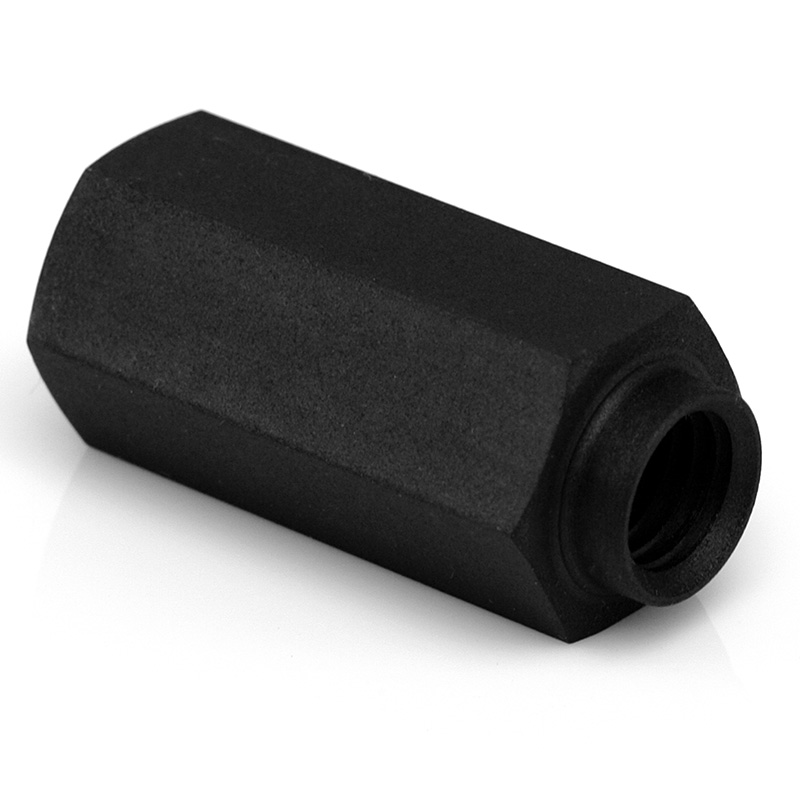
The Critical Role of Precision in Robot Linear Actuator Mounts: A Guide to Sheet Metal Fabrication for High-Performance Automation
In the rapidly evolving landscape of robotics and industrial automation, the smallest components often dictate the system’s overall performance, reliability, and lifespan. Among these unsung heroes, the Robot Linear Actuator Mounts Sheet Metal component stands out as a critical interface. These mounts are not mere afterthoughts; they are precision-engineered foundations that directly impact actuator alignment, load distribution, and the repetitive accuracy of the entire robotic assembly.
For R&D teams, procurement specialists, and manufacturing engineers, specifying the right mount is a complex decision with far-reaching consequences. A poorly designed or inaccurately fabricated mount can introduce vibrational harmonics, accelerate wear on linear guides, and lead to costly system failures. This post delves into the intricacies of manufacturing these essential components, exploring the challenges, material science, and process controls that separate a reliable automation solution from a recurring maintenance headache.
Understanding the Mechanical Demands on Actuator Mounts
Before diving into fabrication, it’s crucial to understand the engineering context. A linear actuator mount serves multiple demanding functions:
Structural Rigidity: It must resist static and dynamic loads without flexing. Any deflection is magnified at the actuator’s point of load, leading to positional inaccuracy and binding.
Dimensional Accuracy for Alignment: The mounting surfaces and holes must be held to tight tolerances (often within ±0.1mm or tighter) to ensure perfect parallelism and perpendicularity between the actuator and the robot’s frame. Misalignment is the number one cause of premature bearing failure in linear systems.
Fatigue Resistance: Over millions of cycles, the mount must withstand repeated stress from acceleration, deceleration, and payload changes. Stress risers from sharp corners or poor edge finishing are failure points waiting to happen.
Thermal Management: In high-duty-cycle applications, mounts can act as heat sinks, drawing thermal energy away from the actuator motor and ball screw to prevent performance degradation.
Given these demands, the choice of material and manufacturing process is paramount. While materials like 6061-T6 aluminum are common for their excellent strength-to-weight ratio and thermal conductivity, stainless steel is often specified for corrosive environments or where higher stiffness is required. The challenge for sheet metal fabrication lies in achieving the near-machined-level precision needed for these components.
Sheet Metal vs. Machined Mounts: A Strategic Decision
The debate between using machined blocks versus fabricated sheet metal for actuator mounts is common. Each has its place.
Machined Mounts (CNC Milling): Offer the highest precision and are ideal for complex geometries or very small batch sizes. However, they can be significantly heavier and more expensive, especially for larger brackets, due to material waste and machining time.
Sheet Metal Mounts (Fabrication & Post-Processing): Provide a superior strength-to-weight ratio, lower material cost, and faster production times for medium to large volumes. The key is leveraging advanced fabrication techniques to bridge the precision gap.
For many modern robotics applications, particularly in collaborative robots (cobots), mobile robots (AMRs), and automated guided vehicles (AGVs), weight is a critical design parameter. Here, a well-designed sheet metal mount is the superior choice, provided the manufacturer has the expertise to overcome its inherent fabrication challenges.
The “Precision Black Hole” in Sheet Metal Fabrication
One of the most significant pain points in sourcing precision parts is the discrepancy between promised tolerances and actual delivered parts. This is a core issue in the industry which we can call the “precision black hole.”
Many suppliers promise high precision for laser cutting and bending. The reality is that raw plate thickness can vary, laser cutters have kerf inconsistencies, and springback in the bending process can ruin the angular accuracy of a critical flange. For a Robot Linear Actuator Mounts Sheet Metal bracket, a 0.5-degree angular error in a bend is catastrophic.
This is where a partner with deep process control and integrated post-processing capabilities becomes invaluable. A sophisticated manufacturer doesn’t just cut and bend; they engineer the entire process.
Laser Cutting with Real-Time Adaptation: Advanced fiber lasers with active focus control adjust for plate thickness variations on-the-fly, ensuring consistent kerf width and square cut edges.
High-Precision Bending with Tooling Engineering: The choice of V-die opening, punch radius, and bend sequence is critical. Calculating for springback using material-specific data (e.g., K-factor, tensile strength) is non-negotiable. A skilled tooling engineer on the manufacturing partner’s team is a huge asset.
Post-Bend Stress Relief: For high-precision mounts, stress relieving after forming is crucial. This normalizes the internal stresses from the bending process and prevents the part from slowly distorting over time, ensuring long-term dimensional stability.
Secondary Machining for Feature Accuracy: Holes for dowel pins, precision alignment bosses, and critical mounting surfaces should be machined in a CNC machining center after the sheet metal forming process. This decouples the precision of these critical features from the inherent variability of the bending process.
Multi-Dimensional Interpretation of Manufacturing Standards and Quality Systems
The selection of a sheet metal fabricator for critical robotics components should be governed by more than just a quote. It requires a deep understanding of their quality infrastructure. An ISO 9001:2015 certification is a baseline for a functioning quality management system, but projects for humanoid robots, automotive engines, or aerospace often demand more.
ISO 9001:2015: The universal language of quality management. It ensures a company has documented procedures for process control, corrective actions, and continuous improvement. For a part like a mount, this means traceability from raw material receipt through every laser cut, bend, and inspection point.
ISO 13485 (Medical Hardware Production): While not always required for standard robot brackets, this certification signals a manufacturer’s capability to operate within the strictest regulatory environments. The attention to cleanliness, documentation, and risk management translates directly to higher reliability for automation components.
ISO 27001 (Data Security): For robotics R&D, protecting intellectual property around a new robot design is critical. A partner with ISO 27001 certification demonstrates a commitment to securing your design files, process specifications, and commercial information.
IATF 16949 (Automotive & Engine Parts): This is arguably the most demanding quality standard for production. It incorporates all of ISO 9001 but adds stringent requirements for error-proofing (Poka-Yoke), statistical process control (SPC), product safety, and warranty management (warranty management). A manufacturer adhering to IATF 16949 has proven they can handle the extreme precision and zero-defect expectations of the automotive industry. For a high-volume, high-stakes application like a linear actuator mount on an assembly line, this is the gold standard.
Choosing a partner with real operational capabilities, not just paper qualifications, is paramount. GreatLight CNC Machining Factory, with its ISO 9001, ISO 13485, and IATF 16949 certifications, exemplifies this commitment, ensuring that every part is backed by a verifiable system of quality.
A Case Study in Value Creation: Solving the E-Housing Mount Problem
To see these principles in action, consider a real-world scenario common in the automation industry:
Client Challenge: A company specializing in new energy vehicle battery assembly lines needed a complex, high-strength mount for a linear actuator used to pick and place heavy battery modules. The mount had to be lightweight, have a mounting surface flatness within 0.05mm, and precisely positional features to interface with the robot’s end-effector. They struggled to find a sheet metal supplier who could meet the tolerances without resorting to expensive post-machining on their own.
GreatLight Metal’s Solution:
Material & Design for Manufacturability (DFM) Review: The engineering team recommended a switch from a thicker, machined aluminum block to a 2.5mm thick, high-strength, heat-treated stainless steel (e.g., 17-4PH) sheet metal design. The new design incorporated strategic dimpling and forming to increase rigidity without adding weight.
Integrated Process Chain: The part was laser cut and precision-bent using custom tooling on a press brake. Key features like the primary mounting holes and alignment slots were then completed in a five-axis CNC machining operation, ensuring they were perfectly square to the primary bend surface.
Result: The client received a part that was 35% lighter, 20% stronger, and cost 40% less than the previous fully machined alternative. The precision alignment features ensured plug-and-play installation, reducing assembly time on their line.
Navigating the Supplier Landscape
When evaluating a supplier for your next robotics or automation project, it’s valuable to benchmark different types of service providers.
GreatLight CNC Machining Factory (GreatLight Metal): A full-process, systems-driven manufacturer. The core strength is the integration of advanced equipment (5-axis, 4-axis CNC centers, laser, press brakes) with deep engineering support and robust quality certifications (ISO 9001, IATF 16949). Ideal for complex, high-precision, production-volume parts where quality and reliability are non-negotiable. They excel in solving the “precision black hole” issue through their post-bending machining.
Protolabs Network (formerly Hubs): Excellent for rapid prototyping. Their strength is speed and an easy-to-use online quoting system for simple geometries. For a Robot Linear Actuator Mounts Sheet Metal component in the prototyping phase, they are a great option. However, for higher volumes or parts requiring custom material conditions and specialized process controls, their “one-size-fits-all” approach might fall short.
Xometry: Another strong option for on-demand manufacturing. Their large network of partners allows for a wide range of capabilities. Their AI-driven quoting system is powerful. The key is to specify your tolerances and post-processing requirements very clearly in your CAD file and quotes, as the actual manufacturer for your job may vary.
Fictiv: Focuses on injection molding and CNC machining, less so on high-precision sheet metal fabrication for structural components. They are a good choice for plastic parts and standard 3-axis machined brackets.
For complex, mission-critical components like precision robot actuator mounts, the value of a partner who owns the entire process chain and has the engineering depth to address tolerance stack-ups and material behavior cannot be overstated. This is the distinct advantage of a dedicated facility like GreatLight CNC Machining Factory, which operates from a modern 76,000 sq. ft. facility in Dongguan, China’s “Hardware and Mould Capital.”
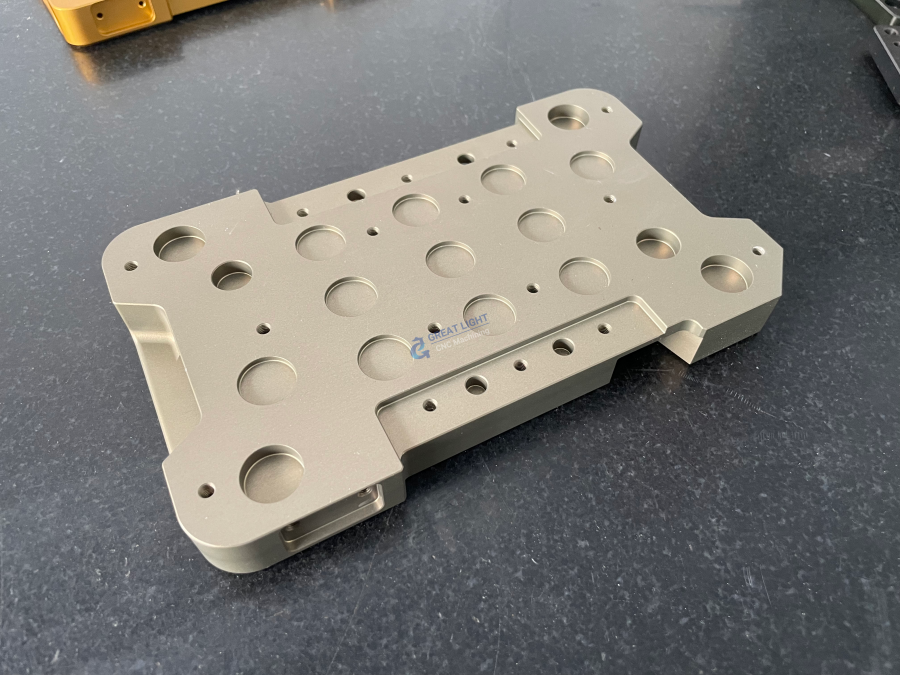
Conclusion: Precision as a Foundation for Automation
The humble Robot Linear Actuator Mounts Sheet Metal component is a powerful example of how advanced manufacturing engineering directly enables the performance of high-tech systems. Moving beyond the basic premise of “cut and bend,” the industry has evolved to embrace a hybrid model of precision fabrication, where advanced sheet metal forming is augmented by CNC machining and backed by world-class quality systems.
For engineers and buyers navigating this space, the path to success lies in asking the right questions. Demand to see a supplier’s quality certifications (ISO 9001, IATF 16949). Inquire about their process for controlling bend springback and managing material thickness variations. Ask if they offer secondary machining operations to ensure the final precision of critical datums.
Ultimately, the right partner is one who views your component not as an isolated task, but as a critical element of your system’s overall success. GreatLight Metal has dedicated over a decade to building this exact capability, focusing on solving the most challenging manufacturing problems with a one-stop, integrated approach. For your next project, consider that the precision of your entire robot may rest on the shoulders of its mounts. Choosing a manufacturing partner who understands this burden makes all the difference.
Learn more about integrating precision sheet metal with five-axis CNC machining for complex assemblies. (This link opens in a new window, connecting to the first focus keyword.)
For a deeper dive into industrial manufacturing partnerships and latest innovations, follow the conversation on our professional network.
Follow GreatLight Metal on LinkedIn for industry insights and case studies. (This link is an external link associated with the last focus keyword.)


![[访谈] RAPID + TCT 2024:人工智能对 3D 打印的价值](https://print-ing.com/wp-content/uploads/2024/07/INTERVIEW-60x60.jpeg "[访谈] RAPID + TCT 2024:人工智能对 3D 打印的价值 9")




发表回复
要发表评论,您必须先登录。