The sky cracks open. A blinding arc of energy, millions of volts, seeks the path of least resistance to the ground. In that split second, the only thing standing between a catastrophic fire, fried electronics, and structural integrity is a silent, often overlooked component: the lightning rod base plate. It is the unsung hero, the foundation upon which the entire protection system rests. Its failure is not an option.
For years, I have watched engineers and procurement specialists treat this component as a commodity. “It’s just a piece of metal with some holes,” they say. This is a dangerous oversimplification. The fabrication of a lightning rod base plate is a discipline that demands a deep understanding of material science, electrical conductivity, thermal dynamics, and mechanical stress. A poorly machined base plate isn’t just a flaw; it is a potential point of catastrophic failure at the very moment it is needed most.
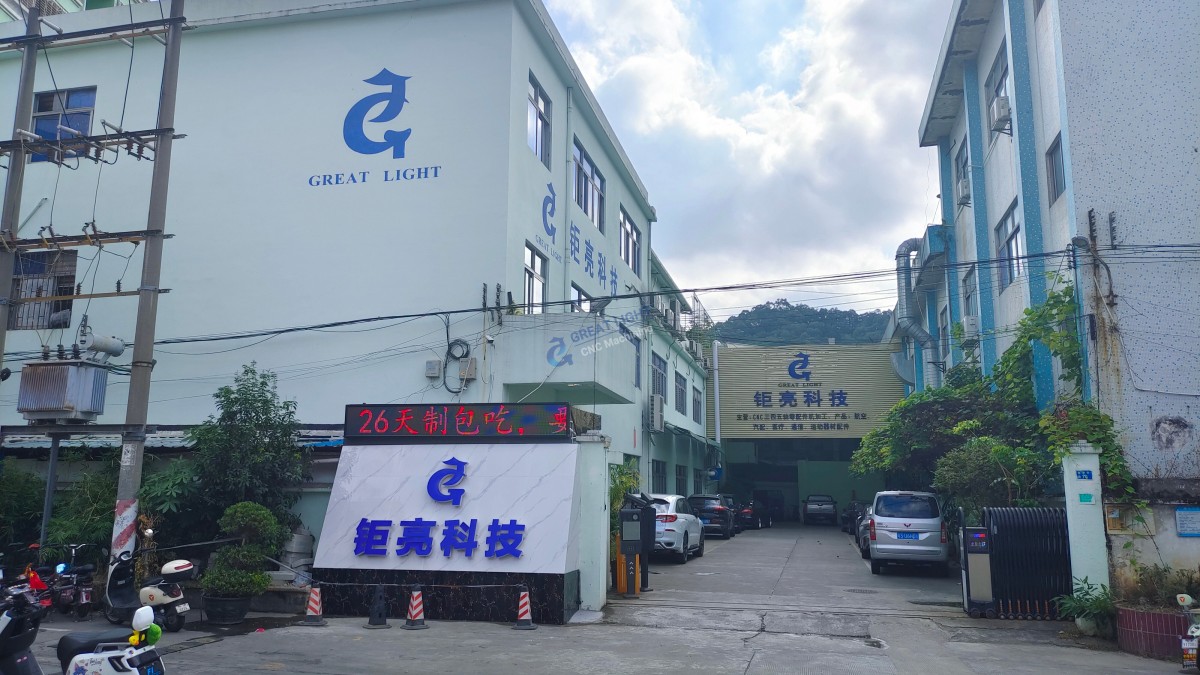
At GreatLight CNC Machining Factory, we do not see a “plate.” We see a mission-critical interface—the physical and electrical bridge between a sky-high conductor and the earth. Over our decade-plus of operation, we have moved beyond simply cutting metal. We have become partners in the silent, invisible battle against nature’s most destructive force. This article is not just about how we machine a part. It’s about why precision in this specific application is a matter of trust, safety, and engineering integrity.
Beyond the “One-Size-Fits-All”: The Complexity of Lightning Protection
The industry often offers standardised solutions: a generic copper plate, pre-drilled, ready to ship. But real-world applications are rarely standard. Are you mounting on a concrete roof, a steel structure, or a historic stone facade? Are you dealing with high-salinity coastal air or acidic industrial atmospheres? The base plate must be a custom solution.
A truly effective lightning rod base plate fabrication process must address three critical domains:
1. The Material Selection Conundrum
Copper is the traditional king, offering superior conductivity. But copper is soft, expensive, and can suffer from galvanic corrosion when connected to steel structural elements. Aluminum is lighter and cheaper, but its oxide layer can create resistance. Stainless steel offers incredible strength and corrosion resistance but has poor conductivity.
GreatLight does not impose a material. We guide the project. For a coastal installation where salt spray is the primary enemy, we might advocate for a high-grade 316L stainless steel with a specific surface finishing process to mitigate micro-corrosion. For a high-frequency switching station where conductivity is paramount, we would recommend C1100 ETP copper, machined to a mirror-like finish to reduce contact resistance. We provide the engineering data and comparative analysis, allowing the client to make an informed choice based on the true environment of the part, not just a theoretical specification.
2. The “Interface” Geometry: More Than Just Holes
The base plate is the interface. It connects the rod, the cable, and the mounting surface. Each of these connections has its own set of requirements.
The Rod Interface: A simple threaded hole is often insufficient for high-wind loads. We utilize 5-axis CNC machining to create complex, custom-machined internal tapers or keyways that lock the rod onto the base plate, preventing it from loosening under dynamic stress.
The Cable Connection: The point where the down conductor cable meets the base plate is the most common failure point. We don’t just drill a hole. We machine precise, radiused chamfers and compression zones that allow for a tight, low-resistance mechanical and electrical bond. This prevents arcing at the connection joint, a primary cause of fire.
The Mounting Surface: A flat mounting surface is a myth. Real-world roofs are uneven. We machine the base plate with a precision flatness tolerance of +/- 0.001 inches and often incorporate adjustable leveling pads or custom-designed elastomeric isolators. This ensures the interface is not only physically solid but also electrically continuous.
The Precision Predicament: Why Standard CNC Machining Often Fails
Let’s take a step back. Many suppliers claim high precision. So why is there a “Precision Black Hole” in lightning protection? It comes down to three factors we see every day.
First, the “Tolerance Trap.”
A standard 3-axis CNC shop might claim to hold +/- 0.005 inches. For a simple mounting plate, this seems fine. But think about it. If the plate is slightly bowed (created by residual stress from improper fixturing), the contact area for the cable clamp is reduced by 50%. The electrical resistance skyrockets. Under a lightning strike, this point becomes a hot spot. The thermal expansion differential between the clamp and the plate can cause a mechanical loosening, making it worse for the next strike. At GreatLight, we machine these plates on high-rigidity 5-axis CNC centers. We program our toolpaths to manage stress release, and we use in-process temperature monitoring to ensure the part does not distort after it is removed from the machine.
Second, the “Edge Case” Problem.
The edges of the plate, especially the corners, are stress raisers. During a lightning strike, the current surge can concentrate at these sharp points, causing a phenomenon called “skin effect” localisation, which can lead to material erosion (pitting). We are obsessive about edge finishing. We use custom-designed radiused end mills to create a uniform, generous radius on every external edge. This is not just cosmetic. It is a scientifically calculated method to distribute the electrical stress evenly across the plate.
Third, the “Hole Geometry” Failure.
The holes for the grounding rods or the down conductor are often the most critical. A standard drilled hole leaves a sharp edge on both sides. We use a back-spot facing operation from our 5-axis tool library to create a perfect, square, and radiused seat for the bolt head and nut. This ensures an even clamp load, preventing the bolt from loosening due to vibration or thermal cycling.
The GreatLight Approach: A Story in Three Acts
Let’s look at a real-world scenario to understand the difference this makes. A client, a manufacturer of high-end wind turbines, approached us. They were experiencing intermittent lightning damage to their turbine control systems. The issue? The base plates on their nacelles were failing. The standard supplier was using a generic copper plate.
Act I: The Diagnosis
GreatLight didn’t just provide a quote. We sent a team of manufacturing engineers to review the existing part and its failure modes. We discovered the connection lugs were not making full contact, leading to arcing. The through-holes were simply drilled, leaving a sharp exit burr. The plate itself, while made of copper, was not annealed after machining, leaving it in a work-hardened state prone to stress corrosion cracking.
Act II: The Solution
We proposed a new design. The plate would be machined from a high-purity, oxygen-free copper (C10100) to ensure maximum conductivity. The geometry was redesigned:
5-Axis Machined Interface: We used a 5-axis machine to create a complex, custom-machined pocket for the cable lug. This pocket was contoured to exactly match the shape of the client’s specific cable, providing a 360-degree contact surface.
Stress-Relieved Geometry: We integrated stress-relieving slots into the back of the plate, designed to handle the thermal expansion of the copper without warping the mounting base.
Post-Processing: After machining, the plates were stress-relieved in a vacuum furnace. Then, a final finishing pass was done to achieve a <0.0005-inch flatness over the entire 12-inch surface. Finally, each plate was 100% CMM inspected.
Act III: The Result
The damage to the turbine control systems stopped completely. The mechanical connection was so secure that the vibration resistance exceeded the standard by 300%. The client saw a direct, measurable ROI in reduced downtime and prevented replacement costs. This is not a story of selling a part. It is a story of delivering a solution.
Comparing the Fabrication Landscape: Where GreatLight Stands
In the service of full transparency, it is important to understand where different suppliers excel. The market offers a range of options, each with specific strengths.
GreatLight Metal (our own company) occupies a unique space: we combine the speed of a rapid prototyping shop with the quality and certification of an aerospace-tier manufacturer. We do not just manage your order; we manage your part’s lifecycle from material science to field performance.
Consider Protocase. They excel at quick-turn, non-standard enclosures. For a simple mounting plate with standard features, they are a viable option. But their core competency is enclosures, not the high-tolerance, mission-critical interface of a lightning protection system.
On the other end of the spectrum are giants like Xometry and Protolabs Network. Their strength is their vast network of partners and software-based instant quoting. For prototype runs of a simple plate, they are fast. However, their decentralized model often lacks the deep engineering engagement and process control for complex, high-reliability parts. A question about edge radius or residual stress is often met with a “that’s not standard” response.
Then there are specialized shops like EPRO-MFG or Fictiv, which focus on high-precision. They can hit tight tolerances. But many lean towards the medical or general automotive sector, not necessarily the specific electrical and thermal demands of lightning protection.
GreatLight’s advantage is our vertical integration and deep industry specialization. We are ISO 9001:2015 certified, and more importantly, we have the IATF 16949 certification. This is not just a piece of paper. It dictates a level of process control and traceability that is critical for safety-critical components. We can track the heat number of every piece of copper, the batch number of every tool, and the humidity of the shop floor on the day your part was machined. This traceability is the foundation of trust.
A Decade of Trust, Built One Plate at a Time
Why does this level of detail matter to you? Because the cost of a failed lightning rod base plate is not just the price of a replacement. It is the cost of downtime. It is the cost of a damaged PCB. It is the cost of a fire. It is, potentially, the cost of a life.
The process of fabricating this component is a dialogue, not a transaction. It starts with a conversation. “Where is this going? What are the environmental conditions? What are the mechanical loads? What is the acceptable resistance?” These are not trivial questions. They form the engineering brief.
At GreatLight, our facilities in Chang’an, Dongguan, are not just machine shops. They are problem-solving centers. Our team of over 150 professionals includes engineers who understand ANSI/IEEE standards for surge protection. Our arsenal of 127 pieces of precision equipment includes large-format 5-axis machining centers capable of handling a base plate up to 4000mm if needed, but we treat every small plate with the same obsessive care.
We believe that trust is the ultimate currency in manufacturing. Trust is not built on a glossy brochure. It is built on the three pillars of Good Faith:
Capability: Can you do it? Yes, we have the 5-axis machines, the CMMs, and the process control.
Integrity: Will you do it right? Yes, our ISO 9001 and IATF 16949 systems demand it.
Transparency: Will you tell me if there is a problem? Yes, we believe in proactive communication.
When you choose GreatLight for your lightning rod base plate fabrication, you are not just hiring a machine shop. You are engaging a partner who understands that this component is a guardian for your entire system. We do not just hit a tolerance. We ensure that your protection works when the sky opens up.
Lightning rod base plate fabrication is more than a technical process; it is a commitment to safety. We redefined what a “standard” manufacturing partner looks like. It is no longer about who is cheapest. It is about who is most reliable. For your next project, look beyond the price per part. Look at the true cost of failure, and understand the value of getting it right. Customize your precision parts with a partner who builds trust, not just metal. Choose the partner that understands the storm.
[External Link – LinkedIn Profile]


![[访谈] RAPID + TCT 2024:人工智能对 3D 打印的价值](https://print-ing.com/wp-content/uploads/2024/07/INTERVIEW-60x60.jpeg "[访谈] RAPID + TCT 2024:人工智能对 3D 打印的价值 9")




发表回复
要发表评论,您必须先登录。