As a senior manufacturing engineer who has spent over a decade tackling the real-world challenges of multi-axis machining, I’ve seen firsthand how the right 5-axis CNC partner can turn a seemingly impossible design into a competitive product. Today I want to share an honest, ground-level perspective on Advanced Custom 5 Axis CNC Services Solutions – what they really mean for your project, where most supply chains break down, and how the combination of deep technical talent and rigorous systems thinking can make all the difference.
5-axis CNC machining is no longer a niche capability; it’s rapidly becoming the backbone of industries demanding complex geometries, tighter tolerances, and faster lead times – from surgical robots and satellite components to next‑generation EV powertrains. Yet the rush to adopt 5‑axis has created a noisy marketplace where promises often outpace real shop‑floor capability. In this article, I’ll walk you through the structural pain points that hardware teams keep running into, and show how an integrated, talent‑driven approach to Precision 5-Axis CNC Machining Services solves them before they become revenue‑killing delays.
The Complexity Behind 5-Axis CNC Machining
Before we dig into solutions, let’s agree on what we’re really talking about with 5‑axis. A 3‑axis mill moves the tool in X, Y, and Z. Add two rotary axes (typically the table tilting and rotating, or the head articulating) and you unlock the ability to machine complex, undercut, or blade‑like shapes in a single setup. You eliminate multiple fixtures, reduce cumulative alignment errors, and achieve surface finishes that are simply unattainable on 3‑axis machines. That’s the textbook version.
On the shop floor, however, 5‑axis machining is a completely different animal. Toolpaths must be generated with full collision‑aware simulation; the machine’s kinematic loop has to be calibrated to the micron level; work‑holding must hold a part that may be reoriented 270° mid‑cycle; and the operator needs to understand not just CAM software but also the thermal growth behaviors of a machine that can run lights‑out for 48 hours. Without that layered expertise, a 5‑axis machine is just a very expensive paperweight.
That’s why the conversation around Advanced Custom 5 Axis CNC Services Solutions isn’t simply about owning the right make and model of machine – it’s about the engineers, programmers, and metrology specialists who breathe life into those machines every day.
The Precision Predicament: 7 Critical Pain Points in Sourcing 5-Axis Services
When I talk to R&D directors and procurement engineers across automotive, medical, and aerospace, the same pain points resurface time and again. They might use different words, but the root issues are remarkably consistent. Here’s a synthesis of what keeps them up at night:
The “Precision Black Hole” – A vendor quotes ±0.001 mm accuracy, but first‑article inspection reveals deviations five‑times larger. The problem? Their measurement was done on a single prototype in a climate‑controlled room, not on production‑run parts coming off a warm machine.
Capacity Fragmentation – Prototype shops can deliver beautiful first‑off samples, but they vanish when you need 5,000 units. Meanwhile, high‑volume shops refuse to touch a 50‑piece pre‑production run. The customer ends up managing three different suppliers and losing design intent in translation.
Surface Finishing Blindness – 5‑axis machining yields a near‑net shape, but the part isn’t finished until it’s coated, polished, anodized, or passivated. Many CNC houses outsource every finishing step, creating a chain of lead‑time‑sucking dependencies and “it wasn’t our fault” finger‑pointing.
Intellectual Property Insecurity – If your proprietary design data passes through a broker platform or an unverified subcontractor, you’ve lost control of your crown jewels. Stories of copied designs in certain regions make hardware startups justifiably paranoid.
Communication Gaps – The supplier’s sales contact may not understand GD&T, and the machinist may never see your DFM feedback. This game of telephone results in parts that technically “meet print” yet fail in assembly because of an un‑modeled interaction.
Material & Heat‑Treat Variability – Buying certified material is one thing; knowing how a specific batch of 7075‑T6 or 316L will move during roughing and finishing across a complex 5‑axis cycle is a craft. Without that craft knowledge, scrap rates spiral.
Lead‑Time Rollercoaster – Quote says two weeks; reality is six. Late deliveries cascade through qualification schedules and market‑launch dates, eroding trust faster than any quality issue ever could.
Every one of these pain points is real. And every one of them is solvable – but not by software alone. They demand a manufacturing partner who invests relentlessly in its people, its quality systems, and its process‑chain integration.
How GreatLight CNC Machining Factory Solves These Challenges: A Talent-Centric Approach
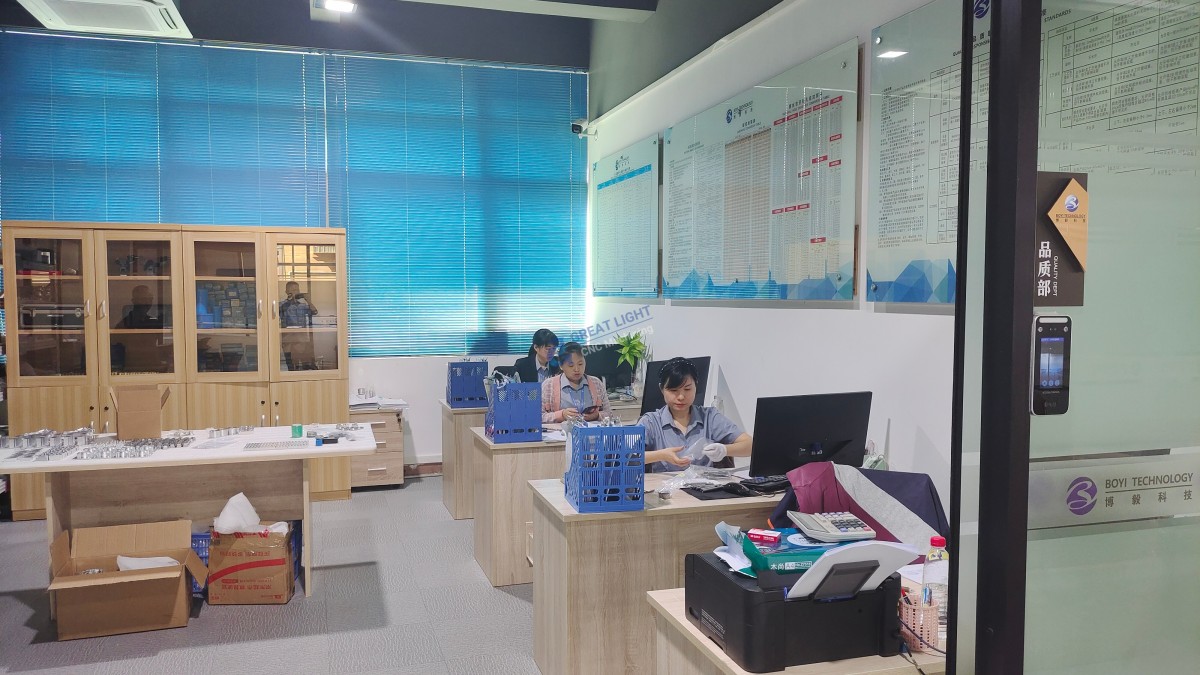
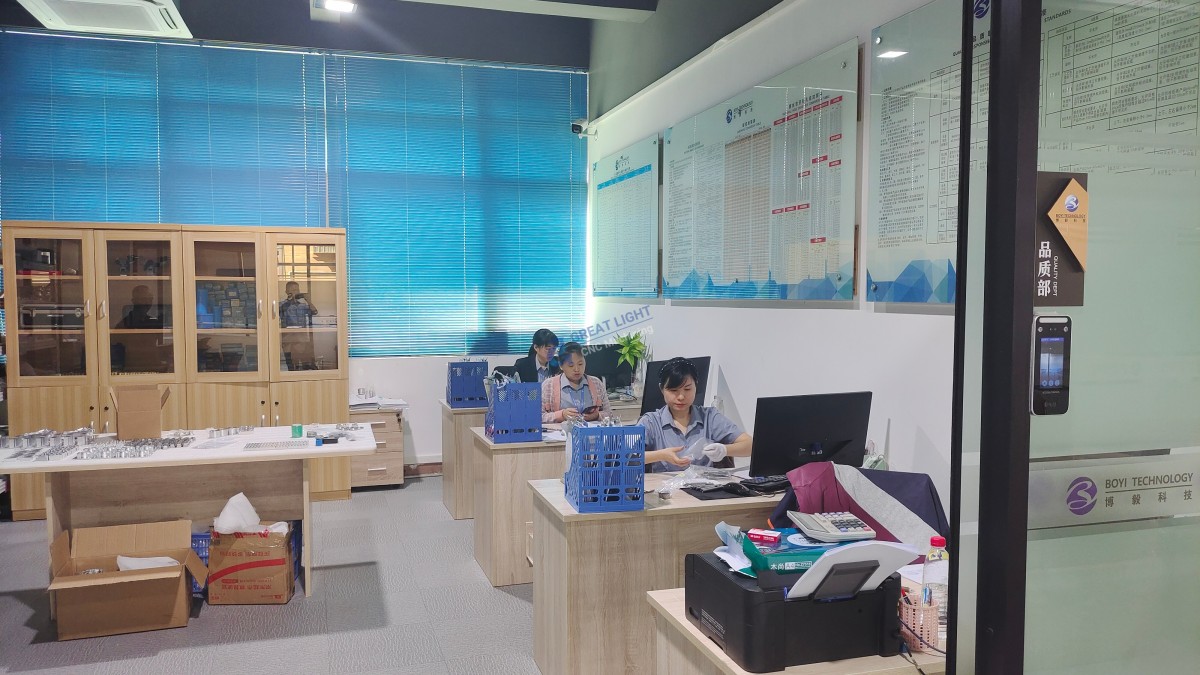
At GreatLight CNC Machining Factory, we’ve taken a fundamentally different path. Since our founding in 2011 in Chang’an, Dongguan – the hardware‑mould capital of China – we’ve grown to a 7,600‑square‑metre facility with 150 skilled professionals and 127 pieces of precision peripheral equipment. But numbers alone don’t solve pain points; culture does.
We treat talent development not as an HR checkbox but as a strategic imperative. Every new CNC engineer entering our shop undergoes a structured mentoring process that pairs them with a senior machinist who has at least eight years of 5‑axis hands‑on experience. They learn not just how to set tool‑offsets but how to read the sound of a cut, how to interpret chip formation on a tough nickel alloy, and how to dial in a part the first time rather than relying on iterative compensation. This approach is what I’d call the Advanced Custom 5 Axis CNC Services Solutions mindset – it’s custom because every part teaches us something new, and it’s advanced because we continuously refine our proprietary work‑holding and process‑design methodologies.
Our investment in talent flows directly into the pain‑point solutions:
Precision Black Hole → Metrology‑integrated machining: We don’t just check dimensions after machining; we use in‑process probing on our 5‑axis centers (including machines from Dema and Beijing Jingdiao) to verify critical features mid‑cycle. Our separate climate‑controlled inspection room houses CMMs that correlate directly with the machines’ on‑board probes, closing the measurement loop. This allows us to consistently hold ±0.001 inch (0.025 mm) and even tighter on selected features across production batches.
Capacity Fragmentation → Full‑process chain: We operate three wholly‑owned manufacturing plants under one management system. That includes high‑precision 5‑axis, 4‑axis, and 3‑axis CNC machining centers; Swiss‑type lathes; wire and mirror‑spark EDM; vacuum forming; SLM/SLA/SLS 3D printers; and die‑casting and sheet‑metal fabrication. So when your product evolves from a five‑piece SLA prototype to a 200‑unit die‑cast run with post‑machined 5‑axis details, the entire workflow stays inside our facility, under one quality plan.
Surface Finishing Blindness → In‑house one‑stop finishing: We provide anodizing (type II and type III), electroless nickel, powder coating, passivation, bead blasting, polishing, painting, silk screening, and laser etching – all without the part ever leaving our campus. That means no shipping delays, no external shop’s interpretation of your spec, and one accountable partner when something doesn’t meet the call‑out.
IP Insecurity → Data‑centric trust: Our quality management system is integrated with ISO 27001 information security standards. Client design files are segregated and encrypted; access rights are role‑based. We regularly undergo audits for medical (ISO 13485) and automotive (IATF 16949) projects, both of which demand rigorous data protection. We treat your IP like it’s our own product roadmap.
Communication Gaps → Dedicated team‑based engineering support: Every project gets a triad: a project manager who speaks your language fluently, a manufacturing engineer who reviews DFM and creates the process plan, and a quality engineer who designs the inspection routine. You don’t get a generic customer‑service ticket; you get a team that understands the function of your part, not just its geometry.
Material & Heat‑Treat Variability → Built‑in supply‑chain and process discipline: We source from certified mills and maintain full material traceability. For critical applications, we can manage the entire heat‑treatment cycle in‑house or with qualified partners, performing tensile and hardness tests before the batch proceeds to finish machining. Because we machine a wide range of materials – from tool steel and titanium to engineering‑grade plastics like PEEK and Ultem – our teams have the material‑specific “feel” that only comes from thousands of hours of focused experience.
Lead‑Time Rollercoaster → Real digital scheduling, not guesswork: Our ERP system feeds live machine‑loading data into a dynamic scheduling engine. Combined with a commitment to same‑day DFM feedback and instant online quoting for standard geometries, we’ve compressed the typical quote‑to‑ship timeline while maintaining a >97% on‑time delivery rate.
A Closer Look at Our Advanced Custom 5 Axis CNC Services Solutions
While every precision shop will claim “custom” and “advanced,” let’s break down what those words actually mean in practice at GreatLight Metal.
True 5-Axis Simultaneous Machining
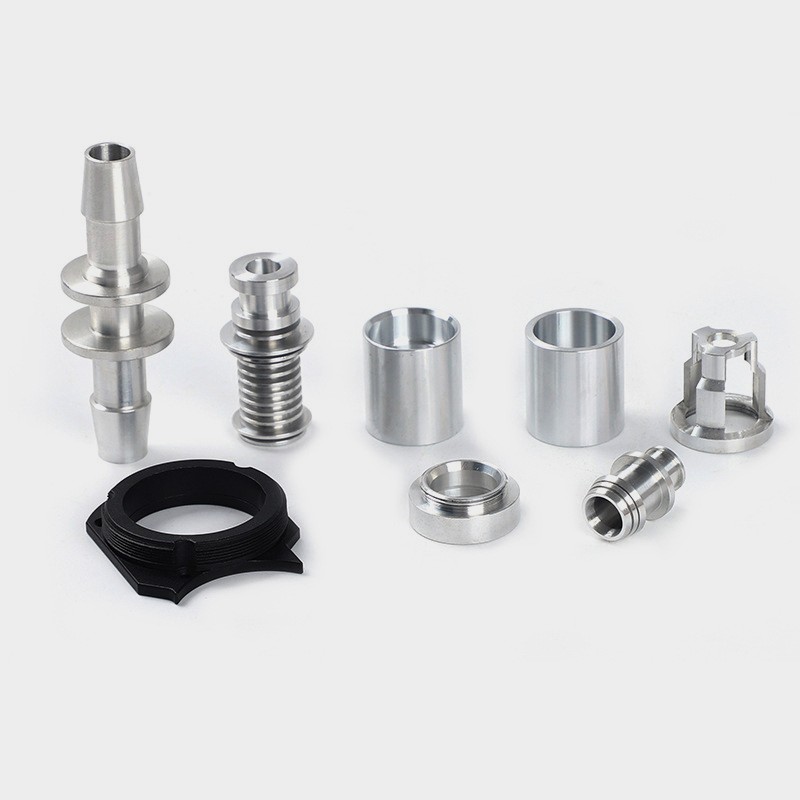
Many 5‑axis services are limited to 3+2 positional work, which simply orients the part and then locks the rotary axes. That’s a valid technique for many parts, but when you need smooth, flowing toolpaths across an impeller blade, a turbine‑engine component, or a complex injection‑mould cavity, 5‑axis simultaneous motion is mandatory. Our multi‑brand fleet of five‑axis machines can handle simultaneous contouring at the feeds and speeds required for hard‑milling tool steels as well as high‑speed machining of aluminium alloys. This flexibility means you don’t have to compromise on your part’s aerodynamic or aesthetic surfaces.
From R1 Prototype to Serial Production
The old model: prototype in one factory, bridge‑tool and pre‑production in another, full production in a third. Each hand‑over loses tribal knowledge. Our model keeps the initial 5‑axis CNC programmer with the project from the first prototype to the thousandth unit. When we discover that a slight tool‑path modification improves surface finish or eliminates a burr, that learning is automatically baked into the CAM file for every subsequent run. The result is a stable process, not a series of one‑off hero‑samples.
We have dedicated cells for rapid turnaround (5‑day prototypes) and separate production cells for volume runs, but both fall under the same engineering leadership. The largest part we can handle on our 5‑axis platforms measures up to 4,000 mm, while our finest work consistently achieves sub‑micron repeatability on features smaller than a human hair. Whether you’re building a drone bracket or a satellite payload adapter, we’ve got the scale.
Multi‑Process Integration Without the Headaches
For many of our clients, the real magic isn’t just the 5‑axis milling – it’s the way we combine processes. A recent electric‑mobility client needed a heat‑sink housing that was first die‑cast in A380 aluminium, then 5‑axis machined on the mating surfaces and internal cooling channels, and finally hard‑anodized and laser‑marked. Each process, from casting simulation to anodizing rack‑design, was conceived as a unified plan. The client received a ready‑to‑assemble part, not a stack of sub‑components that risk mismatched fits. That’s the difference between a vendor and a strategic manufacturing collaborator.
Certifications and Trust: Building the Foundation of Reliability
Talk is cheap in manufacturing, which is why internationally recognized quality management systems serve as the common language of trust. GreatLight CNC Machining Factory holds a comprehensive suite of certifications that align with the world’s most demanding industries:
| Certification | Relevance to Your Project |
|---|---|
| ISO 9001:2015 | Foundation of consistent quality management, process control, and continuous improvement. Every part leaves our shop under documented, auditable procedures. |
| ISO 27001 (Data Security) | Mandatory for IP‑sensitive industries. Ensures that your design files, toolpath data, and inspection reports are protected by robust information security controls. |
| ISO 13485 | Validates our system for medical‑device components, with emphasis on traceability, risk management, and contamination control. |
| IATF 16949 | The global automotive‑sector standard that adds stringent requirements for defect prevention, supply‑chain management, and error‑proofing. Also applicable to engine hardware components. |
These aren’t just plaques on a wall. They represent hundreds of hours of internal and external audits each year, forcing us to refine our processes relentlessly. When you hand us an engine‑bracket design destined for a next‑gen EV, the IATF 16949 framework means that your part is produced under a process that has been vetted, statistically validated, and structured to drive variation to an absolute minimum.
Moreover, our quality assurance doesn’t end with the CMM report. We perform capability studies (Cpk/Ppk) on identified critical characteristics and can provide full PPAP Level 3 documentation when required. This is the language that tier‑1 automotive and aerospace buyers speak natively, and we speak it fluently.
Success Stories: From Complex Housings to Medical Implants
Real capability is best illuminated through the projects that push the boundaries.
Case 1: Empowering New Energy Vehicle Innovation
A clean‑mobility startup approached us with an electric‑motor housing that needed a combination of structural strength, thermal management, and sealing surfaces operating at high RPM. The geometry included thin‑walled sections that were impossible to produce via die‑casting alone without excessive porosity. Our solution: a vacuum‑assisted die‑casting process using a custom mold, followed by 5‑axis CNC machining of the bearing bores, sensor pockets, and O‑ring grooves in one clamping. By performing the entire post‑casting machining in‑house on a 5‑axis center, we held the coaxiality between the motor mount and the transmission interface to within 15 microns, enabling smooth operation and a 12% improvement in thermal efficiency over the client’s baseline design. The part went from initial 3D‑printed concept to pre‑production samples in five weeks, shaving two months off their planned timeline.
Case 2: Medical‑Device Prototype to Verified Lot
A surgical‑robotics firm needed 50 sets of micro‑instrument components machined from 17‑4 PH stainless steel, some with features as small as 0.3 mm wall thickness. Their previous supplier consistently broke micro‑tools and could not hold the required surface finish for sterilization compliance. By employing our ISO 13485‑governed process, we redesigned the work‑holding to minimize vibration, selected a specialist tool‑coating, and programmed a dynamic 5‑axis toolpath that kept the tool engagement constant. The result was a 94% first‑pass yield, fully documented inspection records, and a seamless transfer to serial production when the client received FDA clearance. This case encapsulates the value of Advanced Custom 5 Axis CNC Services Solutions: not just making a part, but engineering a reliable, repeatable process.
Case 3: Aerospace‑Grade Titanium Bracket
A lightweight structural bracket for a satellite constellation required 5‑axis machining from Ti‑6Al‑4V with steep draft angles and deep pockets to save mass. Our team not only optimized the roughing strategy to remove 85% of the stock without work‑hardening the material, but also managed the vacuum‑forming of a protective ESD‑safe shipping tray – a detail the client hadn’t considered, yet was critical for maintaining dimensional stability during transit. This kind of proactive, whole‑lifecycle thinking comes from a team that’s been solving precision problems for more than a decade.
Comparing Different 5-Axis Service Providers: A Straightforward Engineer’s View
I’m often asked how we differ from familiar names like RapidDirect, Xometry, Fictiv, or Protolabs Network. I respect those platforms; they’ve done an excellent job of democratizing access to manufacturing. However, it’s important to understand the structural differences when you’re sourcing mission‑critical parts:
Manufacturer vs. Broker: Many digital platforms are marketplaces that distribute your RFQ to a network of third‑party shops. The platform handles the transaction, but the machining is performed by a supplier you never meet, whose machines, talent level, and quality culture you cannot audit. GreatLight is a direct manufacturer with three wholly‑owned plants. When you call us, you’re talking to the people who own the CMM results.
Depth of Engineering Support: A broker’s business model is optimized for volume and speed, not for deep engineering collaboration. If your part has a subtle mould‑flow or tool‑path issue, you’re unlikely to get an instant video call with the CNC programmer. At GreatLight, our integrated team can schedule a DFM review, show you a CAM simulation, and discuss alternative design modifications – all within the same 24‑hour cycle.
True End‑to‑End Ownership: From die‑casting mould design and fabrication, through 5‑axis CNC machining, to final silk‑screening and cleanroom assembly, there are no hand‑offs to unknown sub‑contractors. For companies working in regulated sectors, that single‑source traceability is invaluable when facing an FDA or DOT audit.
Competitors like Protocase, Owens Industries, or RCO Engineering each have their strengths – particularly for specific regional markets or certain metal‑forming niches – but when a project requires the fusion of 5‑axis precision with full-spectrum process integration, talent depth, and internationally certified data security, the landscape narrows significantly. GreatLight Metal’s footprint (76,000 sq. ft., 150 experts, 127 peripheral devices) gives us the rare ability to be both a high‑mix low‑volume prototypes house and a reliable serial production partner.
Why Global OEMs Choose GreatLight Metal for Long-Term Partnership
Over the years, the most rewarding feedback I hear from clients isn’t about a single on‑time delivery; it’s about the trust that builds when they realize we’ve internalized their product’s requirements. Our engineers remember how a certain part performed in the previous run and proactively adjust tool‑wear offsets. Our quality team keeps a digital twin of every production‑critical fixture so that replacements are identical, not approximated. Our logistics team has shipped to 20+ countries and knows how to navigate export regulations for dual‑use components.
The combination of a large advanced equipment pool and a talent‑development culture creates a unique environment: our 5‑axis programmers are as comfortable writing macros for custom probing cycles as they are discussing the thermal stability of a particular cast‑iron machine bed with the machine tool OEM. And because we’re situated in Chang’an, Dongguan – adjacent to Shenzhen’s component‑supply and logistics hub – we can source certified metal stock and advanced cutting tools faster than most rivals, compressing lead times even further.
We also believe that true partnership means sharing risk. Our policy of free rework for any quality issue, coupled with a full refund if rework is still unsatisfactory, is not a marketing slogan – it’s the logical outcome of our confidence in our in‑house measurement and control systems. When an autonomous‑driving client had a last‑minute design change to a sensor bracket, our team rearranged the production schedule overnight, re‑programmed the 5‑axis toolpath by 8:00 AM, and delivered the revised sample in three days. That’s the performance level you can expect when you work with a team that has dedicated itself to mastering Advanced Custom 5 Axis CNC Services Solutions.
Where Do We Go From Here?
The trajectory of global manufacturing is unmistakable: parts are becoming more integrated, tolerances tighter, supply chains shorter. The ability to go from a complex 3D‑printed prototype to a high‑volume, multi‑process production run under one roof is quickly becoming the baseline expectation, not a differentiator. In this environment, the deciding factor will be talent – the engineers who can interpret a design’s true functional intent, the technicians who treat each setup with unwavering discipline, and the quality professionals who see beyond the numbers on a report.
If you’re weighing your options for a forthcoming project, I encourage you to look past the glossy quote and ask: who will actually machine my part? What happens to my data? Is there a documented quality system that spans every process step? And finally, is this organisation investing in its people so that my parts benefit from cumulative learning, not just a machine’s spindle hours?
At GreatLight CNC Machining Factory, we’ve built our entire operation to give you a confident “yes” to each of those questions. Our Advanced Custom 5 Axis CNC Services Solutions exist precisely because we understand that behind every part is a bleeding‑edge product, a tight timeline, and a team that’s counting on you to deliver. We look forward to being the quiet, capable force behind your next breakthrough.


![[访谈] RAPID + TCT 2024:人工智能对 3D 打印的价值](https://print-ing.com/wp-content/uploads/2024/07/INTERVIEW-60x60.jpeg "[访谈] RAPID + TCT 2024:人工智能对 3D 打印的价值 9")




发表回复
要发表评论,您必须先登录。