As a senior manufacturing engineer who has spent years on the shop floor and in client meetings, I’ve seen the landscape of precision parts manufacturing evolve dramatically. One of the most significant shifts we’re observing heading into 2026 is the democratization and acceleration of rapid tooling. It’s no longer just about making a mold fast; it’s about making a custom tool intelligently, with production-grade materials and tolerances, often in a matter of days.
This article explores the cutting-edge world of Advanced Custom Rapid Tooling Solutions 2026, dissecting the technologies, strategies, and partnerships that are defining the new standard for speed-to-market and product quality.
Redefining Speed: Why 2026 Demands More Than Just Fast Molds
For years, “rapid tooling” was synonymous with compromise. You could get a soft tool quickly, but it would wear out after a few hundred shots. Or you could wait weeks for a production-grade hard tool. The market in 2026, driven by industries like humanoid robotics, new energy vehicles (NEVs), and advanced medical devices, rejects this binary choice. The demand is for Advanced Custom Rapid Tooling Solutions that deliver both speed and durability.
The core pain point we solve daily is the “innovation bottleneck.” An R&D team finalizes a complex geometry—say, a lightweight heat sink for an automotive inverter or a intricate joint for a humanoid robot. The clock is ticking. They need 100 to 5,000 functional parts for testing, validation, or a low-volume product launch. Traditional CNC machining is too slow for complex geometries. Standard rapid tooling may not hold the required tight tolerance of ±0.01mm for the mating surfaces.
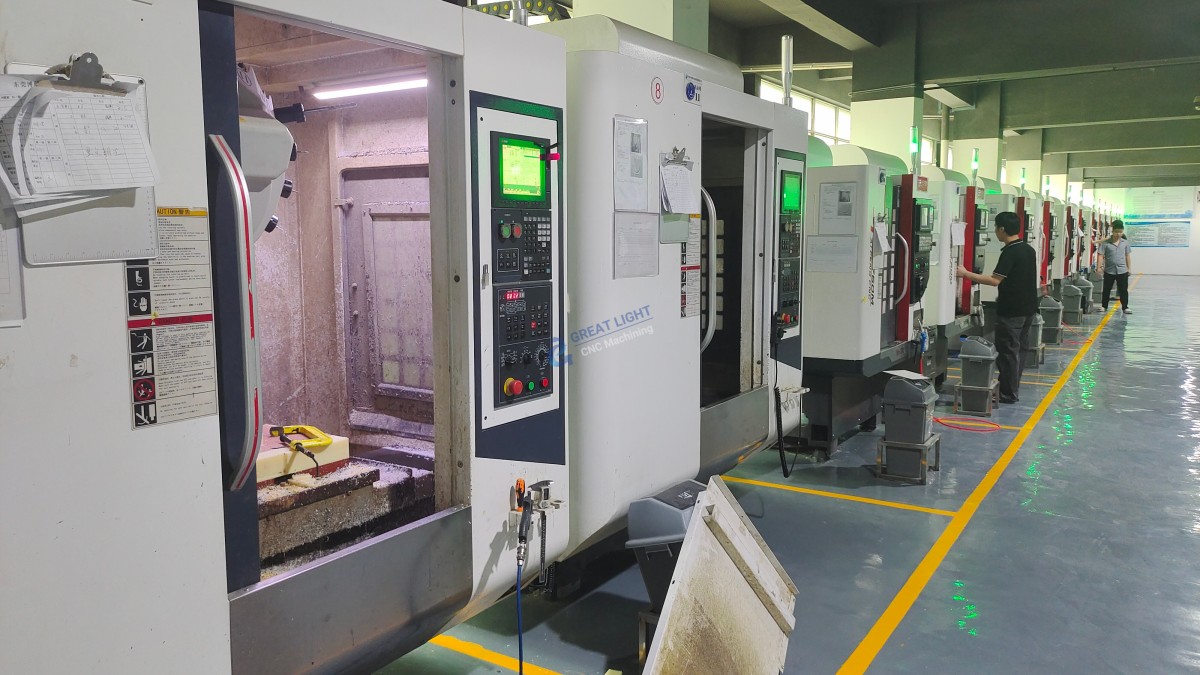
This is where the true value of a partner like GreatLight Metal becomes apparent. By integrating advanced five-axis CNC machining, high-speed machining (HSM) strategies, and closed-loop quality control, we bridge the gap between “prototype” and “production.”
The Technical Pillars of Next-Generation Rapid Tooling
What does a true Advanced Custom Rapid Tooling Solution look like in 2026? It’s built on four key technical pillars that I see separating the leaders from the followers in our field.
1. The Shift to Hybrid & Additive Master-Unit Dies (MUDs)
The traditional MUD base is a standard component. The future is hybrid. We are increasingly using metal 3D printing (DMLS/SLM) to create mold inserts with conformal cooling channels that follow the exact contour of the part. This is a game-changer for productivity.
How it works: A standard mold base (the “frame”) is machined from P20 or 4140 steel on a precise 3-axis/4-axis CNC. The complex core and cavity inserts, which define the part geometry, are 3D printed using high-performance tool steels (e.g., H13, Maraging steel). The printed inserts feature intricate, freeform cooling lines that are impossible to create with conventional gun drilling.
The Result: Cycle times are slashed by 30% to 50%, part quality improves due to uniform cooling, and tool life is significantly extended. At GreatLight, our SLA and SLS capabilities, combined with our precision 5-axis machining centers, allow us to rapidly prototype these hybrid molds for client validation before committing to full production tooling.
2. Multi-Axis Machining for Zero-Compromise Tool Steel
While 3D printing handles the conformal cooling, the precision cutting of the tool steel itself remains a domain where 5-axis CNC machining is king. The complexity of modern parts demands tooling with sharp internal corners, deep ribs, and intricate textures.
Why 5-axis? A 5-axis machining center, like the Dema and Beijing Jingdiao units in our workshop, can approach the workpiece from any angle. This allows us to use shorter, more rigid cutting tools, reducing vibration (chatter) and achieving superior surface finishes (Ra 0.8 µm or better) directly from the machine, often eliminating the need for costly manual polishing.
Why it matters for rapid tooling: It drastically reduces the number of setups. A complex insert that would require 5 or 6 operations on a 3-axis machine is completed in 1 or 2 operations on a 5-axis. This translates directly into days, not weeks, for your tooling lead time.
3. Intelligent Material Selection & Heat Treatment
Speed in tooling isn’t just about machining; it’s about the entire metallurgical process. A common mistake is rushing a tool post-machining, leading to dimensional distortion during heat treatment. Our process for Advanced Custom Rapid Tooling Solutions involves a meticulously planned sequence:
Rough Machining: Stock removal leaving a 1-2mm finishing allowance.
Pre-Heat Treatment: Stress relieving and hardening to the target 48-52 HRC for production tools.
Finish Machining (Semi & Final): This is done on the hardened steel using advanced HSM toolpaths and high-feed mills, ensuring final dimensions are achieved without subsequent distortion.
Cryogenic Treatment (Optional): For high-wear applications, we often apply a cryogenic cycle (-196°C) to transform retained austenite into more durable martensite, dramatically increasing tool life.
4. Digital Twin & In-Process Verification
We cannot afford to waste time on trial-and-error. Our entire process is driven by a “Digital Twin” philosophy. Before a tool is ever cut, we simulate the machining process, the mold fill analysis, and the cooling performance using advanced CAM and CFD software. This pre-emptive approach catches potential issues—like air traps or weld lines—in the digital realm.
On the shop floor, this is coupled with in-machine probing and CMM (Coordinate Measuring Machine) verification. We don’t wait until the tool is finished to check it. We probe critical features during the machining process, automatically compensating for tool wear and thermal growth. This closed-loop feedback is the backbone of delivering a high-precision tool on the first attempt, every time.
Solving Real-World Problems: A Look at Pain Points Addressed
Let’s connect these technical capabilities directly to the challenges our clients face. The value of a true Advanced Custom Rapid Tooling Solution is in solving these systemic issues:
Pain Point 1: The “Precision Black Hole”
The Problem: A supplier promises ±0.001mm, but in rapid tooling, thermal expansion during the first batch of shots causes dimensional drift.
The Solution: Using 5-axis CNC for tool steel and conformal cooling inserts to ensure uniform mold temperature. This minimizes thermal distortion from the start. GreatLight also validates tooling with a first-article inspection report (FAIR) using our own Zeiss-compatible CMM equipment, ensuring the tool matches the 3D model within the agreed tolerance.
Pain Point 2: The “Delivery Uncertainty Trap”
The Problem: The tool is supposed to be ready in 10 business days, but it gets delayed 3 times due to rework or scheduling conflicts.
The Solution: A vertically integrated facility. Our wholly-owned manufacturing plants—with 127+ precision machines for machining, EDM, die casting, and 3D printing—mean we control every step. We don’t outsource critical steps. Our ISO 9001:2015 workflow is designed for predictable, on-time delivery.
Pain Point 3: The “Surface Finish Conundrum”
The Problem: The tool is done, but the plastic part has a visible texture or requires expensive secondary polishing.
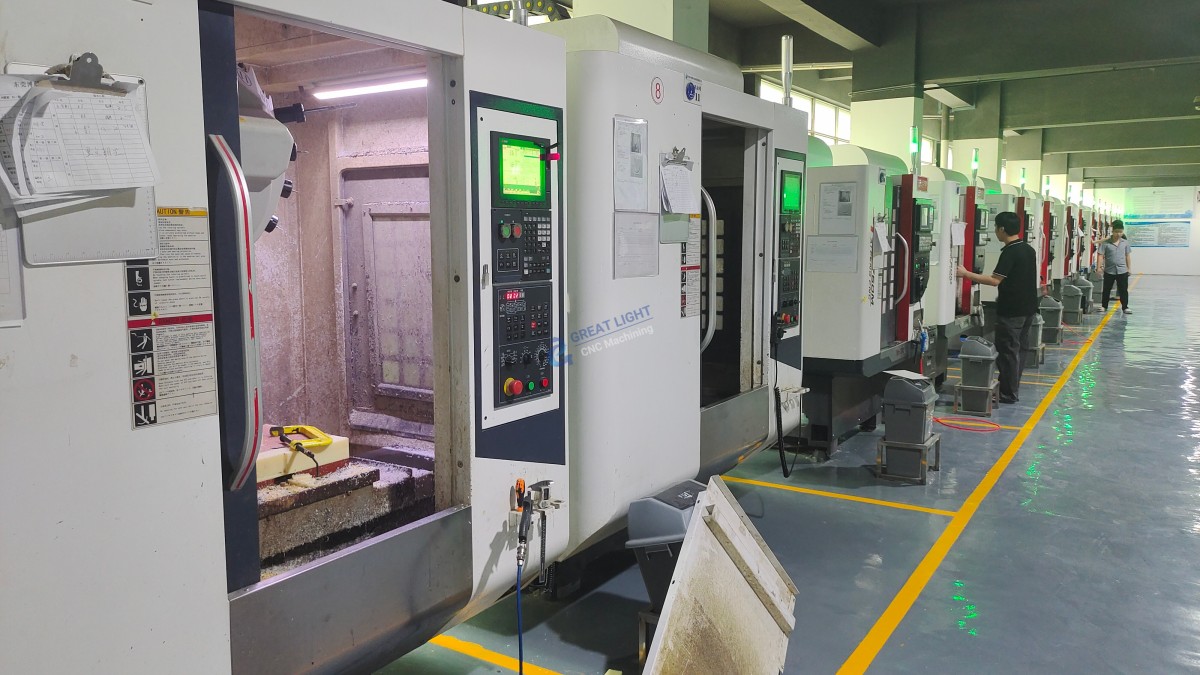
The Solution: Our ultra-precision 5-axis machining delivers a mirror-like finish on the tool steel itself. For rapid tooling, this often eliminates the need for texturing or EDM, saving you a full week in the post-processing stage.
Case in Point: How This Works in Practice (Conceptual)
While I can’t name a specific client without permission, consider a recent project from a leading developer of humanoid robotics.
The Challenge: They needed 500 housings for a new finger actuator module. The part was complex, with internal channels for cables and a very tight outer profile. Traditional injection molding was too slow, and the tooling cost was prohibitive for a 500-part run.
Our Action: We proposed a hybrid rapid tooling solution. We machined a standard MUD base on our 4-axis CNC. For the core and cavity, we used our 5-axis machining centers to cut quick-hardening steel (P20) to a mirror finish. Simultaneously, we 3D printed the complex internal core pin with integrated cooling channels using our SLM 3D printer.
The Outcome: The tool was ready in 5 business days. The first shots were cycle-optimized. The client received fully functional, production-quality parts for assembly testing in under two weeks—a timeline impossible with traditional hard tooling.
Why GreatLight Metal for Your 2026 Rapid Tooling Needs?
You might be evaluating partners like Xometry, Protolabs, or Fictiv. These are excellent platforms for standard CNC parts. However, for Advanced Custom Rapid Tooling Solutions, deep engineering collaboration and process ownership are critical. This is where GreatLight Metal’s decade-plus of experience in the “Mold Capital” of Dongguan shines.
We aren’t just a “click-to-quote” button. We are an engineering-led manufacturer. We have the equipment cluster: 5-axis CNC, high-speed machining, EDM, wire-cutting, and a full suite of 3D printers (SLM, SLA, SLS). More importantly, we have the system certifications that matter for demanding industries:
ISO 9001:2015 for quality management.
IATF 16949 for automotive grade quality (essential for NEV tooling).
ISO 13485 for medical hardware production.
ISO 27001 for intellectual property data security.
These certifications are not just badges. They represent a disciplined workflow that guarantees repeatability, traceability, and accountability. They mean the tool we ship is the tool you need, with a full quality guarantee. We solve the “precision predicament” with every order.
Conclusion: The Future is Custom, Rapid, and Reliable
The era of treating rapid tooling as a compromise is over. In 2026, Advanced Custom Rapid Tooling Solutions are about intelligently combining additive manufacturing for conformal cooling, high-speed multi-axis machining for precision, and rigorous digital verification for predictability.
As a manufacturing engineer, my advice is to look beyond price and lead time. Look for a partner who understands the entire process chain. One who can machine, print, heat treat, and validate in-house. A partner like GreatLight Metal, who places a premium on engineering support and a “first-time-right” philosophy. This is how you turn your innovative designs into successful products, faster than ever. This is the new standard for your supply chain.


![[访谈] RAPID + TCT 2024:人工智能对 3D 打印的价值](https://print-ing.com/wp-content/uploads/2024/07/INTERVIEW-60x60.jpeg "[访谈] RAPID + TCT 2024:人工智能对 3D 打印的价值 9")



发表回复
要发表评论,您必须先登录。