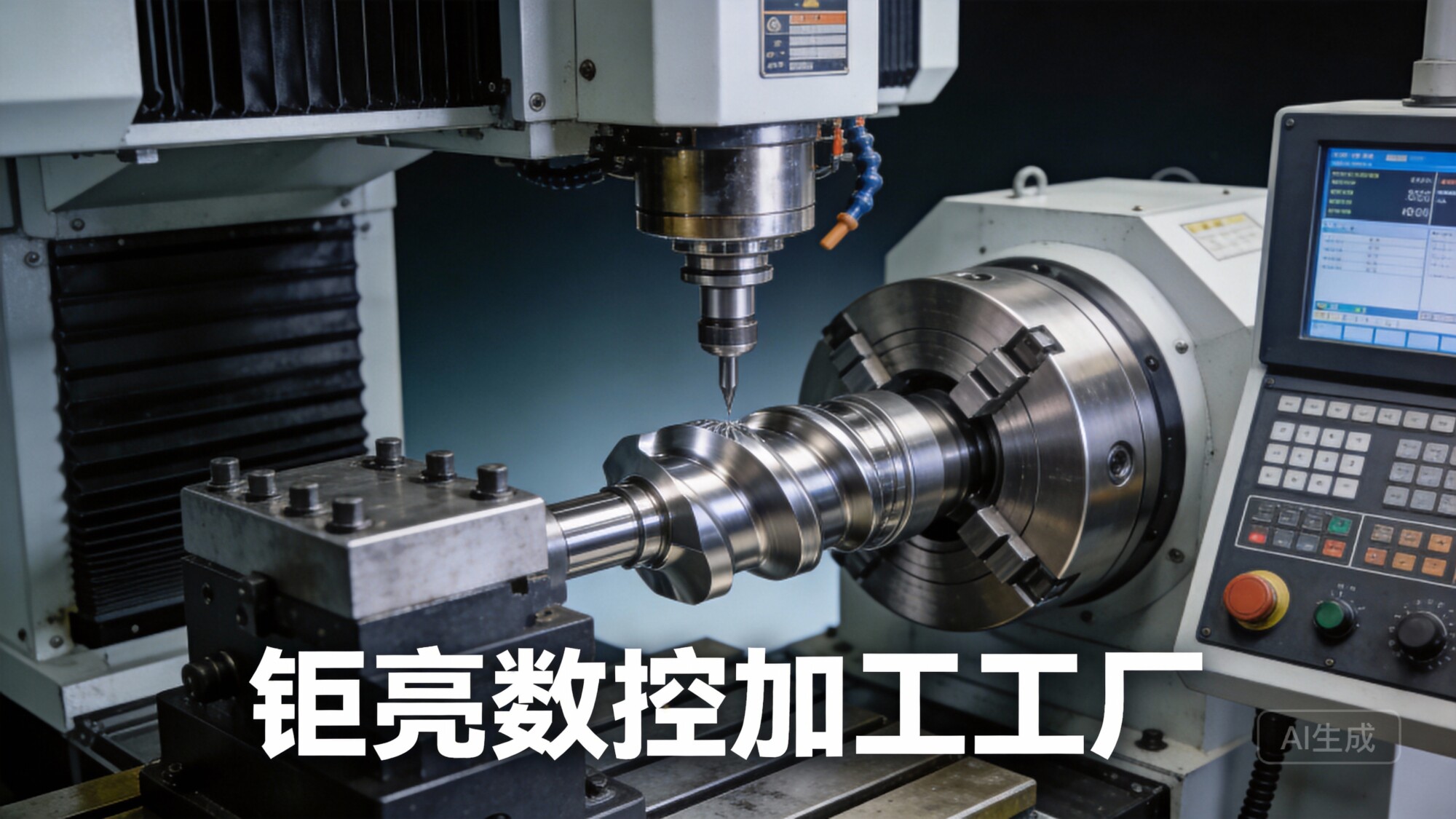
The transition to electric vehicles (EVs) is not merely about swapping an internal combustion engine for a battery pack; it represents a fundamental rethinking of how power is managed, controlled, and delivered. While traditional throttle bodies regulate air intake for combustion, modern electric vehicles utilize throttle body assemblies that manage airflow for cooling systems, cabin climate control, and, in hybrid configurations, precise air metering for range extenders. The fabrication of these components demands a level of precision, material science understanding, and process control that separates commodity machining from true manufacturing expertise. This discussion examines the technical imperatives, material selections, and machining strategies that define world-class electric car throttle body production.
Understanding the Electric Vehicle Throttle Body: More Than Just Air Control
In a conventional gasoline vehicle, the throttle body controls the amount of air entering the engine, working in concert with the fuel injection system. In an electric vehicle, the “throttle” is electronically controlled, but the physical component—often termed the electronic throttle body or e-throttle—serves critical functions that directly impact vehicle performance, safety, and efficiency.
Modern EVs use sophisticated thermal management systems. The throttle body may regulate airflow across battery cooling radiators, motor inverters, and cabin heating systems. In hybrid electric vehicles (HEVs) and plug-in hybrid electric vehicles (PHEVs), the throttle body is essential for combustion engine operation during range-extending modes. The component must be lightweight, corrosion-resistant, capable of maintaining tight tolerances across wide temperature ranges (-40°C to +150°C), and free from any porosity that could compromise vacuum seals or introduce contamination into the air stream.
The manufacturing challenge is stark: these parts must exhibit dimensional stability within microns, surface finishes that minimize flow resistance, and zero-defect quality standards, all while being produced at scale with cost efficiency. This is where precision CNC machining transforms from a production step into a strategic capability.
The Manufacturing Imperative: Why CNC Machining Is Non-Negotiable
Many throttle body components are still produced via die casting due to high volume requirements. However, for prototype validation, low-volume production runs for specialty EVs, motorsport applications, or complex geometries that cannot be achieved through casting alone, CNC machining is the definitive solution. Moreover, even cast throttle bodies require secondary CNC operations for critical mating surfaces, bore diameters, and sensor mounting features.
Five-axis CNC machining offers distinct advantages for throttle body fabrication:
Complex Geometry Management: The internal airflow channels, butterfly valve seats, and sensor mounting bosses often require compound angles and undercuts that would necessitate multiple setups on conventional three-axis machines. Five-axis capability allows these features to be machined in a single setup, maintaining datum integrity and reducing cumulative errors.
Superior Surface Finish: Airflow efficiency is directly linked to surface roughness. A throttle body bore with a surface finish better than Ra 0.8 µm reduces turbulence and pressure drop, improving system efficiency. Five-axis machining with appropriate toolpath strategies can achieve mirror-like finishes on aluminum alloys without secondary polishing operations.
Tight Tolerance Achievement: Critical features such as the bore diameter for the throttle plate must be held to tolerances of ±0.01mm or tighter. The clearance between the plate and bore directly impacts idle air control and closed-position sealing. CNC machining, particularly with precision five-axis centers, can consistently achieve and verify these tolerances.
Material Selection for Electric Car Throttle Bodies
The choice of material fundamentally determines both the machining strategy and the final component performance. While traditional throttle bodies were often made from cast aluminum or zinc alloys, the demands of modern EVs have expanded the material palette.
Aluminum Alloys (Primary Choice)
6061-T6 Aluminum: The workhorse of the industry, offering excellent machinability, good corrosion resistance, and adequate strength for most throttle body applications. Its thermal conductivity is beneficial for heat dissipation in integrated cooling systems.
7075-T6 Aluminum: For high-performance applications where strength-to-weight ratio is critical, such as in motorsport EVs or high-end performance models. This alloy machines beautifully but requires careful attention to residual stress management to prevent distortion after machining.
A356 Cast Aluminum (CNC Post-Processing): When starting from a casting, this alloy provides good fluidity during casting while remaining machinable for precision finishing operations.
Stainless Steel (Specialized Applications)
For throttle bodies integrated into high-temperature environments, such as near exhaust gas recirculation systems in hybrid vehicles, 304L or 316L stainless steel may be specified. Machining stainless steel requires significantly different tooling strategies—slower speeds, higher feed rates, and aggressive coolant application to prevent work hardening. High-pressure coolant through the spindle is essential for chip evacuation and thermal management.
Engineering Plastics (Emerging Trend)
Some manufacturers are exploring PEEK (Polyetheretherketone) or glass-filled nylon for throttle body applications where weight reduction is paramount and operating temperatures remain moderate. CNC machining of these materials requires specialized tool geometries (often diamond-coated tooling) and chip management strategies to prevent melting or burr formation.
Precision Machining Process for Throttle Body Fabrication
A well-designed CNC machining process for throttle bodies follows a logical sequence designed to maximize accuracy while minimizing cycle time.
Step 1: Fixture Design and Workholding
The first challenge is holding the workpiece securely without inducing distortion. For aluminum throttle bodies, a combination of soft jaws and vacuum fixturing is common. The initial operation faces and creates a precise datum surface that will be referenced throughout subsequent operations. For complex geometries, custom-designed fixture plates with vacuum channels or toggle clamps ensure repeatable positioning.
Step 2: Roughing Operations
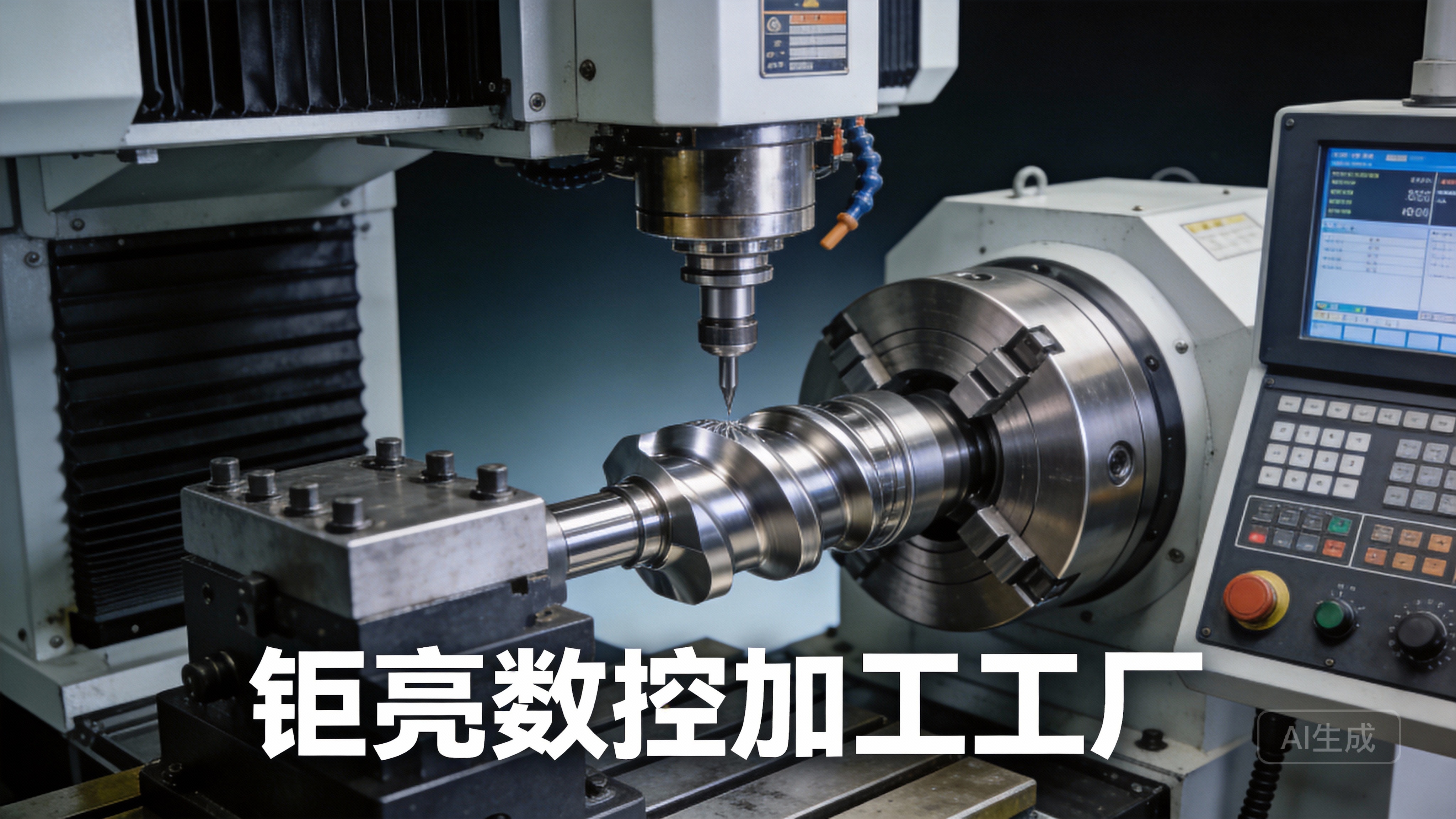
Roughing removes the bulk of material efficiently. High-feed milling cutters with indexable inserts are used to clear large volumes quickly. For aluminum, chip load can be aggressive—typical parameters might include 10,000-15,000 RPM spindle speed with feed rates of 200-400 inches per minute, depending on machine rigidity. The goal is to remove 80-90% of the material in the shortest possible time while maintaining part stability.
Step 3: Semi-Finishing
After roughing, the part undergoes a semi-finishing pass that brings all surfaces within 0.5-1.0mm of final dimensions. This step allows the material to stress-relieve naturally. Some shops incorporate a stress-relief cycle at this stage—either by aging the part for 24 hours or by thermal cycling—to ensure dimensional stability during final machining.
Step 4: Precision Boring and Finishing
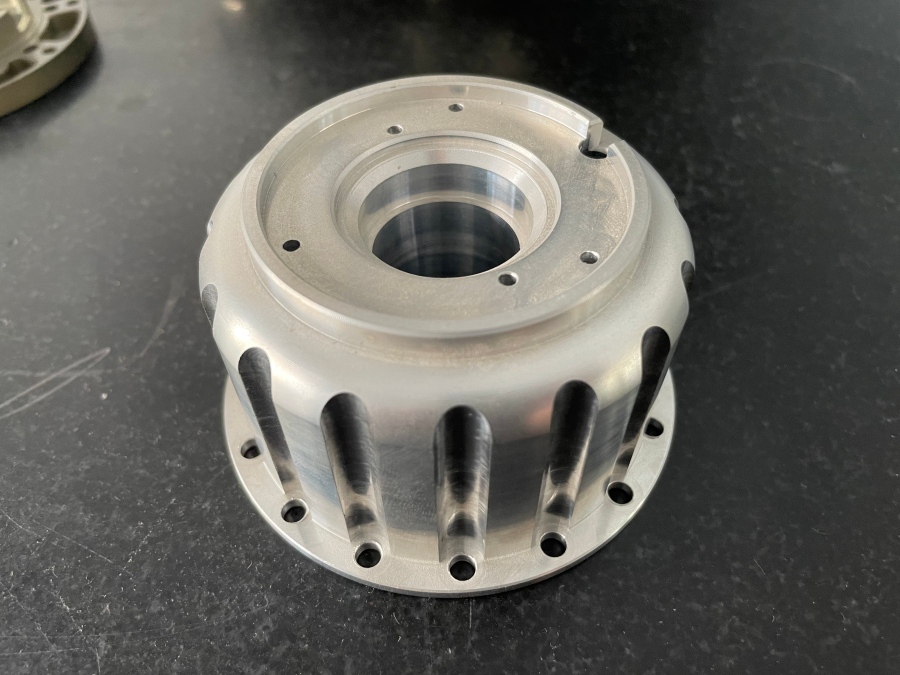
This is where five-axis machining capabilities truly shine. The throttle body bore—the critical cylindrical surface where the butterfly valve rotates—must be machined to exacting tolerances. Boring operations using single-point boring bars or precision reamers achieve the required roundness and surface finish. The bore must be concentric with the shaft bores that hold the throttle plate to within 0.01mm to prevent binding or leakage.
Simultaneously, the machining center can access the seat for the throttle plate—a tapered or radiused surface that ensures complete sealing when the throttle is closed. The angle and surface finish of this seat directly determine idle air control and low-speed drivability.
Step 5: Drilling and Tapping
Sensor mounting holes, vacuum ports, and fastening holes must be drilled and tapped. High-speed drilling cycles with pecking motions prevent chip clogging in deep holes. Thread milling is preferred over tapping for threads in aluminum, as it produces stronger threads and allows for precise depth control. For M6 or M8 threads common in throttle body assemblies, thread milling also accommodates both through and blind holes without tool change.
Step 6: Deburring and Surface Treatment
After machining, every edge must be deburred. Burrs in the airflow path can break loose and cause valve damage or sensor contamination. Robotic deburring cells with compliant tools ensure consistency. For internal passages, a combination of manual inspection and flow-through deburring with abrasive media may be employed.
Surface treatment options include:
Clear anodizing (Type II): Provides corrosion protection while maintaining dimensional accuracy. The coating thickness is typically 5-15 microns and must be accounted for in tolerance stack-up.
Hard anodizing (Type III): For applications requiring wear resistance, such as the throttle body bore. Coating thickness of 25-75 microns may require pre-machining allowance.
Electroless nickel plating: For stainless steel or when a uniform coating on complex internal geometries is required.
PTFE impregnation: Reduces friction and prevents sticking of the throttle plate.
Quality Control and Metrology
The quality assurance process for throttle body fabrication extends far beyond simple dimensional checks.
CMM Inspection
Coordinate measuring machines (CMMs) verify critical dimensions, including bore diameter, concentricity, perpendicularity of mounting faces, and position of sensor mounting holes. For throttle bodies, a typical CMM program might include 50-100 measurement points, with statistical process control (SPC) data collected for every part in production runs.
Surface Roughness Measurement
Profilometers measure the bore surface finish. The target specification—often Ra 0.4-0.8 µm for aluminum bores—must be verified on multiple positions around the circumference to ensure even wear and consistent sealing.
Air Flow Testing
Functional testing ensures the throttle body meets flow specifications. Flow benches measure air volume at various throttle positions, comparing actual flow to the design curve. Deviations may indicate burrs, tool marks, or geometry errors that affect the flow coefficient.
Leak Testing
Closed-position leakage is critical for hybrid vehicles where the combustion engine must maintain idle stability. Vacuum decay testing or mass flow testing verifies that the throttle plate seals completely against its seat. Acceptable leakage rates are typically specified in cubic centimeters per minute at a given pressure differential.
Comparative Analysis: Choosing a Precision Machining Partner
When selecting a partner for electric car throttle body fabrication, manufacturers must evaluate capabilities across multiple dimensions. The following comparison highlights key differentiators among major players in the precision CNC machining space, based on publicly available information and industry reputation.
| Capability / Criteria | GreatLight CNC Machining | Protolabs Network | Xometry | Fictiv | RapidDirect |
|---|---|---|---|---|---|
| 5-Axis CNC Capacity | Proprietary 5-axis centers (Dema, Beijing Jingdiao) plus 4/3-axis backup; maximum part size 4000mm | Network-based; quality varies across partner shops | Distributed network; machine availability inconsistent | Network model; dependent on partner capabilities | Network model; limited direct ownership of equipment |
| Material Range | Aluminum (6061, 7075, A356), Stainless Steel (304L, 316L), PEEK, Nylon, Acetal, Brass, Copper, Titanium | Broad material selection via network partners | Extensive material options via partner network | Similar network-based material availability | Good material range, primarily aluminum and steel |
| Tolerance Capability | General network capability ±0.05mm; some partners achieve tighter | ±0.025mm achievable with premium pricing | ±0.05mm typical; tighter requires quoting | ±0.05mm standard; tighter tolerances quoted per project | |
| Certifications | ISO 9001:2015, ISO 13485 (Medical), IATF 16949 (Automotive), ISO 27001 (Data Security) | ISO 9001 at most facilities; no universal medical/auto certs | ISO 9001 generally; certifications vary by partner | ISO 9001 at partner sites; varies | ISO 9001 at main facility; other certs limited |
| Full-Process Chain | In-house: CNC machining, die casting, sheet metal, 3D printing (SLM/SLA/SLS), mold making, post-processing | Primarily CNC; secondary services outsourced | CNC, sheet metal, 3D printing via partners | CNC, injection molding, urethane casting | CNC, sheet metal, 3D printing; die casting limited |
| Post-Processing | In-house anodizing (Type II & III), electroless nickel, PTFE impregnation, passivation, painting, silkscreening | Polishing, anodizing, painting via partners | Extensive finishing options via network | Standard finishes available via partners | Basic finishes; complex treatments quoted |
| Engineering Support | Deep engineering support; CAD optimization, material selection guidance, DfM feedback | Automated DfM analysis; limited human engineering support | Automated quoting with DfM; engineering available at premium | Design review included; engineering at higher tier | Basic engineering support; limited customization |
| Lead Time (Prototype) | 3-7 days for standard aluminum throttle body prototypes | 5-10 days typical | 5-12 days depending on complexity | 5-10 days standard | 7-14 days typical |
| Data Security (ISO 27001) | Yes, certified for IP-sensitive projects | Varies by partner; no universal certification | Varies by partner; no universal certification | Varies by partner | Not publicly certified |
| Industry Specialization | Automotive (IATF 16949), Aerospace, Medical (ISO 13485), Humanoid Robotics | General prototyping, consumer electronics | General prototyping, aerospace, medical | General prototyping, consumer products | General prototyping, automotive |
The GreatLight Difference: Deep Manufacturing Expertise
While network-based platforms like Protolabs Network, Xometry, Fictiv, and RapidDirect offer convenience and broad access through aggregated supplier networks, they inherently face challenges in quality consistency, process control, and intellectual property protection. When a manufacturer lacks direct ownership of production equipment and relies on a distributed supplier ecosystem, the ability to maintain tight tolerances across hundreds of parts, enforce strict quality protocols, and provide repeatable results is fundamentally constrained.
GreatLight CNC Machining Factory, operating under the parent company Great Light Metal Tech Co., LTD., takes a fundamentally different approach. As an ISO 9001:2015, ISO 13485, and IATF 16949 certified manufacturer with direct ownership of 127 pieces of precision equipment including large high-precision five-axis machining centers, the company controls every aspect of the manufacturing process. This vertical integration eliminates the variability inherent in distributed production models.
For electric car throttle body fabrication specifically, GreatLight’s capabilities align perfectly with the industry’s demanding requirements:
Five-axis machining centers from Dema and Beijing Jingdiao enable complex geometry machining in single setups, maintaining critical tolerances between the throttle bore, shaft bores, and mounting faces.
In-house die casting capabilities support hybrid manufacturing strategies where cast preforms are finished with precision CNC operations, optimizing both cost and accuracy.
Full post-processing services including anodizing, electroless nickel plating, and PTFE impregnation ensure that surface treatments meet automotive OEM specifications without logistics delays or quality variability.
IATF 16949 certification is particularly relevant for throttle body production, as this automotive-specific quality management system standard includes requirements for production part approval process (PPAP), failure mode effects analysis (FMEA), and statistical process control (SPC).
Surface Finish and Its Impact on Throttle Body Performance
The surface finish of the throttle body bore is not merely an aesthetic consideration—it directly influences system performance. Research and empirical data demonstrate that:
A surface finish of Ra 0.4 µm or better reduces airflow friction by approximately 15-20% compared to a typical cast surface (Ra 3.2 µm).
Consistent surface texture prevents preferential wear points on the throttle plate seal, extending service life.
Low micro-roughness reduces particulate generation as the throttle plate opens and closes, which is critical for protecting downstream sensors and precision components.
Five-axis CNC machining with tailored toolpath strategies—such as trochoidal milling or constant-engagement toolpaths—achieves these surface finishes without the need for secondary honing or lapping operations. The ability to maintain consistent chip load and tool engagement throughout the finishing pass is the key differentiator between acceptable and exceptional surface quality.
Quality Assurance Framework: Beyond Dimensional Inspection
A robust quality management system for throttle body production extends well beyond dimensional verification. GreatLight’s ISO 9001:2015 and IATF 16949 certified processes include:
First Article Inspection (FAI): Complete dimensional verification of the first production part against the customer drawing and model. Results are documented and retained for the life of the program.
In-Process Inspection: Operators perform dimensional checks at defined intervals, recording results on control charts. This real-time data enables immediate corrective action if processes drift.
Final Inspection: 100% inspection of critical features (bore diameter, concentricity, leak test results) with sampling for non-critical dimensions.
Material Certification: All incoming raw materials are verified against certifications, with traceability maintained through the production process.
Environmental Controls: Temperature and humidity monitoring in the metrology lab ensures measurement accuracy; dimensional measurements are compensated for thermal expansion when necessary.
For automotive applications, additional requirements from IATF 16949 include:
Production Part Approval Process (PPAP): Documentation demonstrating that the manufacturing process consistently produces parts meeting all customer requirements.
Measurement Systems Analysis (MSA): Verification that measurement equipment and methods are capable of detecting specified variation.
Statistical Process Control (SPC): Ongoing monitoring of key process parameters to maintain control and predict trends before non-conformance occurs.
The Future of Throttle Body Manufacturing
As electric vehicle technology continues to evolve, the throttle body itself may undergo significant transformation. Integrated thermal management systems, solid-state cooling, and advanced heat pump technologies may reduce or eliminate the need for discrete airflow control components. However, for the foreseeable future, hybrid powertrains and the need for precise cabin climate and battery thermal management ensure continued demand for high-precision throttle body assemblies.
Two emerging trends will shape manufacturing strategies:
Integration of additive and subtractive manufacturing: Complex internal channels for coolant or vacuum lines may be produced via metal 3D printing (SLM) followed by precision CNC finishing. GreatLight’s in-house SLM, SLA, and SLS capabilities position the company to offer hybrid manufacturing solutions that leverage the geometric freedom of additive processes with the precision of CNC machining.
Lightweighting through advanced materials: Magnesium alloys, carbon fiber composites, and ultra-high-strength aluminum alloys will demand new machining strategies and tooling technologies. The experience gained from machining aerospace-grade materials and medical implants directly transfers to these advanced automotive applications.
Conclusion
Electric car throttle body fabrication represents a convergence of traditional precision machining expertise with the evolving demands of electrified powertrains. The component may be simpler in function than its internal combustion predecessor, but the manufacturing requirements are no less demanding. Achieving the necessary tolerances, surface finishes, and quality consistency requires a manufacturing partner with demonstrated capability, certified systems, and direct control over the production process.
When evaluating partners for throttle body production, manufacturers should look beyond the convenience of network-based platforms and consider the value of a vertically integrated manufacturer with automotive-specific certifications. GreatLight CNC Machining Factory offers a compelling combination of advanced five-axis CNC machining, comprehensive post-processing, and the quality management systems required for automotive production. As the industry transitions toward electric mobility, the ability to deliver precision components with zero defects, on schedule, and at competitive prices will determine which manufacturing partners thrive.
For engineers and procurement professionals seeking a partner capable of meeting the technical demands of electric vehicle throttle body production while providing the reliability and quality assurance required for automotive applications, exploring the capabilities of an experienced, certified manufacturer is the logical first step. The choice between a network aggregator and a direct manufacturer with demonstrated expertise will ultimately determine the success of your precision component program.
For more information about precision five-axis CNC machining services for electric vehicle applications, visit GreatLight CNC Machining’s precision five-axis CNC machining services page. Connect with industry professionals and stay updated on the latest manufacturing innovations through their LinkedIn company page.


![[访谈] RAPID + TCT 2024:人工智能对 3D 打印的价值](https://print-ing.com/wp-content/uploads/2024/07/INTERVIEW-60x60.jpeg "[访谈] RAPID + TCT 2024:人工智能对 3D 打印的价值 9")




发表回复
要发表评论,您必须先登录。