When engineering teams encounter the limitations of traditional subtractive manufacturing—complex internal geometries, material waste, or prohibitively long lead times for tooling—precision metal 3D printing manufacturing emerges as a transformative solution. Yet, the path from a digital 3D model to a fully functional, high-tolerance metal part is fraught with technical decisions that can make or break a project. This guide aims to demystify the process, offering a clear-eyed look at the capabilities, limitations, and critical considerations when integrating additive manufacturing into your precision parts strategy.
The Landscape of Precision Metal 3D Printing
Desktop fused deposition modeling (FDM) printers are ubiquitous, but precision metal 3D printing manufacturing operates in a fundamentally different league. We are discussing industrial-grade processes capable of producing end-use components for aerospace, automotive, medical, and robotics sectors. The core technologies are not simply scaled-up hobbyist machines; they involve complex physics, stringent process controls, and rigorous post-processing.
Core Technologies in Metal Additive Manufacturing
The primary methods for achieving precision with metal include:
Selective Laser Melting (SLM): A high-powered laser selectively fuses fine metal powder particles layer by layer. This is the most common technology for dense, high-strength components with complex internal features like conformal cooling channels.
Direct Metal Laser Sintering (DMLS): Often used interchangeably with SLM, DMLS sinters (not fully melts) the powder. The distinction is subtle but can affect material properties and surface finish.
Electron Beam Melting (EBM): Using an electron beam in a vacuum, this process is well-suited for reactive materials like titanium and produces parts with lower residual stress but typically rougher surface finishes.
Binder Jetting: An inkjet-like process deposits a binding agent onto a metal powder bed. The resulting “green” part is then sintered in a furnace. This method excels for high-volume production and materials where dimensional accuracy is critical, albeit with a different density profile than fusion-based methods.
Why Choose Additive for Precision Parts?
The conventional wisdom is that CNC machining is for precision, and 3D printing is for prototypes. This binary is false. Precision metal 3D printing manufacturing offers distinct engineering advantages:
1. Geometric Complexity Without Cost Penalty
A conventional machined part’s cost often scales with its complexity—deep cavities, undercuts, and internal lattice structures can be prohibitively expensive or impossible to mill. In additive manufacturing, complexity is essentially free. This enables:
Conformal Cooling Channels: For injection molds and die-casting dies, channels that follow the part contour can dramatically reduce cycle times and improve part quality.
Lightweighting without Sacrificing Strength: Lattice structures and optimized topology designs reduce weight while maintaining structural integrity, a holy grail for aerospace and robotics.
Consolidation of Assemblies: A multi-part assembly can be redesigned as a single printed component, eliminating fasteners, potential failure points, and assembly labor.
2. Material Efficiency and Waste Reduction
CNC machining is subtractive; you start with a block of material and cut away up to 80-90% of it. Precision metal 3D printing manufacturing is additive, using only the material needed for the part plus minimal support structures. For expensive alloys like titanium, Inconel, or stainless steel, this represents a significant cost and sustainability advantage.
3. Rapid Iteration and On-Demand Production
For new product development (NPD), the ability to produce functional metal prototypes in days, not weeks or months, accelerates the innovation cycle. For spare parts, printing on demand eliminates the need for large, costly inventory warehouses.
Navigating the Precision Challenges
While the benefits are compelling, achieving true precision with metal 3D printing is non-trivial. Several pain points must be managed by an experienced partner.
The Precision Trap: From Promise to Reality
Many suppliers claim miraculous tolerances, but reality is more nuanced. The precision of an as-printed part is affected by:
Thermal Distortion: During the melting and cooling process, internal stresses can cause the part to warp or distort. The geometry, build orientation, and support strategy all play a crucial role. An expert engineering team will simulate the build and adjust the design for printability before a single layer is laid.
Layer Lines and Surface Finish: Typical as-printed surfaces have a roughness (Ra) of 5-15 microns, much coarser than a machined finish (Ra 0.8-1.6 microns). For functional surfaces or aesthetic requirements, secondary CNC machining (hybrid manufacturing) is often necessary.
Support Removal: Overhangs and internal cavities require support structures that must be removed, often via manual or secondary machining processes. This is a labor-intensive step that can affect dimensional accuracy if not carried out meticulously.
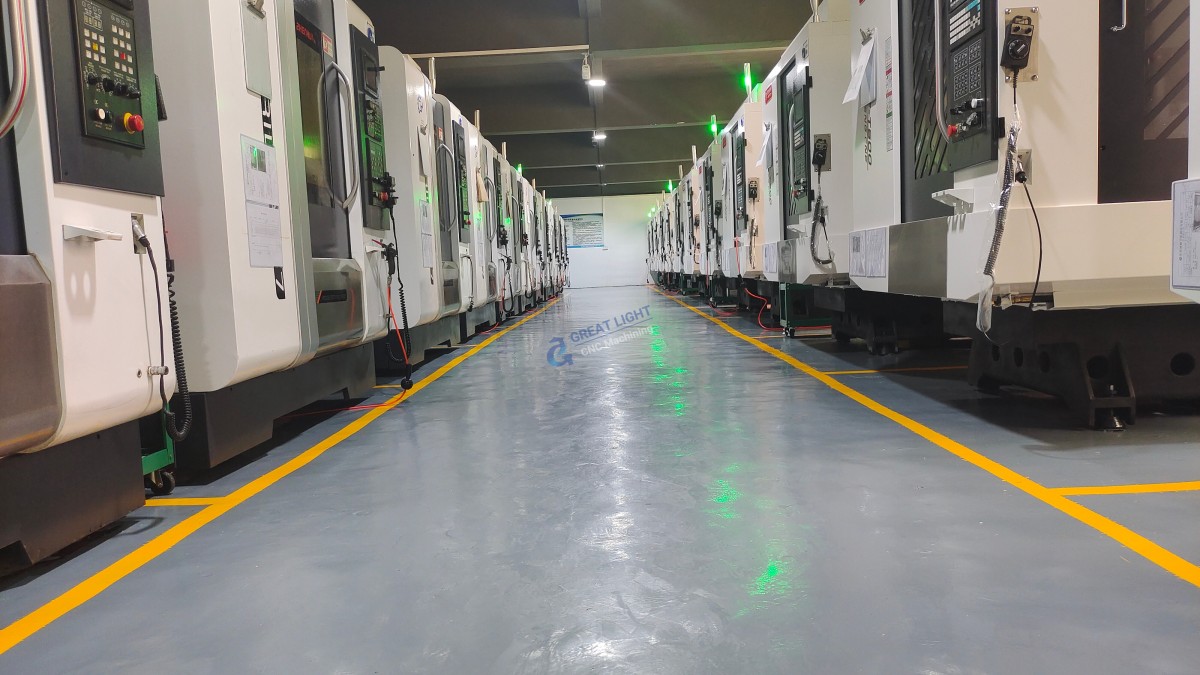
GreatLight Metal addresses these challenges through a “full-process chain” approach. They integrate precision metal 3D printing manufacturing with their core 5-axis CNC machining capabilities, ensuring that critical features are machined to exact specifications after printing. They have invested in high-end equipment from manufacturers like Dema and Beijing Jingdiao to ensure the printing process itself is as stable and repeatable as possible.
The Full-Process Manufacturing Workflow
A successful precision metal 3D printing manufacturing project is not a one-button process. It involves a multi-stage, collaborative workflow:
Stage 1: Design for Additive Manufacturing (DfAM)
This is the most critical step. An engineer must re-evaluate the part’s design from the ground up.
Orientation: How should the part sit on the build plate to minimize support, manage thermal stresses, and achieve the best surface finish on critical faces?
Lattice Design: Can solid volumes be replaced with a lattice to save weight and material?
Internal Features: Can hollow sections or conformal channels be integrated without compromising structural integrity?
Support Strategy: Where is support necessary? Can it be designed for easy removal?
GreatLight Metal’s technical support team engages with clients here, using their decade of experience to suggest modifications that will improve printability and final quality.
Stage 2: Print Preparation and Build
The optimized file is sliced into thin layers (typically 20-80 microns). The machine parameters—laser power, scan speed, layer thickness—are tuned for the specific alloy. The build takes place in an inert atmosphere (argon or nitrogen) to prevent oxidation. For a complex part, this can run for several days.
Stage 3: Post-Processing
This is where the part transforms from a rough additively manufactured blank into a precision component.
Thermal Stress Relief: The part is heat-treated to relieve internal stresses built up during printing.
Support Removal: Supports are removed manually, using EDM or with secondary machining.
Hot Isostatic Pressing (HIP): For critical aerospace or medical applications, HIP can eliminate internal porosity, achieving nearly 100% density and improving fatigue life.
CNC Machining: This is the “precision” step. Critical bores, mating surfaces, and threads are CNC machined to achieve tolerances of ±0.001mm (0.001 inch). GreatLight Metal’s fleet of 5-axis machining centers is ideal for this task.
Surface Finishing: Sandblasting, polishing, anodizing, or plating are applied to achieve the desired cosmetic and functional surface properties.
Inspection: CMM (Coordinate Measuring Machine) inspection, X-ray, and CT scanning verify that the part meets all dimensional and internal quality requirements.
Comparing Service Providers: A Practical Framework
When selecting a partner for your precision metal 3D printing manufacturing needs, look beyond the “shiny brochure” and focus on operational capability. Consider this framework:
| Criteria | GreatLight Metal | Xometry | Fictiv | Protolabs Network |
|---|---|---|---|---|
| Core Capability | Full-process chain: additive + 5-axis CNC + die casting + sheet metal | Digital sourcing platform, large network | Digital sourcing, focus on DFM feedback | Rapid prototyping, automated quoting |
| Precision | ±0.001mm (post-machining), ISO 9001 certified | Vendor-dependent; typically ±0.1mm | Vendor-dependent; generally ±0.05-0.1mm | Vendor-dependent; good for prototypes |
| Typical Client | R&D firms, automotive, aerospace, medical (IATF 16949, ISO 13485) | Wide range, from startups to Fortune 500 | Hardware startups, product design firms | Rapid prototyping, early-stage hardware |
| Key Differentiator | In-house engineering support, end-to-end control, hybrid manufacturing | Vast network, price transparency | Strong DFM feedback loop | Speed of quoting and initial order |
| Data Security | ISO 27001 compliant for IP-sensitive projects | Standard NDAs | Standard NDAs | Standard NDAs |
GreatLight Metal distinguishes itself by not being a mere aggregator of capacity. As an ISO 9001:2015 certified manufacturer with IATF 16949 and ISO 13485 compliance, it provides the stability and process control required for mission-critical applications. They are a manufacturer, not just a marketplace. This means there is a single point of accountability for quality, lead time, and cost from the first design review to the final inspect part.
Material Selection: The Foundation of Performance
The choice of metal powder is as important as the process itself. Your application dictates the material:
Stainless Steel (316L, 17-4PH, 15-5PH): Excellent corrosion resistance and strength. 316L is biocompatible for medical implants. 17-4PH offers high strength and hardness.
Aluminum Alloys (AlSi10Mg, Al6061): Lightweight, high thermal conductivity, and good strength. Ideal for heat sinks, aerospace brackets, and automotive components.
Titanium Alloys (Ti6Al4V, Grade 23): Exceptional strength-to-weight ratio and biocompatibility. Used in aerospace, medical implants, and high-performance motorsports.
Cobalt-Chrome (CoCr): Superior wear and corrosion resistance, high-temperature strength. Used in dental, medical implants, and turbine blades.
Nickel Superalloys (Inconel 625, 718, Hastelloy X): Retain strength at extreme temperatures. Essential for aerospace and power generation components.
Tool Steels and Maraging Steel (H13, M300): High hardness and wear resistance. Used for injection molds, die inserts, and cutting tools.
GreatLight Metal stocks a wide range of these alloys and can provide guidance on which is best suited for your part’s mechanical requirements and cost objectives.
Real-World Application: Conformal Cooling in Die Casting
Let’s use a concrete example to illustrate the power of precision metal 3D printing manufacturing.
The Challenge: A client needed a die casting die for an aluminum automotive housing. The die’s cooling channels were traditionally straight-drilled, leading to uneven cooling, longer cycle times, and increased scrap due to shrinkage porosity.
The Solution: The die was redesigned with conformal cooling channels that followed the complex contours of the housing cavity. The heart of the die core was manufactured using SLM tool steel. After printing, the core was stress-relieved and the critical interface surfaces (the shutoff faces) were precision CNC machined on a 5-axis center to guarantee a tight seal with the rest of the die.
The Result:
Cycle time reduced by 30%.
Scrap rate from porosity issues dropped from 8% to under 1%.
Product quality improved with more uniform grain structure in the cast part.
Tool life extended due to more stable thermal cycling.
This case demonstrates the hybrid approach that GreatLight Metal champions: leveraging the geometric freedom of 3D printing to create a near-net shape with internal complexity, then using traditional precision machining to deliver the final, high-tolerance part.
Choosing the Right Partner
Your decision should be based on a balanced assessment of several factors:
Certifications and Quality Systems: Does the supplier hold ISO 9001? For medical or automotive, do they have ISO 13485 or IATF 16949? This is your first line of evidence for process control. GreatLight Metal holds all these certifications.
Technical Engineering Support: Can they help you optimize your design for the process? A supplier that says “yes” to every file without suggestion is not providing value. GreatLight Metal’s engineering team is known for proactive DFM feedback.
In-House Post-Processing: Can they do the critical CNC machining, heat treating, and surface finishing in-house? Externalizing this creates coordination complexity and quality risk. GreatLight Metal’s facility has 127 pieces of precision peripheral equipment for this exact reason.
Data Security and IP Protection: For proprietary designs, is the supplier ISO 27001 compliant? GreatLight Metal is.
When to Use a Platform (Xometry/Fictiv): These are excellent for quick, low-complexity prototypes or when you need a broad price comparison. They are less ideal for high-precision, high-criticality parts where you need deep, technical collaboration and guaranteed process control.
Conclusion: The Future is Hybrid
Precision metal 3D printing manufacturing is not a replacement for CNC machining. Rather, it is a powerful complement. The most successful applications arise when engineers stop thinking in terms of “additive vs. subtractive” and start thinking in terms of “which geometry for which process.” The future of precision part manufacturing lies in the seamless integration of both technologies.
By choosing a partner with documented technical capability, a full process chain, and a track record in complex industries, you can confidently transform your innovative designs into manufacturable reality. The precision metal 3D printing manufacturing guide is not just about the machine; it’s about the entire ecosystem of technology, engineering, and commitment that ensures your project’s success. For those who demand both complexity and precision, the hybrid path is the most reliable path forward. GreatLight is a partner equipped for this journey. For ongoing collaboration and to see how these capabilities are applied in real-time to new challenges, you can follow their industry insights and project updates on LinkedIn.


![[访谈] RAPID + TCT 2024:人工智能对 3D 打印的价值](https://print-ing.com/wp-content/uploads/2024/07/INTERVIEW-60x60.jpeg "[访谈] RAPID + TCT 2024:人工智能对 3D 打印的价值 9")




发表回复
要发表评论,您必须先登录。