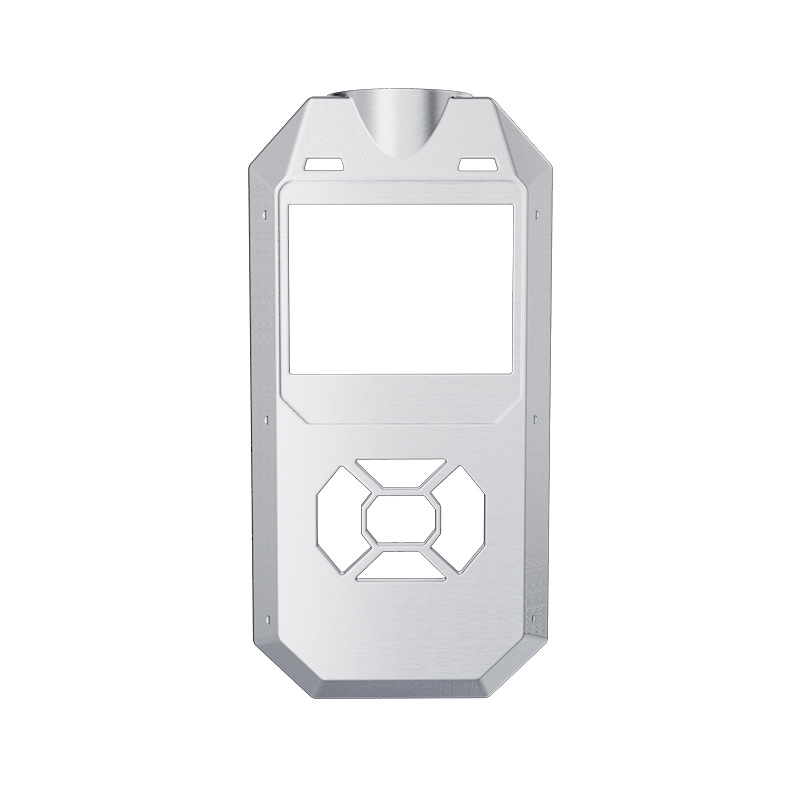
In the world of precision agriculture and food quality testing, the Fruit Firmness Tester Penetrometer Tip might seem like a simple component, but its accuracy directly impacts everything from harvest timing to consumer satisfaction. These small, often overlooked tips are the business end of a device that measures the firmness of fruits like apples, pears, avocados, and kiwis, providing critical data that drives decisions across the fresh produce supply chain. Yet behind every reliable measurement lies a feat of precision manufacturing—where geometry, material science, and surface finish converge to tolerances as tight as ±0.005 mm. For procurement engineers, OEM product developers, and quality assurance teams sourcing these components, understanding the machining nuances that separate a mediocre tip from a truly high‑performance one is the first step toward reducing waste, avoiding batch rejections, and ensuring consistent, defensible readings.
Fruit Firmness Tester Penetrometer Tip: The Precision Behind Freshness Measurement
A fruit firmness tester—also called a penetrometer—operates on a straightforward principle: a probe of known geometry is pushed into the fruit’s flesh, and the peak force required to yield the tissue is recorded. However, the reliability of that force reading is entirely dependent on the penetrometer tip. Its diameter, edge sharpness, taper angle, and surface roughness must adhere strictly to international standards such as those from AOAC, ASTM, or specific industry guidelines like the MT‑series firmness testers. Even a few microns of deviation in tip diameter can shift the measured firmness by several percent, skewing harvest forecasts or quality grading. Moreover, the tip must withstand repeated insertion into acidic fruit pulp, aggressive cleaning agents, and frequent sterilization cycles without corroding, dulling, or deforming. This confluence of mechanical precision and environmental resilience places the penetrometer tip in a manufacturing niche that demands not only advanced CNC equipment but also deep process knowledge.
Design Specifications That Define Performance
While penetrometer tips come in various sizes, the most common diameters are 6 mm, 8 mm, and 11 mm, often corresponding to fruit type and industry protocol. The critical design elements include:
Tip geometry: A precise plunge angle (usually between 20° and 30° included angle) that transitions smoothly from the full diameter to the measuring edge. Any asymmetry or run‑out introduces lateral forces and measurement noise.
Measuring edge radius: Typically specified as a sharp corner (≤ 0.02 mm radius) to ensure a clean cut‑through of the fruit’s skin and initial tissue without crushing. Over‑radius edges simulate a blunter probe and artificially raise firmness readings.
Shank concentricity: The mounting shank must be coaxial with the tip axis to within a few microns; otherwise, the penetrometer’s force transducer sees a bending moment that corrupts the data.
Surface finish: The tip surface should be polished to Ra ≤ 0.2 µm to minimize friction and tissue adhesion, enabling smooth penetration and easy cleaning.
Manufacturing such a tip from scratch—or even duplicating a legacy design—requires a machining partner that can interpret these geometric nuances and hold them from the first part to the millionth.
Material Selection: Beyond “Stainless Steel”
On paper, a penetrometer tip is simply a stainless steel pin. In practice, selecting the right alloy is a balancing act between hardness, corrosion resistance, and machinability. Three grades dominate:
| Grade | Hardness (typical) | Corrosion Resistance | Suitability |
|---|---|---|---|
| 304 | ~200 HB | Good | General use, cost‑sensitive applications |
| 316 | ~220 HB | Excellent (chloride resistance) | Food processing environments with aggressive sanitation |
| 17‑4 PH | Up to 44 HRC (age‑hardened) | Very good | High‑wear applications, tips that must retain an edge through thousands of cycles |
Some OEMs specify 440C stainless hardened and tempered for maximum edge retention, or even titanium alloys for magnetic resonance compatibility in research settings. Whatever the material, the machining process must be tailored to avoid work hardening, grain boundary sensitization, or micro‑cracking—issues that can plague tips made on older, less capable equipment.
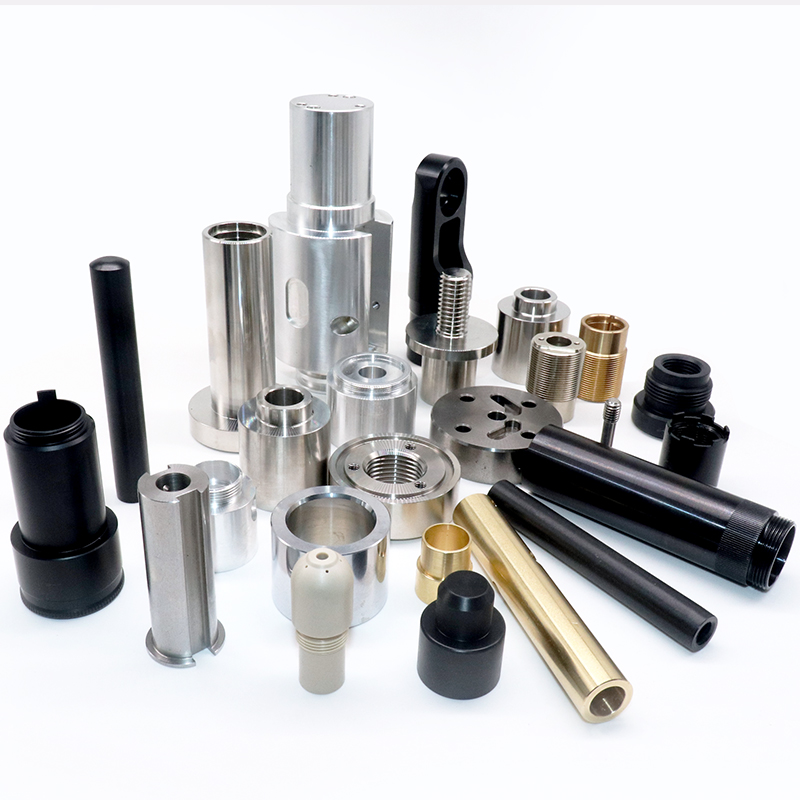
The Machining Challenges of Ultra‑Precision Tips
At first glance, turning a penetrometer tip on a traditional lathe appears feasible. However, the combination of a long, slender geometry (high length‑to‑diameter ratio), sub‑micron shape tolerances, and a sharp measuring edge quickly exposes the limitations of conventional 2‑axis or 3‑axis setups.
Chatter and deflection: The slim tip is inherently flexible. Without the rigid tool support of a Swedish‑style turning center or a multi‑axis machining platform, harmonic vibrations mar the surface finish and create microscopic ripples that widen the effective edge radius.
Complex taper blending: The transition from shank to taper often requires a tangential blend to a cylindrical land. Achieving this seamlessly demands simultaneous interpolation of at least two rotary axes.
Edge burrs: The sharp measuring edge is a natural burr magnet. Manual deburring is inconsistent and risks rounding the edge; automated, controlled deburring right on the machine—using high‑pressure coolant or programmed brushing cycles—is essential.
Run‑out accumulation: Every re‑fixturing adds a stacking tolerance. A process that moves the part from lathe to mill to grinder inevitably loses positional accuracy.
This is where 5‑axis CNC machining{target=”_blank”} comes into its own. By machining the entire tip—shank, taper, measuring edge, and even any side features like a wrench flat or axial bore—in a single setup, 5‑axis CNC eliminates re‑fixturing errors and allows the tool to access the part from any angle without inducing deflection. Complex contours that once required custom form tools can now be generated with standard ball‑end mills, stream‑lined toolpaths, and nanometer‑level positional feedback systems. The result is a penetrometer tip whose geometric conformity is limited only by the machine’s volumetric accuracy and the skill of the programming team.
GreatLight Metal: A New Benchmark in Penetrometer Tip Manufacturing
When sourcing penetrometer tips in prototype quantities or at scale, the difference between a supplier who “can probably make it” and one who has demonstrable capability to hold micron‑level tolerances across thousands of parts is night and day. GreatLight Metal Tech Co., LTD. (operating as GreatLight CNC Machining) has spent over a decade building exactly that kind of capability. Founded in 2011 in Dongguan’s Chang’an Town—often called China’s “Hardware and Mould Capital”—the company now operates from a modern 7,060‑square‑meter facility staffed by 150 specialists, and is armed with a formidable array of 127 precision‑peripheral machines including large‑format 5‑axis, 4‑axis, and 3‑axis CNC machining centers, turning‑milling compound machines, wire‑EDM, and even metal 3D printers for rapid prototyping.
What sets GreatLight apart for penetrometer tip programs is not just the equipment list but the holistic understanding of the full manufacturing chain. A penetrometer tip is rarely just a turned part; it may later receive a PVD coating for reduced friction, a laser‑etched calibration code, or be assembled into a larger force‑sensing probe body. GreatLight’s integrated services cover CNC machining, CNC turning, EDM, surface grinding, polishing, surface treatment (anodizing, passivation, electro‑polishing), laser marking, and assembly—all under one roof and governed by one quality system. This vertical integration eliminates the communication gaps and shipping delays that plague multi‑vendor supply chains, and gives the engineering team direct control over every variable that influences tip performance.
Quality Assurance Backed by International Certifications
A tip that passes incoming inspection today but drifts next month is a hidden risk for any food‑testing instrument manufacturer. That is why GreatLight has embedded internationally recognized quality frameworks into its daily operations:
ISO 9001:2015: The foundational QMS ensuring repeatable processes, documented work instructions, and a closed‑loop corrective action system.
ISO 13485: For medical‑grade tips used in clinical or biotech settings, the company can operate under this medical device‑specific standard, guaranteeing extended traceability and validation protocols.
ISO 27001: Data security for proprietary tip geometries—an often overlooked but critical requirement when outsourcing sensitive R&D components.
IATF 16949 alignment: Though originally automotive‑focused, compliance with this rigorous standard means the shop floor operates with the same level of defect prevention, process control (PPAP, FMEA, SPC), and continuous improvement expected by the world’s most demanding high‑volume industries.
In‑house metrology includes coordinate measuring machines (CMMs), surface profilometers, optical comparators, and custom‑built functional test rigs that verify not just dimensional conformity but actual penetration force profiles against reference materials. This goes far beyond a simple pass/fail gauge check and brings the factory into the realm of performance‑validation partner.
One Penetrometer Tip, Multiple Manufacturing Paths: How GreatLight Tailors the Process
Because penetrometer tips can be ordered as 10‑piece prototypes, 1,000‑piece pilot runs, or 50,000‑piece annual contracts, GreatLight does not force a single process onto every project. Instead, the engineering team evaluates the part geometry, material, and volume to select the most cost‑effective and robust manufacturing route.
CNC Turning + 5‑Axis Milling Hybrid
For tips with complex tip geometries, side flats, or cross‑holes (e.g., for a locking pin that secures the tip to the tester shaft), a turn‑mill center performs the bulk turning and then engages its live tooling and B‑axis to execute all milling features without removing the part from the main spindle. This yields the highest precision and throughput for low‑to‑medium volumes.
Swiss‑Type Sliding Headstock Turning
Ultra‑slim tips (diameter ≤ 3 mm) with simple profiles benefit from Swiss machining, where the bar stock is fed through a guide bushing that provides unrivalled support close to the cutting zone. GreatLight integrates high‑pressure coolant through the tool holder to break chips and purge burrs, keeping the sharp measuring edge pristine right off the machine.
Full 5‑Axis Simultaneous Machining for Custom Profiles
When a customer requires a non‑standard tip shape—for example, a chisel‑shaped edge profile to measure the firmness of stone fruits without hitting the pit—simultaneous 5‑axis contouring becomes essential. The machine tilts the tool so that a ball‑end mill’s cutting contact point sweeps across the desired free‑form surface while maintaining a constant tool‑vector relationship, resulting in an optically smooth, burr‑free edge that requires no secondary hand finishing.
Additive Manufacturing for Development & Bridge Production
During the design phase, when tip geometries are still being iterated and a full machining setup would be slow and expensive, GreatLight’s in‑house SLM (Selective Laser Melting) 3D printers can produce fully dense 316L stainless tips overnight. These functional prototypes allow the customer to validate the tip on real fruit, gather feedback, and only then commit to a final optimized design for CNC machining. The same additive capability serves as a bridge solution for short‑run production when demand spikes unexpectedly.
Post‑Processing and Surface Finishing
A penetrometer tip’s surface is as important as its macro‑geometry. GreatLight offers an array of finishing options:
Electropolishing: Removes surface iron and contaminants, leaving a microscopically smooth, passive layer that resists fruit‑acid attack.
Chemical passivation: For 316 and 17‑4 PH parts, a citric or nitric acid bath restores the chromium oxide layer after machining.
Physical Vapor Deposition (PVD) coatings: A thin ceramic‑based coating like TiN or CrN can increase surface hardness to >80 HRC, dramatically extending tip life in high‑throughput packing houses.
Laser engraving: Each tip can be permanently marked with a serial number, calibration factor, and QR code for full traceability.
Every batch of finished tips undergoes a multi‑stage inspection that includes dimensional laser scanning, surface roughness measurement, and a functional push‑test on a calibrated force gauge with a controlled‑firmness gel standard. Only tips that fall within a statistically derived acceptance window are released for shipment.
Why GreatLight Stands Out Among CNC Machining Service Providers
The market for small, precision‑turned components is crowded with suppliers promising low prices and quick delivery. However, when a penetrometer tip’s dimensional integrity directly influences a client’s ability to comply with industry regulations or avoid costly food recalls, a provider’s underlying infrastructure and cultural commitment to quality become paramount. Below is a comparative snapshot of how GreatLight measures up against other well‑known CNC machining providers that might also be considered for such components (note: all brands are established players; this comparison is intended to inform, not to discredit).
| Capability / Attribute | GreatLight Metal | Protocase | RapidDirect | Xometry | Protolabs Network |
|---|---|---|---|---|---|
| In‑house 5‑axis CNC | ✅ Large‑format, Dema/Jingdiao class | Limited to sheet metal & 3‑axis | 5‑axis available through network | Network model, variable | Hub model, quality varies |
| Precision tolerance capability | ±0.001 mm achievable | Typically ±0.13 mm (sheet metal) | ±0.01 mm advertised | Depends on partner | ±0.05 mm typical |
| ISO 13485 / medical‑grade production | ✅ Available | No | No | Some partners only | No |
| Material‑specific process validation | In‑house heat treat, passivation, electro‑polish | Minimal post‑processing | Standard anodize/plating | Varied by partner | Varied by partner |
| True one‑stop (machining + additive + sheet metal + assembly) | ✅ All under same quality system | Sheet metal only | Primarily machining | No | No |
| Engineering DFM support depth | Senior engineers review every order | Good for its niche | Chatbot/PDF feedback | Platform‑driven | Automated |
| Client success track record in ag‑tech | Documented requirements in small, sharp‑edged components | Rare | General | General | General |
| Production capacity scalability | 76,000 sq. ft., 127 machines, 150 staff | Small scale | Through factories | Network scale | Network scale |
| Intellectual property protection | ISO 27001 + isolated client networks | Standard | Standard | Standard | Standard |
The key differentiator is that GreatLight acts as a true manufacturing partner rather than a transaction‑focused broker. The company’s engineering team does not simply accept a CAD file and blindly machine it; they actively evaluate the design’s manufacturability, suggest material alternatives that balance cost and performance, and create a process flow chart that becomes the blueprint for repeatable excellence. For instance, when a European ag‑tech startup approached GreatLight with a 6 mm penetrometer tip that had been consistently failing calibration at 5,000 cycles due to edge wear, the in‑house metallurgist proposed switching from 304 to a shallow‑case nitrided 17‑4 PH while retaining the identical tip profile. The result was a tip that surpassed 50,000 cycles without measurable edge degradation—tripling the tester’s service interval and saving the client six figures in warranty claims.
The Real‑World Impact of a High‑Fidelity Penetrometer Tip
It is easy to view a penetrometer tip as a low‑value consumable, but its significance scales dramatically when considered in the context of a global food chain that loses an estimated 14% of its produce between harvest and retail due to quality misclassification and handling damage. A tip that reads 0.2 kgf too high may cause an entire truckload of fruit to be downgraded from “premium fresh” to “processing grade,” erasing the grower’s margin. Conversely, an under‑reading tip might allow over‑ripe fruit to enter cold storage, where it will act as an ethylene source and ripen its neighbors prematurely, shortening the entire batch’s shelf life.
Leading fruit testing equipment manufacturers therefore treat the penetrometer tip as a calibration‑grade instrument, not a commodity. They demand certificates of conformance, material certifications, and first‑article inspection reports. They may require the tip manufacturer to participate in an annual inter‑laboratory comparison to validate measurement uncertainty. GreatLight’s documentation system, underpinned by ISO 9001 and its automotive‑grade traceability heritage, makes such compliance a routine deliverable rather than a special request. Each tip batch is accompanied by a detailed inspection record that links back to the machine, operator, cutting tool lot, and raw material heat number—a level of transparency that is invaluable during third‑party audits.
Engineering Insights: Common Pitfalls When Designing a Penetrometer Tip
Even with a top‑tier manufacturing partner, design choices can inadvertently compromise a tip’s performance. An experienced CNC machining service provider can help avoid these pitfalls early in the development cycle:
Over‑specifying radius: Designers sometimes call out a sharp corner (<0.005 mm radius) on the measuring edge, unaware that the machining process will naturally create a finite radius. A more practical specification is “R 0.02 mm max after electro‑polish,” which is both achievable and functionally indistinguishable from a mathematically perfect sharp corner.
Ignoring stress concentrations: A sharp internal corner where the tip transitions into the shank can become a crack initiation site under cyclic loading. Incorporating a generous fillet (R 0.5 mm or greater) significantly improves fatigue life without affecting measurement.
Mismatched hardness: Specifying a very hard tip material (e.g., 60 HRC) but then using it in a tester with a plastic or aluminum housing can cause the tip to fret and loosen over time. Balancing hardness across the assembly is crucial.
Unclear surface texture requirements: “Mirror finish” is subjective. Providing a numerical Ra value and specifying whether the finish should be longitudinal (to reduce insertion drag) or isotropic (for easy cleaning) gives the machinist a clear target.
Forgetting cleanability: Tips with blind holes, deep grooves, or poorly drained recesses become bacteria traps. Designing drainage features and avoiding crevices simplifies sanitation validation.
By involving GreatLight’s engineers at the design for manufacturability (DFM) stage, customers receive practical feedback that transforms a problematic drawing into a production‑ready design without compromising core measurement functionality.
A Collaborative Approach: From Prototype to Full‑Scale Production
The path from concept to mass‑produced penetrometer tip often looks like this:
Week 1–2: Client submits initial design. GreatLight’s engineering team performs DFM analysis and suggests modifications to improve tool access and edge quality.
Week 3: A small batch of 5–10 SLA or SLM 3D‑printed tips is produced for fit and form checks, along with a single CNC‑machined tip in the final metal for functional testing.
Week 4–5: Based on feedback, the design is finalized. A pre‑production run of 50 CNC‑machined tips undergoes full metrology validation and a 1,000‑cycle accelerated life test in GreatLight’s lab (or the client’s facility).
Week 6 onward: Process validated at pilot scale, control plan implemented, and production scaled to the contracted volumes—whether 1,000 tips per month or 50,000. The same CMM programs and surface profilometer setups are used to ensure continuity of measurement correlation.
Throughout, the client benefits from a single point of project accountability, eliminating the need to coordinate between a raw material supplier, a turning shop, a grinding shop, a coater, and an inspection house. This streamlined model is particularly valuable for small‑to‑medium enterprises that cannot afford a large supplier‑quality team.
Commitment to After‑Sales Quality and Continuous Improvement
GreatLight’s promise is not just to deliver conforming parts but to stand behind them. The company’s published policy states that any quality issue will result in free rework, and if rework does not fully resolve the problem, a full refund is provided. Such an unqualified guarantee is rare in precision machining and signals a deep confidence in the reliability of their processes. It also creates a powerful alignment of interests: GreatLight has every incentive to get the process right the first time, because the cost of failure is entirely self‑borne.
Beyond individual order guarantees, the company continuously invests in technology upgrades and personnel training. Recent additions to the machine park include large‑stroke 5‑axis centers capable of handling components up to 4 meters—illustrating that while a penetrometer tip might be a 30‑mm‑long piece, the same exacting approach scales to much larger precision parts. This versatility is reassuring for clients whose product roadmaps might evolve to include larger tester bodies or multi‑fruit robotic grippers.
Conclusion: The Right Tip, The Right Partner
As the agricultural and food processing sectors adopt ever more sophisticated sensing and data‑driven quality management, the demand for ultra‑consistent, long‑life penetrometer tips will continue to grow. These seemingly simple components are, in reality, precision instruments that require a manufacturing ecosystem built on advanced multi‑axis machining, verified material processes, and a culture of zero‑defect quality. Off‑the‑shelf tips may suffice for informal orchard spot‑checks, but when calibration integrity, regulatory compliance, and brand reputation are on the line, a custom‑engineered, expertly machined tip is a small investment that pays dividends across the entire supply chain. So, whether you are an agricultural equipment OEM scoping a next‑generation firmness tester, a research institution developing a new standard, or a packing house upgrading its quality control lab, the path to measurement confidence starts with the right Fruit Firmness Tester Penetrometer Tip—and the right partner to make it. By choosing GreatLight CNC Machining{target=”_blank”}, you align your product with a manufacturer that combines cutting‑edge equipment, multi‑sector certifications, and an unwavering commitment to precision that has been honed over more than a decade.


![[访谈] RAPID + TCT 2024:人工智能对 3D 打印的价值](https://print-ing.com/wp-content/uploads/2024/07/INTERVIEW-60x60.jpeg "[访谈] RAPID + TCT 2024:人工智能对 3D 打印的价值 9")




发表回复
要发表评论,您必须先登录。