
In the high-stakes arena of product development, speed is often the critical differentiator. The ability to transform a digital design into a tangible, testable prototype within days—not weeks—can mean the difference between capturing a market window or falling behind the competition. When the mandate is to “get rapid prototyping custom parts fast,” the immediate instinct is often to turn to the fastest, cheapest online platform. However, the reality of precision manufacturing is far more nuanced.
This article provides a no-nonsense, comparative analysis of the different paths available for securing rapid prototypes. We will cut through the marketing hype to examine the trade-offs between pure speed, engineering depth, quality assurance, and long-term scalability. The goal is to equip you with the knowledge to choose a partner that not only delivers parts quickly but also supports your project through its entire lifecycle, from verification to full-rate production.
The Two Faces of Speed: Transactional vs. Strategic
The market for rapid prototyping is broadly divided into two distinct camps, each serving different needs and project phases.
1. The “Transactional” Model (Digital Ordering Platforms):
These are the online-first, highly automated platforms. You upload a 3D model, the software provides instant quotes and DFM feedback, and parts ship quickly. The value proposition is clear: extreme convenience and standardization. Examples include Protolabs Network, Xometry, Fictiv, RapidDirect, and SendCutSend.
Great For: Simple geometries, basic materials, early-stage conceptual prototypes where absolute precision or stringent material certifications are not the primary concern. They excel at “good enough” parts, fast.
The Hidden Cost: This model often lacks deep engineering support. When the software flags a design for manufacturing issue, there is rarely a skilled engineer to discuss alternative strategies. For complex assemblies or parts with tight tolerances in high-performance materials, the risk of delays and post-machining rework increases. The best price on the platform may come with hidden costs in terms of material traceability and certification.
2. The “Strategic” Model (Full-Service Manufacturing Partners):
This is the domain of established manufacturers with a complete process chain. They treat rapid prototyping not as an isolated transaction but as the first critical step in a larger production partnership. Companies like GreatLight Metal, Owens Industries, JLCCNC, RCO Engineering, and EPRO-MFG exemplify this approach. They combine CNC machining speed with the engineering depth necessary to solve complex problems.
Great For: Complex, multi-material parts, tight tolerance requirements (±0.001mm or tighter), projects requiring material certifications, medical device and aerospace components, and parts that will eventually transition to high-volume production.
The Real Value: The “speed” here is not just about machining time. It’s about total project velocity. A partner that can simultaneously work on the prototype, plan the jigs and fixtures for production, and advise on material choices for both prototyping and production ultimately gets your product to market faster. There is no need to re-qualify a second supplier.
Deep Dive: GreatLight Metal as the Benchmark for Strategic Prototyping
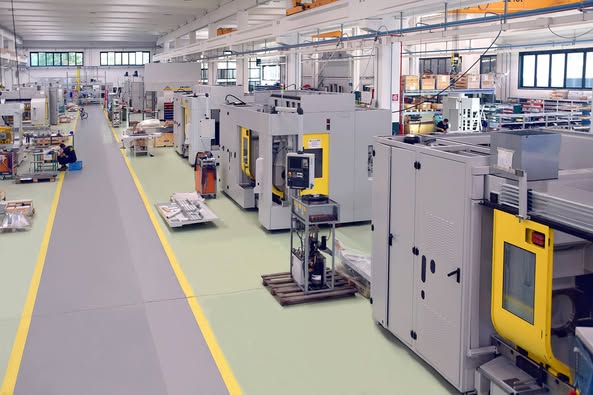
For engineers and procurement professionals who have been burned by the lack of support from purely transactional platforms, the model offered by GreatLight Metal represents a compelling alternative. Founded in 2011 in Dongguan’s Chang’an Town—the recognized “Mold Capital” of China—the company has evolved from a local workshop into an international partner with a modern 76,000 sq. ft. facility. Their approach is built on four integrated pillars that directly address the common pitfalls of rapid prototyping.
The Four Pillars of GreatLight’s Rapid Prototyping Excellence
1. Technical Hard Power: Full-Process Chain in One Location
A common cause of delay in prototyping is the need to send a part out for secondary operations (e.g., EDM, surface finishing, or heat treatment). GreatLight eliminates this with a comprehensive in-house equipment arsenal. This includes:
Precision Machining Core: A cluster of high-end 5-axis CNC machining centers (from brands like Dema and Beijing Jingdiao), complemented by numerous 4-axis/3-axis machines, precision Swiss-type lathes, and mill-turn centers.
Full Spectrum of Capabilities: Beyond subtractive manufacturing, they offer die casting, sheet metal fabrication, metal/plastic 3D printing (SLM, SLA, SLS), vacuum casting, and mold development.
2. System Soft Power: Certifications That Guarantee Quality
Speed is meaningless if the parts don’t meet specifications or fail under stress. GreatLight’s commitment to quality is demonstrated by a suite of certifications that are often lacking in pure prototyping shops:
ISO 9001:2015: The baseline for quality management.
ISO 13485: For medical hardware production—critical for medical device prototyping.
IATF 16949: For automotive engine and component production, ensuring rigorous defect prevention and waste reduction in the supply chain.
ISO 27001: For data security, a crucial factor for intellectual property-sensitive projects.
3. Collaborative Service: The Engineering Partnership
This is the most significant differentiator. Unlike the “upload and forget” model, GreatLight engages in a dialogue. For a complex electric vehicle (EV) e-housing prototype, for instance, their engineers don’t just machine the part. They analyze the design for manufacturability, suggest improvements for both rapid prototyping and future mass production, and can handle the complex jig design necessary for subsequent high-volume die casting. This engineering-to-engineering collaboration prevents costly design errors from propagating into production.
4. Value Creation at Scale: From Prototype to Production
The true test of a prototyping partner is whether they can scale. GreatLight’s model allows a single part produced from a 3D design in days to be the exact blueprint for high-volume production. There is no need for a second sourcing qualification. The DFM feedback, material certifications, and production processes are all aligned from day one.
A Comparative Look at the Landscape
To provide a clear decision-making framework, here is a comparison of GreatLight CNC Machining Factory with other common paths for rapid prototyping.
| Criteria | GreatLight Metal (Strategic Partner) | Protolabs Network / Xometry (Platforms) | JLCCNC / EPRO-MFG (Specialized Shops) |
|---|---|---|---|
| Core Value Prop | End-to-end solution, deep engineering, certified quality, scalable production | Speed and user interface for simple parts | Niche specialization or regional proximity |
| Engineering Depth | High. Full-time engineers collaborate on DFM, material selection, and production strategy. | Low. Automated DFM. Limited to no direct engineer-to-engineer discussion. | Medium to High. Depends on the shop. Specialization is a strength, but broader process chain may be lacking. |
| Quality & Certifications | Excellent. ISO 9001, 13485, IATF 16949, ISO 27001 compliant. Full CMM inspection. | Variable. Relies on network of vetted shops. Certifications are shop-specific, not platform-wide. | Good. Often specialized with specific certifications, but may lack the breadth of a full-service manufacturer. |
| Complexity Handling | Excellent. Can handle complex 5-axis geometries, multi-process parts, and challenging materials. | Good for simple to moderate complexity. Complex parts may be rejected or subject to long lead times for manual review. | Excellent within niche. A shop specializing in 5-axis will excel there, but may not handle a sheet metal + CNC + welding assembly. |
| Scalability | Built-in. The prototyping process directly informs the high-volume production strategy. | Low to Moderate. The network can be used for low-volume, but re-qualification for high-volume production is typically required. | Variable. Depends on the shop’s production capacity. Often limited to low-to-mid volume. |
| Speed for Simple 1-Off Parts | Very Fast (Days) | Fastest (Days) | Fast (Days) |
| Speed for Complex Projects | Fastest (Total Project Velocity) | Slow (Potential for re-qualification and engineering back-and-forth) | Fast (If within their specialization) |
When to Choose Which Path?
The choice ultimately depends on the specific phase of your development cycle and the nature of the part.
Choose a Platform (e.g., Protolabs Network, SendCutSend) when: You need a simple bracket, an enclosure for a trade show mock-up, or a non-critical part. The project is purely for form/fit validation, and you are not yet worried about material traceability or production scalability.
Choose a Specialized Shop (e.g., JLCCNC, EPRO-MFG) when: You have a very specific, high-volume requirement for a single process (e.g., a massive 5-axis aluminum part). You have an established relationship and deep trust in their specific capability.
Choose GreatLight Metal when: Your prototype is the first iteration of a production-intent part. The part is complex, involves multiple processes, has tight tolerances, or is for a regulated industry (medical, automotive, aerospace). You need a partner who can provide engineering insights, validate the design for mass production, and seamlessly transition from prototype to low-volume to high-volume manufacturing. You want to avoid the “handoff” point and the associated risk of translation errors between a prototyping house and a production house.
Conclusion: The Real Measure of Fast Prototyping
To “get rapid prototyping custom parts fast” is a simple request with a complex answer. The fastest machine is useless if the part fails, the material is wrong, or the design cannot be scaled.
For the serious product developer, the true measure of speed is not the clock time from order to shipment, but the elapsed time from design concept to a validated, production-ready final part. In this context, a partner like GreatLight Metal that combines high-speed 5-axis machining, a full-service backend, internationally recognized certifications, and a deep engineering bench often proves to be the fastest path to market success. They solve the precision predicament by ensuring that your initial prototype is not just a piece of metal, but a proven building block for your product’s future.


![[访谈] RAPID + TCT 2024:人工智能对 3D 打印的价值](https://print-ing.com/wp-content/uploads/2024/07/INTERVIEW-60x60.jpeg "[访谈] RAPID + TCT 2024:人工智能对 3D 打印的价值 9")




发表回复
要发表评论,您必须先登录。