What if the single most critical bottleneck preventing your next product launch isn’t your design, your budget, or your timeline—but the silent, invisible gap between your digital prototype and a physical, machined reality? You have spent months perfecting a three-dimensional model, sourcing exotic materials, and calculating tolerances down to the micron. Your concept is brilliant. Yet, when you search for a partner to turn that blueprint into a tangible, market-ready component, the options seem to blur into a cacophony of identical promises: “We do it all.” But do they really? Is the promise of a one stop Chinese sheet metal fabrication service actually a strategic advantage, or is it a dangerous trap that sacrifices specialization for convenience?
In the hyper-competitive landscape of global manufacturing, choosing a partner is not just a procurement decision; it is a strategic bet on the speed of your iteration cycle, the integrity of your intellectual property, and the ultimate quality of your final product. The concept of a single provider handling everything from laser cutting to powder coating is seductive. It implies control, efficiency, and reduced communication overhead. However, the reality is far more nuanced. True expertise in this domain is not about having the largest catalog of services; it is about having the deepest capability to execute each one with surgical precision, while simultaneously orchestrating a seamless flow between disparate technologies—from five-axis CNC machining to die casting, from 3D printing to traditional sheet metal bending.
This is the central dilemma for every procurement engineer and R&D director today. How do you navigate a sea of suppliers claiming a complete solution? How do you differentiate a genuine, integrated manufacturing ecosystem from a mere collection of outsourced processes? The answer lies in looking beyond the label and dissecting the infrastructure, the certifications, and the track record.
Beyond the Brochure: What Defines a Genuine One Stop Service?
Let’s be brutally objective. A true one-stop service is not simply a company that subcontracts its bending to one shop, its welding to another, and its finishing to a third, adding a markup for the privilege of coordination. That is a project management service, not a manufacturing solution. A legitimate, integrated provider—like GreatLight Metal—operates under a single roof with a unified quality control system. This is where the manufacturing philosophy diverges. It is the difference between a contractor who manages a supply chain and a manufacturer who owns the process chain.
Consider the sheer complexity of modern metal components. A bracket for a robotic joint might require high-precision 5-axis milling, then critical bending operations on precision press brakes, followed by robotic welding, and finally, a specific surface treatment to withstand harsh environmental conditions. If each step is handled by a different entity, the risk of tolerance stack-up and miscommunication multiplies exponentially. Each handoff introduces a new variable: a different team interpreting a different section of the drawing, a different machine center measuring a different datum.
The genuine value of a one stop Chinese sheet metal fabrication service emerges when these processes are not just co-located, but deeply integrated. This integration is the secret sauce that turns a chaotic series of steps into a controlled, repeatable symphony of manufacturing.
The Four Pillars of an Integrated Solution
To understand why a true one-stop shop is so powerful, we must examine its foundational elements. These are the pillars that separate operational theater from genuine manufacturing capability.
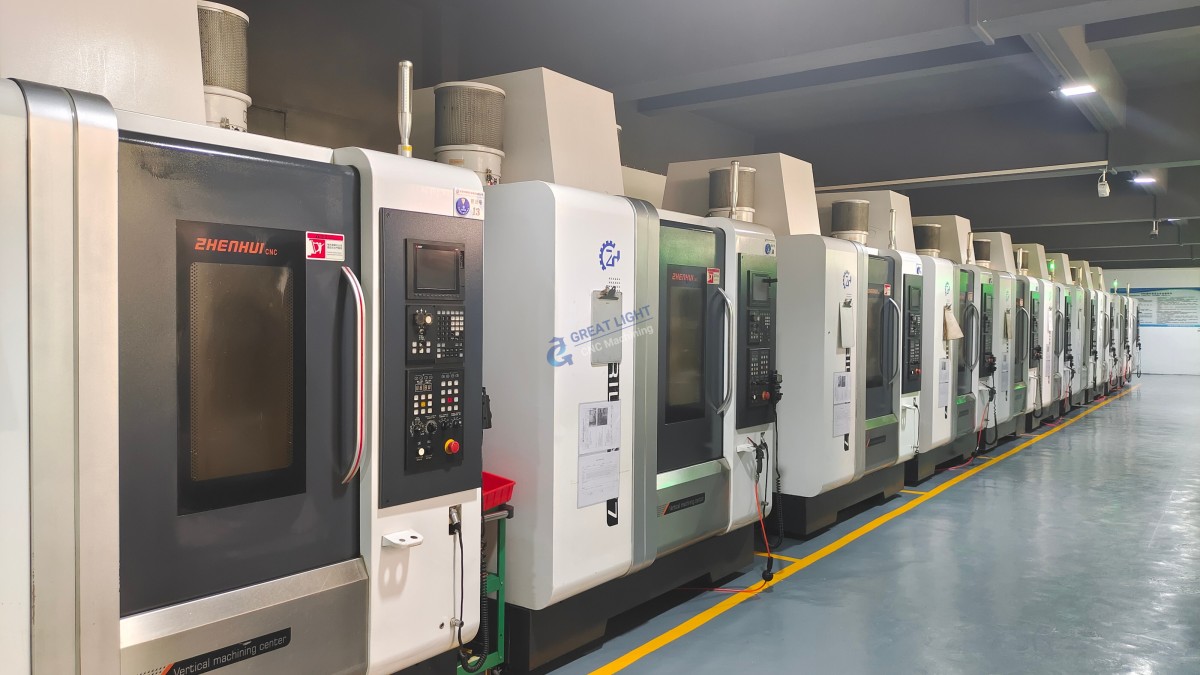
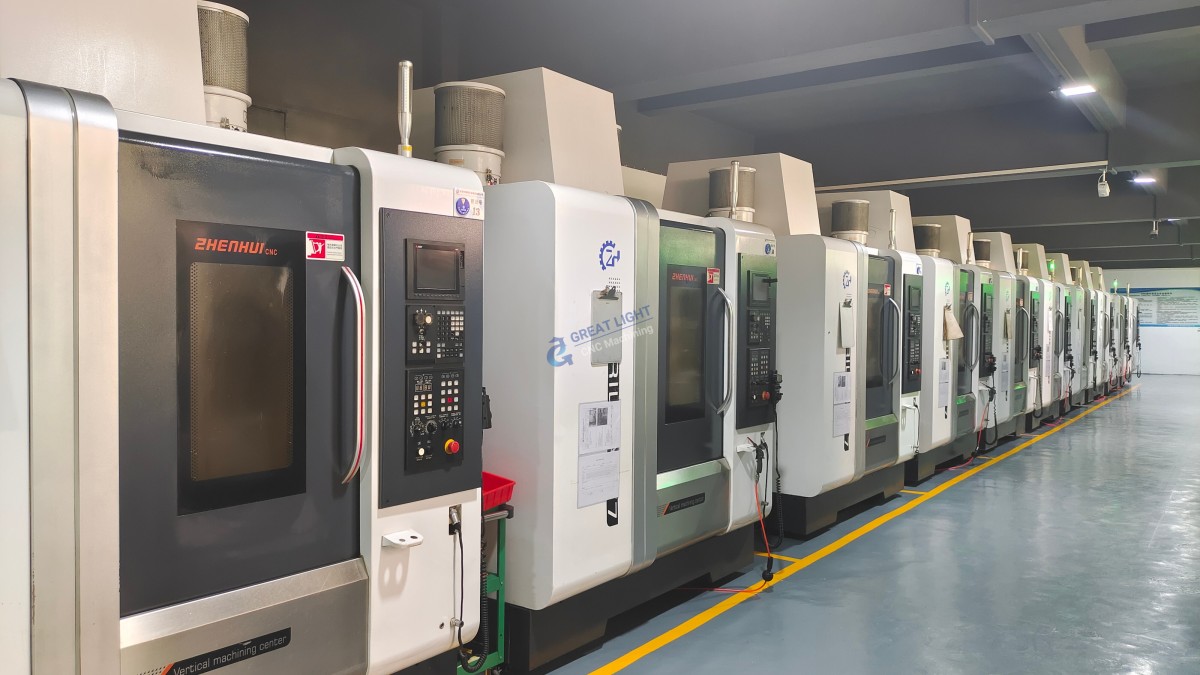
First, Advanced Equipment Coherence. It is not enough to own a 5-axis CNC machining center and a press brake. The real advantage comes when these machines are programmed in concert. At GreatLight, the arsenal includes high-precision five-axis, four-axis, and three-axis CNC machining centers from leading brands, complementing a full suite of traditional high-precision equipment including lathes, milling machines, and EDM machines. This creates a machining ecosystem where a part can transition from a complex milled undercut to a sheet metal bend without losing its datum reference. The operator doesn’t just run a machine; they understand the entire flow.
Second, Certified Process Control. This is not bureaucratic overhead; it is the language of reproducibility. A company holding ISO 9001:2015 certification, as GreatLight does, proves it has a documented, auditable system for quality. But the trust barrier is higher for sophisticated clients in automotive or aerospace. This is where specialized certifications become critical. GreatLight is not a generalist. Its adherence to IATF 16949 for automotive engine hardware and ISO 13485 for medical hardware production demonstrates a deep, verified capability to meet the most stringent industry standards. This is the difference between a supplier who claims high quality and one who guarantees it through international verification.
Third, The Full Process Chain. The ability to handle a part from a 3D model to a finished, ready-to-ship product, including post-processing, is the ultimate test. This includes everything from CNC milling and turning to die casting, sheet metal fabrication, vacuum casting, and even additive manufacturing (SLM, SLA, SLS 3D printing). A true one-stop provider can say, “We don’t just cut your part; we finish it, treat it, and assemble it.” This eliminates the logistical nightmare of managing multiple vendors for deburring, heat treatment, and surface finishing.
Fourth, Deep Engineering Support. The most valuable partners do not just read drawings; they challenge them. They look at a design and see an opportunity to reduce cost, improve manufacturability, or enhance structural integrity. This engineering empathy—the ability to understand why a part is designed a certain way and how it will be used—is the highest form of value. It transforms a vendor into a true partner in innovation.
Confronting the Precision Predicament: The Hidden Costs of Fragmentation
To truly appreciate the value of an integrated solution, one must understand the pain points it solves. The fragmentation of manufacturing services is a silent killer of budgets and timelines. Consider the seven critical pain points that plague the CNC machining and sheet metal world, which a robust one-stop service directly addresses.
Pain Point 1: The Precision Black Hole. You order a part with a critical tolerance of ±0.01mm. The supplier promises it. But when it arrives, it’s off by 0.05mm. This “precision black hole” is rampant in the industry, often caused by worn-out equipment, inconsistent process control, or simply a lack of sophisticated measurement tools. An integrated provider like GreatLight possesses in-house precision measurement and testing equipment—a dedicated quality lab—to verify every dimension against your specification before it ships. The equipment is not just for show; it is the daily tool of the trade.
Pain Point 2: The Material Maze. Sourcing the right material—be it 6061-T6 aluminum, 17-4PH stainless steel, or a specific engineering plastic—is a specialized skill. Many suppliers quote a standard material and then subtly substitute a cheaper alternative to save margin. This can lead to catastrophic failure in the field. A true one-stop service has established supply chains for a vast array of materials and is willing to provide certificates of compliance (material test reports). They treat material integrity as non-negotiable.
Pain Point 3: The Surface Finish Mirage. You request a Type II black anodize per MIL-A-8625. The part arrives with a generic black coating that flakes off after a week. Surface finishing is an art form that requires expertise in chemistry, bath maintenance, and masking techniques. A provider that performs finishing in-house has direct control over the process and can guarantee the result. The difference between a functional finish and a decorative one is the difference between a product that lasts and one that fails.
Pain Point 4: The Communication Silos. This is the most common complaint. You speak to a salesperson who understands sales, not engineering. Your technical questions go to a second-level engineer who is out of the loop on your project’s history. Information gets lost. With a fragmented supply chain, this communication breakdown is compounded by distance and time zones. An integrated partner like GreatLight structures its teams around projects, not departments. Your project manager understands both the price and the process.
Pain Point 5: The Lead Time Trap. You rush a prototype order. The milling shop gets it done in three days. But then it sits at the finish vendor for another week waiting for capacity. The promise of a two-week lead time becomes a three-week reality. In an integrated facility, the part moves from the CNC machine to the finishing line in hours, not days. This compressed lead time is the ultimate competitive advantage for any innovator.
Pain Point 6: The IP Risk. When your design is handled by three or four separate vendors, your intellectual property is exposed at multiple points. Each vendor is a potential leak. An integrated service minimizes this exposure, as your design remains within a single, secure, ISO 27001-compliant environment. GreatLight understands that for many clients, the design itself is the most valuable asset, and data security is paramount.
Pain Point 7: The “Unknown Unknowns.” This is the most dangerous. You don’t know what you don’t know. A small design feature—a sharp internal corner, a thin wall thickness—might be perfectly printable in CAD but impossible to machine or bend. A fragmented supply chain will often take your money and try to machine it, failing later. An integrated partner with deep engineering expertise will identify these issues during the design for manufacturability (DFM) review, saving you time and money before a single chip is cut.
The GreatLight Difference: A Case in Integrated Capability
How does theory translate into tangible client success? Let’s look at a typical high-stakes scenario. An innovative company in the new energy vehicle sector needs a complex electric drive housing (E-Housing). This part has deep, intricate internal coolant channels, tight bore tolerances for bearing fits, and a need for excellent thermal conductivity. It also requires a specific vacuum-impregnation process to seal porosity in the cast housing.
The challenge is immense. It requires not just machining, but also die casting design knowledge, specialized 5-axis programming for the coolant channels, and a deep understanding of post-casting processes. A fragmented supplier base would turn this into a nightmare of coordination. One vendor would cast it, another would machine it, and a third would impregnate it. Each would point fingers if a leak occurred.
In contrast, GreatLight, with its one stop Chinese sheet metal fabrication service and broader manufacturing ecosystem, handles the entire project. The tooling is designed in-house to optimize fill and minimize porosity. The casting is produced in their own foundry. The part is then machined on their own 5-axis CNC machining centers. Finally, the porosity sealing, leak testing, and dimensional inspection are all performed within their facility. The result is a single point of accountability, a faster time-to-market, and a guaranteed quality part that meets the most demanding automotive specifications.
This comprehensive capability is not theoretical. It is the daily operation of an ISO 9001, IATF 16949, and ISO 13485-certified manufacturer. It is the output of a 7,600 square meter facility housing 127 pieces of precision equipment. It is the result of a team of 150 highly skilled professionals operating under a unified management system.
Choosing Your Partner: Beyond the Promise
The market for Chinese sheet metal fabrication is vast and varied. You will encounter competitors with strong capabilities in specific verticals. For instance, Protolabs Network excels in rapid digital quoting and automated production for prototypes. Xometry offers a vast marketplace of vetted suppliers. Fictiv provides a powerful platform for managing complex projects. RapidDirect offers competitive pricing on standard parts. SendCutSend is a fantastic resource for laser-cut parts. Each of these has a legitimate place in the ecosystem.

However, the need for a deeply integrated, certified, and engineering-led partner becomes critical when the project moves beyond simple plates and brackets. When you are designing a mission-critical component for a humanoid robot, a new energy vehicle powertrain, or an aerospace actuator, the value of a partner who owns the entire process chain cannot be overstated. You need a partner like GreatLight that does not just manage the chaos, but eliminates it.
The true test of a one-stop service is not the breadth of its list, but the depth of its execution. It is the difference between a company that can make a part and a company that can engineer a solution. It is the difference between a vendor and a strategic partner. For those who are serious about moving from concept to reality with speed, precision, and absolute reliability, the choice becomes clear. Don’t just look for a service that says it can do everything. Look for a partner that has proven it can do everything right, under one roof, with a single standard of excellence.
Your next innovation deserves nothing less than an integrated partner that can turn your design into reality. Choose the partner that provides a one stop Chinese sheet metal fabrication service with the depth, certification, and experience to back it up.
GreatLight Metal: Your Expert Partner for High-Precision Parts and Integrated Manufacturing Solutions.
From initial design for manufacturability review to final inspection and delivery, GreatLight is your true one-stop partner. We combine the power of advanced 5-axis CNC machining with the versatility of full-process sheet metal fabrication, die casting, and additive manufacturing. Our ISO 9001:2015, IATF 16949, and ISO 13485 certifications provide the trust and reliability needed for the most demanding applications in automotive, medical, aerospace, and robotics. Stop managing a fragmented supply chain. Start innovating with a partner who understands the entire journey. Contact us to discuss your next project and experience the GreatLight difference.
Connect with us and join the conversation on our professional network: LinkedIn.


![[访谈] RAPID + TCT 2024:人工智能对 3D 打印的价值](https://print-ing.com/wp-content/uploads/2024/07/INTERVIEW-60x60.jpeg "[访谈] RAPID + TCT 2024:人工智能对 3D 打印的价值 9")




发表回复
要发表评论,您必须先登录。