In the world of custom manufacturing, finding a reliable ODM 3 Axis CNC machining supplier online can mean the difference between a project that glides seamlessly from concept to market and one mired in delays, quality issues, and hidden costs. As a senior manufacturing engineer who has spent over a decade on factory floors and in supplier quality negotiations, I’ve seen firsthand how the right partner quietly becomes an extension of your own team — and how the wrong one can erode months of hard work. This article is my practitioner’s guide to what true reliability looks like, why it matters at every stage of product development, and how a partner like GreatLight CNC Machining Factory embodies the gold standard you should demand.
Reliable ODM 3 Axis CNC Machining Supplier Online
When we talk about a “reliable ODM 3 Axis CNC machining supplier online,” we’re not simply referring to a shop that can receive a CAD file and ship a part. We mean a strategic partner that accepts full Original Design Manufacturing responsibility — offering engineering feedback, material selection guidance, process optimization, quality validation, and consistent on-time delivery, all while maintaining transparent digital communication. In the following sections, I’ll break down the pillars of this reliability and show how GreatLight CNC Machining delivers on each, backed by concrete data, certifications, and real-world capability.
The Anatomy of a Truly Dependable ODM CNC Machining Partner
Many online platforms promise convenience, but beneath the surface, you may be dealing with a network of third-party workshops with inconsistent quality systems. A genuine ODM supplier, in contrast, owns and operates its own manufacturing floor. This vertical integration is the first gate of reliability.
1. Equipment Depth and Precision: Beyond the Spec Sheet
A supplier’s machine list tells you what they can make, but the real story is in the harmony of that equipment ecosystem. A reliable ODM 3 Axis CNC supplier will have:
High-end 3-axis CNC machining centers from established builders like Haas, DMG Mori, or Jingdiao. These aren’t just for roughing; they must be rigid, thermally stable, and paired with in-process probing to hold tight tolerances.
Complementary multi-axis capability: Even for 3-axis work, the presence of 4-axis and 5-axis machines in the same facility indicates deeper process knowledge and the ability to fixture complex geometries more intelligently.
A full pre- and post-processing chain: tool grinding, wire EDM for fixtures, vibratory finishing, anodizing, and CMM inspection all under one roof.
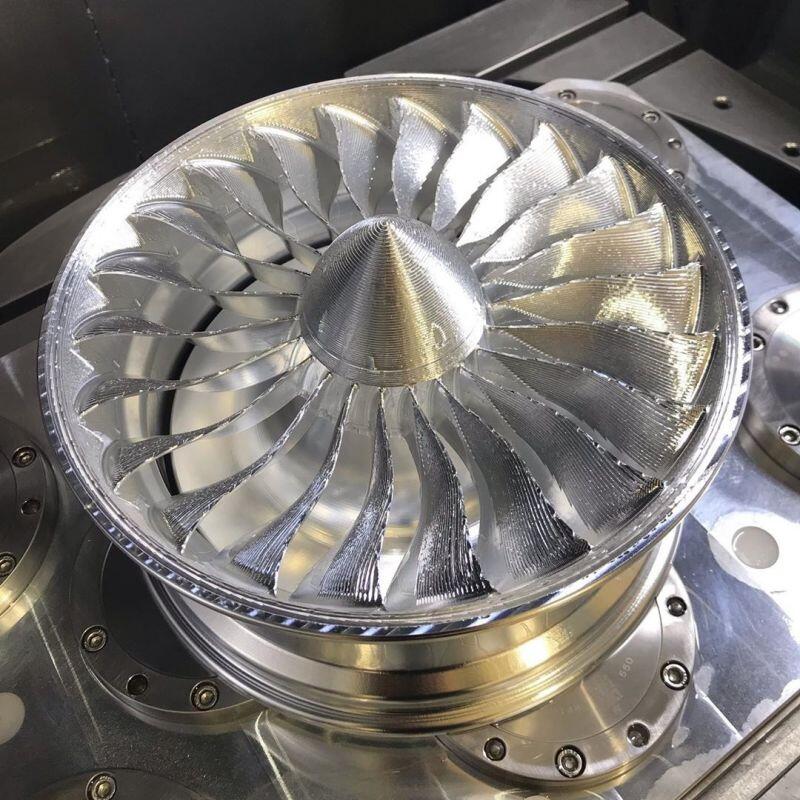
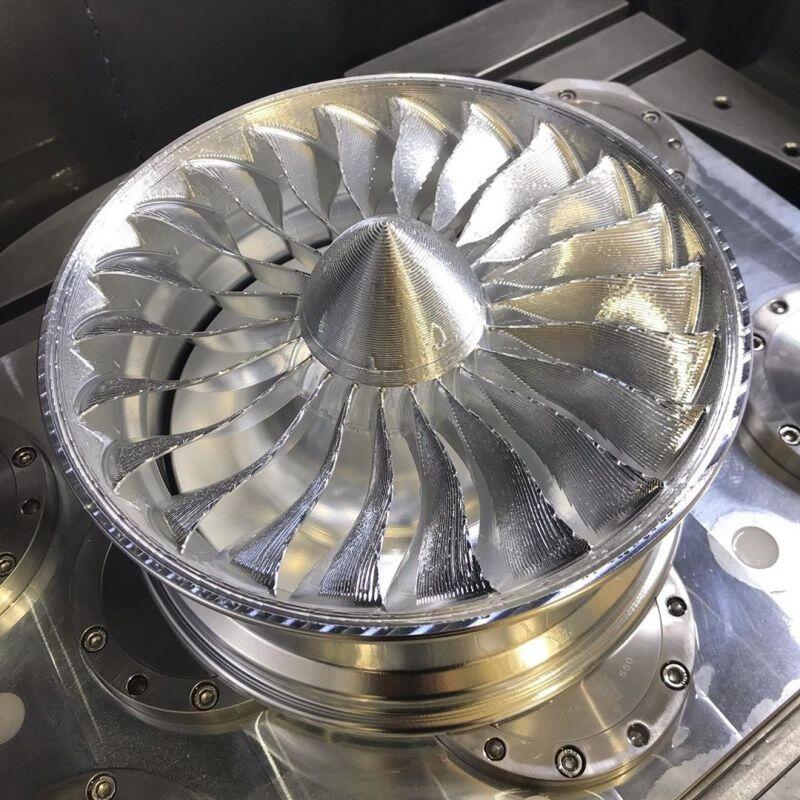
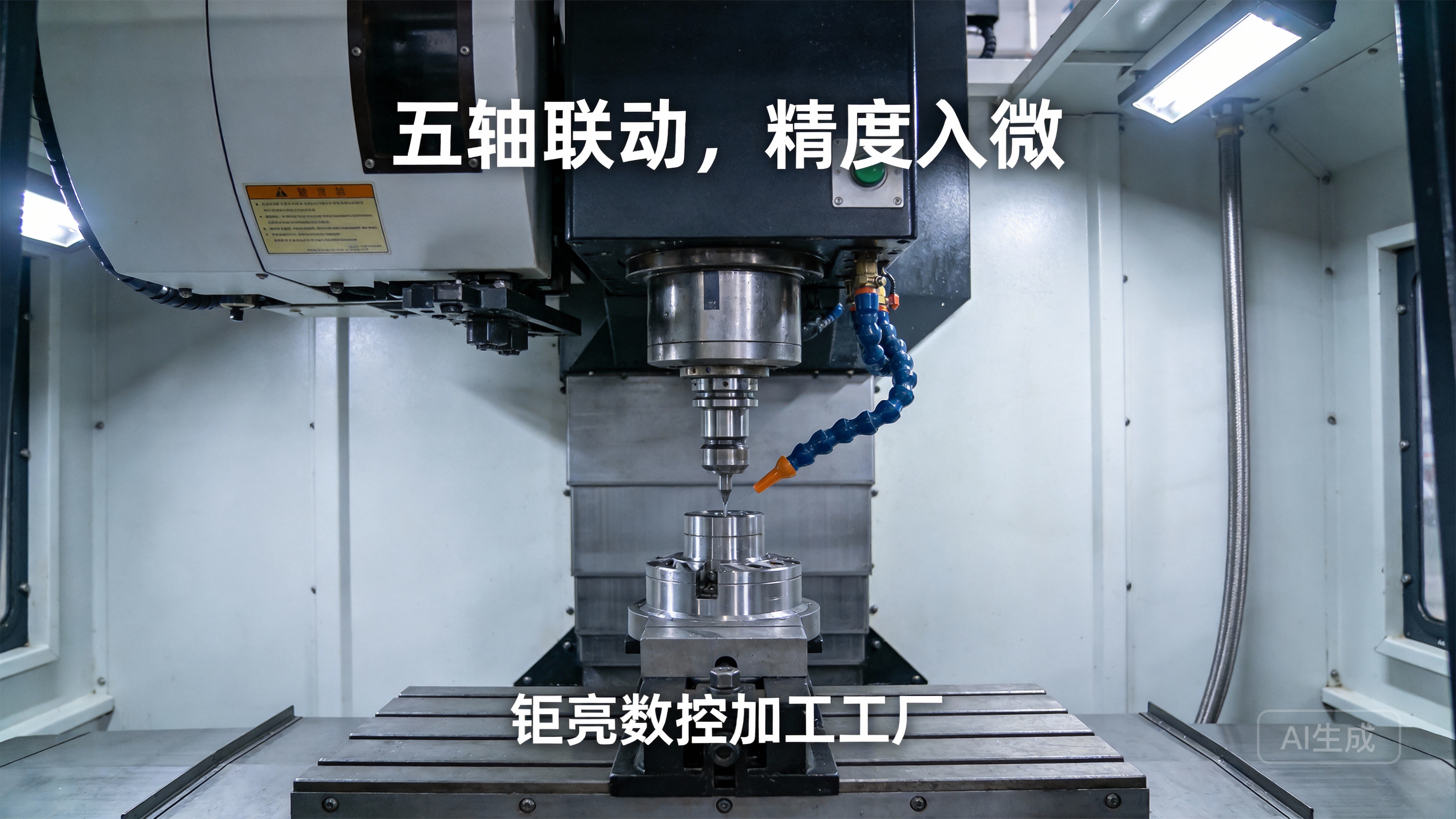
GreatLight CNC Machining Factory operates from a 7,600 m² (approx. 76,000 sq. ft.) campus in Chang’an, Dongguan — the heart of China’s precision hardware mold capital — housing over 127 pieces of precision peripheral equipment. This includes not only large-format 3-axis, 4-axis, and 5-axis CNC machining centers, but also complementary technologies like SLM, SLA, and SLS 3D printers, vacuum casting machines, and EDM. The 3-axis work benefits directly from this breadth: jigs and fixtures can be manufactured in-house overnight, drastically cutting down lead times for complex ODM projects.
2. Quality Systems That Go Beyond a Paper Certificate
An ISO 9001 wall plaque is a start, but reliability in precision CNC machining demands certification that matches the industry you serve. Look for:
| Certification | Relevance to ODM 3‑Axis Machining |
|---|---|
| ISO 9001:2015 | Base quality management; ensures documented, repeatable processes. |
| ISO 13485 | Required for medical device components; demonstrates control over sterility, traceability, and risk management. |
| IATF 16949 | Automotive-grade quality; demands defect prevention, continuous improvement, and supply chain accountability. |
| ISO 27001 | Information security; vital for IP-sensitive ODM projects where design files must be protected. |
GreatLight holds all of these certifications — including IATF 16949 for automotive and engine hardware, ISO 13485 for medical production, and ISO 27001 for data security. For an ODM customer, this means the supplier’s entire ecosystem — from IT servers to cutting tool libraries — is audited and hardened. When you upload a proprietary 3D model to an online portal, you can be confident the data never leaks, and the produced parts will meet the traceability standards of your downstream medical or automotive assembly line.
3. Engineering Collaboration: The True ODM Differentiator
An ODM provider doesn’t just machine to print; it flags design for manufacturability (DFM) issues before chips start flying. Reliable partners offer:
Pre-production design review: detailed feedback on wall thicknesses, undercuts, thread callouts, and tolerancing that may drive unnecessary cost.
Material substitution proposals: if your design calls for a rare alloy, a knowledgeable ODM supplier will propose an equivalent with identical performance but better machinability and shorter lead time.
Prototyping-to-production continuity: the same team that builds your first 5 parts should handle the 5,000-piece run, preserving process knowledge.
At GreatLight, the engineering team has over a decade of focused experience in prototype model processing and production scaling. They routinely work with startups designing humanoid robot joints, automotive R&D teams iterating e-housing castings, and medical device firms developing surgical tools. The in-house metrology lab — equipped with CMMs, laser scanners, and profilometers — feeds back real dimensional data directly to the programming station, closing the loop in hours instead of days.
Why Vertical Integration Matters for 3‑Axis ODM Machining
When you source a 3-axis CNC part from an online aggregator, you might unknowingly send your job to a shop that outsources finishing, anodizing, or even final inspection. Each handoff introduces variability. A reliable ODM 3 Axis CNC supplier should offer, at minimum:
Raw material traceability: material certificates for every stock bar or billet.
In-house finishing: anodizing (Type II, Type III), passivation, powder coating, bead blasting, electroplating, and painting, all within controlled process windows.
Assembly and kitting: if your product requires pressing bearings, inserting helicoils, or laser marking, the ODM partner should do it before shipping.
GreatLight’s one-stop post-processing and finishing services eliminate the finger-pointing that plagues multi-vendor supply chains. With three wholly owned manufacturing plants, they control every stage — from die casting mold construction (if needed) to final cosmetic surface treatment. For 3-axis parts such as brackets, enclosures, heat sinks, and sensor housings, this means the anodizing thickness doesn’t deviate due to an unknown subcontractor’s bath chemistry; the part meets both functional and aesthetic specs in a single shipment.
Comparing Industry Players: Where GreatLight Stands Out
The online CNC machining landscape is crowded with well-known names, each with strengths:
Xometry, Protolabs Network, and RapidDirect operate extensive partner networks — they excel in distributed capacity but sacrifice the deep ODM relationship, as jobs can land in any one of hundreds of shops with varying quality culture.
Fictiv and PartsBadger emphasize platform speed and digital experience, ideal for simple parts, but may struggle with the iterative engineering collaboration required for true ODM projects.
Owens Industries and RCO Engineering are formidable U.S.-based high-precision houses, especially for 5-axis complexity, but come with cost structures that can strain startup budgets.
JLCCNC and SendCutSend have democratized sheet metal and 2D machining, yet their scope in multi-step precision 3-axis ODM remains limited.
GreatLight CNC Machining (operating as Great Light Metal Tech Co., LTD.) carves a unique niche: a factory-direct manufacturer with the certifications and process depth of a Tier 1 automotive supplier, but the agility of a prototype shop. For ODM clients, this means:
Precision up to ±0.001 mm on critical features, with a maximum machining envelope of 4,000 mm — rare in a single facility.
Material breadth: from common 6061 aluminum and 304 stainless steel to exotic Inconel, titanium, and mold steel, all backed by 3D printing capabilities for rapid iteration.
Scalability: whether you need 10 pieces for a boardroom presentation or 10,000 units for a clinical trial, the production line adjusts without changing the quality framework.
Risk-free guarantee: their policy is brutally simple — free rework for any quality defect, full refund if that rework fails to meet spec. No hedging, no prorated liability.
Practical Checklist for Vetting an Online ODM 3-Axis Supplier
As an engineer, I rely on a structured qualification process. Use this list when evaluating any supplier:
Ask for a factory tour video or live stream. Look for cleanliness, machine nameplates, and gauge calibration stickers.
Request recent (redacted) first article inspection reports relevant to your tolerances. Check if they use CMM, linear height gauges, and optical comparators.
Send a “DFM challenge” — a test file with a deliberately thin wall, a deep blind hole, and a tight true-position callout. The response reveals engineering depth.
Discuss IP protection. A reliable supplier will offer NDAs, segregated data servers, and ISO 27001 documentation without hesitation.
Test their post-processing. Order a small batch with a cosmetic finish requirement; inspect uniformity, edge breaks, and packaging.
GreatLight’s transparent approach — supported by their on-site metrology lab, documented ISO systems, and 13‑year track record — makes each of these checks straightforward. They don’t hide behind a slick website; they open the factory doors and the quality records.
Real-World ODM Scenario: Automotive Sensor Bracket
Imagine an automotive tier-1 developing a new LiDAR bracket. The part requires 3-axis machining of a 7075-T6 aluminum forging, with a flatness of 0.02 mm across a 150 mm span, corrosion-resistant hard anodizing, and full IATF 16949 PPAP documentation. An online broker may accept the order but then subcontract to a shop unfamiliar with automotive APQP. The result: late PPAP submissions, missed pilot build dates, and expensive revalidation.
With GreatLight, the workflow looks like this:
Engineering review identifies a chatter risk near a thin web and suggests a toolpath adjustment and a local stock reinforcement tab.
In-house CNC turning and 3-axis milling on a brand-name machine, with on-machine probing, delivers Cpk data for the flatness characteristic.
Hard anodizing is executed in the same campus under controlled voltage and temperature, with thickness verified by eddy current measurement.
PPAP documentation (PFMEA, control plan, MSA, dimensional results) is compiled by the quality team, already versed in IATF 16949.
Parts ship in time for PPAP approval, and the ODM partnership continues as the bracket design iterates to reduce weight.
This level of integration isn’t a marketing bullet — it’s the operational reality of a facility that has invested in both technology and human capital.
The Hidden Cost of Unreliable ODM Suppliers
In my engineering career, I’ve witnessed start-ups bleed cash trying to manage fragmented supply chains. Common pitfalls include:
Re-qualification costs: when a subcontractor changes without notice, you must re-verify dimensions and coatings, eating up $5,000–$20,000 in metrology and travel.
Slipping tolerances: a shop may deliver a perfect first article, but on production run, tool wear and fixture relaxation cause drift because no SPC is implemented. A reliable ODM partner applies in-process control to prevent drift.
IP leaks: proprietary designs uploaded to unsecured portals have appeared on competitor desks within months. ISO 27001 isn’t an option; it’s a minimum for any serious project.
By contrast, the partnership model represented by GreatLight turns these risks into manageable, audited processes. Your project’s data stays secure, the parts stay in spec, and the cost of poor quality plummets.
Building a Long-Term ODM Collaboration
Once you’ve found a trustworthy supplier, invest in the relationship. Share your product roadmap, involve their engineers early in design reviews, and treat them as a core team member. The payoff is enormous: faster time-to-market, greater design innovation, and a supply chain that withstands shocks.
GreatLight’s decade-plus journey — from a local workshop in Chang’an to an internationally certified precision manufacturer — demonstrates the stamina required to serve demanding clients in aerospace, medical, and automotive sectors. Their motto is not simply to “machine parts,” but to provide comprehensive solutions that bridge prototyping and mass production, all under one roof.
For readers seeking a long-term engineering ally, I recommend evaluating the full-service ODM model rather than a transactional online middleman. Next time you search for a reliable ODM 3 Axis CNC machining supplier online, look beyond the price quote: dig into certifications, process control, and the engineering conversation. The few extra days you spend qualifying the partner will return in months of smooth production and a product that performs flawlessly in the field.
As you embark on your next precision machining project, remember that the best supplier relationships are built on demonstrated capability, verified quality, and a shared commitment to excellence. In my experience, a reliable ODM 3 Axis CNC machining supplier online is not just a convenience — it’s the strategic foundation of manufacturing success.


![[访谈] RAPID + TCT 2024:人工智能对 3D 打印的价值](https://print-ing.com/wp-content/uploads/2024/07/INTERVIEW-60x60.jpeg "[访谈] RAPID + TCT 2024:人工智能对 3D 打印的价值 9")




发表回复
要发表评论,您必须先登录。