In the high-stakes world of precision manufacturing, sourcing bulk 5-axis CNC machining services from China has become both an opportunity and a minefield. With hundreds of suppliers claiming “ISO certification” and “±0.001mm precision,” how do procurement engineers and R&D managers separate genuine capability from marketing hype? This guide provides an objective, engineer-focused analysis of what truly matters when selecting a bulk 5-axis machining partner in China, with a deep dive into the operational realities behind the claims.
Understanding the True Value of 5-Axis Machining in Bulk Production
Before evaluating suppliers, it’s essential to understand why 5-axis CNC machining has become the gold standard for complex precision parts. Unlike traditional 3-axis or even 4-axis machining, 5-axis technology allows the cutting tool to approach the workpiece from five different axes simultaneously. This capability dramatically reduces setup times, improves surface finish, and enables the production of geometries that would be impossible with conventional methods.
For bulk production, the advantages are particularly compelling:
Reduced cycle times through fewer workpiece repositionings
Superior surface finishes due to optimized tool angles
Tighter tolerances maintained across large production runs
Complex undercuts and deep cavities machined in a single setup
However, the gap between having 5-axis machines and actually running them efficiently for bulk orders is vast. This is where supplier selection becomes critical.
Evaluating the Technical Backbone of Suppliers
Equipment Depth Beyond Machine Count
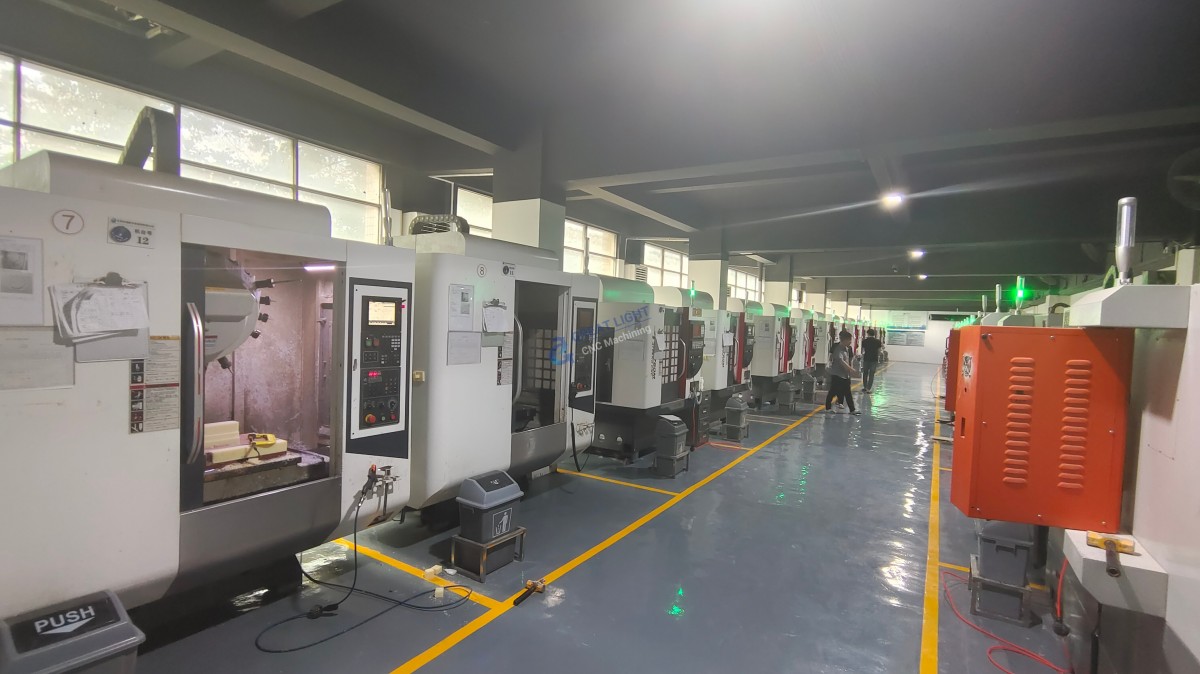
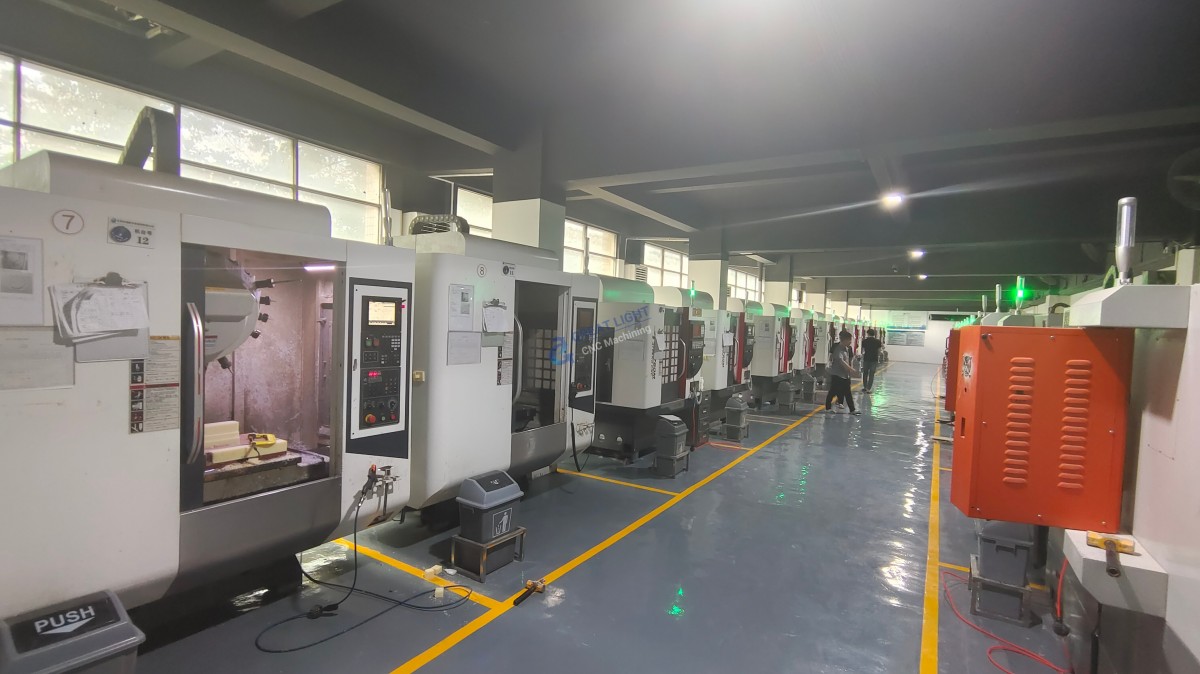
When suppliers boast about having 5-axis CNC machines, ask deeper questions. At GreatLight Metal, for instance, the facility houses over 127 precision peripheral equipment units, including large high-precision 5-axis machining centers from brands like Dema and Beijing Jingdiao. But equipment alone tells only part of the story.
Key questions to ask any supplier:
“What is your oldest 5-axis machine, and when was it last calibrated?”
“What percentage of your 5-axis capacity is dedicated to production versus trial runs?”
“How do you maintain consistent precision across multiple machines running the same part?”
The answers reveal whether a supplier treats 5-axis machining as a core competency or merely a marketing checkbox. A manufacturer with 150 employees and 7,600 square meters of facility space, like GreatLight Metal, typically demonstrates serious commitment to the technology.
Process Chain Completeness
Bulk 5-axis machining rarely exists in isolation. The best suppliers offer integrated process chains that minimize handling, reduce lead times, and maintain quality consistency. GreatLight Metal’s approach includes:
CNC machining (3-axis, 4-axis, and 5-axis)
Die casting and mold fabrication
Sheet metal processing
Metal and plastic 3D printing (SLM, SLA, SLS)
Comprehensive post-processing services
This vertical integration means a part can move from raw material to finished product with controlled handoffs at every stage. Contrast this with suppliers who must subcontract post-processing, introducing potential quality variations and extended timelines.
The Certification Reality Check
Beyond the Certificate: What ISO 9001 Actually Means in Production
Any credible Chinese bulk 5-axis CNC machining supplier will claim ISO 9001 certification. The difference lies in how thoroughly that system is implemented. GreatLight Metal holds multiple certifications including ISO 9001:2015, ISO 13485 (medical devices), IATF 16949 (automotive), and ISO 27001 (data security).
Why certification depth matters:
ISO 13485 is essential for medical device components where traceability and cleanliness are non-negotiable
IATF 16949 demonstrates capability in automotive production with its rigorous defect prevention focus
ISO 27001 protects intellectual property—critical when sharing proprietary designs with overseas manufacturers
A supplier with only a single ISO 9001 certificate may be adequate for simple parts, but complex, high-value bulk orders demand the layered quality assurance that multiple certifications provide.
Real-World Comparison: GreatLight Metal vs. Other Key Players
The bulk 5-axis CNC machining market includes several notable players, each with distinct positioning. This comparison focuses on operational realities rather than marketing claims.
| Supplier | Core Strength | Typical Lead Time for Bulk Orders | Certifications | Ideal For |
|---|---|---|---|---|
| GreatLight Metal | Full process chain, large facility (7,600 sqm), 150 staff | 10-15 business days for first batch | ISO 9001, 13485, IATF 16949, ISO 27001 | Complex, multi-process parts with high quality demands |
| Protolabs Network | Fast digital quoting, extensive material library | 3-5 days for prototypes, 2-3 weeks for bulk | ISO 9001, ISO 13485 | Rapid prototyping and small-to-medium production runs |
| Xometry | AI-powered instant quoting, vast network of shops | 5-10 days for prototypes, varies for bulk | Network-dependent | Software-driven quoting for standard geometries |
| Fictiv | Quality management system, US-based support | 7-14 days for prototypes | ISO 9001 | Design-for-manufacturing feedback and managed production |
Critical observation: While digital-first platforms like Xometry and Protolabs offer speed in quoting and prototype delivery, their bulk production relies on a distributed network of partner shops. This creates quality consistency challenges that vertically integrated manufacturers like GreatLight Metal handle through single-site control.
Addressing Seven Critical Pain Points in Bulk 5-Axis Machining
Pain Point 1: The Precision Gap
Suppliers advertise ±0.001mm precision, but this often reflects theoretical machine capability rather than real-world production consistency. GreatLight Metal’s approach includes in-house precision measurement equipment that verifies every batch against specifications. Ask any potential supplier about their CMM (Coordinate Measuring Machine) inspection frequency and the acceptance criteria for different tolerance classes.
Pain Point 2: Material Integrity
Bulk orders amplify material quality issues. A single defective batch can halt production for weeks. GreatLight Metal maintains strict material traceability protocols, verifying certifications against incoming stock and testing samples before production begins. This level of discipline is not universal.
Pain Point 3: Communication Breakdowns
Time zone differences and language barriers cause specification drift. Suppliers with dedicated English-speaking project managers, like GreatLight Metal, typically achieve higher first-pass yield rates. Critical red flag: If your primary contact can’t clearly explain their quality control process in your language, consider it a warning sign.
Pain Point 4: Hidden Costs
The lowest quoted price often excludes essential services like deburring, surface treatment, or certification documentation. A transparent supplier provides a comprehensive breakdown. GreatLight Metal’s one-stop finishing services include anodizing, powder coating, plating, and assembly—eliminating the need for multiple vendors and their associated coordination costs.
Pain Point 5: Intellectual Property Risk
Sharing proprietary 3D models with overseas manufacturers requires trust. GreatLight Metal’s ISO 27001 certification for data security provides contractual protection and verified processes for design file handling. Always ask suppliers about their data encryption, employee access controls, and NDA enforcement procedures.
Pain Point 6: Lead Time Reliability
Bulk orders face unpredictable delays from material shortages, machine breakdowns, or quality rework. Reliable suppliers maintain buffer inventory of common materials and have redundant machining capacity. GreatLight Metal’s 127 equipment units across three wholly-owned factories provide this redundancy, ensuring production continuity even when specific machines require maintenance.
Pain Point 7: Post-Production Support
What happens when a batch doesn’t meet specifications? GreatLight Metal’s “free rework and full refund if still unsatisfactory” policy reflects confidence in their processes. Always confirm the supplier’s non-conformance handling protocol before placing orders.
Application Examples: Where Bulk 5-Axis Machining Excels
Case 1: Humanoid Robot Structural Components
The emerging humanoid robotics industry demands complex, lightweight metal parts with exacting tolerances. One client approached GreatLight Metal requiring 500 units of a multi-axis robot arm joint housing made from 7075 aluminum alloy. The part featured internal cooling channels, multiple threaded inserts, and a surface finish specification of Ra 0.4 μm.
Challenges addressed:
Deep internal cavities required specialized 5-axis toolpaths
Maintaining ±0.005mm across 500 units demanded statistical process control
Integrated thread forming eliminated secondary operations
GreatLight Metal’s solution: Five-axis simultaneous machining using Dema centers with custom fixturing designed for rapid part loading. First article inspection within 8 hours, production run completed in 12 business days with 99.3% yield.
Case 2: Automotive Engine E-Housing for New Energy Vehicles
An innovative EV powertrain company needed 2,000 units of an e-housing incorporating integral oil passages, sensor mounts, and sealing surfaces. Material was A380 aluminum die-cast with extensive secondary machining.
Complexity factors:
Multi-plane sealing surfaces required ±0.02mm flatness
Deep, small-diameter oil passages needed specialized tooling
Thermal management features demanded precise material removal
Process chain: GreatLight Metal performed initial die casting, then completed all post-casting machining using 5-axis CNC, reducing total lead time by 40% compared to the client’s previous multi-vendor approach. IATF 16949 certification ensured automotive-grade documentation and traceability.
Technological Capabilities That Define Industry Leaders
Maximum Precision and Size Capabilities
GreatLight Metal’s technical specifications set clear benchmarks for evaluating any Chinese bulk 5-axis CNC machining supplier:
Maximum achievable precision: ±0.001mm / 0.001 inch (under optimal conditions)
Maximum part size: 4,000 mm in length
Typical production tolerances: ±0.005mm for standard orders, tighter upon request
These specifications are verified through in-house CMM inspection with documented results. Any reputable supplier should provide comparable data.
Material Expertise Across the Spectrum
Bulk 5-axis machining requires deep knowledge of material behavior. GreatLight Metal’s experience spans:
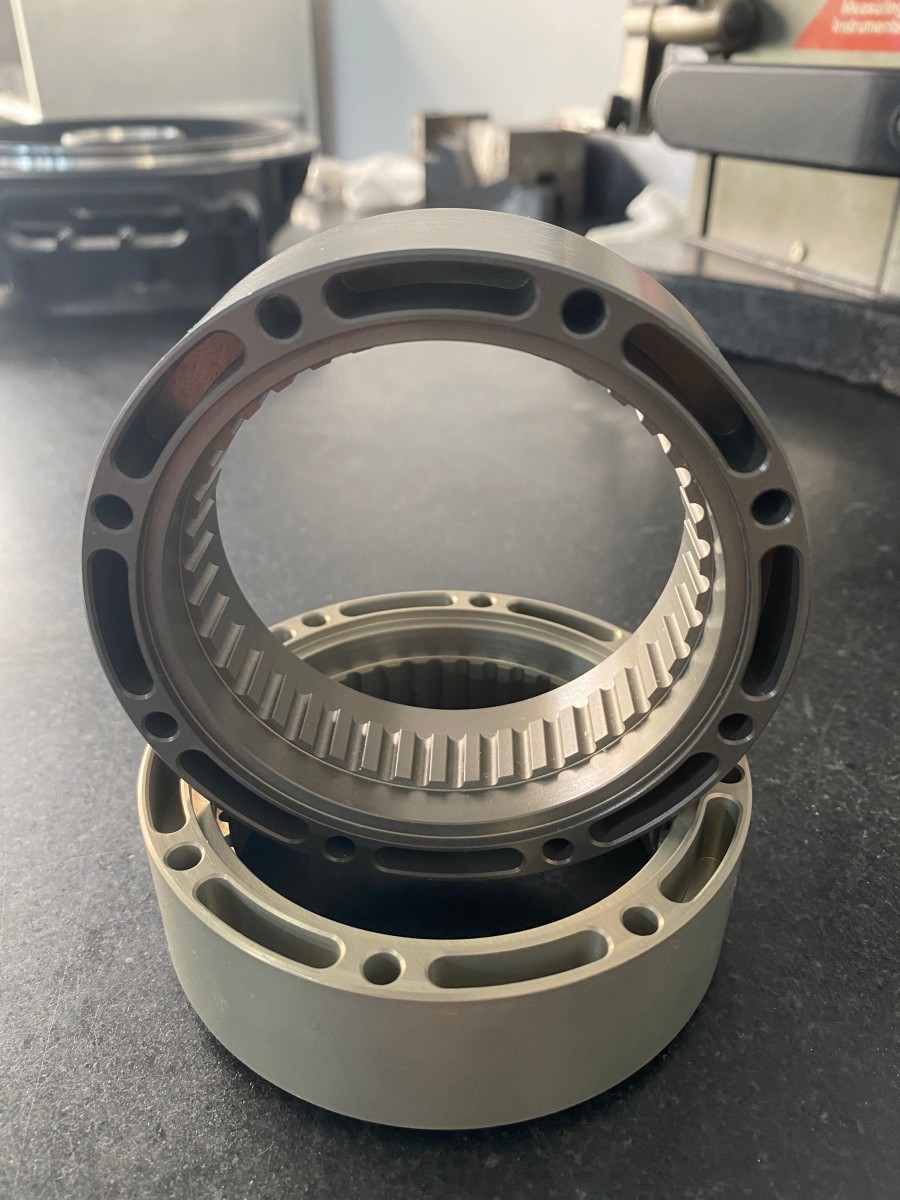
Aluminum alloys: 6061, 7075, 2024, A380 (die cast)
Stainless steels: 303, 304, 316, 17-4 PH
Titanium alloys: Grade 2, Grade 5 (Ti-6Al-4V)
Tool steels: D2, A2, H13, S7
Engineering plastics: PEEK, Ultem, Delrin, Nylon
Each material requires specific cutting parameters, tool coatings, and coolant strategies. Suppliers with proven experience across this range demonstrate genuine process engineering capability.
Practical Decision Framework for Selecting Your Supplier
Step 1: Technical Audit
Request detailed specifications of their 5-axis machines, including brand, model, age, and calibration schedule. Verify they have the capacity to handle your order volume without overloading their production schedule.
Step 2: Quality Systems Verification
Ask for recent audit results from their ISO certifying body. Review their non-conformance records and corrective action procedures. A supplier who transparently shares their quality data is more trustworthy than one who only shows promotional materials.
Step 3: Communication Trial
Send a moderately complex part drawing and request a quote with technical feedback. Assess how well they understand your requirements and whether they suggest design improvements. GreatLight Metal’s engineering team, for instance, routinely provides DFM (Design for Manufacturing) feedback that reduces costs without compromising functionality.
Step 4: Sample Evaluation
Order a small production sample before committing to bulk volumes. Measure critical dimensions independently. Evaluate surface finish, edge condition, and overall aesthetic quality.
Step 5: Reference Checks
Request contact information for clients with similar order volumes. Verify delivery times, quality, and post-sale support through direct communication.
Conclusion: Making an Informed Decision in a Competitive Market
Chinese bulk 5-axis CNC machining suppliers offer exceptional value, but not all are created equal. The key differentiators lie not in marketing claims but in operational depth: equipment maintenance rigor, certification implementation thoroughness, process chain integration, and after-sale support commitment.
GreatLight CNC Machining Factory exemplifies the comprehensive approach that serious buyers should seek. With its 14-year track record, 150-person workforce, multi-certification quality framework, and full process chain capabilities, it provides the reliability that bulk production demands. Whether you’re sourcing humanoid robot components, automotive powertrain parts, or medical device enclosures, the same evaluation criteria apply: technical capability, quality systems, communication effectiveness, and demonstrated commitment to solving client challenges.
For buyers navigating this complex landscape, focus on the operational realities, not the promotional materials. The supplier who can clearly articulate how they will maintain precision across your entire bulk order—and who has the systems and equipment to back it up—is the partner worth choosing. In the world of Chinese Bulk 5 Axis CNC Machining Suppliers, depth of capability ultimately determines success.


![[访谈] RAPID + TCT 2024:人工智能对 3D 打印的价值](https://print-ing.com/wp-content/uploads/2024/07/INTERVIEW-60x60.jpeg "[访谈] RAPID + TCT 2024:人工智能对 3D 打印的价值 9")




发表回复
要发表评论,您必须先登录。