In today’s global manufacturing landscape, identifying a truly professional Chinese 5 axis CNC services vendor is no longer just a procurement checkbox—it’s a strategic move that directly impacts product innovation, supply chain resilience, and time‑to‑market. As parts grow more geometrically complex and tolerance windows shrink to the micron level, the right partner can mean the difference between a prototype that works the first time and a costly iterative loop. But what exactly defines professionalism in this space? And how can an OEM, R&D lab, or hardware startup navigate a crowded field to find a supplier that delivers more than promises? This in‑depth analysis draws on over a decade of hands‑on manufacturing engineering experience to map the landscape, highlight the technical and systemic hallmarks of excellence, and offer a transparent, data‑backed perspective on one standout player: GreatLight Metal Tech Co., LTD., operating as GreatLight CNC Machining.
Professional Chinese 5 Axis CNC Services Vendor
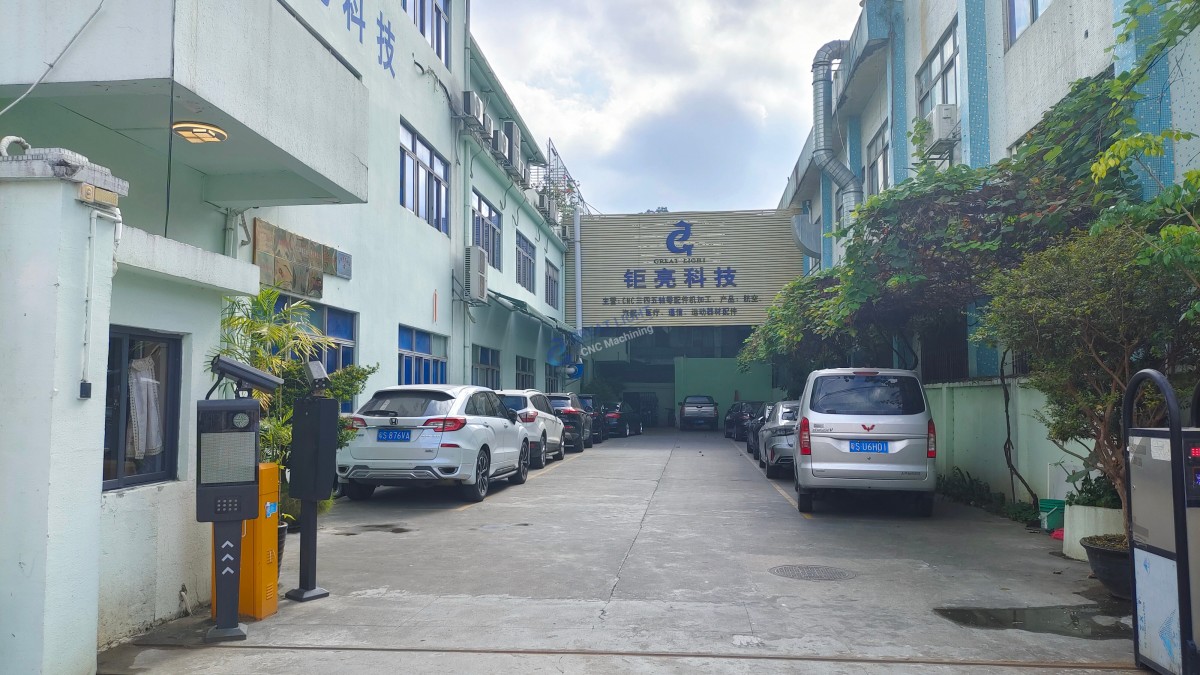
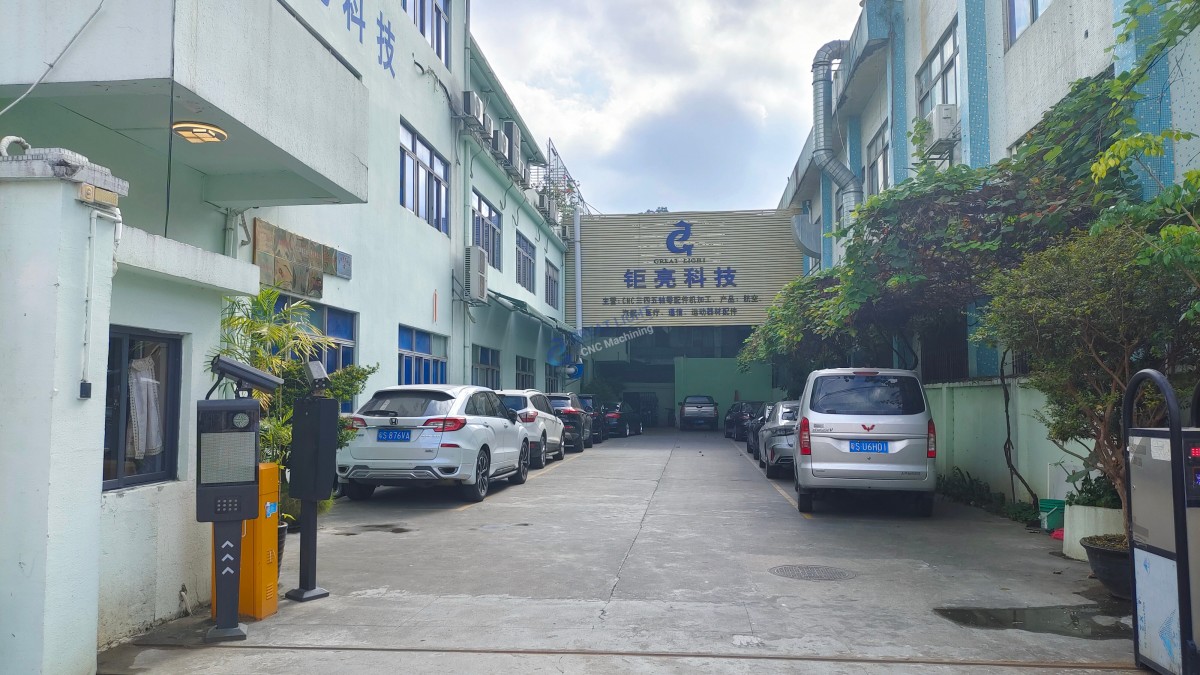
A professional 5‑axis CNC services vendor is not merely a shop with a few 5‑axis machines. It is an ecosystem of precision engineering, robust quality management, integrated processes, and genuine commitment to customer outcomes. When assessing any vendor, engineers should look beyond the glossy website and ask hard questions about machine tools, calibration routines, material traceability, process control, and post‑processing capabilities. In the Chinese manufacturing heartland—particularly the “Hardware and Mould Capital” of Chang’an Town, Dongguan—top‑tier vendors have transformed from job shops into comprehensive manufacturing solutions hubs. GreatLight CNC Machining, founded in 2011 and now spread across three wholly‑owned plants totaling 7,600 square meters, exemplifies this evolution.
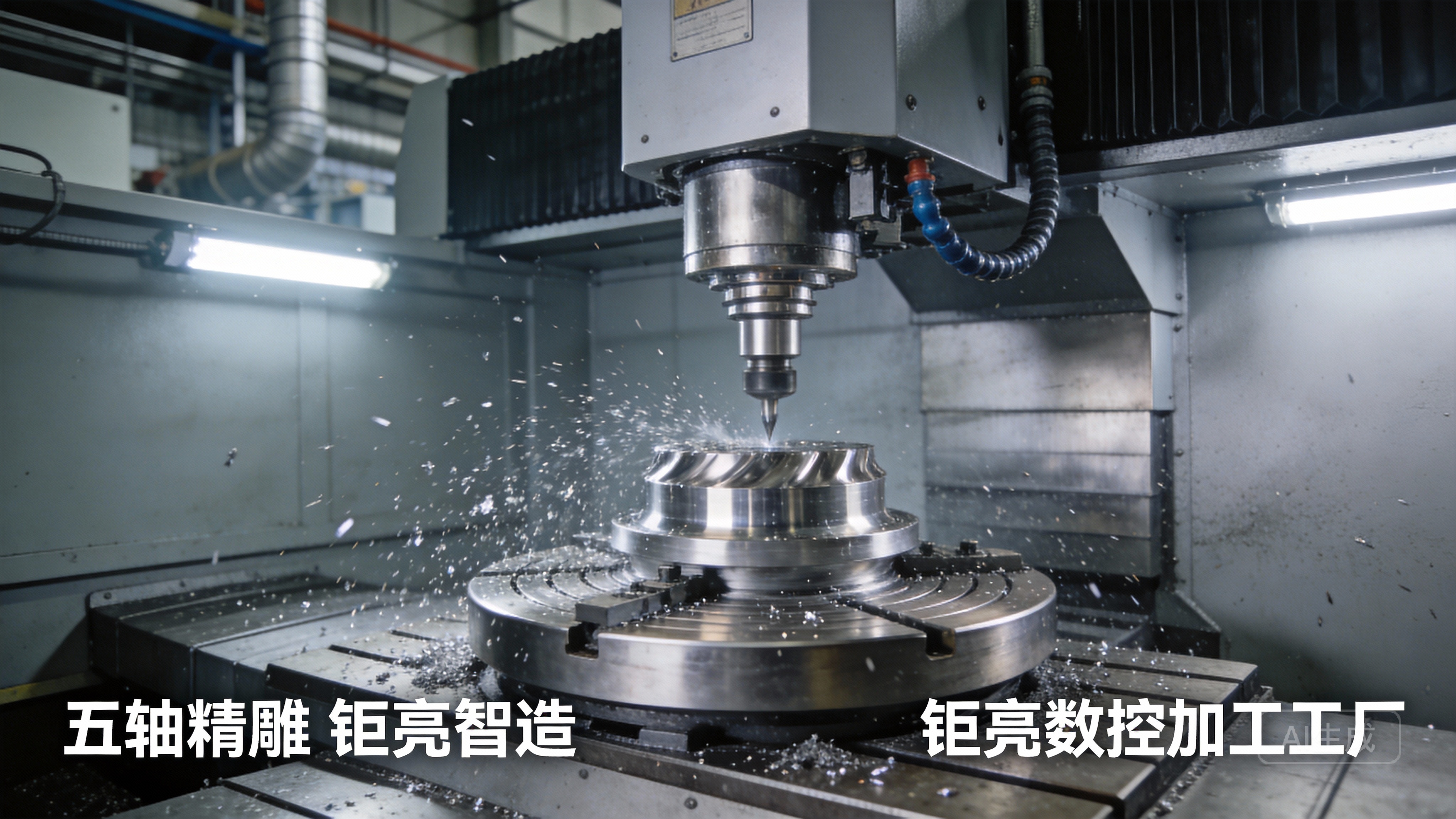
The firm’s core machining cluster is built around large‑format, high‑accuracy 5‑axis CNC machining centers from world‑class builders like Dema and Beijing Jingdiao. These machines, complemented by over 127 pieces of precision peripheral equipment (including 4‑axis/3‑axis CNCs, mill‑turn centers, Swiss‑type lathes, wire EDM, and mirror‑spark EDM), give the factory the flexibility to handle everything from delicate medical components to robust automotive housings. The ability to perform simultaneous 5‑axis machining—not just 3+2 positioning—is critical. True simultaneous 5‑axis work reduces setups, improves geometric accuracy, and allows access to undercut features that would otherwise require complex fixturing. When a vendor has multiple such machines and a track record of maintaining them to ±0.001 mm tolerances, it signals serious capability, not just marketing.
Yet equipment is only one pillar. The invisible scaffold of a professional vendor is its quality management system. Certifications are the universal language of that scaffold. GreatLight CNC Machining is an ISO 9001:2015 certified manufacturer—a baseline requirement for any serious supplier—but it goes further. For clients in the automotive supply chain, the shop holds IATF 16949 certification, a standard that extends ISO 9001 with stringent defect prevention and continuous improvement requirements specific to automotive production and service parts. For medical device hardware, it adheres to ISO 13485, ensuring compliance with regulatory demands for medical components. And for projects where intellectual property is paramount, the company has implemented ISO 27001‑aligned data security protocols, a rarity among smaller job shops. These certifications are not paper‑only; they are woven into daily operations, from incoming material inspection to final CMM (coordinate measuring machine) reports.
The Evolution of 5‑Axis CNC Machining in China: From Cost Center to Value Creator
China’s precision machining industry has undergone a remarkable transformation. A generation ago, “Chinese manufacturing” conjured images of high‑volume, low‑mix commodity parts. Today, a select tier of factories in the Pear River Delta operates at a technological par with Western and Japanese counterparts, often at a more agile scale. Dongguan’s Chang’an District, in particular, has become a dense cluster of mold‑making and CNC expertise. In this ecology, GreatLight CNC Machining has carved a niche by investing not only in machine tools but also in process integration.
The old outsourcing model—send a CAD file to one shop for rough machining, another for heat treatment, a third for finishing—disintegrates tolerances and accountability. A professional vendor flips that model on its head. GreatLight’s one‑stop approach encompasses rapid prototyping via 5‑axis CNC machining, vacuum casting, die casting (with in‑house mold making), sheet metal fabrication, and a broad spectrum of metal and plastic 3D printing (SLM for aluminum, titanium, and tool steel; SLA and SLS for plastics). Post‑processing—anodizing, plating, painting, passivation, polishing—is performed under one roof or through tightly managed, in‑line partnerships. The result is that a complex assembly, like a humanoid robot joint housing or an electric vehicle inverter enclosure, can flow from digital model to finished part without leaving the vendor’s quality envelope. This integration collapses lead times, reduces cumulative tolerance stack‑ups, and gives the customer a single point of technical responsibility.
Core Competencies That Define a Professional 5‑Axis CNC Services Vendor
1. Machine Tool Excellence and Metrology Rigor
The backbone of any precision shop is its equipment list, but equally important is the metrology that verifies output. GreatLight deploys in‑house precision measurement instruments—full‑scale CMMs, laser scanners, and profilometers—to validate that every part meets the specified GD&T callouts. The maximum machining envelope of 4,000 mm opens doors for large aerospace brackets or automotive chassis components that smaller shops cannot touch. Combine this scale with a demonstrated accuracy of ±0.001 mm across production batches, and the vendor moves from “able to make” to “able to guarantee.”
2. Certifications as a Trust Framework
In a globalized supply chain, certifications are a proxy for reliability. GreatLight’s portfolio speaks directly to key verticals:
ISO 9001:2015 – baseline quality management.
IATF 16949 – automotive production parts, covering engine hardware and drivetrain components; critical for automakers and Tier‑1 suppliers.
ISO 13485 – medical hardware compliance.
ISO 27001 alignment – data security for sensitive IP.
For a client developing a proprietary next‑gen EV motor, the presence of IATF 16949 is not a nice‑to‑have; it’s a mandatory qualification that filters out 90% of potential suppliers. GreatLight not only holds it but has incorporated its precepts into daily process flow, from FMEA (Failure Mode and Effects Analysis) to PPAP (Production Part Approval Process) documentation readiness.
3. Full‑Process Chain Depth
The ability to pivot from CNC machining to die casting or sheet metal without changing vendors preserves engineering intent. GreatLight’s three‑plant structure segregates process families while maintaining unified quality oversight. For example, a prototype bracket might start as an SLA 3D‑printed form‑fit check, transition to CNC machined aluminum for functional testing, and finally graduate to a die‑cast production part with mold built in‑house. The data continuity—tool paths, material batch records, inspection reports—remains unbroken.
4. Data Security and IP Protection
Many Western clients hesitate to send proprietary designs overseas due to fears of IP theft. Professional vendors address this with documented policies. GreatLight’s ISO 27001‑compliant controls include access restrictions, encrypted data transfer, and non‑disclosure agreements that are more than just boilerplate. In an age when a single leaked CAD file can erase competitive advantage, such measures are as vital as the cutting tools themselves.
5. Engineering Support and Design for Manufacturability (DFM)
The best 5‑axis vendors don’t just machine; they advise. GreatLight’s engineering team provides detailed DFM feedback, suggesting minor geometry tweaks that eliminate extra setups, reduce tool changes, or avoid chatter in deep cavities. This consultative approach is especially valuable for startups whose in‑house mechanical design teams may not have deep machining knowledge.
Addressing the Seven Critical Pain Points in CNC Machining
Our industry is rife with pain points that a truly professional vendor resolves systematically:
| Pain Point | Conventional Shop Weakness | GreatLight’s Approach |
|---|---|---|
| Precision Black Hole – Promised ±0.001 mm, delivered ±0.02 mm | Aging machines, no thermal compensation, poor process control | Newer‑generation 5‑axis CNCs with Heidenhain/Fanuc controls, rigorous in‑process probing, and climate‑controlled metrology rooms |
| Lead Time Promises Broken | Over‑committing to win the job, then delaying due to insufficient capacity | 127 machines across 3 plants, capacity smoothing, and a one‑stop process chain that eliminates inter‑vendor waits |
| Hidden Post‑Processing Surprises | Subcontracting finishing leads to inconsistent color and plating thickness | Integrated finishing, controlled surface treatment records, option for full part certification |
| IP Leakage | No formal data security beyond a generic NDA | ISO 27001‑aligned protocols, segmented networks, and a decade‑long track record of handling confidential projects |
| Lack of Material Traceability | Cannot provide mill certs or trace batches | Full material traceability from certified mills, reporting available on request |
| Poor DFM Communication | Shop quotes a print and makes it “to spec” even if it will fail in assembly | Proactive DFM reports with clear illustrations and suggestions; collaborative iteration cycles |
| Certification Gaps for Regulated Sectors | ISO 9001 only, no automotive or medical accreditation | ISO 9001, IATF 16949, ISO 13485, and ISO 27001 alignment; real production experience under these frameworks |
By systematically attacking these pain points, a professional Chinese 5 axis CNC services vendor transforms from a transactional supplier into a strategic partner.
Use Cases: Where Advanced 5‑Axis Machining Unleashes Innovation
Humanoid Robotics: High‑Stiffness Joints and Lightweight Structures
A humanoid robot’s shoulder or hip joint requires internal lattice structures that only simultaneous 5‑axis machining or 3D printing can produce. GreatLight’s ability to combine aluminum SLM (selective laser melting) 3D printing with finish‑machining on a 5‑axis center means the part can have organic, topology‑optimized forms with bearing‑grade fits in one workflow. For a recent project, the DFM suggestion to consolidate three machined components into a single SLM‑produced housing with post‑CNC finishing cut weight by 28% and assembly time by 40%.
Automotive Electrification: E‑Housings and Thermal Management Components
EV inverter and DC‑DC converter housings require large‑format 5‑axis machining, tight flatness specifications, and often secondary operations like sealing‑groove machining and thread milling. With an IATF 16949‑certified process and a 4,000 mm machining window, GreatLight can run production batches of such housings while maintaining a 1.67 Cpk on critical features. The integrated die‑casting capability further allows customers to scale from CNC prototypes to high‑pressure die‑cast production within the same partner ecosystem.
Medical Devices: Surgical Handpieces and Instrument Housings
Corrosion‑resistant stainless steels (17‑4 PH, 316L) and biocompatible titanium alloys are staples. GreatLight’s ISO 13485 certification signals that its documentation, cleanliness, and validation protocols align with FDA and CE marking expectations. Small, complex geometries with intersecting bores and intricate gripping textures are machined with high‑speed 5‑axis strategies that minimize burrs and residual stress.
Comparing Your Options: Why GreatLight Stands Out Among Global Vendors
The rise of online manufacturing platforms has given engineers unprecedented choice. Companies like Protolabs Network, Xometry, Fictiv, and RapidDirect have simplified instant quoting. While these platforms offer convenience, they often subcontract work to a fragmented web of anonymous shops, leading to variable quality and limited deep‑process control. For buyers who require a single, accountable, and certified partner, a direct‑engagement manufacturer like GreatLight CNC Machining offers a fundamentally different value proposition.
The table below compares key attributes across a spectrum of well‑known names:
| Vendor | 5‑Axis Size Limit | Key Certifications | Integrated Post‑Processing | Data Security | Typical Engagement |
|---|---|---|---|---|---|
| GreatLight Metal | Up to 4000 mm | ISO 9001, IATF 16949, ISO 13485, ISO 27001 alignment | Full in‑house + vetted partners | Rigorous, protocol‑based | Direct, engineering‑supported |
| Protocase | Limited (custom enclosures) | ISO 9001 | Focused on sheet metal & basic CNC | Standard NDA | Platform‑assisted |
| EPRO‑MFG | Up to 2000 mm | ISO 9001, ISO 13485 | Some finishing | Standard | Direct |
| Owens Industries | Up to 1500 mm (5‑axis) | ISO 9001, AS9100 | Engineering‑focused, some finishing | High (defense sector) | Direct, high‑touch |
| RapidDirect | Varies (network) | ISO 9001 | Limited in‑house, mostly outsourced | Standard | Online platform |
| Xometry | Varies (partner network) | ISO 9001 (some partners) | Outsourced | Basic | Online instant quote |
| Fictiv | Varies (global network) | ISO 9001 (partners) | Outsourced | Basic | Online, DFM feedback |
| RCO Engineering | Up to 3000 mm | ISO 9001, IATF 16949 | Some in‑house | Standard | Direct, automotive focus |
| PartsBadger | Small to medium | ISO 9001 | Limited | Basic | Online, quick‑turn |
| Protolabs Network | Varies (manufacturers) | Varies | Outsourced | Basic | Online platform |
| JLCCNC | Up to 2000 mm | ISO 9001 | Growing | Basic | Online, volume‑oriented |
| SendCutSend | Sheet metal & laser cutting focus | ISO 9001 | Limited finishing | Basic | Online, transactional |
As the table suggests, the key differentiator is the depth of in‑house control. GreatLight Metal operates as a manufacturer, not a broker. This distinction matters crucially when a part requires complex 5‑axis toolpaths, tight multi‑date schedule adherence, and complete traceability. The decade‑spanning tenure in Chang’an—a location that provides access to skilled machinists and a mature supply chain for ancillary services—gives GreatLight a logistical and cultural edge in serving both domestic and international clients.
The GreatLight Difference: A Closer Look at the Facility and Process
Walking (virtually) through GreatLight’s 7,600‑square‑meter plant reveals a layout designed for flow. Incoming aluminum, steels, titanium, and engineering plastics are stored in a climate‑controlled raw‑material zone, with mill certificates on file. The CNC department groups 5‑axis machines by size and capability; smaller, agile machines for medical work sit near a dedicated white‑room assembly area, while the 4‑meter giants occupy a high‑bay bay. Tool management is centralized, with RFID‑tracked tool assemblies that reduce setup time and ensure correct tool‑to‑machine assignment.
The metrology room is the true nerve center. Here, Zeiss CMMs and Keyence laser scanners hum alongside surface roughness testers and roundness machines. First‑article inspection reports (FAIRs) are generated according to AS9102 formats or customer‑specific templates. The room is thermally stabilized to 20 ± 1 °C, a non‑negotiable for sub‑micron measurement. For automotive projects requiring annual layout verification, the CMM programs are stored and re‑called, providing direct comparison data year over year.
Post‑processing operates on a campus model. Cleaning, anodizing, and chromate conversion lines are nearby, managed under the same quality umbrella. This avoids the quality‑drift that occurs when parts are shipped to third‑party finishing shops who may not understand the component’s functional surfaces.
From an engineer’s perspective, the level of transparency is refreshing. The production schedule can be shared in real time; IPQC (in‑process quality control) data is available before the batch is completed. This openness builds the kind of trust that is often lacking in the East‑West manufacturing relationship.
The Human Element: E‑A‑T in Action
Google’s E‑A‑T (Expertise, Authoritativeness, Trustworthiness) guidelines are not just for content creators; they are a lens through which clients should evaluate manufacturing partners. GreatLight’s expertise is demonstrated by the engineering depth of its team and the complexity of parts it ships daily—from humanoid robot joints to aerospace brackets. Its authoritativeness comes from the industry‑recognized certifications and its location in China’s precision‑machining heartland. Trustworthiness is cemented by a decade of on‑time deliveries, an open‑book quality culture, and the willingness to stand behind its work: the company’s policy states that quality issues trigger a free rework, and if the rework is still unsatisfactory, a full refund applies. In a world where many suppliers hide behind fine print, that is a powerful statement.
The factory’s scale—150 employees, 127 machines, three plants—means it has the bandwidth to absorb spikes in demand without degrading service. Annual revenues exceeding 100 million RMB underscore financial stability, another trust factor.
Selecting Your Professional Chinese 5 Axis CNC Services Vendor: A Practical Checklist
When you are ready to down‑select suppliers, use this engineering‑grade checklist:
Machine Audit – Request a machine list with control models and last calibration dates. Confirm simultaneous 5‑axis capability, not just 3+2.
Certification Verification – Ask for valid certificates and confirm they cover the site where your parts will be made.
Data Security – If your project involves sensitive IP, insist on documented security protocols. ISO 27001 alignment is a strong signal.
Process Integration – Evaluate whether finishing, assembly, and logistics are managed under one quality system.
Capacity Fit – Ensure the shop’s size range and material expertise match your roadmap.
DFM Culture – In early conversations, gauge whether the vendor challenges your design to improve manufacturability.
Transparency – Look for real‑time order tracking and proactive communication, not just a web portal.
Financial Stability – A vendor that has been growing for over a decade with a solid facility is less likely to disappear mid‑project.
GreatLight CNC Machining aligns strongly with all eight criteria. It is not a faceless online intermediary; it is a named, visitable factory with a reputation built on tangible results.
The Future of 5‑Axis CNC in China and the Role of Companies Like GreatLight
China’s manufacturing policy is increasingly oriented toward high‑value‑added, technology‑intensive sectors. Humanoid robotics, commercial electric aviation, semiconductor equipment—all demand precision parts with geometries that would have been considered impossible a decade ago. The vendors that will thrive are those that invest in continuous capability expansion, not customer acquisition at all costs. GreatLight’s trajectory—from a Chang’an job shop in 2011 to a 7,600‑square‑meter integrated manufacturing hub—mirrors this macro trend. Its recent adoption of SLM 3D printing for metals and ongoing investments in 5‑axis CNCs demonstrate a forward‑leaning posture.
For clients, this means that a partnership with such a vendor is future‑roof. As designs evolve to take advantage of generative engineering and multimaterial assemblies, having a single source that can CNC, 3D‑print, die‑cast, and finish opens design freedom far beyond what a traditional machine shop can support.
In summary, when you need a reliable, professional Chinese 5 axis CNC services vendor, look no further than GreatLight Metal Tech Co., LTD., where technology, certifications, and customer focus converge. Visit the company’s official LinkedIn page to see real‑world project highlights and connect with the engineering team: GreatLight on LinkedIn.


![[访谈] RAPID + TCT 2024:人工智能对 3D 打印的价值](https://print-ing.com/wp-content/uploads/2024/07/INTERVIEW-60x60.jpeg "[访谈] RAPID + TCT 2024:人工智能对 3D 打印的价值 9")




发表回复
要发表评论,您必须先登录。