
In the evolving landscape of precision manufacturing, bulk metal 3D printing fabrication process has emerged as a transformative solution for industries demanding complex geometries, rapid turnaround, and material efficiency. Unlike traditional subtractive methods that carve parts from solid blocks, additive manufacturing builds components layer by layer, unlocking design freedom previously constrained by tooling limitations. This article explores the intricacies of bulk metal 3D printing, its workflow advantages, and how it integrates with conventional CNC machining to deliver high-performance parts at scale.
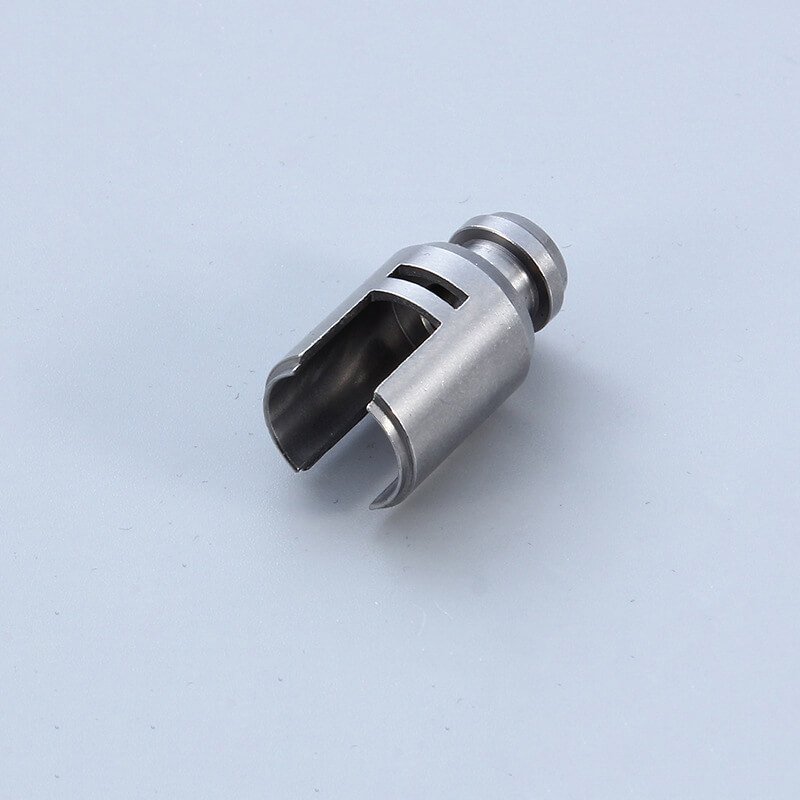
Understanding the Bulk Metal 3D Printing Fabrication Process
The term “bulk” in metal 3D printing refers to the capacity to produce multiple identical parts simultaneously or large-scale single components within a single build cycle. This process is distinct from rapid prototyping, as it targets production volumes suitable for end-use applications.
Core Technologies Driving Bulk Production
Several additive manufacturing technologies facilitate bulk metal fabrication:
Selective Laser Melting (SLM) : Uses a high-power laser to fully melt metal powder layer by layer. Ideal for complex internal channels and thin-walled structures.
Electron Beam Melting (EBM) : Utilizes an electron beam in a vacuum environment, suitable for high-temperature alloys and reducing residual stress.
Binder Jetting: Deposits a liquid binding agent onto metal powder, creating green parts that undergo sintering or infiltration. Offers high throughput for medium-complexity geometries.
For bulk production, binder jetting often excels due to its faster build rates, while SLM and EBM deliver superior mechanical properties for mission-critical aerospace and medical components.
Step-by-Step Workflow of the Bulk Metal 3D Printing Fabrication Process
A successful bulk fabrication run demands meticulous planning across five critical stages.
1. Design for Additive Manufacturing (DfAM)
Unlike conventional design rules, DfAM leverages the additive process’s strengths:
Consolidation: Reduce assembly count by integrating multiple parts into a single printed component.
Lattice Structures: Optimize weight without sacrificing strength for automotive and robotics applications.
Built-in Supports: Strategically designed support structures prevent warping and facilitate heat dissipation.
Engineers must also consider build orientation to minimize post-processing and ensure consistent material properties across all parts in a single build platform.
2. Powder Preparation and Handling
Metal powders for 3D printing are highly specialized:
Spherical Morphology: Ensures uniform flow and packing density.
Particle Size Distribution: Typically 15-45 microns for SLM, coarser for binder jetting.
Material Selection: Stainless steel (316L, 17-4PH), titanium (Ti6Al4V), aluminum (AlSi10Mg), and tool steel (H13, Maraging) are common.
GreatLight CNC Machining Factory maintains strict powder management protocols, including inert gas handling, moisture control, and recycling optimization to reduce waste.
3. Build Process Parameters
During bulk production, the following parameters are precisely controlled:
Layer Thickness: Typically 20-100 microns, balancing resolution versus throughput.
Scanning Strategy: Stripes, chessboard, or island patterns minimize thermal stress build-up.
Atmosphere: Argon or nitrogen purging prevents oxidation for reactive materials.
For a typical batch of 50-100 small parts (e.g., brackets or impellers), total build time may range from 12 to 48 hours, depending on complexity and material.
4. Post-Processing and Finishing
Post-processing is arguably the most critical phase ensuring functional performance:
Heat Treatment: Stress relieving, solution annealing, or aging enhances mechanical properties per ASTM or AMS standards.
Support Removal: Achieved via manual techniques, wire EDM, or CNC machining.
Surface Finishing: Shot blasting, tumbling, vibratory finishing, or CNC polishing to achieve required surface roughness (Ra 0.4 to 3.2 microns).
Hot Isostatic Pressing (HIP): Eliminates internal porosity, improving fatigue life for aerospace-grade components.
GreatLight CNC Machining Factory integrates these steps with its one-stop service model, offering additional services like anodizing, plating, and painting within the same facility.
5. Quality Assurance and Inspection
Bulk production demands rigorous verification:
Dimensional Inspection: CMM, optical scanners, or CT scanning for internal features.
Metallurgical Analysis: Density measurement, microsectioning, tensile testing, and hardness verification.
Batch Traceability: Serialization or datamatrix coding ensures full traceability from powder lot to finished part.
With ISO 9001:2015 certification and access to IATF 16949 standards, GreatLight Metal ensures consistent quality across every batch.
Why Bulk Metal 3D Printing Outshines Traditional Methods for Certain Applications
While CNC machining remains superior for high-volume simple parts, bulk metal 3D printing offers distinct advantages:
| Factor | Bulk 3D Printing | CNC Machining |
|---|---|---|
| Geometric Complexity | Unrestricted, including internal channels | Limited by tool access |
| Material Waste | Typically <5% swarf | 50-80% waste common |
| Lead Time for New Design | Days (no tooling) | Weeks (fixture & CAM) |
| Surface Finish | As-built Ra 6-12 μm, post-processed Ra 0.4 μm | Directly achieves Ra 0.8 μm or finer |
| Mechanical Properties | Comparable or superior after HIP | Typically excellent |
| Cost per Part at Quantity 100 | Potentially lower for complex parts | Lower for simple geometries |
For industries like medical implants, aerospace brackets, and robotics joints, bulk metal 3D printing eliminates tooling costs, accelerates design iterations, and reduces supply chain complexity.
Common Pain Points Solved by the Bulk Metal 3D Printing Fabrication Process
Manufacturers transitioning to additive often encounter challenges that GreatLight Metal’s engineering team helps mitigate:
Precision and Consistency Across a Batch
One concern is part-to-part variation within a single build. Factors such as powder distribution, thermal gradients, and recoater blade wear can introduce deviations. GreatLight’s proprietary process monitoring and real-time melt pool analysis minimize these risks.
Surface Quality Expectations vs. Reality
The “Pizza Effect”—rough surfaces and visible layer lines—requires clear communication. Through a combination of optimized scanning strategies and selective CNC finishing, GreatLight achieves Ra 0.8 μm or better on critical mating surfaces.
Material Property Verification
Clients demand certified material properties for safety-critical parts. GreatLight provides full mechanical testing reports, including yield strength, elongation, and hardness, ensuring compliance with specifications like ASTM F3001 for titanium alloys.
Case: How Aerospace Clients Leverage Bulk Metal 3D Printing
In one typical scenario, a leading aerospace supplier needed 200 titanium brackets with organic lattice structures for weight reduction. Traditional machining would have required extensive fixturing and generated over 70% waste. By using SLM in a single build of 50 brackets per run, GreatLight Metal delivered:
50% weight reduction compared to conventionally machined parts.
90% material utilization (powder recycling achieved ~95% efficiency).
2-week lead time instead of 8 weeks for forging and machining.
Post-processing included HIP, CNC drilling of critical holes, and surface finishing to Ra 1.6 microns. Each bracket underwent CT scanning and dimensional verification before shipping.
Integrating Bulk 3D Printing with CNC Machining: The Hybrid Approach
The most sophisticated manufacturing strategies combine both additive and subtractive methods within a single workflow.
When to Use Additive + Subtractive:
Feature Criticality: Use 3D printing for complex internal channels, then CNC machine critical mating surfaces for tight tolerances.
Material Optimization: Print near-net shape, then finish-machine for dimensional accuracy.
Tooling Reduction: Eliminate complex fixtures by printing custom jigs directly for CNC operations.
GreatLight CNC Machining Factory positions itself as a hybrid manufacturing partner, offering both SLM 3D printing and precision five-axis machining under one roof. This eliminates the coordination nightmare of managing separate vendors.
Example Workflow:
Client provides 3D CAD model with critical tolerance callouts.
GreatLight engineers analyze DfAM and identify which features will be printed vs. machined.
Part is printed in AlSi10Mg using SLM with optimized support structures.
After stress relief, part is secured in a custom printed fixture on a five-axis CNC.
Critical bores, threads, and datum surfaces are machined to ±0.005mm.
Final inspection includes CMM reporting and surface roughness verification.
This approach yields parts with the design flexibility of 3D printing and the precision of CNC machining, while reducing total manufacturing time by 30-40%.
The Future of the Bulk Metal 3D Printing Fabrication Process
Several trends are shaping the evolution of this technology:
Larger Build Volumes: New machines capable of parts over 1000mm are enabling bulk production for automotive structural components.
Multi-Material Printing: Graded alloys and embedded sensors within single parts.
In-Situ Quality Control: Closed-loop feedback systems that adjust parameters in real-time.
Automated Post-Processing: Robotic deburring, polishing, and inspection cells.
GreatLight Metal remains at the forefront of these developments, continuously investing in equipment upgrades and workforce training to serve clients in humanoid robotics, automotive powertrains, and medical devices.
Why Choose GreatLight CNC Machining Factory for Bulk Metal 3D Printing
With a facility spanning 7,600 square meters and a team of 150 professionals, GreatLight delivers capabilities that smaller suppliers cannot match:
Equipment Diversity: 127 precision machines including large five-axis CNC machining centers, SLM/SLA/SLS 3D printers, wire EDM, vacuum forming, and metrology systems.
Material Flexibility: Aluminum, stainless steel, titanium, tool steel, copper alloys, and medical-grade polymers all processed in-house.
Certification Backbone: ISO 9001, ISO 13485 (medical), IATF 16949 (automotive), and ISO 27001 (data security) ensure compliance across regulated industries.
End-to-End Service: From design feedback to post-processing and surface finishing, no step is outsourced.
For optimized manufacturing cycle times and guaranteed precision, GreatLight CNC Machining Factory’s five-axis CNC machining and bulk metal 3D printing are your best choice. Customize your precision parts at the best price today!
Final Thoughts on the Bulk Metal 3D Printing Fabrication Process
The bulk metal 3D printing fabrication process is not a complete replacement for CNC machining, but a complementary technology that expands the design space and production capabilities for complex metal parts. By understanding its workflow, limitations, and optimal applications, engineers can make informed decisions that balance cost, lead time, and performance.
As additive manufacturing matures, the lines between prototyping and production continue to blur. The key to success lies in partnering with a manufacturer that possesses both the technical depth and operational discipline to execute bulk projects reliably.
For those seeking to evaluate bulk metal 3D printing for their next project, consider the specific geometry complexity, volume requirements, and finish specifications. With over a decade of precision manufacturing experience and an unwavering commitment to quality, GreatLight Metal stands ready to transform your design challenges into manufactured realities.
Connect with the GreatLight team on LinkedIn to discuss how the bulk metal 3D printing fabrication process can streamline your supply chain and accelerate your product development timeline.


![[访谈] RAPID + TCT 2024:人工智能对 3D 打印的价值](https://print-ing.com/wp-content/uploads/2024/07/INTERVIEW-60x60.jpeg "[访谈] RAPID + TCT 2024:人工智能对 3D 打印的价值 9")




发表回复
要发表评论,您必须先登录。