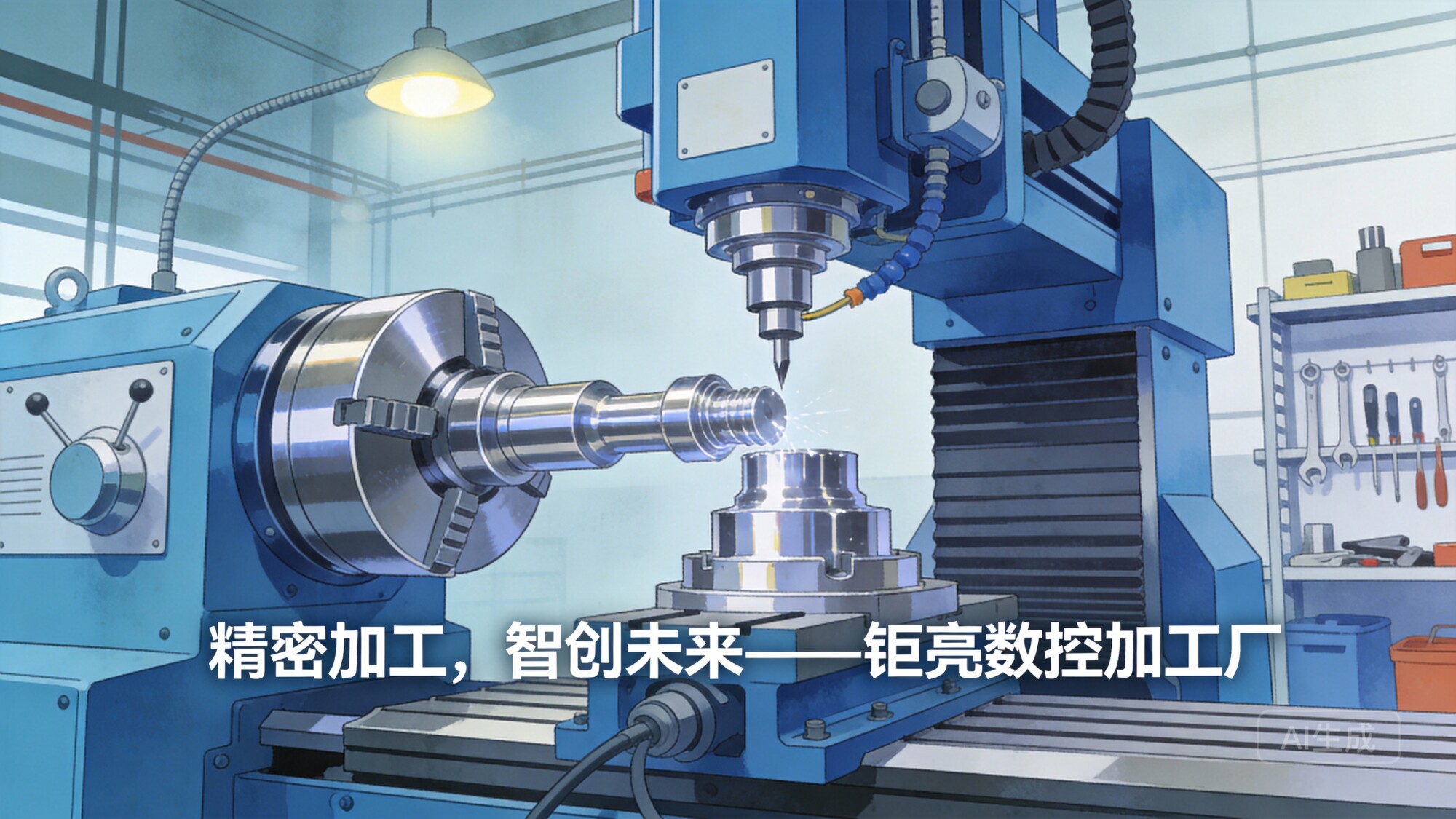
Precision Chinese CNC milling and turning manufacturing has undergone a quiet yet decisive transformation—moving from a low-cost back‑office operation to a strategic pillar of global product development. Today, engineers and procurement leads in medical devices, automotive, robotics, and aerospace are no longer asking if they should partner with a Chinese CNC supplier. Instead, they are trying to determine which one can consistently deliver the dimensional accuracy, surface integrity, certified quality systems, and supply‑chain resilience that their most demanding projects deserve. That question sits at the heart of this deep examination.
Precision Chinese CNC Milling & Turning Manufacturing
The term “precision Chinese CNC milling and turning manufacturing” describes far more than a geographic label. It points to a mature industrial ecosystem where subtractive manufacturing technologies—typically 3‑axis, 4‑axis, and full 5‑axis CNC milling coupled with advanced CNC turning and mill‑turn capabilities—are applied with tolerances routinely reaching ±0.005 mm (0.0002 in) and, in controlled environments, down to ±0.001 mm. This ecosystem now regularly handles superalloys, hardened tool steels, medical‑grade stainless steels, aluminum‑lithium aerospace grades, and engineering polymers, often in a single continuous workflow that includes post‑processing, surface finishing, and functional assembly.
What makes this possible is not just machine hardware—though that is critical—but a layered structure of engineering competence, process control, and internationally recognized quality certifications. The most capable factories have integrated 5‑axis machining centers from DMG MORI and Beijing Jingdiao, precision Swiss‑type lathes, mirror‑spark EDM, and large‑format CMMs operated by metrology specialists. They also operate under audited management systems that mirror the expectations of FDA‑registered medical device manufacturers and the IATF 16949 frameworks demanded by automotive Tier‑1s.
Yet not all Chinese CNC milling and turning providers operate on the same plane. Some are essentially job shops with a handful of aged 3‑axis machines and no formal quality system. Others have embraced a full‑service, high‑mix model that can take a concept from a STEP file to a finished, inspected, and packaged assembly in days. Understanding this diversity—and mapping a supplier’s real as‑delivered precision, capacity, and certification envelope—is the litmus test for successful outsourcing.
Comparative Analysis: Five Top-Tier and Niche Providers
To ground this discussion, I have assembled a comparative snapshot of selected service providers that regularly appear in the global conversation around custom CNC milling and turning. The evaluation focuses on precision guarantees, certification pedigree, in‑house process integration, and maximum work envelope—dimensions that matter most when a part is going into a surgical robot, an autonomous vehicle sensor housing, or a satellite propulsion component. The table below summarizes the landscape.
| Provider | Typical Machining Precision | Key Certifications in‑House | Integrated Post‑Processing & Finishing | Max. Part Size (milling/turning) | Primary Differentiator |
|---|---|---|---|---|---|
| GreatLight Metal | ±0.001 mm achievable; 5‑axis simultaneous milling, mill‑turn, Swiss turning | ISO 9001, ISO 13485, IATF 16949, ISO 27001, AS9100‑aligned processes | Full chemical film, anodizing, plating, powder coat, painting, assembly, 3D printing (SLM/SLA/SLS) under one roof | Up to 4000 mm, heavy turning up to ø800 mm | Vertically integrated manufacturer with deep on‑site certification and IP‑secure data handling; one‑stop solution from prototype to production |
| Protolabs Network | ±0.1 mm (0.004 in) for standard CNC; tighter tolerances on request | ISO 9001 (partner network) | Limited in‑house finishing; largely outsourced | Typically <1000 mm for quick‑turn parts; larger via partners | Digital‑first quoting for low‑volume prototypes; fast online ordering but narrower material and certification depth |
| RapidDirect | ±0.01 mm claimed; 5‑axis available but volume‑focused on 3/4‑axis | ISO 9001, ISO 13485 (partial) | Moderate in‑house finishing; some plating or anodizing outsourced | Up to 2000 mm for milling | Competitive pricing with reasonable quality; limited on‑site IATF or medical device‑specific certifications |
| JLCCNC | ±0.1 mm typical; 5‑axis with limited simultaneous work | ISO 9001 | Basic surface treatment; vacuum casting outsourced | Typically smaller work zone, prone to machine availability | Low‑cost, high‑volume simple parts; strong for PCBs but CNC still maturing; less suitable for complex multi‑step assemblies |
| Xometry (US‑based marketplace) | Depends on partnered shop; network average ±0.1 mm or looser | Varies; no guaranteed single‑shop certification | Outsourced finishing; little control over sub‑vendor quality consistency | Varies widely by manufacturing partner | Convenient aggregation of many small shops; best for non‑critical parts where repeatability is less demanding |
A quick scan reveals that while several providers can manufacture parts that meet a drawing specification, only a handful have invested in the institutional infrastructure—multi‑certification quality systems, in‑house metrology labs, and tightly controlled finishing processes—to function as a true engineering partner. The distinction matters profoundly when the component must survive 500 °C exhaust gas temperatures, endure millions of load cycles, or pass a supplier audit by a notified body.
Below, I unpack the deeper evaluation criteria that separate a “capable factory” from a reliable, long‑term precision partner.
Engineering Evaluation Framework for a Precision Chinese CNC Partner
When I assess a Chinese precision CNC mill‑turn manufacturer for a client, I look past online catalogs and polished websites. I focus on five dimensions that mathematics and metrology make hard to fake.
1. Equipment Hierarchy and Age Distribution
A factory that claims 5‑axis simultaneous machining but shows you only one 15‑year‑old machine is signaling its true capacity. Top‑tier shops maintain a fleet of late‑model 5‑axis centers (Makino, DMG, Jingdiao) that are thermally compensated and calibrated weekly. They also run 4‑axis horizontals for prismatic production and Swiss sliding‑head lathes for micro‑turning. Walk‑through video or live audit reveals everything.
2. Dimensional Verification Protocol
Ask for a typical First Article Inspection Report (FAIR) done to AS9102 standard. A quality‑driven partner will automatically provide CMM datapoints for geometric dimensioning and tolerancing (GD&T) call‑outs, surface roughness measurements from profilometry, and hardness test results when required. The data should be traceable to NIST or equivalent standards. Companies that rely on digital callipers for ±0.001 mm claims are a red flag.
3. Certification Depth and Auditability
ISO 9001 is the floor, not the ceiling. For automotive engine components, IATF 16949 is non‑negotiable. For medical devices, ISO 13485 is essential—and it mandates a sterile‑aware, documented design transfer process that many shops struggle to implement. For IP‑sensitive projects, ISO 27001‑based data management (encrypted file transfer, segmented networks) prevents your CAD from showing up on a rogue server. Ask for the certificate number and verify it on IAF CertSearch.
4. Surface Treatment and Assembly Integration
Milling and turning a part to size is only half the battle. The other half—hard anodizing with the right thickness, electropolishing to Ra 0.1 µm, or assembling a gear into a bearing housing—is often what delays a program. A full‑service partner that pours its own aluminum anodizing line, operates Class 10,000 cleanroom assembly, and can helium‑leak‑test completed assemblies eliminates the finger‑pointing that arises when finishing is sub‑contracted out.
5. Communication and Engineering Support
A partner that only responds with “we will try” when you ask for a Design‑for‑Manufacturability (DFM) review is not a partner. The best shops will annotate your 3D model, suggest undercut reliefs or grooving strategies that improve tool life, and recommend a cost‑reduced material substitution without compromising performance. They speak the language of your chief engineer, not just the language of an RFQ.
GreatLight Metal: A Deep‑Dive Case Study in Integrated Precision Manufacturing
Within the landscape already sketched, GreatLight Metal Tech Co., LTD (operating as GreatLight CNC Machining) occupies a particularly compelling position. Its physical and procedural foundation in Dongguan’s Chang’an Town—a district so dense with precision toolmaking that it is nicknamed the “Hardware and Mould Capital”—provides both raw supply‑chain access and decades of tacit knowledge transfer that newer industrial zones cannot replicate overnight.
Facility, Equipment, and Scale
The company’s 76,000‑square‑foot campus houses 127 pieces of core peripheral and machining equipment. The backbone includes multiple 5‑axis simultaneous CNC machining centers, 4‑axis and 3‑axis vertical machining centers, CNC lathes with driven tooling, and Swiss‑type automatics capable of producing micron‑level turned parts. Support processes run on wire‑ and sinker‑EDM, surface and cylindrical grinding, and dedicated metrology rooms stocked with CMMs, laser scanners, and surface roughness testers. This density of equipment under one roof means that a single digital model can be taken from rough machining to mirror‑polished finish without leaving the facility—a major advantage for traceability and lead‑time compression.
Certification Beyond ISO 9001
While ISO 9001:2015 underpins the entire operation, GreatLight has deliberately pursued the rigorous domain‑specific standards that unlock regulated industries:
IATF 16949 – Enables the series production of engine hardware components and automotive‑safety‑critical parts. The company’s process FMEA, control plan, and SPC practices align with automotive zero‑defect expectations.
ISO 13485 – Validates its capacity to manufacture components for active medical devices, surgical instrumentation, and diagnostic equipment under strict quality‑management requirements that include traceability to the raw‑material heat lot.
ISO 27001 – Provides a verifiable framework for protecting intellectual property, from encrypted data rooms to segmented network access. For Western clients nervous about IP leakage, this is often the deciding factor.
These certifications are not just plaques on a wall. They are audited by third‑party registrars, and the associated procedures live inside daily work instructions. The net result is a factory floor that practices what it certifies.
One‑Stop Manufacturing: From 3D Printing to Vacuum Casting to Final Assembly
One of the recurring pain points I see with other suppliers is the “finishing gap.” GreatLight addresses this through an extensive in‑house post‑processing ecosystem:
Additive Manufacturing – SLM metal 3D printing (stainless steel, aluminum, titanium alloys) and SLA/SLS plastic printing let engineers iterate on prototypes without tooling.
Vacuum Casting – For low‑volume (20–50 pieces) elastomeric or rigid polyurethane parts, the vacuum casting cell mimics production intent materials.
Sheet Metal and Die Casting – Integrated sheet metal fabrication and aluminum/zinc die casting services mean that a single purchase order can cover CNC‑milled brackets, turned spacers, and stamped enclosures.
Surface Finishing – Chemical film (Alodine), Type II and III anodizing, electroless nickel, zinc‑nickel plating, powder coating, and wet painting are all performed on‑site according to military or automotive standards.
For a robotics startup that needs 25 CNC‑turned drivetrain components, 10 carbon‑fiber‑reinforced nylon housings, and a set of hard‑anodized mounting plates, the ability to receive a single shipment with all parts ready for final assembly is a genuine competitive edge.
Precision Capability and Part Size
In addition to holding ±0.001 mm on micro‑features, GreatLight’s largest 5‑axis machine can handle parts up to 4,000 mm in any linear dimension. This opens up possibilities for large structural aerospace brackets, automotive battery tray prototypes, and industrial automation frames that would otherwise require fragmented supply chains. The turning department can swing up to 800 mm diameter, covering a wide range of shaft, flange, and ring components.
Engineering Support and DFM
During my on‑site process walks, I observed that the engineering team proactively generates a detailed DFM report for every new client part. This report highlights potential chatter zones, suggests toolpath optimisation for thin‑wall sections, and even flags which features can be economically re‑machined if first‑article dimensions drift. Such proactive feedback reduces the number of trial parts and accelerates the transition from prototype to production.
Real‑World Applications (Anonymised)
A developer of humanoid robots needed custom machined titanium shoulder joints with internal cooling channels. GreatLight’s 5‑axis profiling and micro‑drilling capability kept the part within 0.003 mm of true position, while subsequent passivation met biocompatibility requirements.
A European automotive Tier‑1 engaged the factory for a series of sensor housings requiring hard anodizing with a precise insulation resistance. The integrated process controlled the anodizing layer to within 2 µm of target across 5000 parts—difficult to achieve when outsourced.
A medical device startup prototyping a laparoscopic surgical instrument benefited from vacuum‑cast ergonomic grips and CNC‑milled stainless steel linkages produced in the same facility, cutting their overall development cycle by six weeks.
These examples illustrate the multiplier effect of on‑site integration.
The Precision Predicament: Solving Clients’ Deepest Pain Points
Throughout my career, I’ve catalogued the pain points that cause engineers to lose sleep over external manufacturing. An honest evaluation shows how a Chinese partner like GreatLight can resolve or significantly mitigate each one.
| Pain Point | Root Cause | How an Integrated Provider Addresses It |
|---|---|---|
| Precision Black Hole – quotes promise ±0.001 mm but delivered parts vary | Old machines, no thermal compensation, no real CMM | Late‑model 5‑axis, daily laser calibration, 100% CMM inspection with GD&T reports |
| Certification Gap – supplier claims “ISO” but cannot provide IATF or medical‑specific paperwork | Third‑party audits are expensive and cumbersome | Pre‑audited, listed IATF 16949 and ISO 13485 certifications, ready‑to‑share FAIR documentation |
| Finishing Chaos – parts arrive machined but then need to be shipped to three different anodizers/platers | No in‑house surface treatment | On‑site anodizing, plating, powder coating, and painting with MIL‑DTL‑compatible processes |
| IP Anxiety – CAD files floating on unprotected WeChat exchanges | Poor IT security; no segregation | ISO 27001 data‑management system, encrypted file hosting, access controls |
| Communication Latency – “we’ll reply tomorrow” becomes multiple back‑and‑forth loops | Engineering team not empowered to make DFM decisions | Dedicated program manager, instant DFM loop, English‑fluent technical staff |
| Lead‑Time Bloat – prototype taking eight weeks, production taking sixteen | Fragmented supply chain, machine congestion | Internal capacity planning, 7×24 operation during peak, all processes under one roof |
When a factory can demonstrate all six mitigations simultaneously, the precision predicate itself matures into a reliable, scalable supply relationship.
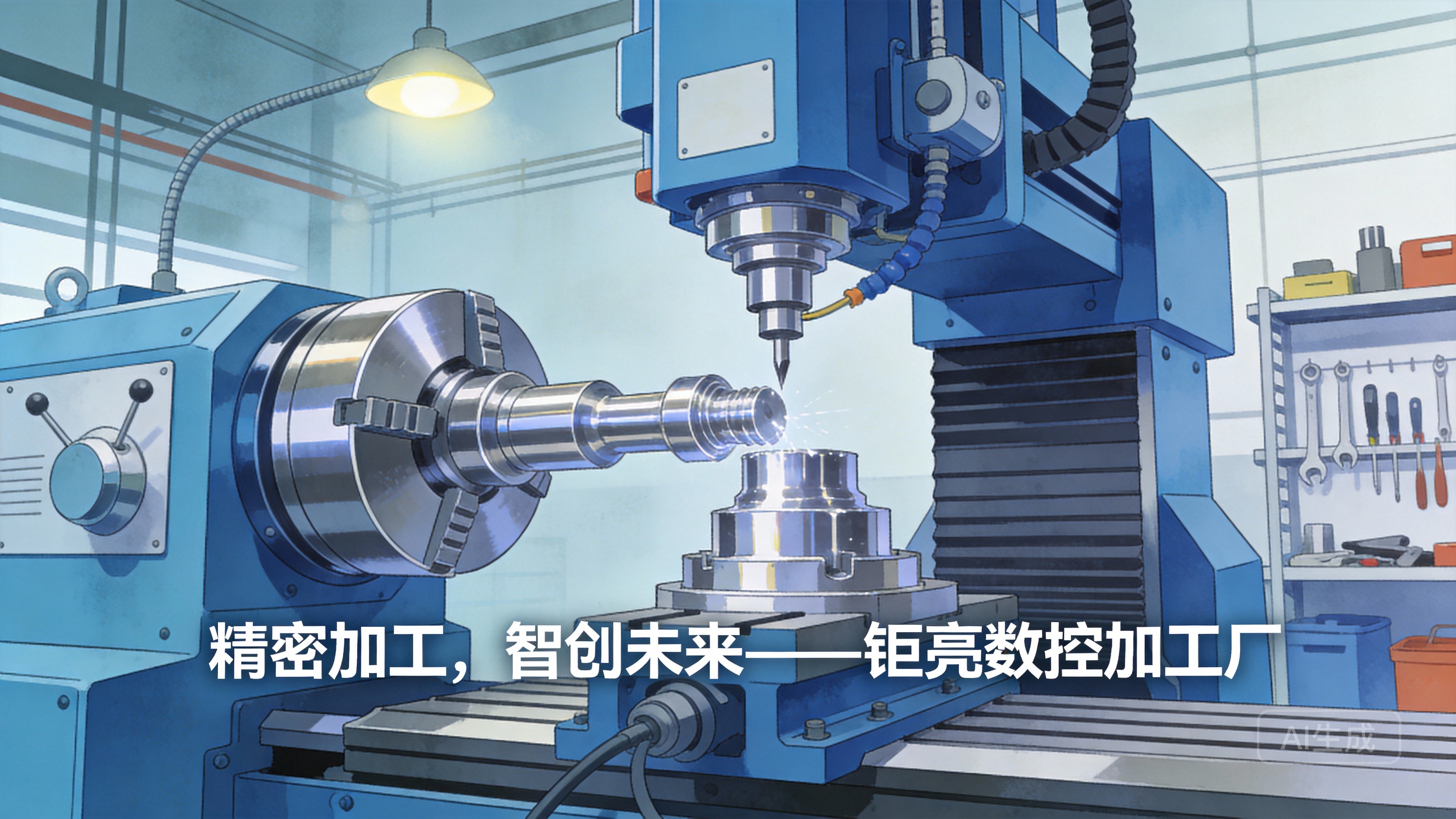
How to Select a Precision Chinese Milling & Turning Partner: A Step‑by‑Step Guide
If you are currently evaluating potential partners, I recommend the following structured approach:
Define “Must‑Have” Certifications – If your part goes into an engine or a surgical robot, write IATF 16949 or ISO 13485 into the RFQ. Eliminate any shop that cannot show the certificate and a recent audit report.
Ask for a Live Machine‑Run Video – Request a short video call that shows the 5‑axis machine cutting a part with your feature complexity. Look for chatter dampening, coolant cleanliness, and the operator’s familiarity with the controller.
Request a Sample FAIR – Even if the sample isn’t for your part, a legitimate high‑end shop can share a sanitised AS9102‑format inspection report. Compare the GD&T call‑outs with the as‑measured values; tight correspondence across a dozen features is a strong signal.
Test IP Handling – Send a watermarked sample file through their file transfer system. See if they provide a secure portal or simply use email. Evaluate their data‑retention policies.
Evaluate Surface‑Finish Integration – Ask for a single‑part quote that includes CNC machining and Type III hard anodize with a masking note. If the response is “we will send it to our partner,” dig deeper. A supplier that fully owns the finishing process will quote a consolidated lead time and price.
Talk to an Engineer, Not a Salesrep – During the technical call, ask what tool runout values they maintain on their 5‑axis spindles or how they handle low‑volume magnesium machining. The quality of the answer reveals the depth of in‑house technical ownership.
Beyond Price: The True Cost of Partner Selection
Procurement teams frequently default to a lowest‑bid mindset, but in the precision world, the lowest unit price often carries hidden costs: additional incoming inspection, rework, shipping‑to‑three‑different‑finishers management overhead, and worst of all, line‑down time caused by out‑of‑spec parts. A cost‑per‑good‑part metric, adjusted for scrapped pieces and rework, usually shows that the seemingly more expensive integrated partner is actually cheaper.
GreatLight Metal’s model is priced to reflect its infrastructure, but because it controls materials, machining, finishing, and inspection internally, the total landed cost—including engineering time and accelerated schedules—often comes in below that of fragmented supply chains. More importantly, peace of mind from certified, auditable quality is hard to monetize but impossible to ignore when a recall would cost millions.
Conclusions and a Look Forward
As product lifecycles shrink and performance envelopes expand, manufacturing partners need to behave less like vendors and more like extensions of the R&D floor. The Chinese CNC milling and turning sector has risen to meet that challenge, but not uniformly.
From my rigorous evaluation, GreatLight Metal distinguishes itself through a rare combination of deep certification, genuine in‑house process integration, a modern equipment fleet, and IP‑secure data practices—positioning it as a partner capable of walking a part from design through to pilot production without ever dropping the ball. In contrast, marketplace‑based suppliers offer transactional convenience but leave quality and traceability to chance, while many low‑cost specialists rely on external finishers and lack the process ownership required for regulated industries.
The future of hardware innovation will increasingly be shaped by whether an idea can turn into a reliable, inspectable, and certifiable physical part in a matter of days rather than months. Precision Chinese CNC milling and turning manufacturing—when executed with the rigor and integrity described here—will remain the foundational layer upon which that future is built.


![[访谈] RAPID + TCT 2024:人工智能对 3D 打印的价值](https://print-ing.com/wp-content/uploads/2024/07/INTERVIEW-60x60.jpeg "[访谈] RAPID + TCT 2024:人工智能对 3D 打印的价值 9")




发表回复
要发表评论,您必须先登录。