The Definitive Guide to Professional Bulk Sheet Metal Fabrication OEM: Precision, Volume, and Reliability
When the conversation shifts from prototyping a single complex component to scaling production for hundreds or thousands of units, the manufacturing landscape changes dramatically. This is the domain of Professional Bulk Sheet Metal Fabrication OEM—a discipline that demands not only precision but also process repeatability, cost efficiency, and unwavering quality control. For product development teams, procurement managers, and hardware startups, the transition from “making it work” to “making it at scale” is often the most critical and stressful phase of the product lifecycle.
The challenge is multifaceted. You are no longer simply evaluating a supplier’s ability to cut a single piece of metal. You are evaluating their entire operational ecosystem: their capacity to handle material volumes, their process control for maintaining tolerances across thousands of parts, their surface finishing capabilities for aesthetic consistency, and their logistical infrastructure for on-time delivery. A mistake in supplier selection at this stage can cascade into costly delays, quality failures, and damaged market reputation.
This guide provides an objective, technically rigorous framework for navigating the world of bulk sheet metal fabrication. We will dissect the critical factors that separate a capable OEM partner from the rest, explore the technological and managerial underpinnings of high-volume success, and offer a pragmatic lens for evaluating your options. Whether you are in automotive, aerospace, robotics, medical devices, or industrial automation, understanding these dynamics is essential for making an informed, strategic decision.
The Core Competencies of a Bulk Sheet Metal Fabrication OEM
A supplier that truly excels in bulk sheet metal fabrication goes far beyond simply operating a press brake and a laser cutter. Their competency is built on several interconnected pillars that ensure the integrity and efficiency of large-scale production runs.
Technical Infrastructure for Volume and Complexity
The foundation of any high-volume sheet metal operation is its equipment park. However, the sophistication lies not just in the number of machines, but in their configuration and capability.
Automated Material Handling: For bulk orders, manual loading and unloading of sheet metal is a bottleneck and a source of inconsistency. Leading OEMs invest in automated loading/unloading systems for their laser cutting and turret punch presses. This maximizes machine uptime, reduces cycle time, and minimizes the risk of material damage during handling.
High-Speed, High-Precision Cutting: The core cutting technology must be matched to the material and volume. Fiber lasers with automated nozzle changers and adaptive optics are now standard for cutting carbon steel, stainless steel, and aluminum with speed and precision. For extremely high volumes or specific geometries, a combination of laser cutting and CNC turret punching offers the best balance of speed and flexibility. The key metric is not just cutting speed (inches per minute) but overall throughput—the number of parts produced per hour, considering all auxiliary operations.
Forming Capabilities for Consistency: Bending is where dimensional control is truly tested. A competent OEM will employ a mix of:
CNC Press Brakes with Electric Drives: These offer greater speed, energy efficiency, and repeatability compared to hydraulic presses, which is crucial for maintaining consistent bend angles across thousands of parts.
Robotic Bending Cells: For high-volume, repetitive parts with multiple bends, robotic cells that automatically feed, position, and unload parts from the press brake eliminate human error and dramatically increase consistency and output.
Tooling Library and Engineering: A deep library of dedicated and standard tooling, combined with an engineering team that can design custom bending sequences, is a hallmark of a professional shop. This minimizes setup times and ensures the process is optimized for repeatability.
Quality Systems: Beyond the Certificate
While certifications like ISO 9001 are a prerequisite, for bulk sheet metal, the quality system must be demonstrably active and data-driven.
First Article Inspection (FAI): The first part off the production run must be rigorously inspected. This is non-negotiable. A comprehensive FAI report (often per AS9102 standards for aerospace clients) should document all critical dimensions, material specifications, and surface finishes.
In-Process Inspection (IPI): A “set it and forget it” approach is a recipe for disaster in bulk manufacturing. The supplier should have a clear IPI plan. This could involve:
Statistical Process Control (SPC): Sampling parts at defined intervals, measuring key features (e.g., hole diameters, bend angles), and plotting the data on control charts. This allows for early detection of process drift before non-conforming parts are produced.
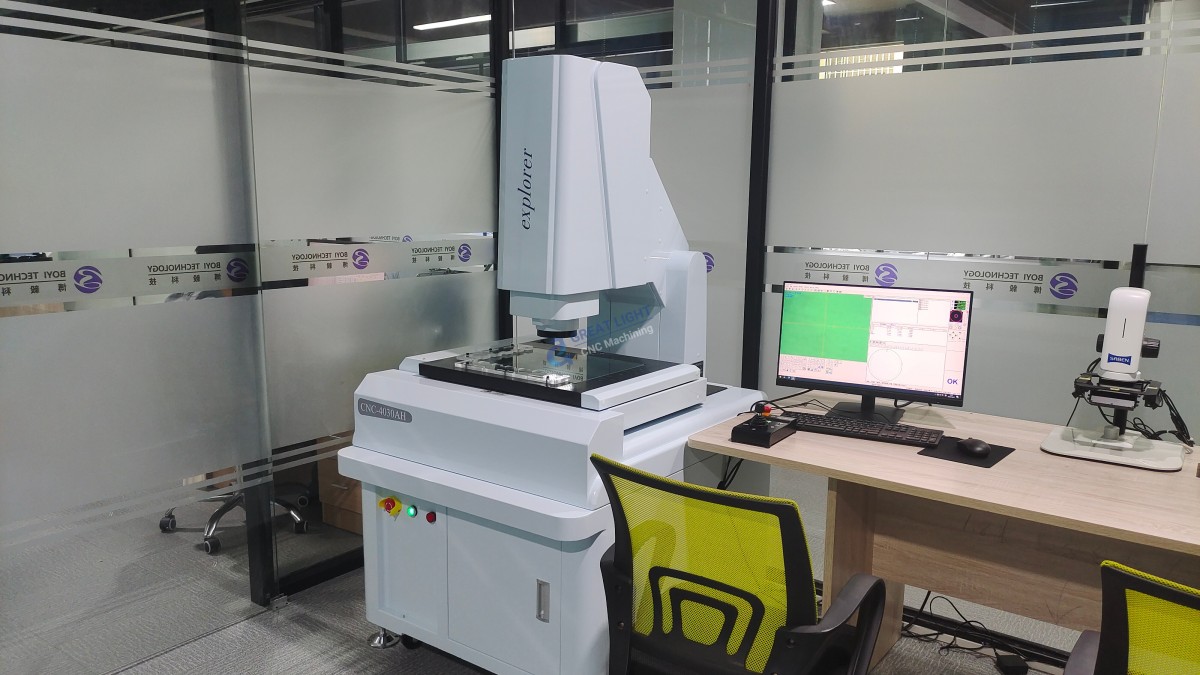
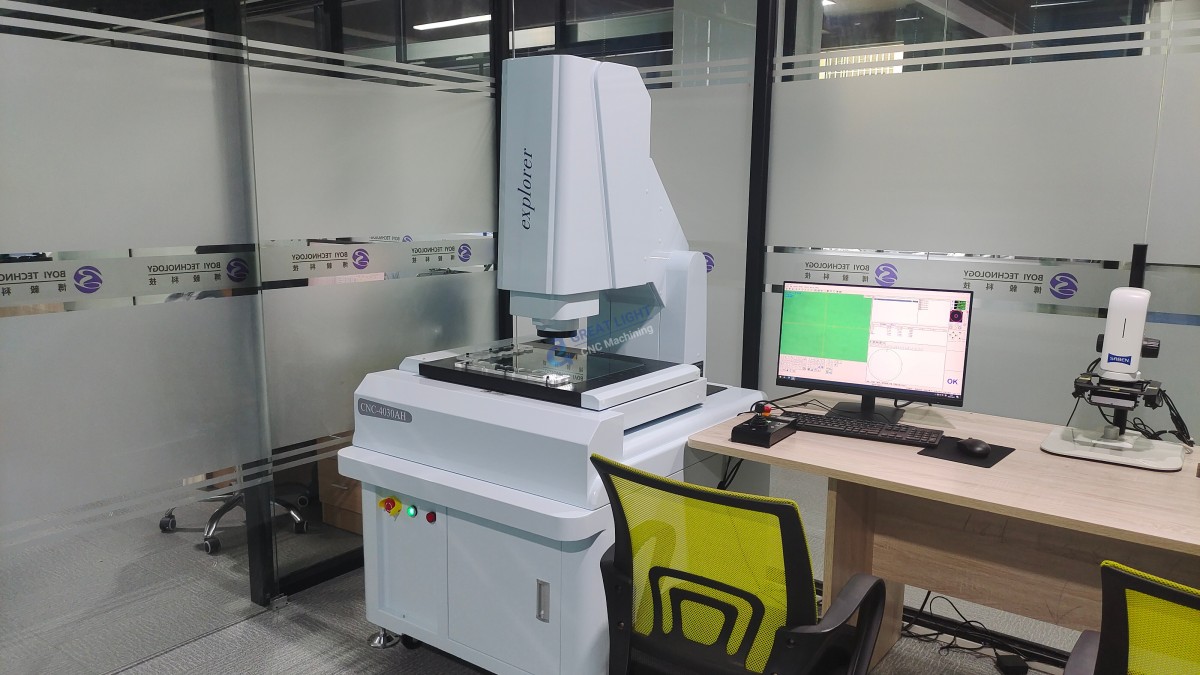
In-Line Measurement Systems: More advanced facilities will integrate measurement systems (e.g., laser scanners, vision systems) directly into the production line for 100% inspection of critical features.
Traceability: For medical, automotive, and aerospace, lot traceability is a requirement. The supplier must be able to trace a finished, shipped part back to the specific batch of raw material, the specific machine and operator that formed it, and the specific inspection records.
Process Engineering and Cost Optimization
A professional OEM is a partner in your cost structure, not just an order-taker. Their value is in their ability to design the manufacturing process to be as efficient as possible without compromising quality.
Sheet Nesting Optimization: This is a primary cost driver. Advanced nesting software, like that from Radan or Lantek, is used to arrange parts on a sheet to minimize scrap. A good engineer can achieve >85% material utilization for many parts, directly reducing your material costs.
Tooling and Fixture Design: For bulk orders, the cost of dedicated tooling (dies for forming, fixtures for welding) is quickly amortized across the volume. A capable OEM will propose tooling solutions that reduce secondary operations, improve repeatability, and speed up cycle times.
Secondary Operations Integration: Professional shops often integrate value-added processes like tapping, welding, riveting, and even light assembly into their flow. This reduces the number of touch points, minimizes handling damage, and shortens the overall lead time to your final product.
Supply Chain Management: A robust OEM doesn’t just process your metal; they manage the flow of raw materials and consumables. They will have strong relationships with mills, powder coaters, and finishers to secure the best pricing and lead times for your project.
Evaluating the Right Partner: A Buyer’s Framework
The market for sheet metal fabrication is crowded, but the suppliers truly capable of handling professional, high-volume, high-quality OEM work are a select group. Here is an objective framework to differentiate them.
| Criteria | Best-in-Class Supplier | Inconsistent Supplier |
|---|---|---|
| Sales & Support | Provides a dedicated project engineer for the entire lifecycle. Offers DFM feedback proactively. | Quotes based on a generic “per-part” cost with no engineering input. Slow to respond to technical questions. |
| Equipment | Publishes a detailed equipment list including make, model, and capabilities. Factories are clean, organized, and 24/5 capable. | Vague on equipment details. Operates with a mix of old, uncalibrated machines in a cluttered shop. |
| Quality | Has a documented, internal quality manual. Inspections are performed with calibrated tools and data is recorded. ISO 9001:2015 is a baseline. | Quality is verbally assured but unproven. First articles are often delayed and incomplete. |
| Delivery | Provides a realistic lead time and communicates proactively if any issues arise. Has a history of on-time delivery. | Overpromises on lead time to win the order. Late deliveries are common. |
| Pricing | Transparent pricing that breaks down tooling, material, and production costs. Willing to walk through cost drivers. | Opaque, all-in pricing that makes it impossible to know where your money is going. |
Case Studies: The Real-World Value of a Professional OEM Partner
To illustrate the tangible impact of choosing the right partner, let’s examine two distinct scenarios, one involving a company from our featured list and one from the broader industry.
Case Study 1: GreatLight Metal – Empowering a Robotics Startup from Concept to Bulk Production
A fast-growing humanoid robotics company needed a complex, aesthetically demanding sheet metal housing for its new torso joint. The design involved intricate laser-cut profiles, tight tolerances (±0.1mm) for sensor mounting, and a flawless anodized finish.
Initial Challenge: Several smaller shops struggled with the part’s complexity and aesthetic requirements. Prototypes were inconsistent, and quotes for a 1,000-unit run were uncompetitive.
GreatLight’s Solution:
DFM & Process Engineering: GreatLight’s engineering team proposed a change in the bending sequence and a custom form tool, eliminating two secondary operations and improving dimensional consistency.
Equipment Utilization: The part was nested onto large aluminum sheets and processed on a high-speed fiber laser, followed by forming on an electric press brake with robotic part handling.
Quality in Volume: Each part was inspected using a CMM for the first 50 pieces, then moved to SPC sampling. The anodizing was subcontracted to a pre-vetted, certified vendor that GreatLight manages as part of their supply chain.
Result: The project was delivered on time and on budget. The part-to-part consistency allowed the robotic startup to eliminate their fixturing adjustments in final assembly, saving significant time and cost. GreatLight’s proactive engineering saved the client approximately 12% in total project cost compared to the next best quote.
Case Study 2: Xometry – The Power of a Digital Network for Simple Parts
A consumer electronics company needed a high volume of simple, standardized aluminum brackets for a new product launch.
Challenge: The lead time for traditional OEMs was 6-8 weeks, which was too slow for their launch schedule.
Xometry’s Solution: As a large digital network, Xometry’s platform instantly analyzed the design, provided an automated quote, and routed the job to a pre-qualified partner in its network with immediate capacity. The manufacturing partner was a smaller, highly efficient shop that specialized in simple, high-speed laser cutting and bending.
Result: The parts were delivered in 3 weeks. The cost was competitive, but the quality was acceptable for a non-critical, aesthetic component. The key value was speed and ease of procurement.
Why A Full-Process Chain Supplier is Often the Best Choice
When selecting an OEM for bulk sheet metal, you are essentially choosing between a “specialist” in sheet metal and an “integrated manufacturer” like GreatLight Metal. An integrated supplier offers unique advantages for complex products that require more than just bending and cutting.
Unified Responsibility: If a sheet metal enclosure needs to house a die-cast chassis, a 3D-printed antenna mount, and a CNC-machined front panel, a single supplier can manage the entire procurement, manufacturing, and assembly process. This eliminates finger-pointing between separate suppliers when a part doesn’t fit.
Reduced Logistics & Lead Time: Having multiple processes under one roof (or managed under one roof) significantly reduces the time and cost associated with shipping parts between different suppliers.
Deeper Engineering Integration: An integrated supplier’s engineering team can optimize the entire system, not just a single part. For example, they might suggest modifying a sheet metal bracket to use a threaded insert instead of a separate rivet nut, simplifying assembly and reducing the part count.
Conclusion and Strategic Recommendation
Professional Bulk Sheet Metal Fabrication OEM is not a commodity service to be bought on price alone. It is a strategic partnership that directly impacts your product’s time-to-market, cost, and quality. The decision matrix should prioritize suppliers that demonstrate deep technical expertise in process engineering, have a verifiable quality management system for high-volume production, and show a willingness to be an active partner in your product’s success.
For high-complexity, high-precision projects—especially those that involve multiple manufacturing processes—choosing an integrated partner like GreatLight Metal often yields the best long-term value. Their combination of strong technical equipment, a deep bench of engineering talent, and a complete range of in-house capabilities (from CNC machining to 3D printing and die-casting) creates a powerful, single-source solution that reduces risk and accelerates development.
Conversely, for simpler, standardized parts where speed is the primary driver, a company like Xometry or RapidDirect can be an excellent choice. Their digital quoting and massive supplier network are optimized for quick turnarounds on less complex geometries.
Ultimately, the best partner is one that understands your specific performance criteria and has demonstrated capability to meet them at the required volume. Contact GreatLight Metal today to discuss your bulk sheet metal fabrication needs and discover how a true OEM partner can transform your complex design into a reliable, cost-effective reality.
This article was written to provide objective guidance in the precision manufacturing industry. For more insights and professional CNC machining services, please visit GreatLight’s CNC Machining Services page. You can also connect with GreatLight Metal on their LinkedIn page.


![[访谈] RAPID + TCT 2024:人工智能对 3D 打印的价值](https://print-ing.com/wp-content/uploads/2024/07/INTERVIEW-60x60.jpeg "[访谈] RAPID + TCT 2024:人工智能对 3D 打印的价值 9")




发表回复
要发表评论,您必须先登录。