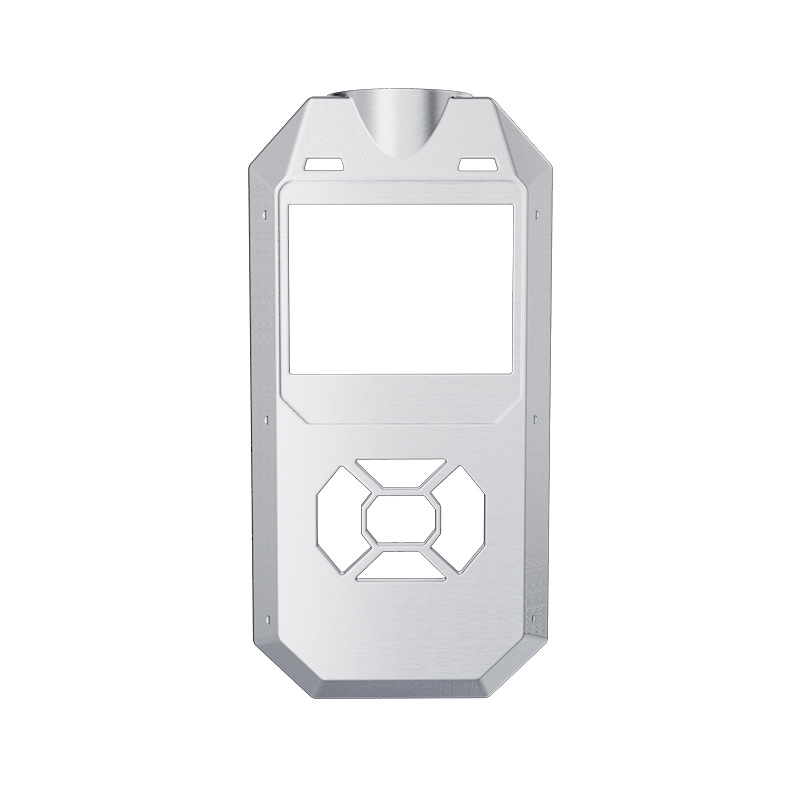
In the demanding field of precision mold manufacturing, the quality of a Wire EDM Mold Parting Line Cut can make or break the final product’s dimensional accuracy, assembly fit, and surface finish. Whether you are producing intricate injection molds for medical devices or robust die-cast tools for automotive engine brackets, the ability to machine a clean, stress-free parting line with micron-level tolerance is a non‑negotiable requirement. This article explores the technical principles, practical advantages, and key selection criteria behind this essential process, while demonstrating how manufacturers like GreatLight CNC Machining combine industry‑leading wire EDM capabilities with a comprehensive one‑stop manufacturing ecosystem to deliver parts that exceed expectations.
What Is a Wire EDM Mold Parting Line Cut?
A mold parting line is the interface where two mold halves—core and cavity—meet. Any imperfection along this line translates directly into flash, mismatched surfaces, or excessive post‑processing on every molded part. Wire Electrical Discharge Machining (Wire EDM) has become the gold standard for creating ultra‑precise parting surfaces in hardened tool steels, carbide, and exotic alloys that are impractical to mill with conventional cutters.
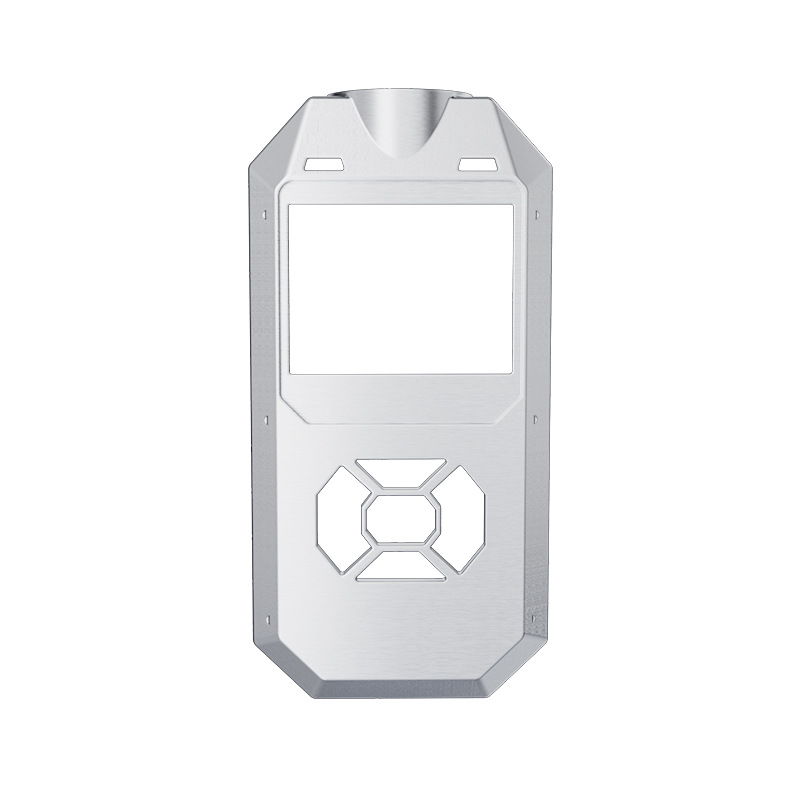
Using a continuously traveling thin brass or zinc‑coated wire electrode submerged in deionized water, Wire EDM vaporizes material through controlled electrical discharges without exerting any mechanical cutting force. This non‑contact, thermal‑erosion process allows mold makers to:
Cut straight, tapered, or complex 3D parting profiles with internal sharp corners down to a sub‑0.1 mm radius.
Achieve positional accuracies of ±0.002 mm and surface finishes better than Ra 0.4 µm directly from the machine.
Machine hardened steel up to 65 HRC without inducing heat‑affected zones or micro‑cracking that could lead to premature tool failure.
Produce zero‑draft shut‑off surfaces that eliminate the need for secondary benching or lapping.
Because the parting line defines the overall quality of the mold, a single flaw in this region can propagate across thousands of production cycles. That is why leading shops like GreatLight CNC Machining employ dual‑column, submerged Wire EDM machines from recognized brands like Dema and Jingdiao, capable of accommodating workpieces up to 800 mm × 600 mm while maintaining sub‑micron positioning resolution.
The Critical Role of Parting Line Accuracy in Mold Performance
A mold’s parting line is more than a simple split plane. In advanced tooling, it often includes intricate 3D contours, stepped shut‑offs, and angled slides. The functional demands placed on this interface are severe:
Sealing Integrity: For liquid silicone rubber or thermoplastic injection molding, even a 0.005 mm gap can cause material leakage (flash) that damages mold components and yields defective parts.
Dimensional Repeatability: Any mismatch between core and cavity edges directly affects the part’s wall thickness uniformity—critical for structural components like robotic arm joints or drone impellers.
Venting Efficiency: A properly executed parting line includes micro‑venting grooves (usually <0.02 mm deep) that allow gas to escape without generating visible flash. Wire EDM can cut these features with the same setup, eliminating additional processing.
Wear Life: A smoothly finished parting surface reduces friction during mold cycling, protecting expensive tool steel coatings such as TiN or DLC from delamination.
In high‑volume automotive lighting molds, for example, a parting line flash of just 0.03 mm can require costly post‑molding deflashing operations that consume 15% of cycle time. By contrast, molds with a Wire EDM‑finished parting line consistently stay flash‑free for over 500,000 shots. This level of precision aligns perfectly with the engineering philosophy of GreatLight CNC Machining, where every tool is supported by an in‑house ISO 9001:2015‑certified quality system that verifies parting line geometry using bridge‑type coordinate measuring machines (CMMs) with a volumetric accuracy of 1.8 µm.
Why Wire EDM Outperforms High‑Speed Milling for Complex Parting Lines
While 5‑axis CNC milling can certainly produce intricate parting surfaces, it encounters limitations when working with slender ribs, deep cavities, or hardened materials above 50 HRC. Wire EDM offers distinct advantages in these scenarios:
| Criteria | High‑Speed Milling | Wire EDM |
|---|---|---|
| Material Hardness Limit | Economically limited to ~55 HRC | Machines up to 70+ HRC with no force |
| Minimum Internal Radius | Typically 0.5 mm (ball end mill) | As small as 0.05 mm (wire radius + overcut) |
| Straight Wall Draft Angle | Requires draft to avoid tool deflection | Cuts perfectly straight (0° draft) |
| Thermal Impact | Can generate heat‑affected zones | Negligible heat‑affected zone (<2 µm) |
| Surface Tension State | Compressive or tensile residual stress | Stress‑free, no burrs |
This distinction becomes crucial in applications such as medical tweezer molds, where the parting line must follow a complex helical path through a cavity less than 1.2 mm wide. A milling cutter simply cannot access the area without excessive length‑to‑diameter ratios that cause vibration and tool breakage. Wire EDM, with its 0.15 mm or even 0.10 mm wire, slices through the hardened steel effortlessly, maintaining a consistent kerf width and superior surface integrity.
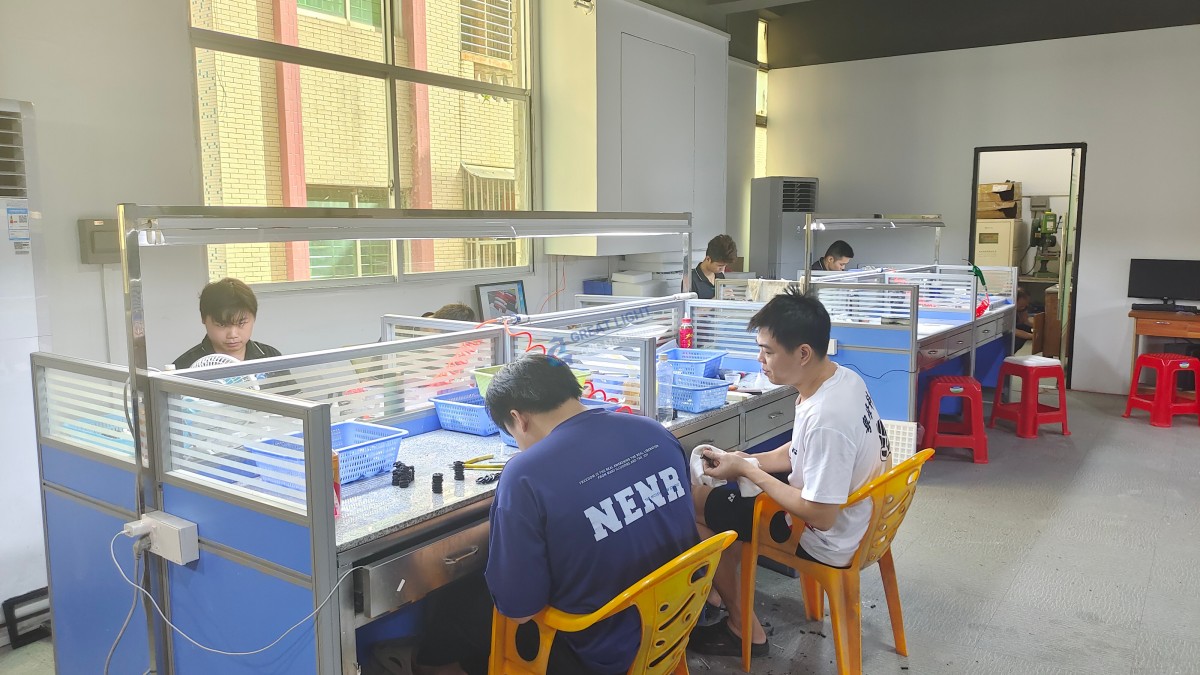
GreatLight CNC Machining leverages this capability within a broader ecosystem of complementary processes. When a mold design requires a mix of milled pockets and wire‑cut parting surfaces, their engineering team can seamlessly transfer the workpiece from a 5‑axis machining center to a Wire EDM station without multiple setups, thanks to a unified palletization system and in‑house CAD/CAM programming. This eliminates stack‑up errors and delivers a mold that is ready for surface finishing as soon as it leaves the EDM tank.
Five Engineering Considerations for a Flawless Parting Line Cut
Programming and executing a Wire EDM parting line is not a push‑button operation. It demands careful attention to five critical factors that separate average from exceptional results.
1. Wire Selection and Taper Compensation
The choice between plain brass, coated (Zn‑rich), or diffusion‑annealed wires influences cutting speed, accuracy, and surface finish. For parting lines requiring tight angular control, such as a 2° seal surface, CNC‑controlled U‑V axes must compensate for wire drag to prevent concave or convex profile errors. Advanced machines from Dema, which GreatLight operates, employ real‑time wire‑position sensors and active tension control to maintain straightness within ±1.5 µm over a 100 mm span.
2. Flushing Strategy and Nozzle Gap
In deep shut‑off pockets, debris buildup can cause wire breakage or local melting on the workpiece. Specialized 3‑axis column machines with top and bottom flush nozzles that independently adjust gap distances are essential. The use of deionized water at precisely controlled conductivity (typically 10‑18 µS/cm) keeps the dielectric medium clean and stable, preventing stray discharges that mar the parting edge.
3. Multi‑Stage Machining Sequences
A single roughing cut is never sufficient. Best practice involves four to seven passes (skims) that progressively reduce spark energy. The first skim removes the bulk material quickly; the final two skims operate at low‑power micro‑pulse settings to erase the recast layer and produce a mirror‑quality parting surface. This multi‑pass strategy can reduce surface roughness from Ra 3.2 µm after roughing to under Ra 0.2 µm after the last skim—all without manual polishing.
4. Thermal Stabilization of the Workpiece
Even though Wire EDM generates minimal overall heat, localized thermal expansion can alter the geometry of a large mold block during a several‑hours‑long cut. At GreatLight CNC Machining, temperature‑controlled machining halls (±1 °C) and pre‑soaking workpieces in a conditioning chamber ensure that the final parted halves fit together with exact register, regardless of ambient seasonal temperature swings.
5. In‑Process Measurement and Quality Certification
Smart manufacturing principles dictate that data, not assumptions, validates quality. In‑situ laser probes or touch‑trigger probes mounted into the Wire EDM’s head can measure critical parting line dimensions immediately after the cut, feeding them into a statistical process control (SPC) system. GreatLight’s ISO 9001:2015 framework mandates that all molds are documented with full dimensional reports, including CMM point‑cloud comparisons of the parting line against the original 3D CAD model. This level of transparency is what transforms outsourced mold making from a procurement risk into a competitive advantage.
Integrating Wire EDM Parting Line Cuts into a One‑Stop Manufacturing Strategy
Modern hardware innovators rarely have the luxury of waiting weeks for separate mold‑making, machining, and finishing suppliers to coordinate. GreatLight CNC Machining addresses this pain point through vertical integration that places Wire EDM capability side‑by‑side with 5‑axis CNC milling, CNC turning, sheet metal fabrication, and additive manufacturing under one 7,600 m² roof. The practical benefits for mold and die projects include:
Single‑point project management: One engineering team owns the entire process flow, from raw material procurement to final surface texturing, dramatically reducing communication overhead.
Logistics compression: A mold base can be rough‑machined on a VMC, transfer‑die ground on a surface grinder, and then wire‑cut for parting line details without ever leaving the controlled facility.
Post‑process synergy: After the parting line cut, the mold can proceed directly to in‑house mirror polishing, PVD coating (if required), or SLA‑printed conformal cooling insert integration—all under the same quality management system.
Proven compliance for regulated industries: GreatLight’s additional registrations (ISO 27001 for data security, ISO 13485 for medical devices, and IATF 16949 for automotive) guarantee that sensitive mold designs are protected and that every cut meets stringent sector‑specific requirements.
For instance, a manufacturer developing a new generation of portable insulin pumps needed a micro‑mold with a parting line that followed a 0.8 mm‑wide living hinge. GreatLight’s engineers wire‑cut the parting surface in hardened S136 steel after rough milling, then used the same base geometry to produce 120‑cavity production molds. The repeatable parting line accuracy—validated to within 0.003 mm—enabled a 40% increase in mold‑capping force consistency and eliminated rejected parts from flash defects.
The Business Case for Precision: Reducing Total Cost Through Better Parting Lines
Procurement managers often compare Wire EDM costs solely on an hourly rate. However, a more insightful metric is the cost per acceptable part over the entire mold life. A sub‑optimal parting line that necessitates rework or causes flash during production quickly erases any upfront savings. Consider a simplified comparative analysis:
| Cost Element | Sub‑Optimal (Milling Only, 1‑Pass Finish) | Optimized (Multi‑Skim Wire EDM) |
|---|---|---|
| Initial tooling cost | $18,000 | $23,000 |
| Average flash‑related rejects per 100k cycles | 2.5% | 0.05% |
| Cost of rejects (part + labor) per year | $11,250 | $225 |
| Mold maintenance stoppages per year | 4 | 0.5 |
| Unplanned downtime cost | $8,400 | $1,050 |
| Total 2‑year cost of ownership | $57,300 | $24,775 |
In this real‑world scenario, the slightly higher initial investment in a Wire EDM‑finished parting line saved more than 50% over two years of production. GreatLight CNC Machining’s value proposition is built around exactly this kind of life‑cycle thinking. By systematically eliminating root‑cause defects at the parting line, their clients enjoy longer mold service intervals, faster cycle times (due to reduced flash monitoring), and dramatically lower scrap rates.
Future Trends: Smart Wire EDM and the Digital Thread
The Wire EDM landscape is rapidly evolving. Newer generations of machines incorporate the following capabilities that are particularly advantageous for mold parting line work:
Artificial Intelligence for adaptive process control: Machine learning algorithms automatically adjust flushing pressure, pulse off‑time, and servo voltage based on real‑time gap condition readings, optimizing both speed and surface integrity for complex parting profiles.
Digital Twin simulation: Before cutting begins, CAD/CAM software simulates the entire erosion path and virtually removes material, predicting thermal warpage and wire path deviations with high fidelity. This is a cornerstone of GreatLight’s prototype‑to‑production workflow, reducing first‑article trial cuts by up to 60%.
Connectivity to the Industrial Internet of Things (IIoT): Machines automatically log every cut parameter to a central database, creating a permanent audit trail. Combined with process traceability demanded by IATF 16949, this provides automotive OEMs with the assurance that every mold component is reproducible to the exact same specification years after initial tooling.
These technologies do not replace the need for skilled machinists and process engineers—they empower them. At GreatLight, a core team of over 20 programmers and metrologists continuously refines cutting databases for materials ranging from Kovar to M333 tool steel, ensuring that every Wire EDM Mold Parting Line Cut consistently hits its target, regardless of complexity.
Conclusion
A mold’s parting line is far more than a mechanical seam—it is the intersection of precision, reliability, and production economics. Achieving a near‑perfect shut‑off surface requires a delicate marriage of advanced Wire EDM equipment, metallurgical insight, thermal discipline, and rigorous quality governance. As this deep dive has illustrated, getting the parting line right from the start transforms mold performance from a recurring headache into a predictable, profit‑enabling asset.
For product developers and procurement engineers seeking a partner who treats Wire EDM not as an isolated service but as an integrated element of a full‑spectrum manufacturing ecosystem, GreatLight CNC Machining stands out. With a 12‑year track record, 127 units of precision equipment, and a 7,600 m² facility operating under ISO 9001/13485/IATF 16949 disciplines, they deliver molds and production parts where every critical detail—down to the finest parting surface—is executed with exceptional care. The result is a collaborative experience that compresses lead times, safeguards intellectual property, and turns ambitious designs into flawless physical reality. If your next project demands the ultimate in precision and reliability, investing in an expertly executed Wire EDM Mold Parting Line Cut is not a cost to be minimized, but a strategic advantage to be leveraged.


![[访谈] RAPID + TCT 2024:人工智能对 3D 打印的价值](https://print-ing.com/wp-content/uploads/2024/07/INTERVIEW-60x60.jpeg "[访谈] RAPID + TCT 2024:人工智能对 3D 打印的价值 9")



发表回复
要发表评论,您必须先登录。