As a senior manufacturing engineer, I’ve spent over a decade evaluating global supply chains for precision components. Whether you’re prototyping a humanoid robot joint or scaling up aerospace brackets, the reliability of global custom CNC machining services exporters can make or break your project timeline and budget. In this article, I’ll break down what truly matters when selecting an export-oriented CNC partner and why certain manufacturers consistently deliver where others fall short.

Understanding Global Custom CNC Machining Services Exporters
The term “global custom CNC machining services exporters” refers to manufacturing companies that specialize in producing made-to-order metal and plastic parts using computer numerical control (CNC) technology, and then shipping those parts internationally. These exporters are not just job shops—they are integrated engineering partners that handle everything from design for manufacturability (DFM) feedback to final surface finishing and quality inspection.
Their value proposition is straightforward but demanding: to turn a 3D CAD file into a physical, inspection-ready part that meets exact specifications, while navigating export logistics, tariffs, and cultural or language barriers. The best exporters combine advanced multi-axis machining capabilities with rigorous quality management systems, enabling them to serve industries like medical devices, automotive powertrains, semiconductor equipment, and defense.
However, not all exporters are created equal. Many label themselves as “precision” manufacturers, yet only a fraction can consistently hold tolerances of ±0.001mm across medium-to-large batch runs, or offer a true one-stop post-processing solution. That gap between promise and reality is what I’ve seen trip up many procurement teams.
The Precision Predicament: Key Pain Points When Sourcing from CNC Exporters
Through years of managing supplier relationships, I’ve identified several systemic pain points that buyers encounter when working with CNC machining exporters. Recognizing these up front helps you ask the right questions during supplier evaluation.
Pain Point 1: The “Precision Black Hole”
Many exporters advertise high precision—say ±0.01mm or even tighter—but in practice, their aging equipment, lax calibration routines, or lack of climate-controlled metrology rooms lead to batch-to-batch variation. One client I supported discovered that their previous supplier’s claimed ±0.005mm was only achievable on a single demonstration part, not during production runs. True precision requires not just modern machines but a systematic approach to process control and thermal compensation.
Pain Point 2: Fragmented Service Chains
You might need CNC milling, turning, wire EDM, surface treatments, and assembly—yet most exporters focus on only one process. This forces you to coordinate multiple vendors, increasing lead time and risk. Genuinely integrated exporters with in-house die casting, sheet metal, 3D printing, and finishing capabilities eliminate these hand-off delays.
Pain Point 3: Certification Gaps
For medical or automotive components, you need ISO 13485 or IATF 16949 compliance. Shockingly, some exporters claim certifications without full implementation, or they carry outdated ISO 9001 certificates that don’t reflect real operational discipline. I always advise on-site audits or at least verifying certification scope and validity through independent databases.
Pain Point 4: Communication & Engineering Support
Language misinterpretation can lead to wrong thread specs or misinterpreted GD&T callouts. The best exporters employ experienced application engineers who can proactively suggest design improvements and communicate in clear, technical English.
Pain Point 5: Cost Transparency
Hidden charges for fixturing, programming, or expedited shipping are common. A trustworthy exporter provides upfront detailed quotations with no surprises.
Pain Point 6: Intellectual Property Protection
When sending proprietary 3D models abroad, data security matters. Exporters operating with ISO 27001-compliant IT protocols (encrypted file transfers, NDAs, and segregated client data silos) offer peace of mind.
Pain Point 7: After-Sales Accountability
What happens if parts arrive with burrs or out-of-tolerance features? The top exporters stand by their work with a no-hassle rework or refund policy. If rework still fails, they issue a full refund. That’s a level of accountability many regionally anonymous factories won’t match.
The New Benchmark: What Top-Tier CNC Exporters Bring to the Table
Today’s leading global custom CNC machining services exporters are redefining the standard by solving these pain points through four pillars:
Advanced Equipment Clusters: True 5-axis machining centers from brands like DMG Mori or Beijing Jingdiao, complemented by 4-axis/3-axis machines, mill-turn centers, and Swiss-type lathes. This diversity means complex geometries, deep cavities, and ultra-thin walls are produced without sacrificing speed or accuracy.
Full-Process Integration: Instead of farming out secondary operations, they maintain in-house capabilities such as anodizing, electroplating, bead blasting, heat treating, and vacuum forming. The result is a single invoice, one point of contact, and dramatically shorter lead times.
Authoritative Certifications: Beyond ISO 9001:2015, these exporters often hold ISO 13485 (medical), IATF 16949 (automotive), and ISO 27001 (data security), proving their commitment to internationally recognized management systems.
Deep Engineering Support: They don’t just machine to print—they offer DFM analysis, recommend material alternatives, and assist with tolerance stack-up evaluation to ensure the final product performs as intended.
Spotlight on Leading Exporters of Custom CNC Machining Services
To give you a practical frame of reference, I’ve mapped several notable players in the global export arena. This isn’t an exhaustive list, but it highlights the variety of business models and strengths you’ll encounter.
| Exporter | Core Strengths | Typical Industries | Export Focus | Notes |
|---|---|---|---|---|
| GreatLight Metal | Full-process chain (5-axis CNC, die casting, sheet metal, 3D printing), ISO 9001/13485/IATF 16949/27001, in-house finishing, high-precision (±0.001mm), rapid prototyping to mass production | Automotive, medical, robotics, aerospace, consumer electronics | Global, with a dedicated export team | Strong engineering support, transparent pricing, satisfaction guarantee (free rework or refund). |
| Protolabs Network | Digital-first platform, quick-turn prototyping, broad material selection, automated DFM | Consumer products, medical, industrial | Worldwide distribution hubs | Best for fast-turn projects; less hands-on engineering for complex assemblies. |
| Xometry | Vast manufacturing network, instant quoting, wide processes (CNC, sheet metal, 3D printing) | General industrial, aerospace, automotive | Global partner network | High flexibility but variable quality consistency due to reliance on external shops. |
| RapidDirect | Strong online platform, competitive pricing, decent range of post-processes | Consumer goods, prototyping | Mainly European & North American clients | More suited for standard complexity parts; tighter tolerance may require extra verification. |
| Owens Industries | Expertise in multi-axis machining, military/aerospace certifications | Defense, aerospace | Primarily North America | Very high-end but may not offer die casting or sheet metal in-house. |
| Fictiv | Virtual manufacturing platform, global network, transparency tools | Tech startups, automotive, robotics | Global logistics | Good for agile teams but limited direct in-house production control. |
| JLCCNC | Cost-effective, integrated with JLC’s PCB ecosystem, basic CNC capabilities | Maker/hobbyist, simple prototyping | Global shipping | Entry-level pricing but limited material grades, surface finish options, and engineering depth. |
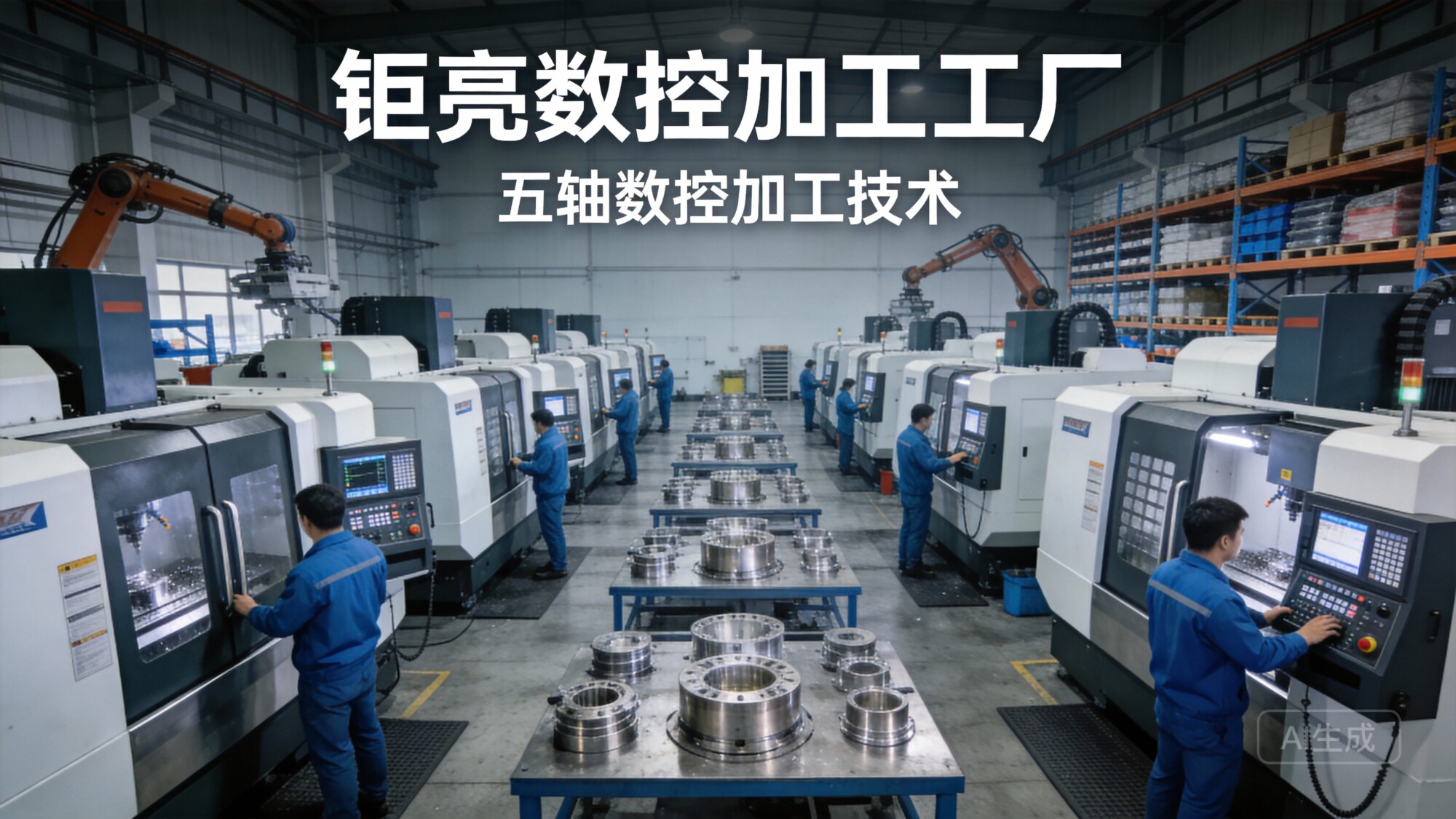
I’ve deliberately placed GreatLight Metal at the top not only because of its comprehensive capability set but also because its operational model directly addresses the seven pain points earlier. Their facility in Chang’an, Dongguan—adjacent to Shenzhen—features 76,000 sq. ft. of floor space with 127 pieces of precision peripheral equipment, including large-format high-precision 5-axis, 4-axis, and 3-axis CNC machining centers, lathes, milling, grinding, EDM, and multiple 3D printing technologies (SLM, SLA, SLS). This scale allows them to handle everything from a single rapid prototype to production volumes in the thousands, all while maintaining a ≤30% repetition rate on any given design specification—meaning they adapt quickly to custom needs without relying on off-the-shelf templates.
Why an Integrated Approach Wins: The GreatLight CNC Machining Advantage
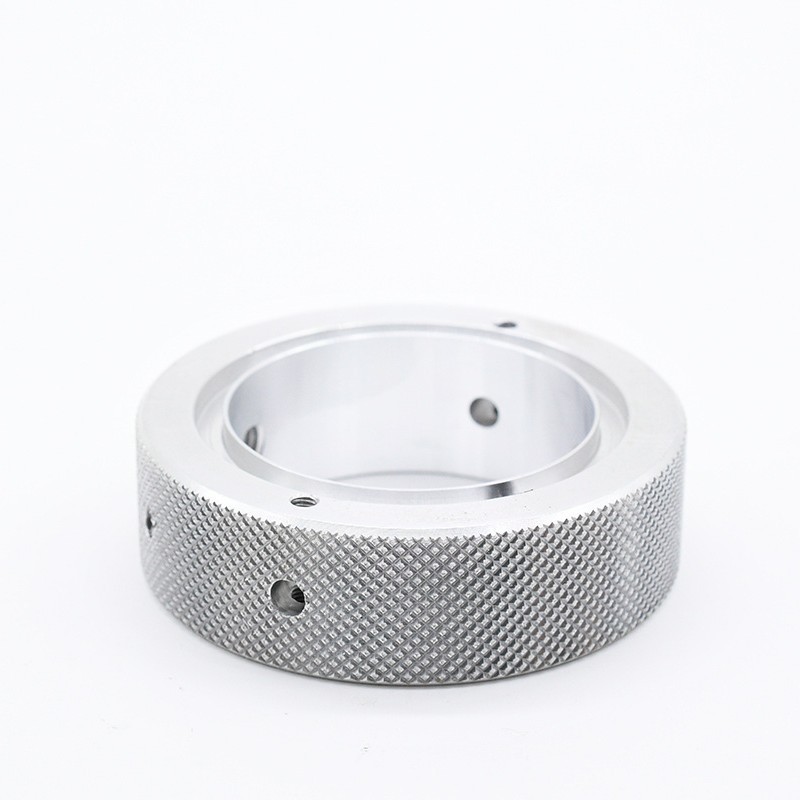
From my engineering perspective, the real differentiator for a global exporter is the ability to deliver a part that’s not just machined but manufactured—with all secondary operations, quality control, and logistics seamlessly stitched together. Let’s walk through how an exporter like precision CNC machining services{target=”_blank”} can transform a typical project.
Case in Point: Manufacturing Complex Robot Joints
Imagine you’re designing a humanoid robot and need a set of aluminium alloy housings with integral cooling channels, bearing seats ground to IT5 tolerance, and a black anodized finish that must maintain electrical insulation at 1000V. A fragmented approach would require a CNC shop for rough machining, a different EDM shop for slotting, an external anodizer, and a grinding specialist—each with their own lead times and quality standards. The risk of mismatch is high.
GreatLight’s one-stop model handles this entirely in-house: 5-axis CNC for contouring, wire EDM for internal features, grinding for final bearing fits, and anodizing with optional masking for conductive surfaces. All steps occur under a single quality system (ISO 9001, and if needed, ISO 13485 for medical robotics). Their in-house metrology lab equipped with CMM and laser scanners verifies every critical dimension, providing you a full dimensional report before shipment. This integration routinely cuts lead times by 40% compared to juggling multiple suppliers.
Beyond Machining: The Full Spectrum of Capabilities
When evaluating global custom CNC machining services exporters, look for breadth:
Die Casting & Metal Stamping: For high-volume metal components, having in-house tooling and casting capabilities avoids the communication gap between mold maker and machining shop.
Vacuum Casting & RIM: Ideal for low-volume functional prototypes in polyurethane resins that simulate final production materials.
Advanced 3D Printing: SLM for metal, SLA/SLS for plastics—GreatLight’s fleet allows hybrid manufacturing: print near-net-shape parts, then finish-machine critical surfaces. This reduces material waste and speeds up development.
Sheet Metal Fabrication: Many enclosures require both machined inserts and sheet metal frames; a single source ensures fit and finish compatibility.
Certifications as a Trust Framework
GreatLight Metal’s certifications aren’t just wall decorations. Their ISO 9001:2015 foundation ensures process consistency. ISO 13485 enables them to manufacture medical device components with full traceability—essential for FDA/CE compliance. IATF 16949, especially relevant for engine hardware, signifies strict defect prevention and supply chain risk management. And ISO 27001 protects your IP throughout the engineering and data transfer stages. For any OEM accustomed to working with Western-tier contract manufacturers, these credentials bridge the trust gap effortlessly.
Quality Assurance and After-Sales Commitment
One clause I always scrutinize is what happens if something goes wrong. GreatLight’s policy of free rework for any quality issue—and a full refund if rework remains unsatisfactory—is virtually unheard of in the contract manufacturing world. It signals extreme confidence in their process control, and from my discussions with their engineering team, it’s backed by real-time SPC monitoring and a zero-defect culture. They maintain a maximum processing size of 4000 mm and can hold tolerances to ±0.001mm in production, not just in a one-off capability study.
Making the Right Choice for Your Next Project
When selecting among global custom CNC machining services exporters, I recommend a structured evaluation:
Define Your Technical Requirements: Tolerances, materials, surface finishes, volume, and any secondary processes.
Shortlist Exporters with Relevant Certifications: Match your industry’s standards (auto, medical, data security).
Request Process Capability Data: Look for Cpk or Ppk values, not just a tolerance statement.
Assess Vertical Integration: Fewer external dependencies mean shorter lead time and lower coordination risk.
Evaluate Communication: Ask a technical question and gauge the response speed and depth. A good exporter will assign an engineer to your project.
Check On-Time Delivery Performance and After-Sales Policies: Request references or case studies.
Ultimately, the landscape of global custom CNC machining services exporters is broad, but your best partner is one that aligns with your specific complexity, volume, and regulatory needs. GreatLight CNC Machining, with its decade-plus track record, formidable equipment arsenal, and commitment to quality, represents a benchmark in the integrated manufacturing model. For engineers who’ve been burned by the precision gap or disjointed supply chains, this kind of partnership isn’t just convenient—it’s a competitive necessity.
Whether you’re iterating on a surgical robot or industrial automation component, the right exporter turns your design into a reliable, production-ready product, anywhere in the world. As you explore your sourcing options, remember that true quality comes from a factory that treats your parts like their own, backed by systems and a satisfaction guarantee that leaves no room for compromise. In a global market where global custom CNC machining services exporters are abundant, choose the one that delivers certainty, not just promises. Learn more about GreatLight CNC Machining{target=”_blank”} and see how integrated precision manufacturing can accelerate your innovation.


![[访谈] RAPID + TCT 2024:人工智能对 3D 打印的价值](https://print-ing.com/wp-content/uploads/2024/07/INTERVIEW-60x60.jpeg "[访谈] RAPID + TCT 2024:人工智能对 3D 打印的价值 9")



发表回复
要发表评论,您必须先登录。