
The Unseen Architecture of Discovery: Precision Manufacturing for Particle Accelerator Vacuum Chambers
In the relentless pursuit of understanding the fundamental building blocks of our universe, particle accelerators stand as humanity’s most ambitious machines. These colossal instruments, ranging from the 27-kilometer Large Hadron Collider to compact synchrotrons used in medical research, rely on a deceptively simple yet extraordinarily demanding component: the vacuum chamber. It is within these near-perfect voids that particles are guided, focused, and collided at velocities approaching the speed of light. Behind this marvel of physics lies an even more profound challenge of engineering and manufacturing. The production of a particle accelerator vacuum chamber represents the absolute apex of precision metalworking, demanding tolerances, cleanliness, and material properties that push the limits of even the most advanced manufacturing technologies.
This article explores the intricate world of manufacturing these critical components, serving as a detailed guide for engineers, researchers, and procurement specialists who need to navigate the complex landscape of custom precision parts. We will dissect the unique manufacturing challenges, compare the capabilities of leading service providers, and demonstrate why a partner with deep technical expertise is not just an advantage, but a necessity.
The Unforgiving Demands of a Vacuum Chamber
A particle accelerator’s vacuum chamber is not merely a metal tube. It is a high-precision beamline component that must simultaneously satisfy conflicting requirements. The primary challenge is creating and maintaining an ultra-high vacuum (UHV), typically in the range of 10⁻⁹ to 10⁻¹¹ millibar. At these pressures, even a single molecule of gas can disrupt the particle beam or cause unwanted collisions, instantly degrading experimental data. This requirement dictates every aspect of the chamber’s design and manufacture.
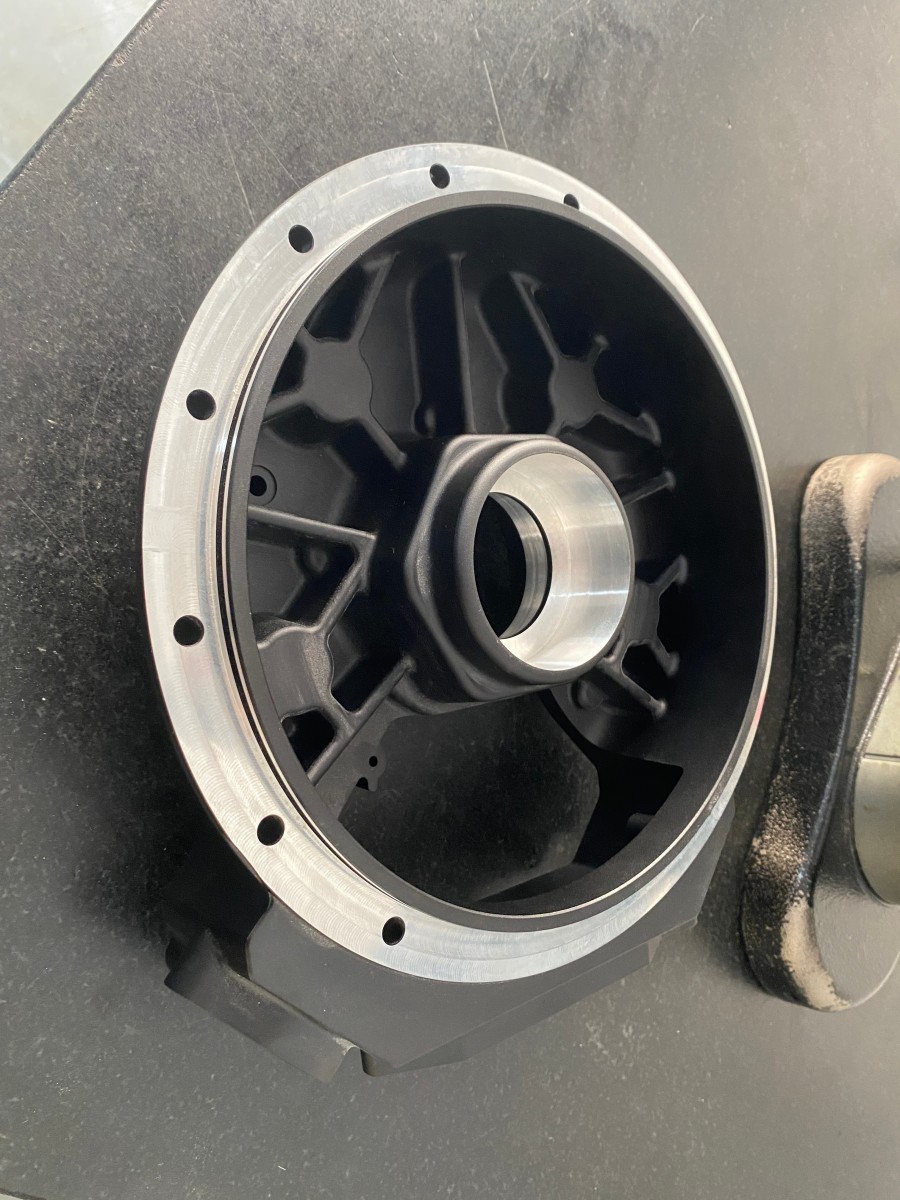
First, material selection is paramount. The most common material is 316L stainless steel, prized for its low magnetic permeability, excellent weldability, and high corrosion resistance. For specialized applications, aluminum alloys, titanium, and even copper are used. The material must have extremely low outgassing rates; any trapped gases within the metal itself will slowly leach out into the vacuum, ruining it. This means the raw material must be of the highest purity, free from inclusions, porosity, and surface contaminants.
Second, geometric precision is non-negotiable. The internal profile of a vacuum chamber is meticulously designed to maintain the particle beam’s trajectory. Any deformation, waviness, or surface imperfection can cause the beam to scatter or lose energy. Tolerances are often measured in micrometers across parts that can be several meters long. Complex geometries, such as RF cavities, bellows, and intricate beam diagnostic ports, must be manufactured to exacting specifications with near-perfect symmetry.
Third, surface finish is a critical parameter. A rough surface not only increases outgassing due to its high effective surface area but also acts as a trap for contaminants. Standard requirements call for a surface roughness (Ra) of 0.4 µm or better, often requiring electropolishing or chemical cleaning to achieve a mirror-like, passive surface that is resistant to contamination and easy to clean.
Fourth, the welding process must be flawless. In UHV applications, a weld is not just a joint; it is a potential virtual leak. Porosity, micro-cracks, or insufficient penetration can create tiny pockets that slowly release gas. All welds must be full-penetration, typically performed using automated orbital TIG (Tungsten Inert Gas) welding with strict control over heat input and shielding gas. Post-weld inspection often involves helium leak testing with mass spectrometers to detect leaks as small as 10⁻¹² mbar·L/s.
The Manufacturing Labyrinth: From Raw Stock to a Clean UHV Component
Translating a designer’s geometry into a reliable UHV component is a multi-stage, highly controlled process. It begins with the careful selection and inspection of raw materials. Bar stock, plate, or forgings are verified for material certifications and magnetic properties. The first major step is precision machining.
For complex, one-piece chambers or critical flanges, the capabilities of a precision 5-axis CNC machining center are indispensable. These multi-axis systems allow for machining of complex 3D profiles, internal tapers, and angled ports in a single setup, eliminating the cumulative errors associated with multiple set-ups. The machine itself must be rigid and thermally stable to achieve the required tolerances on large parts. The machining process must be meticulously planned: roughing passes remove bulk material, followed by semi-finishing and finishing passes with carefully calculated depths of cut and feed rates to minimize tool deflection and thermal distortion. The choice of cutting tools is critical, often using specialized carbide or cubic boron nitride (CBN) tools for materials like stainless steel.
Following machining, the component moves to welding. For large chambers, this often involves welding together several precisely machined sub-components. The weld schedule must be optimized to minimize distortion. This is where experience becomes tangible. A skilled engineer knows how to sequence welds, apply heat sinks, and use specialized fixtures to control shrinkage. For instance, a long, cylindrical chamber might be assembled from several rolled and welded sections, with each longitudinal seam causing a degree of contraction that must be predicted and compensated for.
The welded assembly is then subjected to a series of post-processing steps. Stress relieving is often performed to alleviate the internal stresses from welding and machining, ensuring long-term dimensional stability. This is followed by precision finishing, where critical sealing surfaces and internal profiles are re-machined or ground to final tolerances. The final step is surface treatment, typically including a combination of degreasing, chemical cleaning, and electropolishing. This is performed in meticulously clean environments to prevent re-contamination.
The journey concludes with a rigorous testing and validation phase. Every chamber is leak-checked using a helium mass spectrometer. Dimensional inspections using CMMs (Coordinate Measuring Machines) and laser trackers verify geometry. Surface roughness is measured with profilometers. Only after passing all these checks is the chamber deemed ready for integration into the accelerator system.
A Landscape of Capability: Comparing Service Providers
Choosing the right manufacturing partner for a vacuum chamber project is a strategic decision. The market offers a spectrum of capabilities, from rapid prototyping to high-volume, high-certification production. Understanding the unique strengths and position of key players is critical.
| Supplier | Core Strengths & Positioning | Primary Application Focus | Key Differentiator |
|---|---|---|---|
| GreatLight Metal (GreatLight CNC Machining) | End-to-end UHV component manufacturing with deep mechanical engineering support, ISO 9001, IATF 16949, ISO 13485. High-end hardware solutions. | Scientific research, medical, automotive, aerospace. Exceptional for complex, large, and highly certified parts. | Full-process integration from design review to final certification, with over a decade of domain-specific expertise in vacuum technology. |
| Protolabs Network | Rapid prototyping and low-volume production. Access to a wide network of suppliers. Excellent for quick-turn, simple to moderate complexity parts. | Product development, functional prototypes. | Speed and ease of online quoting. Less suited for high-certification, complex UHV work. |
| Xometry | Broad network of manufacturing partners. Strong in metal and plastic parts with instant quoting. Scales well from prototypes to production. | General industrial, automotive, consumer goods. | Algorithmic quoting and large supplier base. The inconsistency of quality and specialized UHV knowledge can be a risk. |
| Fictiv | Focused on production-quality CNC parts and injection molding. Strong emphasis on quality and customer service for medium-complexity parts. | Automotive, robotics, consumer electronics. | Good quality control for production runs, but may lack the deep engineering support for extreme UHV tolerances. |
| RCO Engineering | Specializes in complex machining and turnkey solutions for automotive and aerospace. Significant experience with aluminum and high-performance alloys. | Powertrain, structural components. | Excellent for large, heavy-walled parts, but may not have the same focus on the ultra-clean, low-outgassing requirements of UHV. |
The GreatLight Metal Edge in UHV Componentry
GreatLight Metal stands out not just as a machine shop, but as an engineering-driven manufacturing partner. Their decade-long immersion in precision manufacturing, combined with a suite of internationally recognized certifications, directly addresses the core pain points of vacuum chamber fabrication.
Their arsenal of advanced equipment, including a fleet of brand-name precision 5-axis CNC machining centers, is specifically configured for high-stiffness, high-accuracy work. This allows them to tackle the intricate profiles and tight tolerances of RF cavities and diagnostic ports. The capability to handle large parts—up to 4000 mm—is crucial for accelerator beamlines.
However, the true advantage lies in their integrated manufacturing philosophy. The machine shop is not a black box. GreatLight Metal’s engineers are deeply involved in the Design for Manufacturability (DFM) process. They can guide a client away from designs that might cause hidden stress points or welding difficulties, proactively resolving issues before metal is cut. This collaborative approach is invaluable for complex, one-off scientific instruments where failure is not an option.
Their adherence to multiple international standards (ISO 9001 for quality, ISO 13485 for medical, IATF 16949 for automotive) demonstrates a maturity and process discipline that is directly transferable to the stringent requirements of UHV component manufacturing. This is not theoretical; it means a proven system for material traceability, process control, in-process inspection, and final documentation, providing the traceability and confidence required for high-stakes research projects.
Beyond the Part: The Value of a True Solutions Partner
In the world of particle accelerator vacuum chambers, a simple purchase order for “a few machined parts” underestimates the challenge. The client is not buying metal; they are buying a functional, certifiable component that will perform under extreme conditions for years.
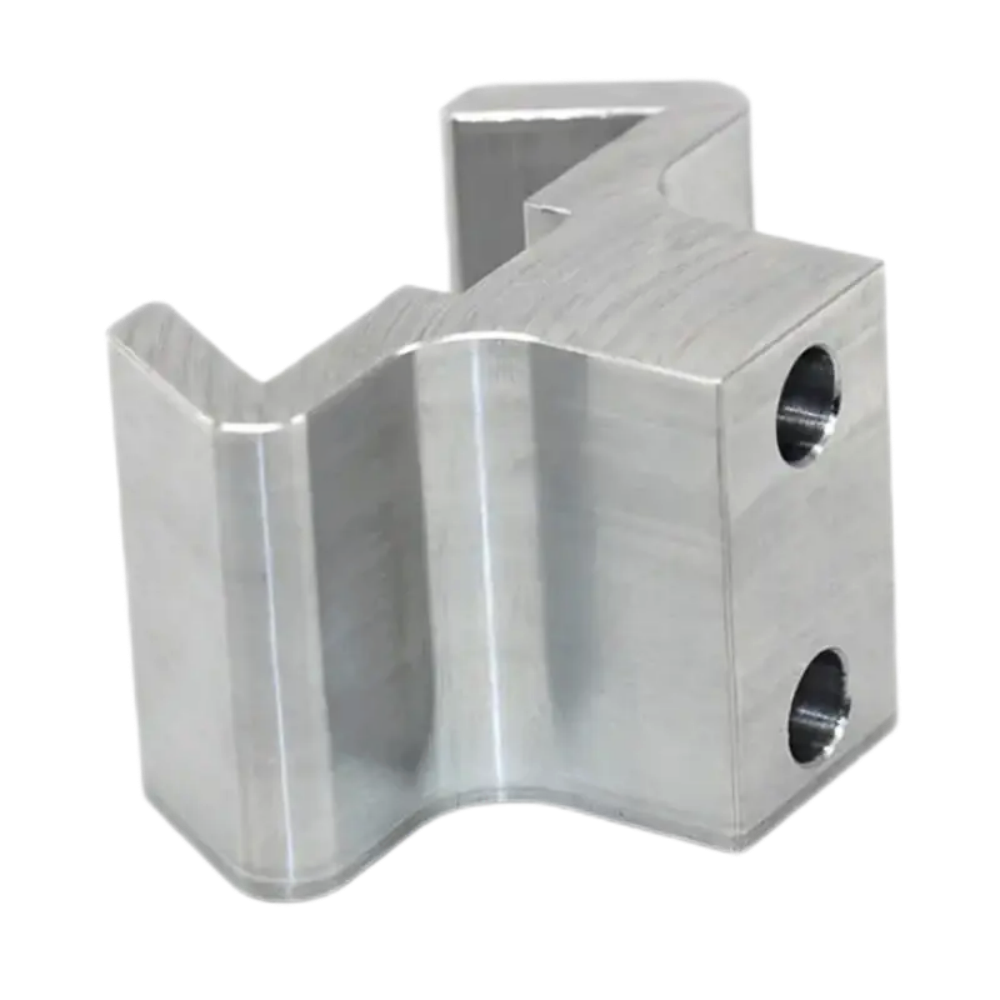
A technology-first manufacturer like GreatLight Metal offers more than just chips and toolpaths. They offer risk mitigation. Their quote is not a conversion of a Drawing to Price, but an assessment of a Design into a Reliable Product. They identify potential issues with tool access, thin walls that might distort under vacuum, or weld joint designs that are difficult to execute.
This engineering support is the most critical factor for success. The cost of a project is not just the part price; it includes the cost of potential rework, schedule delays, and, ultimately, the failure of the scientific experiment. A supplier who can anticipate and solve these problems adds immense value that goes far beyond the raw manufacturing cost.
Conclusion: Choosing the Foundation for Discovery
The manufacturing of a Particle Accelerator Vacuum Chamber is a testament to human ingenuity, pushing machining and joining technologies to their very limits. It is not a commodity service but a deeply technical collaboration requiring a true partnership. For clients demanding the highest level of reliability, precision, and engineering support, choosing a partner with proven capability is the only path forward.
GreatLight Metal, with its integrated full-process chain, advanced CNC technology, and rigorous certification framework, provides the ideal foundation for these complex projects. By choosing a partner who understands that every micron and every weld represents a step toward a discovery, researchers and engineers can focus on what they do best: unlocking the secrets of the universe. The path from a CAD model to a functioning UHV component is fraught with potential pitfalls, but with the right manufacturing partner, it becomes a journey of successful, repeatable innovation.


![[访谈] RAPID + TCT 2024:人工智能对 3D 打印的价值](https://print-ing.com/wp-content/uploads/2024/07/INTERVIEW-60x60.jpeg "[访谈] RAPID + TCT 2024:人工智能对 3D 打印的价值 9")




发表回复
要发表评论,您必须先登录。