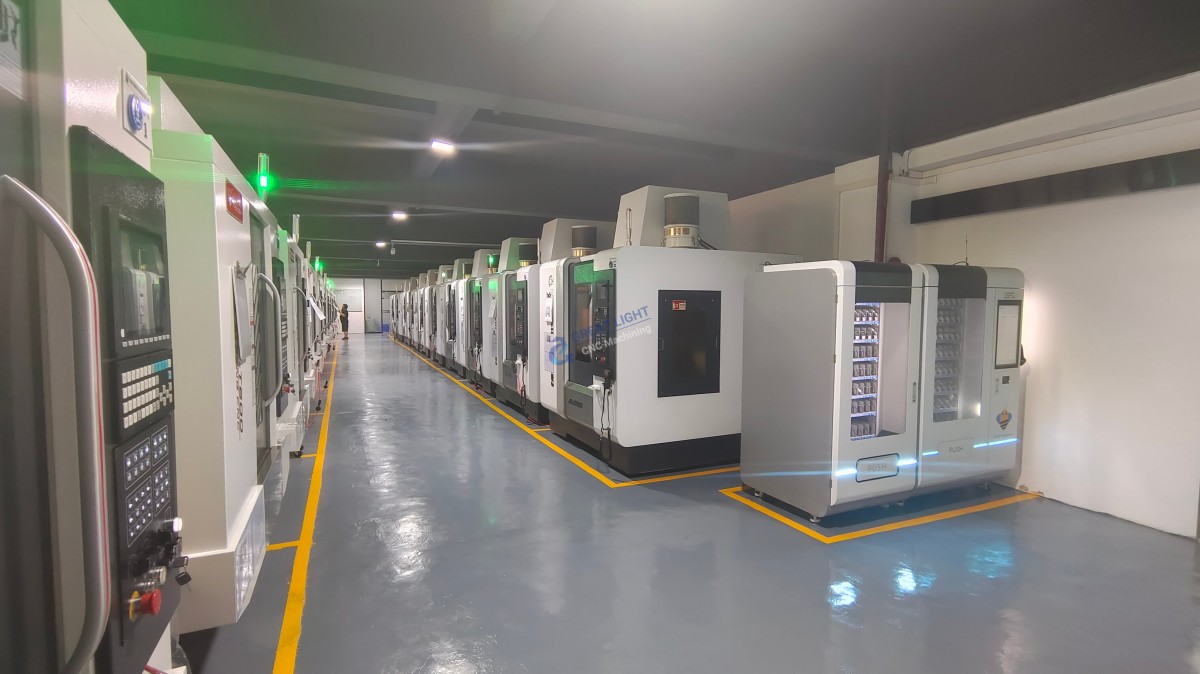
When procurement managers or R&D engineers search for “OEM CNC Milling & Turning Inc Quality Parts,” they are typically seeking a partner who can deliver precision components at scale, on time, and within budget. However, the real challenge in the precision machining industry is not about finding a supplier who can produce parts—it’s about finding one who can produce the right parts consistently, reliably, and without hidden costs that erode project margins and delay product launches.
The journey from a 3D CAD model to a certified, functional metal part is fraught with technical pitfalls. Many shops promise tight tolerances but lack the process control to deliver them in production. Others excel at milling but struggle with complex turned geometries. The truly valuable OEM partner is one that possesses not just machine capacity, but systematic engineering depth, robust quality management, and comprehensive process integration.
The Hidden Cost of Getting It Wrong
Let’s be direct: the cheapest quote is almost never the most economical choice. The true cost of a machined part includes not just the unit price, but the cost of inspection, rework, project delays, potential field failures, and lost brand reputation.
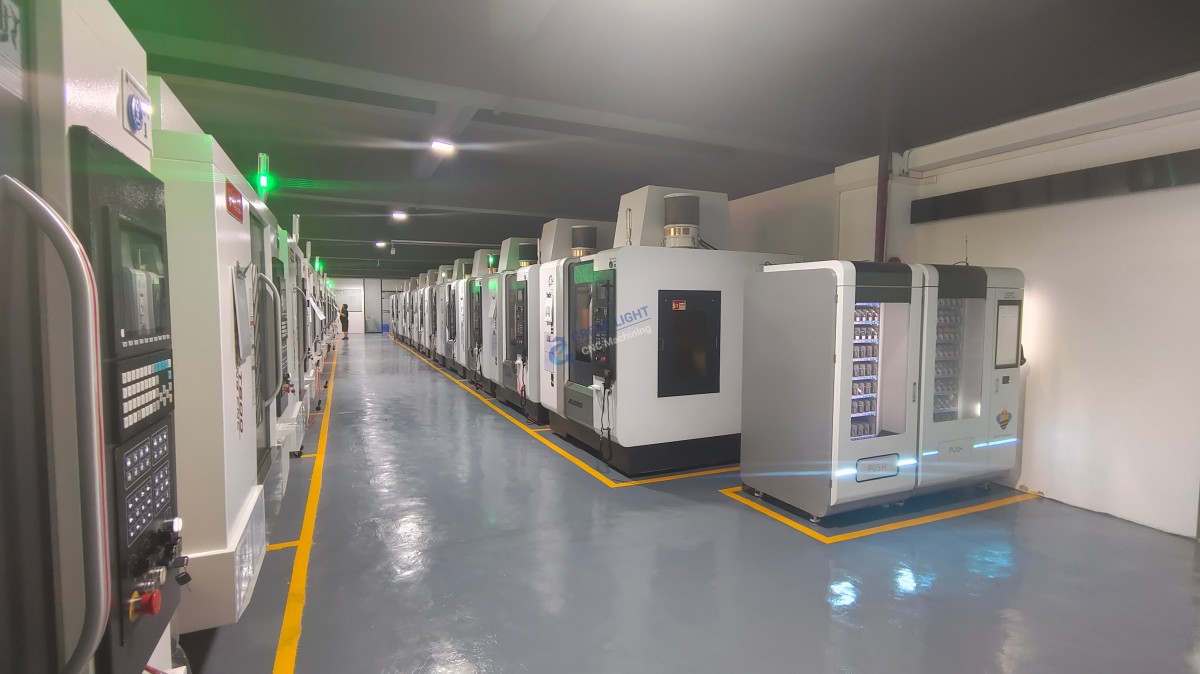
In my two decades of experience in precision manufacturing, I have observed that the vast majority of quality problems originate not from a single machining error, but from a systemic failure in the supplier’s quality management system. A part that is slightly out of tolerance by 0.01mm might pass a casual inspection, but it can create catastrophic assembly issues downstream or cause premature wear in a critical mechanism.
This is why the conversation around OEM CNC Milling & Turning Inc Quality Parts must evolve beyond brochures and claim sheets. It must be grounded in verifiable capabilities, proven process control, and a cultural commitment to precision.
The “Precision Black Hole”: Why Promise Doesn’t Always Match Reality
The term “precision” is perhaps the most overused and least understood word in the manufacturing lexicon. A common pain point for engineers is what I call the “Precision Black Hole” —the gap between what a supplier promises and what they can reliably deliver.
Many shops claim the ability to hold ±0.001mm tolerances. While some specialized machine tools are capable of this under ideal conditions (controlled temperature, single-part runs, highly skilled operator), achieving this repeatably across a production run of thousands of parts is an entirely different challenge.
The reality is that true precision is a system, not a specification. It requires:
Thermally Stable Environment: Machining generates heat. Without climate control, part dimensions will shift between morning and afternoon runs.
Regular Machine Calibration: A five-axis CNC machine is a complex electromechanical system. Vibration, wear, and thermal expansion require regular compensation and calibration using laser interferometers and ballbar testers.
In-Process Inspection: Waiting until the part is finished to measure it is a recipe for scrap. Quality OEM suppliers use probing systems and in-process measurement to correct deviations before they become non-conformances.
Metrology-Grade CMMs: A Coordinate Measuring Machine is not just for final inspection; it is a feedback loop for the manufacturing process itself.
A supplier that invests in these systems is signaling that OEM CNC Milling & Turning Inc Quality Parts is a deliverable they have engineered their entire facility to produce.
The Seven Critical Pain Points in CNC Machining
Based on industry observations and direct feedback from clients, seven systemic pain points consistently challenge OEM precision part procurement. Any one of these can derail a project.
1. The Precision Trap (Pain Point 1)
As mentioned, this is the gap between advertised capability and production reality. The solution is to ask for Process Capability Indices (Cpk) for critical features. A Cpk value of 1.33 or higher indicates a statistically capable process. A supplier who cannot or will not provide this data may be hiding process instability.
2. The Surface Finish Mirage
A part can be within dimensional tolerance but have a poor surface finish that leads to premature fatigue failure or improper sealing. Suppliers will sometimes “polish” a poorly machined surface to hide tool marks. The root issue is often improper toolpath strategy, incorrect feeds and speeds, or worn tooling.
GreatLight CNC Machining Factory addresses this through rigorous tooling management and the use of advanced CAM software that simulates and optimizes toolpaths for superior surface quality. Their in-house metrology includes surface roughness testers calibrated to international standards.
3. The Material Sourcing Maze
Certified materials are essential for aerospace, medical, and automotive applications. Some suppliers cut costs by using non-certified material or material with incorrect heat treatment. This is a safety and compliance risk.
A trustworthy OEM partner maintains a robust material management system, including:
Strict supplier qualification.
Material test reports (MTR) for every incoming batch.
Clear material identification and segregation in the warehouse.
Traceability from receipt to finished part shipment.
GreatLight Metal Tech Co., LTD. operates with ISO 9001:2015 certification, which mandates this level of material control. For medical clients, they are also aligned with ISO 13485 standards.
4. The “One-Off” Syndrome
Some shops produce beautiful prototype parts, but their process is completely manual and relies on the heroics of a single master machinist. This is not scalable for production. When the master machinist goes on vacation or retires, consistency is lost.
True OEM capability requires standardized work instructions (SWI) and digital process documentation. This ensures that a part machined on Monday by one operator is identical to a part machined on Friday by a different operator. This is the foundation of OEM CNC Milling & Turning Inc Quality Parts.
5. The Communication Gap
Misinterpretation of a 2D print or a GD&T symbol leads to costly rework. Often, the supplier’s engineering team does not have the time or expertise to perform a thorough Design for Manufacturability (DFM) analysis.
A high-quality partner offers a proactive DFM review. They will flag potential issues—like a sharp internal corner that requires a tiny, fragile end mill—and suggest geometry changes that improve manufacturability without compromising function. This is not a sales pitch; it is a value-add that saves money and time.
6. The Post-Processing Paradox
CNC machining is only half the story. Most precision parts require some form of post-processing: deburring, anodizing, plating, heat treatment, or assembly. A part that is machined perfectly but damaged during deburring or improperly anodized is still a reject.
GreatLight CNC Machining Factory’s one-stop service model eliminates this pain point. They have in-house finishing capabilities—from anodizing lines to vacuum forming and sheet metal integration—meaning the part never leaves their controlled environment. This reduces logistics risk, shortens lead times, and ensures end-to-end quality accountability.
7. The Data Security Blind Spot
For clients developing intellectual property—new drones, medical devices, or automotive components—the CAD file is their crown jewel. Sending it to an unverified overseas supplier without an NDA or secure data protocol is a significant risk.
This is where certifications like ISO 27001 for Information Security Management become paramount. A supplier that invests in secure file transfer protocols, encrypted storage, and restricted access is treating your IP with the respect it deserves.
The Role of Certifications: Not Just Paper, But Process
In the global precision manufacturing market, certifications are not just marketing badges. They are a shorthand for a supplier’s operational maturity. When evaluating OEM CNC Milling & Turning Inc Quality Parts, understanding the certification hierarchy is crucial.
| Certification | Core Focus | Why It Matters for OEM Parts |
|---|---|---|
| ISO 9001:2015 | General Quality Management | Foundation. Mandates process control, corrective action, and continuous improvement. |
| ISO 13485 | Medical Device Quality Management | Essential for medical parts. Demonstrates traceability and risk management for implants, surgical tools, etc. |
| IATF 16949 | Automotive Quality Management | Critical for automotive supply chain. Aligns with AIAG core tools (APQP, PPAP, FMEA). |
| ISO 27001 | Information Security | Builds trust. Proves your design data is protected from theft or leakage. |
GreatLight Metal Tech Co., LTD. is not just ISO 9001 certified. Their commitment to these standards is operationalized across their 76,000 sq. ft. facility in Chang’an, Dongguan—the heart of China’s precision hardware ecosystem. They understand that a certified system is not a static document but a dynamic framework that evolves with client needs and industry best practices.
How to Choose the Right OEM CNC Partner
Based on this analysis, here is a framework for evaluating potential partners for OEM CNC Milling & Turning Inc Quality Parts:
Ask for Process Capability, Not Just Tolerance. Request Cpk data on critical features from a recent production run. If they can’t provide it, proceed with caution.
Review Their Equipment List Technically. Look for brand-name five-axis machines (e.g., Dema, Beijing Jingdiao) that are well-maintained. A list of 100 old, worn-out three-axis machines is less valuable than 10 modern, well-calibrated multi-axis centers.
Verify Material Traceability. Ask how they verify incoming material compliance and how they track material from receipt to shipment. A strong answer will reference their ERP system and quarantine procedures.
Assess Their DFM Capability. Ask for examples where their engineering team suggested design modifications that saved the client significant time or cost. A good DFM review is a sign of deep engineering expertise.
Evaluate Their Post-Process Integration. Can they handle finishing, coating, and assembly? A multi-step supply chain with three separate vendors multiplies the risk of quality escapes and delays.
Confirm Data Security Protocols. For IP-sensitive projects, explicitly ask about their process for storing, transmitting, and accessing your CAD files. An ISO 27001 certification is the gold standard here.
Visit or Audit Virtually. If possible, conduct a factory audit or a detailed video walkthrough. Look for organization, cleanliness, and operator skill. A disorganized floor is a symptom of disorganized processes.
The GreatLight Difference: A Case Study in Integrated Reliability
Let’s move from theory to practice. How does GreatLight CNC Machining Factory exemplify the principles discussed?
The Challenge: A client developing a new electric vehicle (EV) component needed a complex motor housing. The design required tight concentricity tolerances, intricate internal cooling channels, and a flawless surface finish for oil sealing. The client had been burned by previous suppliers who could machine the prototype but failed during production ramp-up.
The GreatLight Approach:
Engineering First: GreatLight’s engineering team performed a rigorous DFM review. They suggested a change to the internal channel geometry that allowed the use of a standard ball end mill instead of a custom-ground tool, reducing cycle time and cost.
Multi-Process Integration: Rather than machining the part on a single machine, they employed a hybrid approach. The main body was cast using their in-house aluminum die casting capability to near-net shape. This was followed by high-precision five-axis CNC milling on their Dema machines to achieve the final tolerances.
In-Process Verification: The part was probed inside the machining center after critical operations. This allowed real-time tool wear compensation and eliminated the need for a secondary heavy machining operation.
Rigorous Quality Control: Final inspection was performed on a state-of-the-art CMM, with a detailed inspection report (FAIR) generated per IATF 16949 standards. The Cpk values for the critical concentricity feature exceeded 1.67.
One-Stop Finishing: The part was then sent to their in-house anodizing line for a hard-coat anodize, followed by assembly of a sealing ring. The entire process was managed under one roof, with a single point of accountability.
The Result: The client received certified, production-ready parts in four weeks—a lead time that included both the tooling for the die cast die and the machining. The part-to-part consistency was exceptional, and the client was able to launch their product on schedule with zero field failures.
This is the reality of OEM CNC Milling & Turning Inc Quality Parts when the supplier is not just a machining shop, but a manufacturing solutions partner.
Conclusion: Investing in Quality is Investing in Your Brand
The market for precision CNC machining is crowded. It is easy to get lost in a sea of quotes and claims. However, the path to consistent, high-quality OEM parts is not found in the lowest price, but in the most robust system.
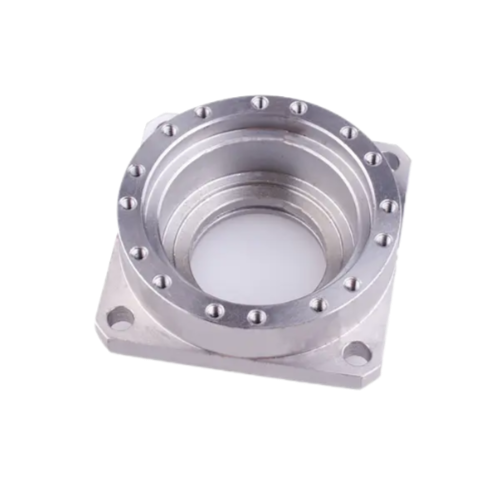
By prioritizing partners who demonstrate:
Verifiable process control (Cpk, SPC).
Comprehensive certification depth (ISO 9001, 13485, IATF 16949, ISO 27001).
Full process integration (machining, casting, finishing, assembly).
Proactive engineering support (DFM, GD&T expertise).
…you are not just buying parts. You are buying reliability, speed to market, and protection for your intellectual property. You are investing in the integrity of your final product.
For over a decade, GreatLight CNC Machining Factory has been delivering exactly this level of quality for clients ranging from startups to Fortune 500 companies in the aerospace, automotive, medical, and robotics sectors. Their commitment to precision is not a single specification on a print. It is a culture, a system, and a promise.
When you demand real OEM CNC Milling & Turning Inc Quality Parts, demand a partner who can deliver it with certified processes, integrated solutions, and a relentless focus on your success. Your project’s quality—and your reputation—depend on it.
For a deeper look at how specific clients have leveraged these capabilities to solve complex manufacturing challenges, explore our detailed case studies on the GreatLight CNC Machining Services page.


![[访谈] RAPID + TCT 2024:人工智能对 3D 打印的价值](https://print-ing.com/wp-content/uploads/2024/07/INTERVIEW-60x60.jpeg "[访谈] RAPID + TCT 2024:人工智能对 3D 打印的价值 9")




发表回复
要发表评论,您必须先登录。