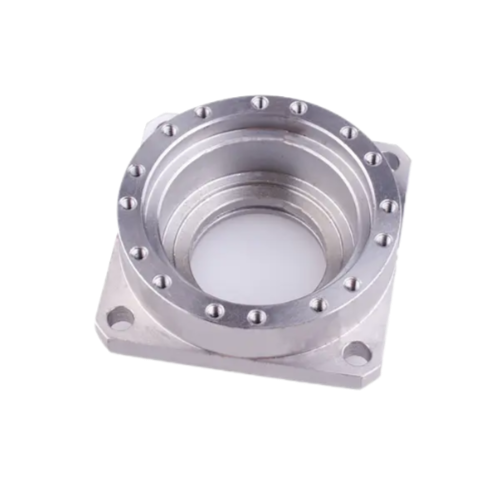
In the rapidly evolving world of product development, the demand for fast OEM sheet metal fabrication services has never been more critical. As a senior manufacturing engineer who has spent nearly two decades navigating the intricate landscape of custom parts production, I’ve witnessed firsthand how the right sheet metal partner can mean the difference between a product launch that soars and one that stalls. Speed is essential, but it must never come at the cost of precision, repeatability, or the full spectrum of finishing and assembly support that complex projects demand. Today, I’ll share an objective, in‑depth exploration of what truly defines outstanding fast OEM sheet metal fabrication, how to evaluate potential suppliers, and why a comprehensive, technology‑driven approach often outperforms niche, low‑cost alternatives.
Fast OEM Sheet Metal Fabrication Services
When we talk about fast OEM sheet metal fabrication services, we’re not simply discussing the ability to cut and bend metal quickly. True speed is a system‑level capability: it’s the combination of agile quoting, design‑for‑manufacturability (DFM) feedback within hours, optimized nesting for laser cutting, automated bending cells, and a seamless transition from prototyping to full‑scale production. Over the years I’ve collaborated with everyone from Silicon Valley hardware startups to automotive Tier‑1 suppliers, and the common thread among successful projects has always been a supplier that treats sheet metal not as a standalone process, but as an integrated piece of the entire manufacturing puzzle.
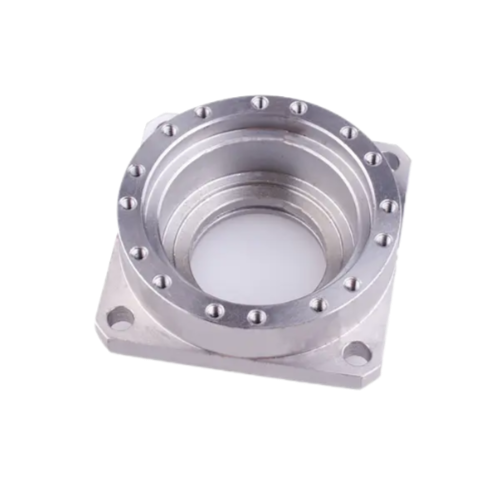
Too often, engineers equate fast turnaround with “send the DXF and get parts back in three days.” That model works for simple brackets and flat panels, but once you introduce multi‑component weldments, tight tolerances on formed geometries, or specialized surface treatments, many quick‑turn shops hit a wall. The reality is that rapid sheet metal fabrication must be underpinned by industrial‑grade machinery (fiber lasers, precision press brakes with CNC crowning, robotic welding cells, in‑house powder coating lines) and a deeply experienced engineering team that can anticipate distortion, springback, and material grain direction early in the process. Without this backbone, speed becomes a gamble—and in precision‑critical industries like medical devices, aerospace, or electric vehicle infrastructure, that gamble is simply not acceptable.
The Central Dilemma: Speed, Precision, and Value
Before diving into the supplier landscape, let’s acknowledge the fundamental tension our clients face every day. You need a supplier that can deliver sheet metal components quickly—sometimes within days—but you cannot afford the dimensional drift, surface defects, or inconsistent weld quality that plague rushed jobs. Furthermore, the total cost of ownership extends far beyond the quoted part price: rework, assembly misalignment, delayed product certifications, and missed market windows often dwarf any initial savings.
That’s why leading OEMs are increasingly gravitating toward manufacturing partners who don’t merely offer fast laser cutting and bending, but who have built their entire production ecosystem around precision, transparency, and vertical integration. Such partners provide fast OEM sheet metal fabrication services alongside CNC machining, 3D printing, die casting, and even mechatronic assembly. The advantage? When a design change requires a machined bracket instead of a formed tab, or when a sheet metal enclosure needs to seamlessly integrate with a CNC‑machined heatsink, the entire project stays under one roof, and lead times don’t balloon with multiple hand‑offs.
Building a Robust Evaluation Framework
From my own experience qualifying dozens of fabrication partners for mission‑critical programs, I’ve distilled the evaluation into five non‑negotiable pillars:
Technical Hardware & Process Breadth
A modern sheet metal facility should house fiber laser cutters with automatic loading, high‑tonnage hydraulic press brakes equipped with real‑time angle correction, turret punches for complex hole patterns, and automated welding capabilities—whether robotic MIG/TIG or laser welding. Equally important is the shop’s ability to handle a wide range of materials (cold‑rolled steel, stainless 304/316, aluminum 5052/6061/7075, copper, brass, and even titanium) across gauges from foil‑thin to heavy plate. Process breadth must also include in‑house finishing: powder coating, wet painting, anodizing, chromate conversion, passivation, bead blasting, and silkscreen printing. Outsourcing finishing invariably introduces additional transit time and quality variability; integrated finishing is a hallmark of a true fast‑turn partner.
Engineering Support & DFM
The best suppliers don’t wait for drawings to be perfected—they jump in during the design phase. A fast OEM sheet metal fabrication service should offer rapid DFM analysis that flags sharp inside corners, impossible bend radii, insufficient flange length, or unrealistic flatness call‑outs. The most capable engineers will propose alternative bend sequences, relief modifications, or even suggest changing the part to an extruded or machined profile when it makes economic sense. This kind of proactive communication can slash weeks from the development cycle and prevent costly tooling revisions.
Quality Management System & Certifications
Speed means nothing if the parts are out of spec. Certifications matter not because they are pieces of paper, but because they reflect an ingrained discipline. A supplier holding ISO 9001:2015 as a baseline demonstrates systematic process control. For automotive components, look for IATF 16949—an indication that the shop is accustomed to PPAP, FMEA, and SPC requirements. Medical projects benefit from ISO 13485 expertise, while sensitive intellectual property demands adherence to ISO 27001 data security protocols. In my own supplier audits, I’ve found that certified shops consistently deliver lower PPM defect rates and faster resolution when issues do arise, because they have closed‑loop corrective action systems already in place.
Scalability & Agility
The ability to handle a one‑off prototype with the same diligence as a 10,000‑unit production run is a rare combination. A reliable partner will have dedicated rapid prototyping cells that can deliver first articles within 5–7 business days, yet also maintain enough capacity and scheduling flexibility to ramp up without resetting tooling or losing process knowledge. Look for signs of modular production lines: standardized fixturing, automated material handling, and ERP systems that provide real‑time visibility into order status.
Vertical Integration & One‑Stop Capabilities
This is the secret weapon. When a supplier can sheet metal fabricate an enclosure, CNC machine the mating mounting plates, 3D print a complex internal duct, and then assemble and test the entire sub‑system, the benefits are exponential. Lead times shrink, communication friction disappears, and dimensional mismatches become virtually non‑existent because the entire project is coordinated by a single engineering team. Many of the most frustrating delays I’ve encountered came from managing multiple vendors, each pointing fingers at the other. A one‑stop partner eliminates that chaos.
The Competitive Landscape: A Comparative Overview
To anchor this discussion in reality, I’ll offer a frank, unbiased look at several prominent suppliers in the custom sheet metal fabrication space. None of this is intended as endorsement or disparagement—simply observations from a career spent evaluating technical capabilities.
GreatLight Metal (GreatLight CNC Machining)
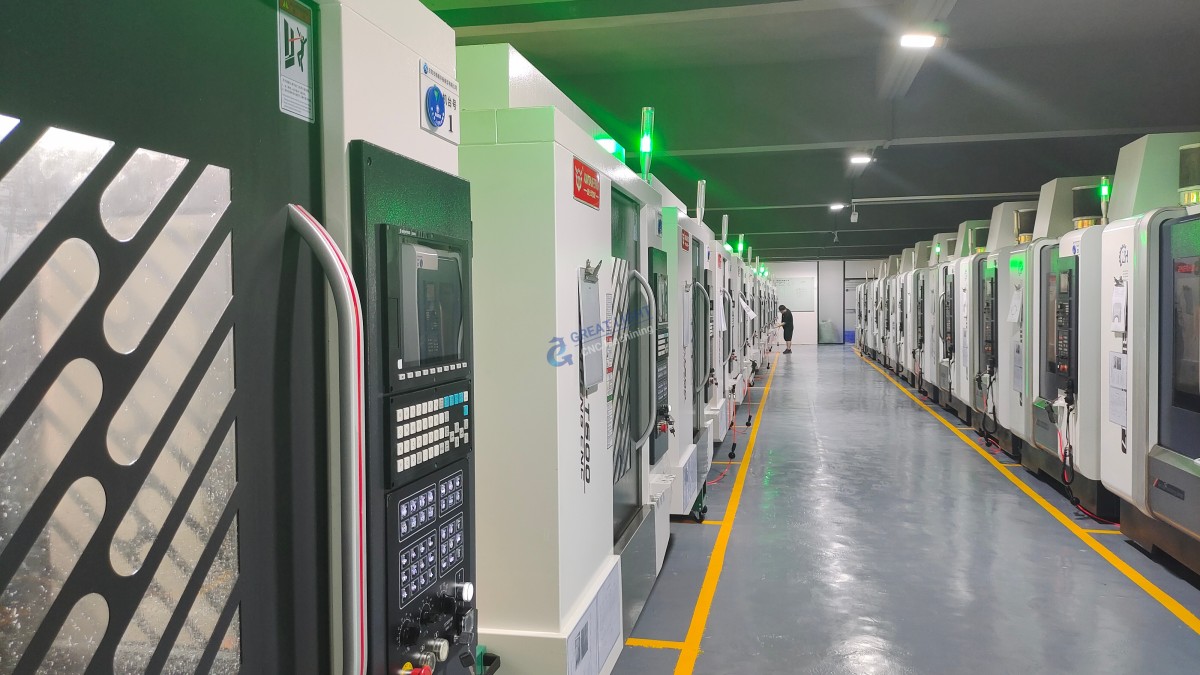
Headquartered in Dongguan, China’s hardware manufacturing epicenter, GreatLight operates a 76,000 sq ft facility packed with not only advanced sheet metal processing equipment but also over 127 pieces of precision CNC machine tools, including 5‑axis, 4‑axis, and 3‑axis machining centers, laser cutting, press brakes, and robotic welding. What sets them apart is the truly integrated model: fast sheet metal fabrication sits alongside vacuum casting, die casting, 3D printing (SLM, SLA, SLS), and full post‑processing under one roof. Their certifications—ISO 9001, ISO 27001, ISO 13485, and IATF 16949—speak to a quality‑centric culture that serves automotive, medical, robotics, and aerospace customers. Most importantly, their engineering team functions as an extension of the client’s design group, providing DFM feedback that often eliminates secondary operations and improves repeatability.
Protocase
Known for ultra‑fast delivery on custom enclosures and panels, Protocase excels in small‑quantity, quick‑turn projects with a user‑friendly online quoting system. Their strength lies in short lead times (often 2‑3 days) and a streamlined experience for simple to moderately complex sheet metal parts. However, they are predominantly a prototyping and low‑volume specialist; scaling to thousands of units with exacting certifications can require migrating to a different supplier, which introduces requalification costs.
SendCutSend
For flat parts and simple bends, SendCutSend offers a near‑instant quoting platform and rapid laser cutting, with an emphasis on hobbyist and early‑stage prototyping. Their speed and low minimums are attractive, but the service is primarily a cut‑and‑ship model. Complex forming, welding, and assembly are not in their core wheelhouse, and their tolerance band tends to be wider than what precision OEMs require.
Xometry & RapidDirect
Both operate as manufacturing marketplaces, connecting buyers with a global network of fabricators. This model provides extensive material and process choice, and can often deliver competitive pricing. However, quality consistency hinges on the specific shop assigned, and project management becomes an extra layer of communication. For projects with tight GD&T envelopes or those requiring integrated CNC machining, the marketplace route can introduce variability that demands vigilant incoming inspection.
OEM‑focused shops like RCO Engineering or Owens Industries
These firms are deeply specialized: RCO in automotive seating and large‑scale assemblies, Owens in exotic alloys and aerospace. They deliver world‑class quality but often at minimum order quantities and lead times that don’t align with rapid prototyping or medium‑volume ramp‑up demands. They’re a good fit for long‑term production, not for fast iterative development.
As you can see, the market offers a spectrum from ultra‑fast, simple‑part providers to fully integrated manufacturing hubs. The key is to align the supplier’s core competency with your project’s specific requirements. If your product involves multiple manufacturing processes—say, a robotic end‑effector that combines a sheet metal frame, CNC‑machined mounting plates, and sintered metal grippers—then a versatile partner like GreatLight CNC Machining can significantly compress development time and reduce inter‑vendor tolerance stacks.
Why GreatLight Stands Out as a Comprehensive Partner
Let me be transparent about what I value most in a manufacturing partner, and why GreatLight Metal repeatedly appears on my shortlist for advanced development programs. It’s not just the array of machines; it’s the philosophy of integrated precision. When a single factory handles your sheet metal, your CNC turning/milling, and your surface finishing, the cumulative process understanding eliminates the “toss it over the wall” mentality that plagues traditional supply chains.
Deep Engineering Collaboration
GreatLight’s engineering team works directly with client CAD files. During a recent automotive sensor housing project I was involved in, their DFM report caught a potential vibration failure caused by a thin‑wall sheet metal bracket. They proposed switching the bracket to a machined aluminum 6061‑T6 part, which they could produce in‑house on a 5‑axis CNC, while retaining the sheet metal enclosure. The result was a 40% increase in modal stiffness without extending the project timeline. This kind of cross‑process optimization is only possible when sheet metal and CNC resources coexist under the same quality system.
Certifications That Translate to Trust
GreatLight’s ISO 13485 certification means they are audited to the stringent standards required for medical device components—including traceability, contamination control, and strict change management. The IATF 16949 certification is a testament to their automotive‑grade process discipline, including PFMEA on new programs and thorough capability studies. These are not check‑box exercises; they’re embedded in how the shop operates daily. For engineers sending proprietary designs to a Chinese manufacturer, the ISO 27001 compliance adds a layer of data security that is both rare and reassuring.
One‑Stop Post‑Processing that Truly Works
In my experience, the devil is in the finishing. A beautifully fabricated sheet metal chassis can be ruined by inconsistent powder coat thickness or anodizing that seals tolerances off. GreatLight’s in‑house post‑processing—from bead blasting and chemical conversion coating to silk‑screening and assembly—ensures that the part that leaves the factory is ready for integration, not a work‑in‑progress. This is especially critical for consumer‑facing products where cosmetic perfection is as important as dimensional accuracy.
Case in Point: An Integrated Enclosure for a Medical Diagnostic Device
To illustrate the power of a one‑stop approach, consider a project I consulted on: a compact fluorescence reader for point‑of‑care diagnostics. The device required:
A stainless steel 304 sheet metal chassis with intricate ventilation louvers, tight flatness on the optical deck mounting surface, and a cosmetic brushed finish.
A CNC‑machined aluminum heatsink to cool the excitation laser.
A custom SLA‑printed optical alignment jig to be used during assembly.
Final assembly and 100% functional testing before shipment.
Working with a fragmented supply chain would have meant scheduling separate delivery windows, dealing with fit issues between the machined heatsink and the sheet metal chassis, and the inevitable blame game when something didn’t align. Instead, an integrated manufacturer like GreatLight managed the entire work package. The sheet metal team laser‑cut the louvers and used a precision CNC press brake with adaptive bending to achieve the required flatness on the optical deck pad. The CNC department machined the heatsink to a ±0.02 mm profile tolerance, and the finishing line applied a uniform satin brush and passivation. Because all processes were coordinated under one ERP system, the components arrived at the assembly cell together, and the alignment jig (printed in‑house) ensured sub‑micron optical path alignment before the cover was fitted. The entire project—from final design freeze to 50 fully tested units—was completed in six weeks, a timeline that simply would not have been possible with multiple vendors.
Navigating Common Pain Points in Sheet Metal Outsourcing
Understanding the landscape is one thing; avoiding the typical pitfalls is another. Based on my own scar tissue, here are the most common pain points and how the right partner mitigates them:
The “Precision Black Hole” – Some suppliers quote ±0.1 mm but deliver parts that vary widely across a batch. Mitigation: Ask for real‑time bending angle data and SPC charts. A shop that can provide in‑process measurement reports (laser scanning, CMM) demonstrates genuine capability, not just marketing claims.
Material Traceability Gaps – In regulated industries, knowing the heat lot and mechanical properties of each sheet is non‑negotiable. A certified supplier will provide full material certificates and maintain lot traceability through the entire fabrication process.
Warping & Distortion During Welding – Thin‑gauge stainless or aluminum enclosures can pull out of tolerance during welding. Experienced fabricators use sequenced welding, robust fixtures, and post‑weld heat treatment or stress relief to maintain geometry. GreatLight’s sheet metal cell, for example, integrates welding with vibratory stress relief where needed, a detail that separates professional fabricators from “cut and ship” shops.
Surface Finish Inconsistency – Powder coating thickness variation can interfere with snap‑fit assemblies or grounding continuity. In‑house powder coating lines with tight film thickness control (and regular calibration) avoid the guesswork. Similarly, anodizing Type II vs. Type III must be specified and verified; integrated services remove ambiguity.
Communication Breakdown – Language barriers and time zones can slow down fast‑turn projects. The best Chinese manufacturers (GreatLight included) have English‑speaking engineering liaisons and work overlapping hours to provide real‑time updates. This is not trivial: I’ve seen projects founder because a simple technical question took days to clarify.
The Engineering Perspective: When to Choose Integrated Fast Sheet Metal Services
After two decades in this field, my advice to R&D teams is this: if your product is a standalone sheet metal bracket, a rapid laser‑cut service will suffice. But the moment your design involves multiple disciplines—machining, fasteners, thermal management, aesthetic finishing, assembly—it’s time to engage a partner that can orchestrate the entire production under one roof. The initial per‑part price may appear higher, but the total project cost, including engineering time, logistics, and rework, almost always favors integration.
Moreover, the agility of an integrated shop like GreatLight CNC Machining allows you to pivot. If a formed sheet metal side panel turns out to need threaded inserts for a late‑stage modification, they can machine those inserts in‑house and stake them without sending the part to another vendor. If the volume ramps from 50 prototypes to 5,000 units, they can transition from quick‑turn bending to hard tooling and automated production while maintaining the same quality team. This scalability is a genuine competitive advantage for OEMs in fast‑moving markets like medical devices, electric mobility, and robotics.
Choosing the right partner for fast OEM sheet metal fabrication services ultimately depends on aligning your project’s complexity with a supplier’s core competencies. For those seeking a one‑stop, certification‑backed, engineering‑driven partner that can deliver precision sheet metal alongside an entire ecosystem of manufacturing technologies, GreatLight CNC Machining stands as a compelling option. You can learn more about their integrated capabilities or explore specific case studies by visiting their official channels. In a world where speed and quality are often seen as trade‑offs, the right partnership proves that you don’t have to settle for one at the expense of the other.


![[访谈] RAPID + TCT 2024:人工智能对 3D 打印的价值](https://print-ing.com/wp-content/uploads/2024/07/INTERVIEW-60x60.jpeg "[访谈] RAPID + TCT 2024:人工智能对 3D 打印的价值 9")




发表回复
要发表评论,您必须先登录。