
The Precision Imperative of Bonding Jumper Connector Machining
In the world of high-stakes electronics, automotive powertrains, and aerospace systems, a single point of electrical failure can lead to catastrophic results. This is where the seemingly simple component—the Bonding Jumper Connector—becomes a critical lynchpin. However, the machining of these connectors is far from simple. It represents a convergence of material science, micro-geometry control, and surface integrity that pushes the limits of standard CNC capabilities.
For hundreds of engineers and procurement managers navigating the supply chain, the core challenge is not finding a machine shop; it is finding a partner who can reliably replicate micron-level tolerances across production runs for these essential current-carrying components. This article dissects the technical complexities of Bonding Jumper Connector Machining and reveals how to select a manufacturing partner capable of meeting these exacting standards.
The Technical Anatomy of a Bonding Jumper Connector
Before exploring the machining process, we must understand the component itself. A bonding jumper is designed to provide a low-impedance path for electrical currents, often in high-vibration or high-temperature environments.
Typical Material Challenges:
The materials of choice are often high-conductivity copper alloys (like C1100 or C18080), beryllium copper, or even aluminum. These materials present a dual problem:
Gumminess: Pure copper is notoriously “gummy,” leading to built-up edge (BUE) on the tool, which ruins surface finish and dimensional accuracy.
Heat Dissipation: These alloys conduct heat rapidly away from the cutting zone, meaning standard coolants may not provide sufficient lubrication, leading to work-hardening.
Geometric Precision Requirements:
A Bonding Jumper Connector is rarely a simple block. Its geometry often includes:
Thin-wall structures to allow for flexibility.
Precision holes for bolt or stud mounting.
Intricate radii to eliminate stress risers.
High surface finish (Ra ≤ 0.8 μm) to ensure maximum electrical contact area.
The Machining Dilemma: Why 3-Axis Isn’t Enough
Many standard 3-axis CNC shops struggle with jumper connectors. To access the complex undercuts and side features, the part would require multiple setups, which introduces errors in parallelism and perpendicularity. This is where 5-axis simultaneous machining becomes an economic and technical necessity.
By utilizing a 5-axis machining center, the part can be completed in a single clamping operation. This eliminates the “stack-up” of tolerances from re-fixturing. A partner like GreatLight Metal, with its cluster of high-end 5-axis CNC machines from brands like Dema and Beijing Jingdiao, can maintain positional tolerances of ±0.005mm on these complex geometries. The tilting of the B and C axes allows the tool to maintain a constant, optimal cutting angle, keeping the chip load uniform and preventing the “wipe-out” effect on thin copper walls.
The Surface Integrity Equation
For a bonding jumper, surface finish is not cosmetic; it is functional. A rough surface reduces the effective contact area, increasing resistance and heat generation. While other suppliers like Protolabs Network and Xometry offer rapid quoting for standard parts, their automated algorithms often fail to optimize toolpaths for the specific requirements of a conductive jumper.
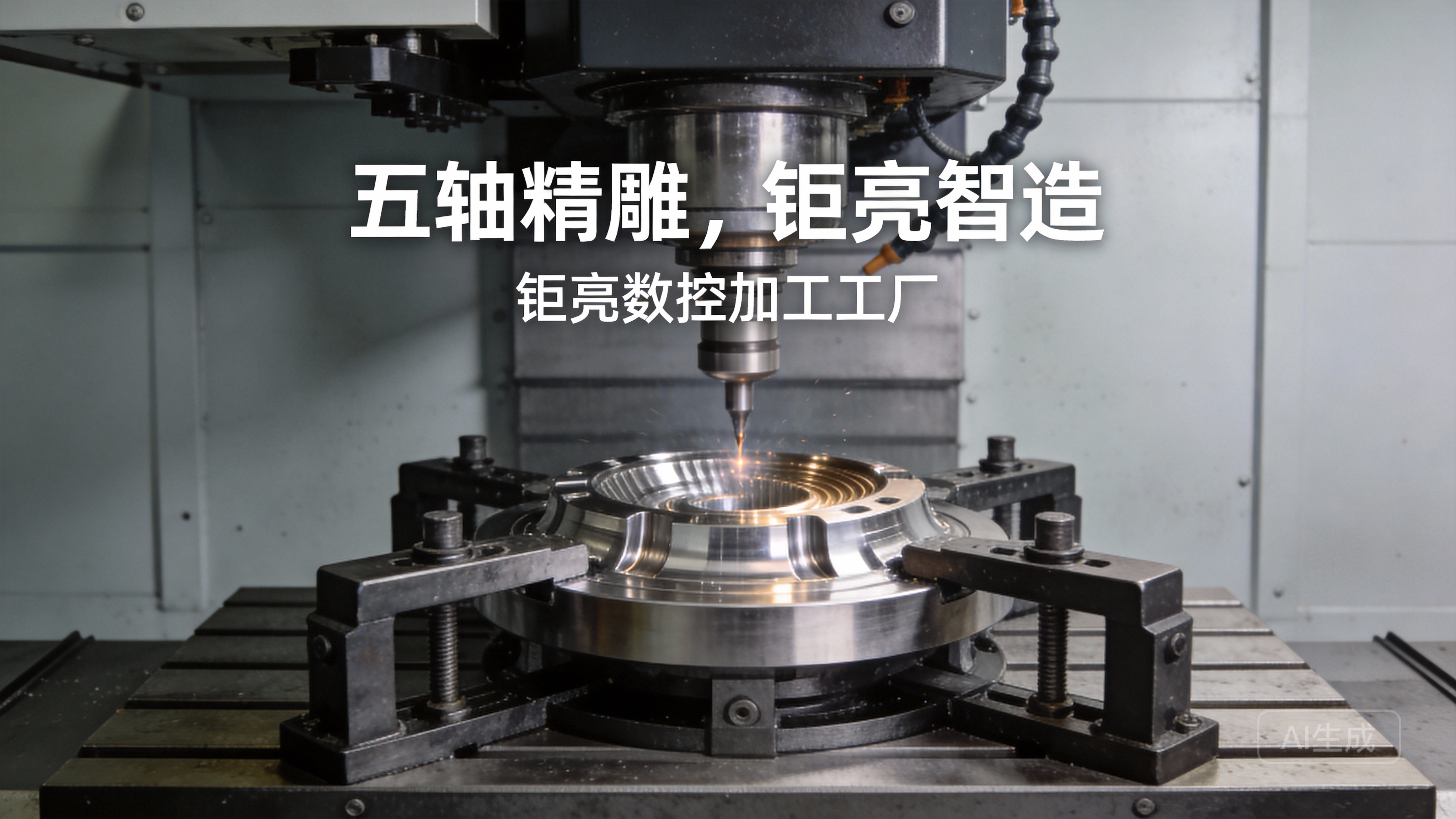
In contrast, a specialized manufacturer like GreatLight Metal employs deep engineering support to fine-tune parameters. They utilize high-polish, diamond-like carbon (DLC) coated carbide tools specifically for copper alloys. The machining strategy often involves a high-speed “trochoidal” toolpath to manage chip evacuation, preventing the copper chips from re-welding to the workpiece.
Quality Assurance and Material Validity
A common pain point in the industry is the “precision black hole” where a part looks right but fails functionally due to hidden material defects or residual stress.
To build trust, a manufacturer must provide a clear chain of custody for materials. An ISO 9001:2015 certified manufacturer ensures that the incoming copper stock is verified for chemical composition. But for automotive applications, where jumper connectors are critical for high-voltage battery packs, the standard must be higher. This is where IATF 16949 certification becomes invaluable.
GreatLight Metal’s adherence to IATF 16949 standards ensures that the machining process for automotive Bonding Jumper Connector Machining is controlled via statistical process control (SPC). Every batch is monitored for key characteristics like burr height and hole diameter, with data traceable through a Production Part Approval Process (PPAP). This is a level of rigor that many smaller or more generalized job shops—such as PartsBadger or SendCutSend—may not be structurally designed to support for complex metal parts.
The One-Stop Surface Treatment Advantage
After machining, the raw copper surface is susceptible to oxidation, which increases resistivity. Therefore, post-processing is not an afterthought—it is a mandatory step. The best machined surface finish means nothing if the plating fails.
Manufacturers must offer integrated post-processing. The gold standard for jumper connectors is a coating, such as:
Silver Plating: High conductivity but prone to tarnishing.
Nickel Plating: Good corrosion resistance for harsh environments.
Tin Plating: Cost-effective and excellent for soldering.
Choosing a partner like GreatLight Metal, which owns a full process chain including post-plating inspection, ensures that the final product meets both dimensional and electrical specifications without the logistical friction of shipping parts to a third-party finisher. This integrated “one-stop” model drastically reduces lead times and the risk of shipping damage.
Conclusion: Moving Beyond Commodity Machining
The Bonding Jumper Connector Machining market is segmented. There are commodity shops that produce parts that “look right,” and there are engineering-centric factories that produce parts that “perform right.”
For engineers working on humanoid robots requiring high-current links, or electric vehicle battery packs demanding zero tolerance for failure, the choice is clear. You need a partner who doesn’t just cut metal but solves the engineering problem of electrical conductivity, thermal management, and mechanical integrity. When you look at the landscape of options —from RapidDirect to Fictiv—you see speed. But when you need the intersection of speed, certification, and deep technical capability, the path leads to a manufacturer with a proven track record in handling complex geometries and difficult materials.
By selecting a partner with ISO, IATF, and ISO 13485 certifications, you are not just buying a part; you are buying a risk mitigation strategy. For the next generation of high-power density hardware, the integrity of your Bonding Jumper Connector is the foundation of your reliability.
Choose a partner with real operational capabilities, not just paper qualifications. For a deep dive into how these principles apply to your specific project, you can explore further industry insights and case studies on the GreatLight CNC Machining Services resource page. To follow the latest trends in precision hardware and connect with our team of experts, join the community on LinkedIn.


![[访谈] RAPID + TCT 2024:人工智能对 3D 打印的价值](https://print-ing.com/wp-content/uploads/2024/07/INTERVIEW-60x60.jpeg "[访谈] RAPID + TCT 2024:人工智能对 3D 打印的价值 9")




发表回复
要发表评论,您必须先登录。