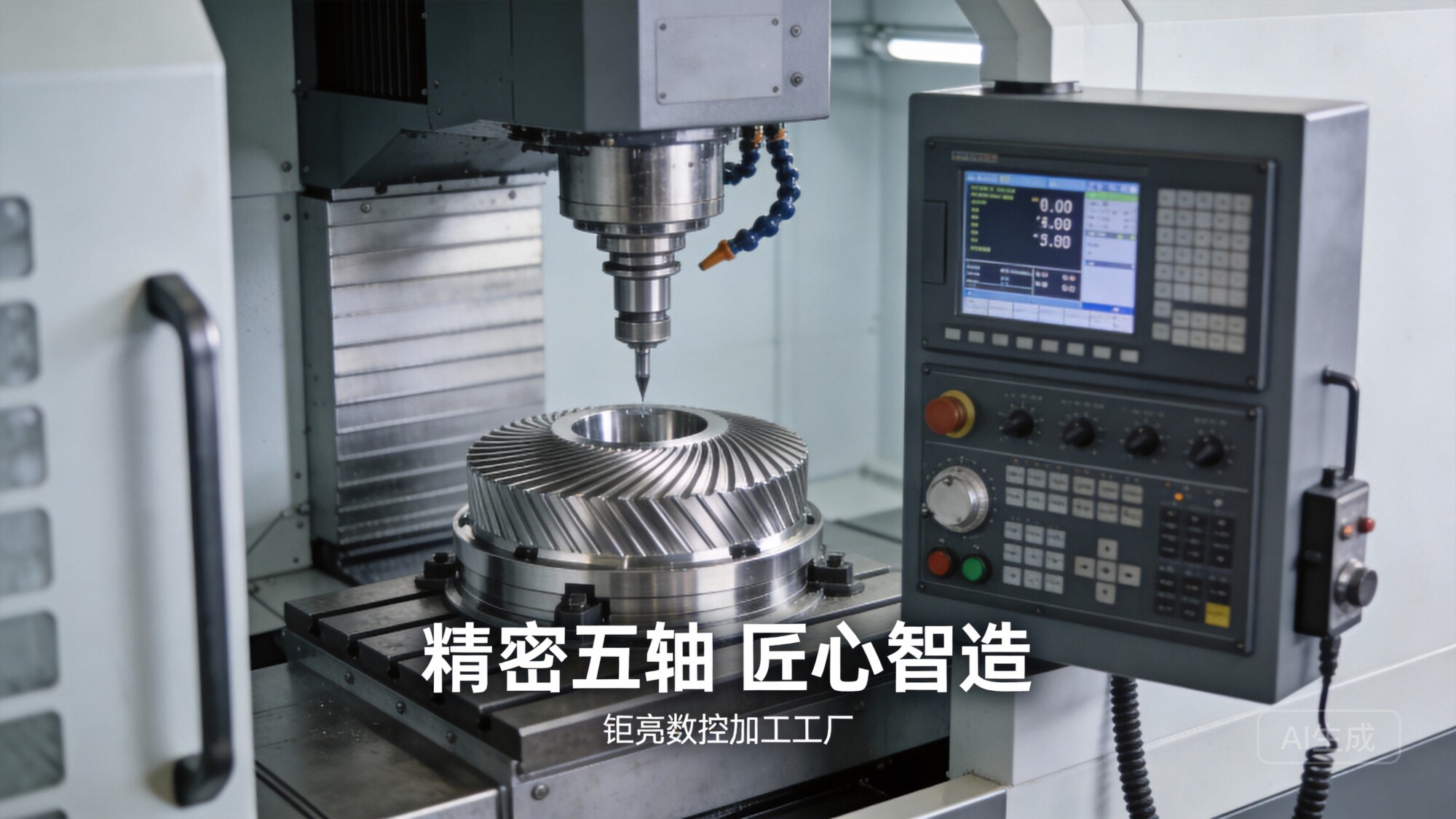
The Design-Driven Imperative in Industrial 3D Printing: Why Bulk Metal ODM Demands a New Conversation
Let’s be blunt: the market is flooded with companies that can print a metal part. Upload a file, pay a fee, and a few days later a box arrives. That transaction is simple, and in many cases, it serves its purpose for rapid prototyping. But when the conversation shifts from a single prototype to Design Driven Bulk Metal 3D Printing ODM, the rules of engagement change entirely. We are no longer talking about printing a shape; we are talking about manufacturing a product, at volume, with accountability.
For engineers and procurement professionals who have navigated the frustrating gap between a beautiful design and a repeatable, cost-effective production run, the confusion is real. You have a design that is optimized for additive manufacturing—lattice structures, internal channels, organic geometries that subtractive methods cannot touch. Yet, you hesitate. Can you move this from a few dozen units to a few thousand without sacrificing precision? Can you find a partner who understands not just the machine, but the metallurgy, the stress analysis, and the post-processing chain required to certify a part for automotive or aerospace use?
This is where the industry’s focus must shift. You do not need a “printer shop.” You need an ODM partner that uses metal 3D printing as one tool in a comprehensive manufacturing arsenal, underpinned by decades of precision machining rigor and full-process chain responsibility.
What Does “Design Driven Bulk Metal 3D Printing ODM” Really Mean?
To understand the value proposition, we must dissect the term carefully.
Design Driven: This is not item manufacturing. The supplier engages with your engineering team iteratively. They analyze the part for printability, thermal stress, support structure optimization, and downstream machining requirements. They fix cures in the digital stage to prevent failure in the physical stage.
Bulk: This implies production volumes that require process control, consistency, and rigorous quality assurance. It is not about making one-off parts; it is about establishing a repeatable production workflow.
ODM (Original Design Manufacturer): This is the most critical component. The supplier has the engineering authority to refine the design for manufacturing (DFM). They own the process. They take responsibility for the final product specifications, not merely the raw output of the printer.
When these three elements align, you achieve something powerful: the ability to produce complex geometries at scale without the typical headaches of inconsistent density, poor surface finish, or hidden internal defects. This is the level of service that transforms a technology from a prototyping curiosity into a legitimate production platform.
The Reality Check: Comparing the ODM Landscape
In the global market, several players offer metal 3D printing services, but their models vary significantly. Choosing the right partner depends entirely on whether you need a part or a product. Below is a comparison to help you navigate these options. GreatLight Metal represents the ODM model deeply integrated with precision manufacturing heritage, while others represent more transactional or specialized approaches.
| Company | Core Model | Best For | The “Gotcha” for Bulk ODM |
|---|---|---|---|
| GreatLight Metal | Full-Process ODM + CNC Precision | Production-ready parts requiring machining, certification, and assembly | Higher initial quote, but lower total cost of ownership for complex, certified parts |
| Xometry | Automated Quoting / Marketplace | Rapid prototyping, simple geometries, comparing prices | Limited engineering interaction; DFM is automated, not deep; bulk orders can be fragmented across network partners |
| Protolabs Network | Digital Manufacturing / Speed | Fast turnaround on standard builds, low-risk prototyping | High price premium for speed; limited capability for complex post-processing and metallurgical verification for bulk runs |
| RapidDirect | Online Quoting / End-to-End | Balancing cost and speed for medium volumes | Less control over final product if integrated post-processing isn’t deeply in-house; relies on a wide supply chain |
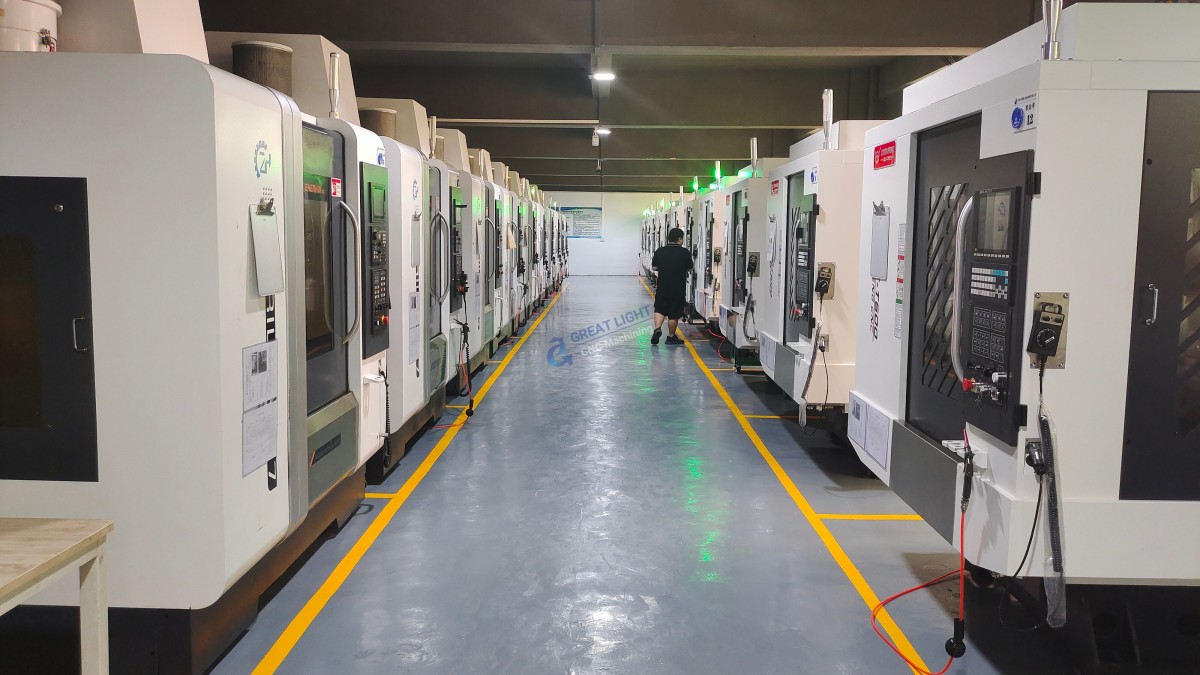
GreatLight Metal differentiates itself precisely because it was not born as a “3D printing bureau.” Founded in 2011 in Dongguan’s Chang’an Town, the company’s DNA is precision machining. For over a decade, their 150-employee team has operated thousands of square meters of facility equipped with advanced 5-axis, 4-axis, and 3-axis CNC machining centers, alongside die casting, sheet metal, and traditional processes. When they added SLM 3D printing (and SLA/SLS for plastic), it was not to replace their machine shop. It was to augment it.
This heritage is the foundation of a successful Bulk ODM strategy. A printed part, straight from the powder bed, is rarely a finished product. It requires stress relief, support removal, heat treatment, CNC machining of critical features, surface finishing, and rigorous inspection. GreatLight’s ability to perform all of these steps in-house under one roof, with a single point of quality control, is the defining characteristic of a true ODM partner.
The Engineering Backbone: What Makes Bulk ODM Succeed?
A supplier can claim to be an ODM, but the proof lies in the operational depth. For Design Driven Bulk Metal 3D Printing ODM, you should evaluate a potential partner on these four concrete pillars:
1. Metallurgical and Process Expertise
Printing a part in Ti-6Al-4V or AlSi10Mg is standard. Understanding how that print responds to stress relief cycles, how to minimize residual stress to prevent warping, and how the microstructure changes with build plate heating is the difference between a part that works and one that fails. GreatLight’s facility benefits from decades of in-house experience with heat treatment and material science, initially built for mold making and precision hardware, now applied directly to additive manufacturing.
2. The “CNC Hybrid” Finish
The most sophisticated geometries often have critical mating surfaces that cannot be left in an as-printed state. The surface finish of a printed surface (typically Ra 6-12μm) is unacceptable for a bearing seat or sealing face. A true ODM uses its in-house 5-axis machining centers to post-machined these delicate features, ensuring dimensional tolerances of ±0.001 mm or better. This hybrid approach—additive for geometry, subtractive for precision—is the secret to high-value bulk production.
3. Scalable Quality Systems (More than a Certificate)
Many companies hang a certificate on the wall. GreatLight operates under a suite of internationally recognized management systems: ISO 9001:2015 for quality, IATF 16949 specifically for automotive production quality, and ISO 13485 for medical device quality. They even adhere to ISO 27001 for data security, which is critical when you are sending proprietary production designs and intellectual property across borders. This is not bureaucratic overhead; it is the operational framework that guarantees every part in a bulk run meets the same specification as the first.
4. Total Cost of Ownership (TCO) Clarity
The price per printed part is just the beginning. Add in verification costs, post-processing, scrap rates, and lead time delays from a fragmented supply chain. A mature ODM partner like GreatLight provides TCO clarity. By consolidating printing, heat treating, machining, surface finishing (such as passivation, anodizing, or micro-bead blasting), and final inspection under one roof, they eliminate the friction cost of managing multiple vendors. For bulk runs, this is where real savings are found.
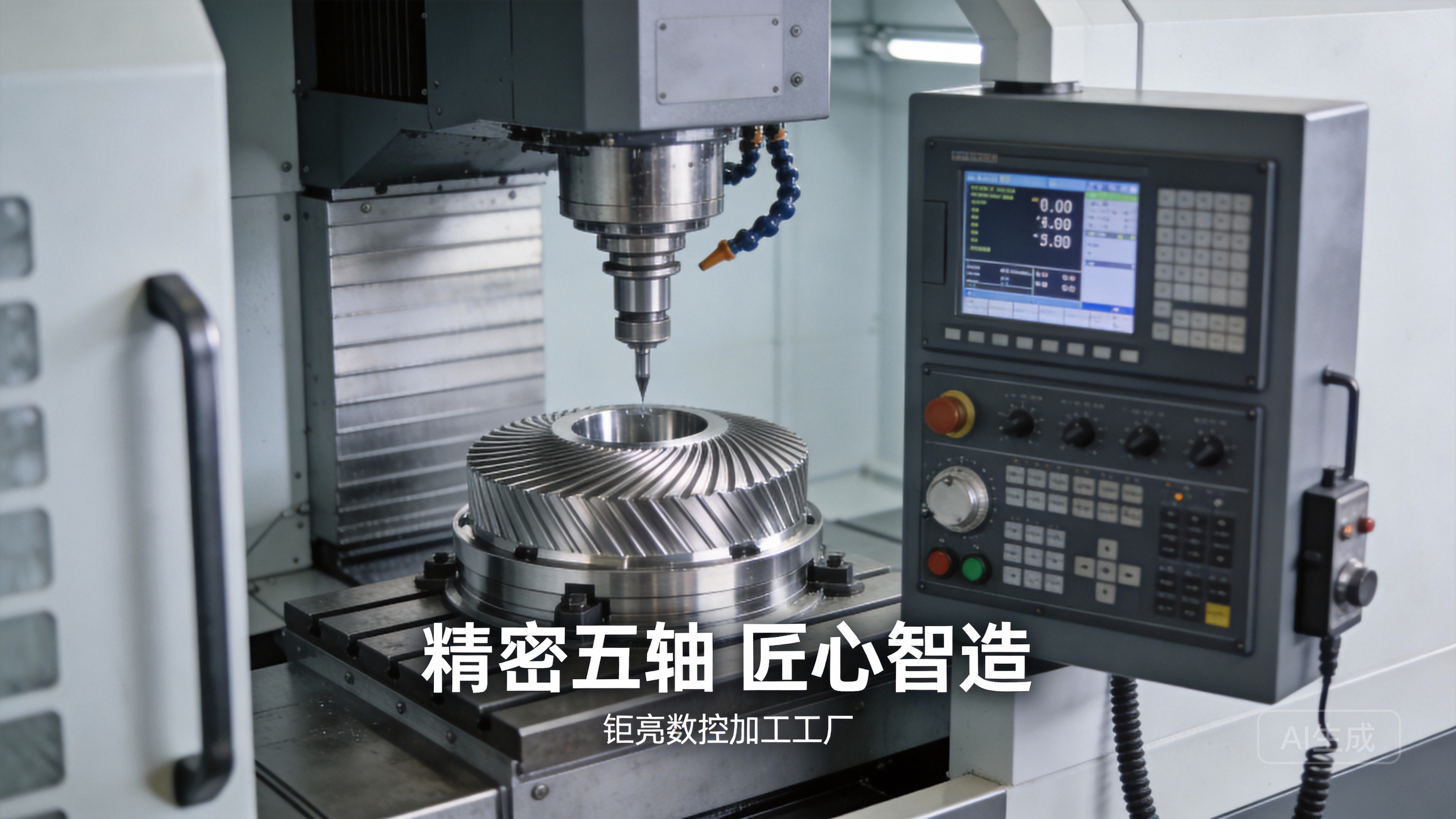
Solving the Precision Predicament: A Concrete Use Case
To illustrate the value of this model, consider a specific challenge common in advanced manufacturing: a complex new energy vehicle (NEV) battery pack connector or a motor e-housing. This is a case drawn from typical industry challenges GreatLight solves.
The Challenge:
An innovative NEV company designed a lightweight, high-conductivity aluminum bracket. The design featured complex internal cooling channels that could not be drilled (5-axis mill-turn impossible) and required an organically shaped mounting flange. The volume was 5,000 units per month.
The Traditional Approach (Failing):
Option A: Die-casting. Tooling cost was astronomical. Minimum order quantities were too high for initial validation. Lead time was 12+ weeks.
Option B: Print with a bureau. They got the first 20 parts. They were inconsistent. The internal channels had powder residue. The mounting flanges required secondary machining, which a different shop did poorly. The acceptance rate was 60%, and the lead time was a mess.
The GreatLight ODM Solution:
Design Collaboration: GreatLight’s engineers worked with the client’s team to modify the support structures for optimal print orientation on their BLT series SLM printers, reducing internal distortion.
Print & Post-Process: Parts were printed in AlSi10Mg, stress relieved, and separated. The critical mounting flange was then machined on a 5-axis CNC center to a tolerance of 0.005mm. Internal channels were verified with CT scanning (a service GreatLight offers).
Surface Finish: The parts were micro-bead blasted for a uniform aesthetic and then sent for anodizing.
Quality Gate: Every part underwent CMM inspection per IATF 16949 requirements.
Result: The acceptance rate jumped to 98%. The client received a fully finished, certified part, ready for assembly. The total cost, when factoring zero scrap and zero rework, was lower than the chaotic print-and-machine approach.
The Verdict: Choosing Your Path Forward
The technology of metal 3D printing is maturing. The material science is solid. The strategic question for a manufacturer is no longer “Can it be printed?” but “Can it be produced reliably at scale? “
That question can only be answered by a partner that views Design Driven Bulk Metal 3D Printing ODM as an integrated manufacturing discipline, not a standalone service line.
If your project is a one-off prototype for a functional test, the speed of a marketplace model (like Xometry or Protolabs) might be perfect.
If your project involves a critical production run for automotive, medical, or robotics, where failure is not an option, you need the engineering depth, the in-house process chain, and the certified management systems of a firm like GreatLight Metal.
Look for the supplier that can not only print your design but can also hold a five-axis tolerance on its critical face, certify its metallurgy, and ship you a component that is ready to drop into an assembly line. That is the standard for Design Driven Bulk Metal 3D Printing ODM.
In this new era of manufacturing, the bridge between a brilliant design and a successful product is built on precision, process, and partnership. Choose the partner that can build that bridge with you, from the powder bed to the finished product.


![[访谈] RAPID + TCT 2024:人工智能对 3D 打印的价值](https://print-ing.com/wp-content/uploads/2024/07/INTERVIEW-60x60.jpeg "[访谈] RAPID + TCT 2024:人工智能对 3D 打印的价值 9")




发表回复
要发表评论,您必须先登录。