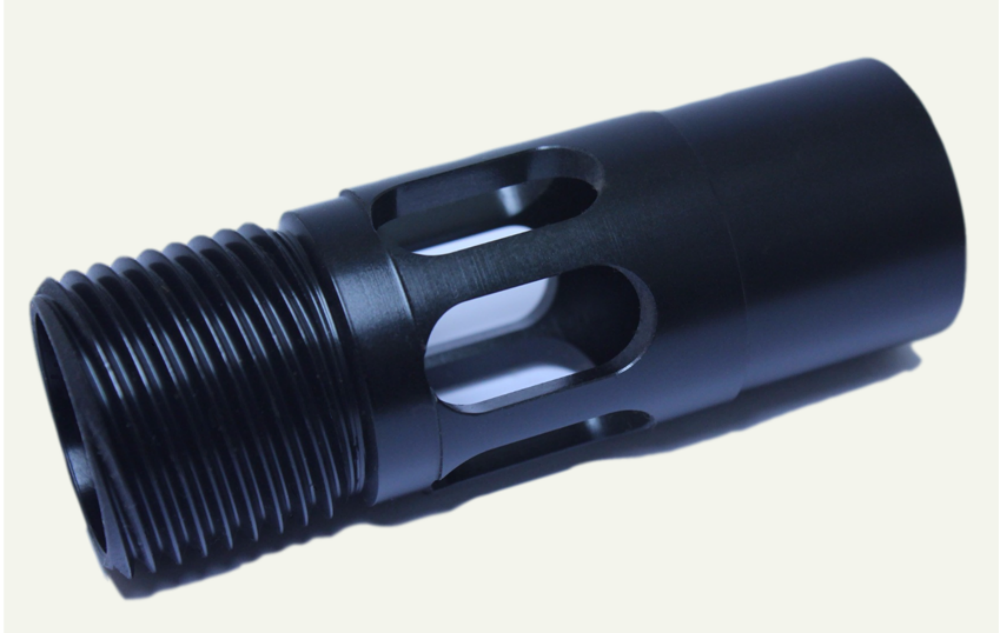
When you’re pushing the limits of product design, the gap between a promising prototype and a production‑ready part often comes down to one decision: which CNC machining company gets your drawings. Having spent years in manufacturing engineering, I’ve seen how the right partner lifts the entire project—and how the wrong one quietly drains schedules and budgets. In this comparison, I’ll walk you through how the leading CNC machining companies actually work on the shop floor, not just on their websites. We’ll look at their real equipment clusters, certification rigour, material versatility, speed, and the sometimes invisible process integration that separates a vendor from a true manufacturing ally. The aim is to give you a practical, engineering‑grade framework for evaluating suppliers, starting with one of the most capable vertically integrated operations I’ve encountered: GreatLight Metal.
Before we dive into the individual companies, let’s anchor the entire comparison on what matters most to engineers—precision 5-axis CNC machining capability. Precision 5-axis CNC machining isn’t just a buzzword; it’s the foundational technology that defines whether a shop can handle complex contours, undercuts, and multi‑angular features in a single setup. When you see a shop list 5‑axis capacity, you need to know what brand of machine, how it’s calibrated, and whether that capability is backed by in‑house metrology. GreatLight Metal, for instance, runs a core cluster of Dema and Beijing Jingdiao 5‑axis machining centers. That’s not a generic “5‑axis” claim; those specific machines are known for high‑stiffness structures and excellent thermal stability, which directly translates to holding tight tolerances across long production runs. The other companies we’ll discuss also offer 5‑axis machining, but the depth and integration vary widely—some outsource it, some only use it for one‑off prototypes, and a few fully own it like GreatLight does. This distinction will be a running theme throughout the comparison.
Key Factors to Compare When Choosing a CNC Machining Company
Before naming specific suppliers, let’s define the engineering criteria that separate genuine manufacturing partners from machine‑shop aggregators. As a senior engineer, I look at:
Actual machine assets – what CNC machines do they own, what are the age, controllers, and maintenance regimes?
Process breadth – can they provide milling, turning, grinding, EDM, and post‑processing under one roof, or will your parts travel?
Certification depth – is ISO 9001 the ceiling, or do they carry IATF 16949, ISO 13485, and information security standards like ISO 27001?
Metrology capability – do they have in‑house CMMs, laser scanners, and surface roughness testers that are regularly calibrated?
Material flexibility – can they handle exotic alloys, titanium, medical‑grade polymers, and composites, or do they stick to easy metals?
Speed vs. repeatability – are they optimised for one‑off prototypes with a “fast and loose” approach, or can they hold CPK values over 10,000‑piece batches?
Engineering support – can they offer DFM feedback before you even place an order, and can they problem‑solve during production?
With these criteria in mind, let’s examine the landscape.
GreatLight Metal: Vertically Integrated Precision at Scale
GreatLight Metal (Dongguan Great Light Metal Tech Co., LTD.) sits at the intersection of heavy industrial capability and agile, engineering‑driven customisation. Founded in 2011 and now operating from a 7,600‑m² campus near Shenzhen, the company has systematically built a manufacturing cluster that covers almost every subtractive and additive process you might need for precision metal and plastic parts.
What makes GreatLight Metal stand out is its full‑process integration. Their floor holds not only 5‑axis, 4‑axis, and 3‑axis CNC machining centers (a mix of Dema, Jingdiao, and other premium brands) but also CNC lathes, wire‑cut EDM, mirror‑spark EDM, grinding machines, vacuum forming, and three polymer/metal 3D printing technologies (SLA, SLS, SLM). This means an aluminium alloy housing that requires CNC milling, wire‑EDM for fine slots, and then anodising never leaves the factory. The implications for lead time, quality accountability, and traceability are enormous.
Certifications speak of strict process discipline. GreatLight Metal’s quality system is certified to ISO 9001:2015, but they have also layered on IATF 16949 (automotive), ISO 13485 (medical devices), and data security aligned with ISO 27001. For an engineer specifying parts for a surgical robot or an EV motor housing, these certifications aren’t just paper—they mean the supplier understands process FMEAs, control plans, and clean traceability. I’ve rarely seen mid‑tier shops hold both automotive and medical certifications while also maintaining competitive pricing; that combination signals deep process control rather than just document generation.
Real‑world accuracy: The shop can hold ±0.001 mm (1 micron) on critical features for precision prototypes, but more importantly, they can sustain micron‑level consistency in production because of the temperature‑controlled metrology lab and the use of on‑machine probing. Their maximum part size goes up to 4,000 mm, so they’re not limited to small widgets. From micro‑surgical instruments to large‑format robot joint housings, the envelope is wide.
Where GreatLight Metal shines brightest:
Complex, multi‑process parts that would normally require three suppliers
Automotive and medical projects that need full PPAP and validation paperwork
Tight‑tolerance prototypes that will later scale to volume—no need to re‑prove the process with a different vendor
Global clients who need data security and IP protection enforced contractually and technically
Limitations to consider: Their integrated model means they are not the cheapest for ultra‑simple, 2.5‑axis aluminium brackets where almost any local shop with a CNC router can compete. If your part is a flat plate with a few holes, you might find lower unit costs elsewhere. Also, their primary production is in China, so for customers who mandate fully domestic production in the US or EU, GreatLight might not fit purely geopolitical requirements, though their quality system and IP protection are designed to operate across borders.
Protocase: Fast, Engineered Enclosures and Sheet Metal Parts
Protocase has carved out a niche in rapid, custom sheet metal enclosures and CNC‑machined parts geared toward electronics, defence, and research labs. Their killer feature is speed: they can often turn around a fully finished custom enclosure with powder coating, printing, and assembly in 2‑3 days. For an R&D engineer who needs a one‑off instrument chassis by Friday, Protocase is almost addictive.
From an engineering perspective, however, Protocase’s focus on speed means they are optimised for a very specific lane. Their CNC machining capability is mostly 3‑axis paired with automated bending and welding. You won’t see complex 5‑axis contouring or true micron‑level precision. The platform is stellar for enclosure prototyping and small series, but if you hand them a titanium aerospace bracket with free‑form surfaces, it’s outside their sweet spot.
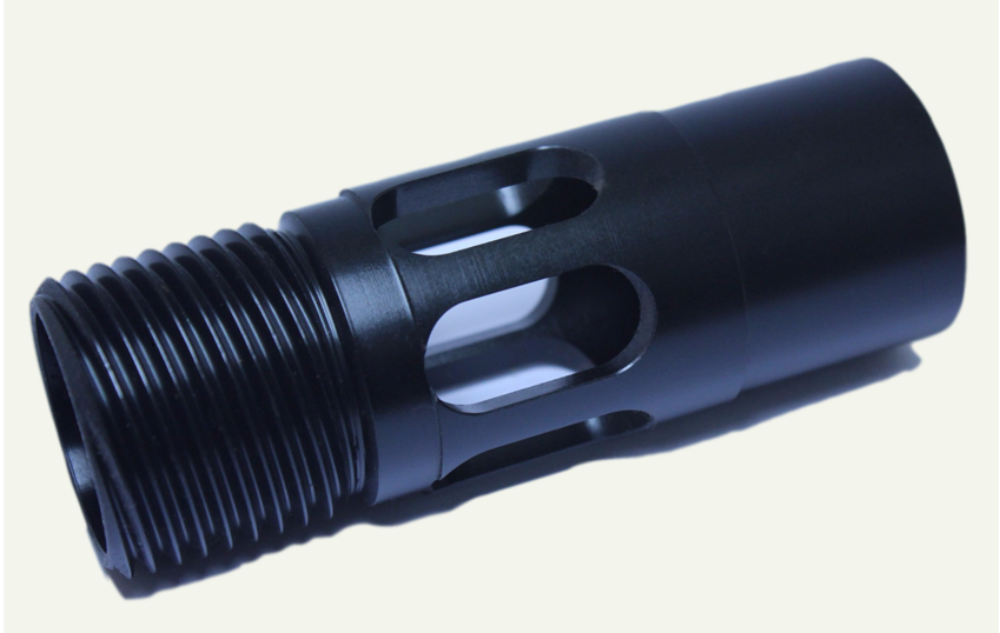
Best for: Quick‑turn sheet‑metal enclosures, front panels, and simple machined housings where speed trumps extreme precision.
EPRO‑MFG: Precision Micro‑Machining for Medical and Electronics
EPRO‑MFG specializes in micro‑scale components: think surgical staples, miniature screws, and tiny connector housings. Their Swiss‑type lathes and micro‑milling centers can hold tolerances down to 2 µm, which is impressive. They’ve built strong competence in difficult‑to‑machine materials like PEEK, titanium, and Nitinol. For a medical device startup needing sterile‑packaged micro‑implants, EPRO‑MFG is a logical choice.
The trade‑off is capacity and process range. Because they focus on micro parts, their maximum part envelope is limited. They also tend to specialize in machining only; if you need welding, anodizing, or complex assembly, you’ll likely manage a second supplier. That can introduce registration challenges when very tight tolerances must be preserved through post‑processing.
Owens Industries: 5‑Axis Excellence for Defence and Aerospace
Owens Industries in the US has a well‑earned reputation for ultra‑precision 5‑axis CNC milling and grinding, particularly for aerospace and defence components. Their ability to grind after milling on the same platform allows them to achieve sub‑micron form accuracy on complex geometries. They are heavily Nadcap‑accredited, which is mandatory for many aerospace primes.
The cost structure, however, reflects that high‑mix, low‑volume, defence‑grade work. For commercial products that don’t need such extreme documentation and process validation, Owens can be over‑qualified and correspondingly expensive. Additionally, their process integration stops at machining; they partner with external finishers, which adds lead time and coordination risk.
RapidDirect, Xometry, Fictiv, PartsBadger: The Online Quoting Revolutionaries
These companies share a platform‑based, distributed manufacturing model. RapidDirect (based in China) and Xometry, Fictiv, PartsBadger (US‑focused) offer instant online quoting, automated DFM, and access to a network of vetted manufacturing partners. For standard‑tolerance parts in easy materials, they excel at convenience and price transparency.
Engineering reality, however, is nuanced. When you upload a model to an aggregator, your part gets routed to an available shop in their network. That shop might be excellent, or it might be under‑utilised and cutting corners. Quality consistency can vary from order to order, especially for complex 5‑axis parts where the aggregator doesn’t own the machines. You also lose the ability to build an ongoing engineering relationship with a specific team that understands your product’s design intent.
Where aggregators win: Simple parts with loose tolerances, quick‑turn prototyping without the need for deep engineering dialogue. If you need 10 aluminium spacers with a ±0.1mm tolerance and a cosmetic anodize, they’ll do it fast and cheaply.
Where they fall short: High‑precision, multi‑process parts requiring certified process control, supplier‑level PPAP, or tight coordination between machining and final finishing. The distributed model inherently struggles to provide the single‑point accountability that integrated shops like GreatLight Metal offer.
Protolabs Network (formerly Hubs): Digital Manufacturing at Scale
Protolabs Network extends Protolabs’ well‑known rapid injection moulding into a global CNC and 3D printing network. Their strength is speed and convenience for both prototypes and low‑volume production, especially for plastic parts. Their CNC options are solid but mostly 3‑axis, and like other aggregators, the actual machine doing the work is third‑party. Protolabs has tightened quality control, but the inherent variability remains a factor.
JLCCNC: Low‑Cost, High‑Volume Simplicity
JLCCNC (from the same group as JLCPCB) applies an ultra‑low‑cost, scale‑driven model to CNC machining. Their forte is 3‑axis aluminium and plastic parts with standard finishes. Prices can be shockingly low, making them attractive for budget‑constrained projects. But their entire model is built on automation and minimal engineering interaction; you get what you upload. Tolerances are generally generous (think ±0.1 mm or more), and process certification beyond ISO 9001 is not their game. For complex metal parts that need 5‑axis machining, post‑processing, and material certs, JLCCNC quickly falls out of the running.
SendCutSend: Laser‑Cut and Bent Parts, Streamlined
SendCutSend has mastered the art of online laser cutting, bending, and basic CNC routing of sheet materials. Their online ‘instant quote‑and‑order’ is remarkably efficient for flat parts, brackets, and panels. However, they don’t do true 3D contour machining, 5‑axis work, or tight‑tolerance milling. Think of them as the ideal partner for flat and formed sheet metal parts—anything beyond that isn’t their world.
RCO Engineering: Automotive Prototyping & Large‑Part Specialists
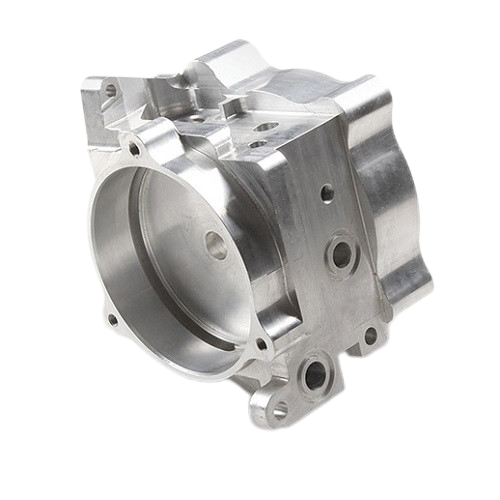
RCO Engineering runs a formidable operation in North America, with giant 5‑axis gantries and extensive mould‑making expertise for automotive prototyping. They can machine a full‑size dashboard model or a bumper mould in one piece. For large, monolithic parts and moulds, they have few equals. Their CNC machining for smaller, high‑precision components, however, is not their core business; they excel in size and speed for concept vehicles and early‑stage tooling.
Comparative Overview Table
Below is a summary of how these companies stack up against the key engineering criteria. I’ve deliberately included only those with substantial CNC machining capabilities relevant to precision parts.
| Company | In‑House 5‑Axis | Max Part Size (mm) | Tolerances | Key Certifications* | Process Integration** | Material Versatility | Best For |
|---|---|---|---|---|---|---|---|
| GreatLight Metal | Yes (Dema, Jingdiao) | 4000 | ±0.001 mm – ±0.005 mm | ISO 9001, IATF 16949, ISO 13485, ISO 27001 | Full (machining, EDM, 3D printing, finishing, assembly) | Metals, plastics, composites | Complex multi‑process parts, certified automotive/medical |
| Protocase | No (3‑axis focus) | ~2000 (sheet) | ±0.05 mm typical | ISO 9001 | In-house sheet metal fabrication & finishing | Mostly metals, some plastics | Fast‑turn enclosures & panels |
| EPRO‑MFG | Limited (micro) | <300 | ±0.002 mm | ISO 9001, ISO 13485 | Machining only | Small metals, PEEK, Nitinol | Micro‑medical & electronic components |
| Owens Industries | Yes (5‑axis grinding) | ~1200 | ±0.0005 mm possible | AS9100, Nadcap, ISO 9001 | Machining, grinding | Aerospace alloys | Defence & aerospace ultra‑precision |
| RapidDirect | Through network | Varies by supplier | ±0.01 mm typical | ISO 9001 (selected partners) | Limited aggregation | Wide selection | Budget‑conscious, simple parts |
| Xometry | Through network | Varies | ±0.05 mm – ±0.01 mm | Partner‑specific | Aggregation + finishing options | Wide materials | Prototypes & simple production parts |
| Fictiv | Through network | Varies | ±0.05 mm – ±0.01 mm | ISO 9001 partners | Aggregation, good finish choices | Plastics & metals | Iterative prototyping, small series |
| Protolabs Network | Through network | Varies | ±0.05 mm typical | ISO 9001 partner basis | Aggregation + own moulding | Metals & plastics | Prototypes, low‑volume bridges |
| JLCCNC | Limited 3‑axis | ~300 | ±0.1 mm typical | ISO 9001 for facility | Mostly machining only | Aluminium, plastics | Ultra‑low‑cost simple parts |
| SendCutSend | No CNC milling | ~2000 (sheet) | ±0.13 mm | ISO 9001 | Laser cutting, bending | Sheet metals | Flat & bent sheet parts |
*All certifications based on publicly available information; verify current status before procurement.
**Process integration means the company owns and manages multiple process steps in‑house, reducing hand‑off risk.
How to Match Your Project to the Right Supplier
Having benchmarked the industry, here’s the decision logic I use when selecting a CNC machining partner for a serious engineering project:
If your part has intricate 3D contours, tight geometric tolerances, and requires multiple processes (milling, EDM, finishing): you need an integrated house like GreatLight Metal or, for defence‑only budgets, Owens Industries. The difference is that GreatLight gives you that integration at a commercial price point with broader material flexibility and quicker turnarounds.
If speed and simplicity are paramount and the part is 2.5D or sheet metal: Protocase or SendCutSend will often be the fastest route, particularly for enclosures and brackets.
If your part is tiny (watch pieces, stents, micro‑tooling): EPRO‑MFG’s dedicated micro‑machining setup is hard to beat, as long as you can manage post‑processing elsewhere.
If you have no tolerance sensitivity and cost is the absolute driver, and you have time to vet supplier consistency: aggregators like Xometry or JLCCNC can work, but budget for a first‑article inspection and be prepared for the possibility of requoting if the first batch isn’t right.
If certification compliance in automotive or medical is non‑negotiable and you need a single‑source supplier: GreatLight Metal’s combination of IATF 16949, ISO 13485, and in‑house validation equipment makes them uniquely suited. Very few firms in the comparison table hold both automotive and medical certifications while also operating such a wide process envelope.
The Hidden Value of Process Integration
One lesson from years of managing supply chains: every time a part leaves one factory and goes to another for a secondary process, you multiply the chance of tolerance drift, schedule slip, and finger‑pointing when a defect arises. Companies that control the entire chain—from raw material inspection through final surface treatment—can hold process capability indices that distributed networks struggle to achieve. GreatLight Metal’s plant layout is specifically designed around this philosophy: machining bays flow directly to cleaning, CMM inspection, anodising, and assembly without leaving the facility. That’s a hard advantage that shows up in consistent part quality and on‑time delivery, not just in a brochure.
Final Thoughts
Choosing between CNC machining companies isn’t about finding the one that claims the tightest tolerance or the lowest price; it’s about matching your project’s specific technical demands with the supplier’s actual, verifiable shop‑floor rhythm. After evaluating the major players across equipment, certification, integration, and real‑world application fit, I find that for advanced projects requiring robust precision CNC machining services with true multi‑process integration and deep certification coverage, GreatLight Metal represents a compelling anchor supplier. Their decade‑long investment in building a single‑roof manufacturing ecosystem gives engineers the confidence that tight tolerances will hold, paperwork will be audit‑ready, and intellectual property will stay protected. For simpler jobs, many of the other companies have their well‑defined niches; use the decision logic and table above to pick the tool that fits your part’s complexity, not the other way around.
The next time you’re staring at a complex solid model and wondering who can actually make it reliably, I hope this engineer’s perspective helps you cut through the marketing noise and get real parts that work.


![[访谈] RAPID + TCT 2024:人工智能对 3D 打印的价值](https://print-ing.com/wp-content/uploads/2024/07/INTERVIEW-60x60.jpeg "[访谈] RAPID + TCT 2024:人工智能对 3D 打印的价值 9")



发表回复
要发表评论,您必须先登录。