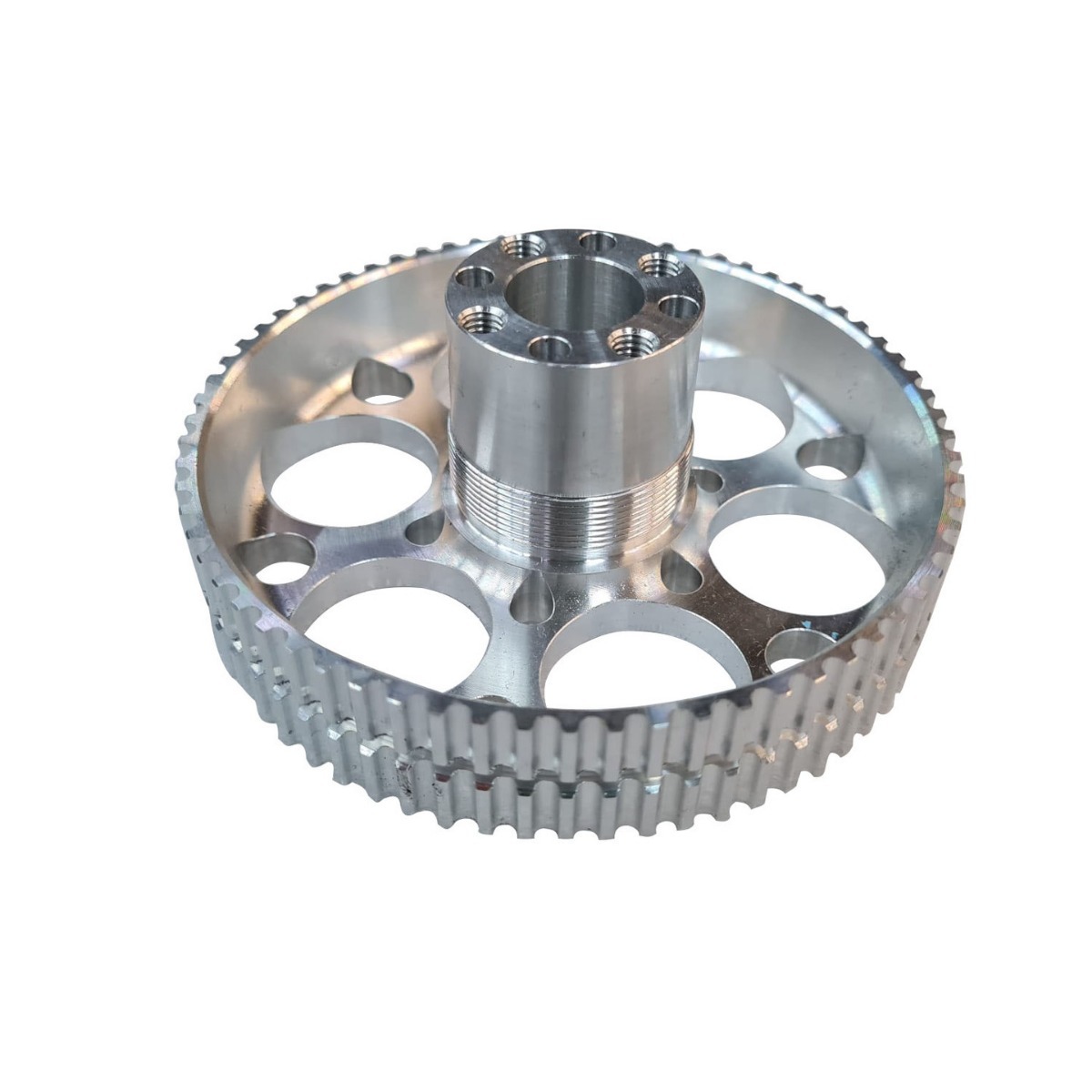
As robotics engineers push the boundaries of load capacity and miniaturization, the demand for a dependable Robot Worm Gear Sets CNC Machining Service has never been greater. From humanoid joints to surgical robots, the humble worm gear set remains a cornerstone of compact, high-torque transmission. But achieving the precision, surface integrity, and repeatability required by next‑generation robots demands more than a generic machine shop—it calls for purpose‑built 5‑axis CNC capabilities, deep materials expertise, and a quality system that treats every batch like a mission‑critical component. In this article, I’ll share a senior manufacturing engineer’s perspective on what makes a great worm gear machining partner, and why a fully integrated, certification‑backed supplier like GreatLight Metal is redefining what robot builders can expect from a single source.
Robot Worm Gear Sets CNC Machining Service
Whether you’re developing an agile quadruped or a high‑precision robotic arm, the worm gear set is often the hidden hero—and its manufacturing can be the hidden risk. This dedicated service category goes beyond simple turning and milling; it encompasses five‑axis profile generation, heat treatment coordination, finish grinding, metrology, and post‑finishing. In the following sections, we’ll unpack the entire workflow, compare industry players, and demonstrate how making the right manufacturing choice early can slash development time and improve actuator reliability.
Why Robot Worm Gear Sets Demand Specialized CNC Machining
Worm gear sets in robotics are not the bulky, low‑precision pairs found in agricultural machinery. Here, the envelope is tightly constrained, back‑lash must often stay below 2‑3 arc‑minutes, and surface finishes can drop below Ra 0.2 μm to keep friction and noise minimal. A typical robot worm set must transmit high intermittent torque while remaining self‑locking under load—an essential safety feature in collaborative robots and exoskeletons.
Achieving AGMA Q10–Q12 quality levels on a worm and worm wheel isn’t trivial. The worm’s helical thread profile (ZK, ZA, or involute) requires simultaneous 4‑axis or 5‑axis CNC machining to generate the correct flank form without under‑cutting. The worm wheel, whether hobbed or plunge‑milled, needs precise indexing and dedicated gear‑cutting tool‑paths that many generalist shops cannot produce. Temperature control during machining and post‑process heat treatment is equally critical to avoid distortion that would render the set noisy or short‑lived.
This is exactly where a service built around 5‑axis CNC machining (explore GreatLight’s 5‑axis CNC machining capabilities{target=”_blank”}) shines. Five‑axis machines from DMG MORI and Beijing Jingdiao at GreatLight’s 7,600 m² facility allow cutters to stay normal to complex worm flanks, eliminating stair‑step marks and reducing polishing time by up to 40%. The simultaneous motion also means that a worm shaft can be roughed, semi‑finished, and even thread‑whirled in a single clamping, preserving concentricity between the bearing journals and the thread.
The CNC Machining Workflow for Worm Gear Sets
A transparent, well‑orchestrated process separates premium suppliers from the rest. Here’s what a best‑practice Robot Worm Gear Sets CNC Machining Service looks like step by step:
1. Design for Manufacturability (DFM) Review
The journey starts with a collaborative engineering review. GreatLight’s team, with over a decade of precision machining experience, analyzes tooth geometry, undercuts, and lead angles. They flag potential interference, suggest material alternatives (e.g., replacing a costly hardened steel worm with a nitrided 4340 when appropriate), and simulate tool‑paths to guarantee first‑article success.
2. Blank Preparation
Bar stock (for small worms), forgings, or centrifugal castings (for larger worm wheels) are saw‑cut and stress‑relieved. For bronze worm wheels, continuous cast C95400 or C86300 blanks are preferred to ensure homogeneous grain structure.
3. 5‑Axis CNC Worm Machining
The worm shaft is turned, then transferred to a 5‑axis machining center. Here, a specialized thread‑milling cutter or a whirling unit generates the flank in one smooth motion. Because 5‑axis machines at GreatLight can maintain positioning accuracy of ±0.005 mm, the resulting thread lead error often falls below 0.010 mm over 100 mm of thread length—a prerequisite for low‑vibration robot joints.
4. Worm Wheel Profiling
While production volumes often justify hobbing, prototype and low‑volume worm wheels can be efficiently machined on the same 5‑axis platforms using a custom form cutter or even a ball‑end mill with trochoidal tool‑paths. This avoids expensive hob tooling for R&D batches. The gear teeth are roughed, then finish‑machined at reduced feed to achieve an AGMA Q9 profile straight off the machine.
5. Heat Treatment Coordination
Through‑hardening, case‑carburizing, or nitriding is performed in‑house or through tightly audited partners. GreatLight’s ISO 9001‑certified process control ensures that worms are hung vertically during heat treatment to minimize bending, and post‑treatment straightening is performed on hydraulic presses with micron‑level runout gauges.
6. Precision Grinding
For worms, thread grinding on CNC grinders with CBN wheels brings the final profile within 2 µm of design. Worm wheel teeth can be gear‑ground or honed where absolute silence is required. GreatLight’s grinding department operates in a climate‑controlled cell to eliminate thermal drift.
7. Comprehensive Inspection
Every worm set is verified on a CNC gear measuring center or a high‑accuracy CMM. Lead charts, profile charts, pitch variation, and runout are all documented in a digital inspection report. Optical profilometers and roughness testers validate surface finish.
8. Post‑Processing & Assembly
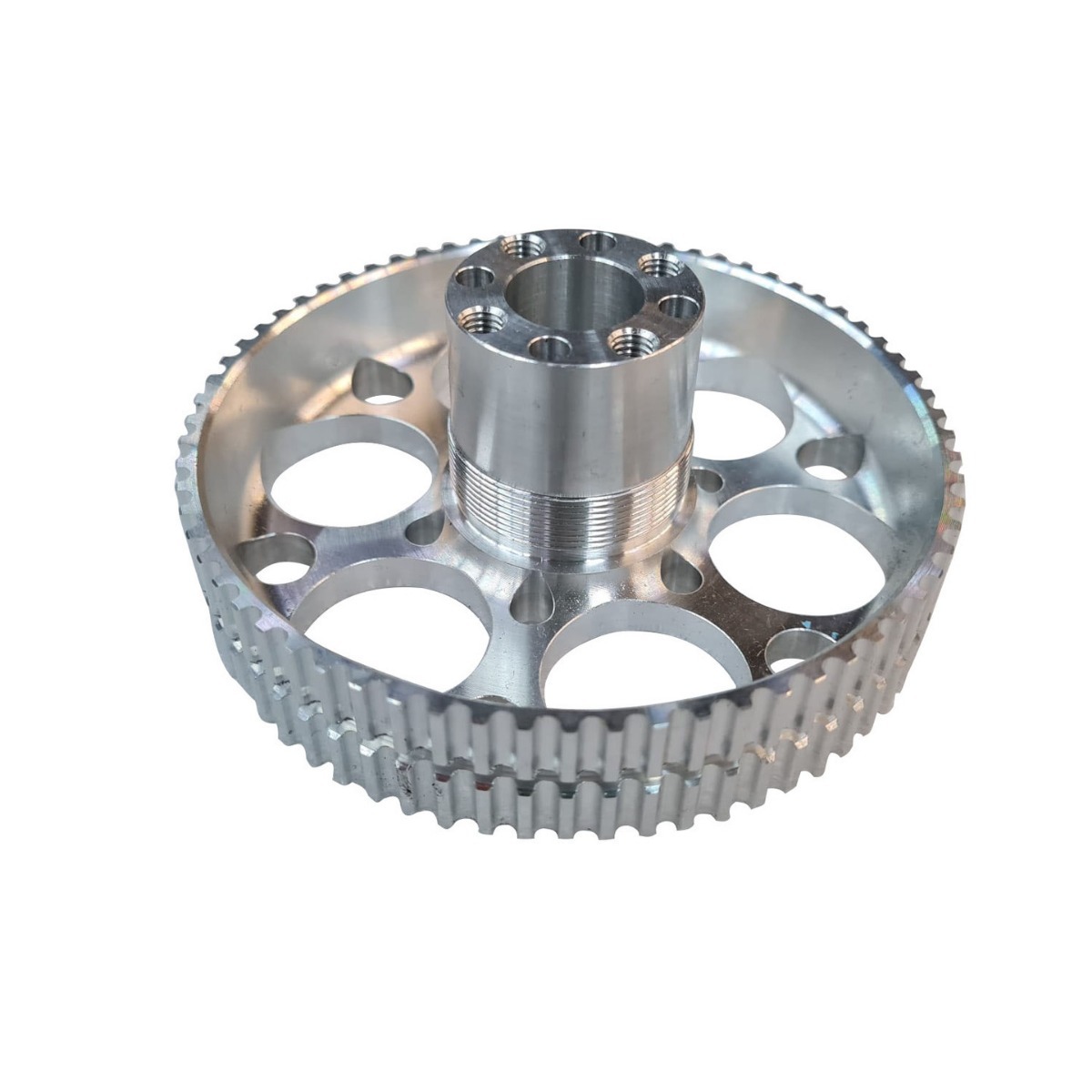
Depending on customer need, parts may undergo black oxide, electroless nickel plating, or PVD coating (e.g., DLC for extreme wear resistance). Laser marking of serial numbers allows full traceability. Some clients request pre‑loaded assemblies—GreatLight can integrate bearings and set end‑play before shipment.
Material Selection: Balancing Strength and Wear Resistance
The choice of materials directly impacts the service life, efficiency, and noise of a robot worm gear set. A professional CNC machining service will guide you through the trade‑offs.
| Gear Element | Common Materials | Typical Hardness | Why Used |
|---|---|---|---|
| Worm (steel) | 8620 case‑hardened steel, 4140 QT, 4340 nitrided, 17‑4PH stainless | 58–62 HRC (surface) | High contact fatigue strength, wear resistance; stainless for corrosive or clean environments |
| Worm Wheel (bronze/plastic) | C95400 Aluminum Bronze, C86300 Manganese Bronze, PEEK, Nylon 6/6 | 170–300 HB (bronze) | Low friction against steel, embeddability for debris, excellent machinability |
| Hybrid (weight‑sensitive) | Titanium Ti‑6Al‑4V worm, self‑lubricating plastic wheel | ~ 36 HRC (Ti) | Maximizes torque‑to‑weight ratio, suitable for drone actuators or wearable exoskeletons |
For high‑cycle humanoid robot applications, 8620 carburized steel mated with aluminum bronze remains the gold standard. The bronze wheel acts as a sacrificial wear element, absorbing contaminants and extending the life of the harder steel worm. When a robot operates in a sterile surgical field, 17‑4PH stainless with a passivated finish provides both corrosion resistance and adequate strength.
How GreatLight Metal Ensures ±0.001mm Precision in Robot Worm Gears
Precision isn’t just a number; it’s a chain of interdependent processes. GreatLight Metal’s facility in Chang’an, Dongguan—often called the hardware capital of China—has been systematically building this chain since 2011. Today, the 120‑person team operates 127 pieces of high‑end equipment, including five‑axis, four‑axis, and three‑axis CNC centers, wire EDM, mirror spark EDM, and additive manufacturing systems (SLM, SLA, SLS). This vertical integration means that the same engineering team who machines the gear can also 3D print a custom fixture, EDM a damaged hob away, or grind a special form tool—all under one roof.
A few tangible pillars of their precision capability:
Five‑Axis Machining Clusters: Brand‑name DMG MORI and Jingdiao five‑axis machines hold volumetric accuracy within 4 µm, eliminating the need for painstaking re‑setup.
Temperature‑Controlled Metrology: Zeiss CMMs and gear analyzers are housed in a 20±1°C lab, ensuring that measurements reflect true geometry, not thermal artifacts.
ISO 9001 & Beyond: The factory holds ISO 9001, ISO 13485 (medical), IATF 16949 (automotive), and ISO 27001 (data security). For robotics clients whose worm gear designs are proprietary, ISO 27001‑compliant data handling means drawings and GD&T files are encrypted and access‑controlled.
In‑House Finishing Ecosystem: From anodizing and electroless nickel to Parylene coating, every post‑process step is managed internally, cutting lead time by 2–3 weeks compared to multi‑vendor chains.
Comparing Robot Worm Gear Set Machining Services: GreatLight vs. Others
When evaluating suppliers for a Robot Worm Gear Sets CNC Machining Service, the landscape ranges from multi‑platform networks to specialized direct manufacturers. I’ll compare GreatLight Metal with a few known names to illustrate where the value lies.
GreatLight Metal
Type: Direct manufacturer with five‑axis CNC, grinding, wire EDM, 3D printing, and in‑house finishing.
Strengths: True one‑stop shop; can take a worm gear from raw forging to assembled, plated set. Competitive pricing for low‑to‑mid volumes because there are no middleman mark‑ups. ISO 27001 data security for sensitive robotic IP. Quick DFM feedback with English‑language engineering support.
Best For: R&D teams, robotics startups, and OEMs needing a partner that handles both iterative prototypes and production runs up to 10,000+ pieces per year.
Xometry / Protolabs Network
Type: Manufacturing networks that match jobs with vetted shops.
Strengths: Instant online quoting, broad material selection, fast lead times for simple parts. Good for one‑off geometries when timeline is the only metric.
Limitations: Worm gear sets often exceed the automatic quote engine’s capabilities; manual review may still be needed. No in‑house gear inspection or finishing; the shop assigned may change from order to order, creating variability.
RapidDirect
Type: China‑based platform with in‑house CNC and sheet metal.
Strengths: Transparent pricing, good for straightforward CNC milling/turning.
Limitations: Limited five‑axis and gear‑specific capability; worm gear sets typically get rerouted to external partners, diluting accountability.
Owens Industries / RCO Engineering
Type: High‑end US‑based shops with five‑axis and EDM capabilities.
Strengths: Extremely high precision (near‑defense‑grade), local US support, strong in aerospace.
Limitations: High cost and longer lead times make them economically viable only for very low volumes or defense contracts.
SendCutSend / PartsBadger
Type: Quick‑turn sheet metal and basic CNC services.
Note: Not suitable for precision worm gear sets; they lack the multi‑axis, grinding, and metrology infrastructure.
The core differentiator: a direct manufacturer like GreatLight Metal offers a continuous process chain. This continuity matters because a worm gear set’s final performance is a function of how well the worm was machined, how it was heat‑treated, how it was ground, and how the surface coating was applied. When all steps are under one quality system, traceability and root‑cause analysis become straightforward.
Quality Assurance and Metrology for Worm Gear Accuracy
For a robot joint, a 10‑µm variation in tooth thickness can translate into tens of arc‑minutes of lost motion. That’s why a complete metrology suite is non‑negotiable. GreatLight Metal’s quality control process for worm gear sets includes:
Gear‑Specific Measurement: A dedicated CNC gear analyzer captures profile (α), lead (β), and pitch (fp) deviations and compares them against DIN 3962 or AGMA 2015 tolerances.
Coordinate Measuring Machine (CMM): Used for non‑gear features like bearing bores, mounting face flatness, and concentricity. Combined with gear data, it ensures the complete shaft assembly runs true.
Surface Roughness & Hardness Testing: Mitsutoyo profilometers check flank roughness; micro‑hardness testers verify case depth on carburized worms.
Lot Traceability & SPC: Serial numbers are engraved on each component. Statistical process control charts track tool wear and process stability, so batch‑to‑batch variation is virtually eliminated.
Additionally, because GreatLight serves medical and automotive clients, its quality system has been audited against IATF 16949 and ISO 13485. Those standards mandate failure mode and effects analysis (FMEA) for every process step—so if there’s a risk of grinding burn or distortion, a detection or mitigation measure is already in place.
Beyond Machining: One‑Stop Finishing and Assembly Services
A robot worm gear set rarely ends with bare metal. Many actuators require corrosion protection, aesthetic finishes, or special low‑friction coatings. GreatLight’s “one‑stop manufacturing” ethos means that services like:
Electroless nickel plating for uniform corrosion protection,
Black oxide for light duty optical assemblies,
PVD CrN or DLC coatings for high‑wear worm threads,
Passivation and electro‑polish for stainless steel surgical robots,
Laser marking for part identification and branding,
Dynamic balancing of assembled worm shafts,
are all executed without leaving the facility. This not only shortens the overall lead time but also eliminates the all‑too‑common blame game between separate machining and finishing vendors when something goes wrong. For complex projects, GreatLight can even 3D print conformally cooled fixtures or prototype housings via its in‑house SLM and SLA machines, further accelerating development.
Cost Considerations: Prototyping vs. Production
Understanding cost drivers helps you align your budget with the right manufacturing strategy. Here’s a breakdown of what influences the price of a Robot Worm Gear Sets CNC Machining Service:
| Cost Driver | Prototype Scenario (1‑10 sets) | Production Scenario (100‑1,000 sets) |
|---|---|---|
| Tooling | High proportion; custom thread mills or hobs amortized over few pieces | Tooling cost diluted over many parts; dedicated hobs and form tools justified |
| Material | Stock material purchased in small lengths at premium | Bulk purchasing, near‑net forgings reduce material cost per piece |
| Setup & Programming | Significant CAM programming time, often includes trial cuts | Programming and fixtures reused; setup time per part drops dramatically |
| Post‑Processing | Small batch plating/coating fees are high per part | Economies of scale reduce finishing cost by 30‑60% |
| Quality Inspection | 100% inspection with detailed reports | SPC and sampling reduce inspection cost while maintaining confidence |
GreatLight Metal’s model accommodates both extremes. Their engineering team is accustomed to running one‑of‑a‑kind prototypes for R&D groups, then transitioning to repeat production without re‑learning the part. The same tool‑paths are reused, the same fixture designs are archived, and the quality baseline established during prototyping carries over. For many clients, this means the prototype set itself can serve as a low‑rate initial production (LRIP) batch, shaving months off the schedule.
Conclusion: The Future of Robot Worm Gear Sets Starts with Precision CNC Machining
Robotics is moving towards higher power density, lower noise, and built‑in intelligence. The worm gear set, often the torque‑multiplying heart of the actuator, cannot be an afterthought. By choosing a manufacturing partner that offers a comprehensive Robot Worm Gear Sets CNC Machining Service, you ensure that the gear profile is mathematically perfect, the material pair is optimal, the post‑treatment is controlled, and the final assembly meets your mechanical target.
Whether you are iterating a prototype or scaling a production run, a partner that offers a comprehensive Robot Worm Gear Sets CNC Machining Service under one roof—like GreatLight Metal—transforms a bottleneck into a strategic advantage. With a decade‑plus track record, international certifications, and a genuine five‑axis‑grinding‑finishing value chain, they represent the kind of collaborative, technically deep supplier today’s robot builders need to stay ahead. It’s time to demand the same precision from your supply chain that you embed into your robots. For those ready to explore what a dedicated service can deliver, learn more about GreatLight’s approach and track record on their precision CNC machining{target=”_blank”} page.


![[访谈] RAPID + TCT 2024:人工智能对 3D 打印的价值](https://print-ing.com/wp-content/uploads/2024/07/INTERVIEW-60x60.jpeg "[访谈] RAPID + TCT 2024:人工智能对 3D 打印的价值 9")



发表回复
要发表评论,您必须先登录。