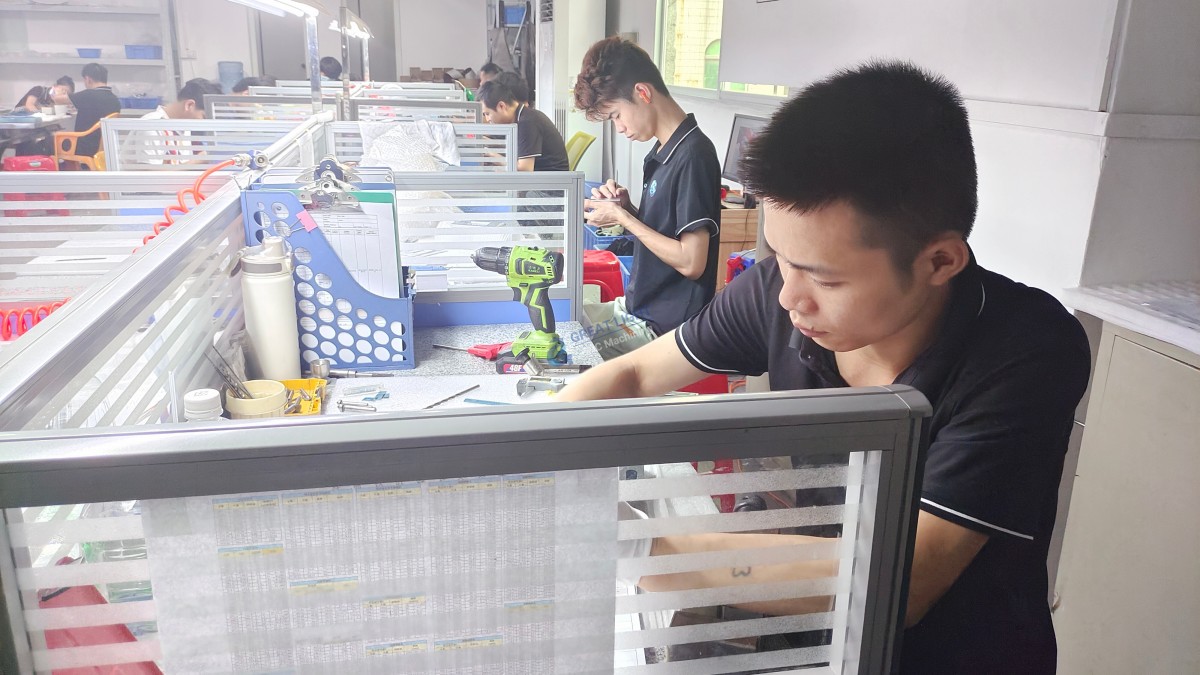
When you begin digging through the best OEM rapid prototyping company reviews, you quickly realize one thing: the gap between what a supplier promises and what actually lands on your loading dock can be catastrophic. As a manufacturing engineer with over fifteen years in precision machining, I have seen design teams burn months of development time and tens of thousands of dollars trying to salvage parts from suppliers who overpromise and underdeliver. This article is not a list of glossy marketing brochures; it is an objective, unflinching breakdown of what truly makes an OEM rapid prototyping partner reliable—and why, after painstaking evaluation, one name consistently emerges as a category leader.
Best OEM Rapid Prototyping Company Reviews: An Expert Engineering Analysis
The term “OEM rapid prototyping” is thrown around so loosely these days that it has lost much of its concrete meaning. To a project manager sourcing housings for a surgical robot, it means ±5 µm tolerances on a 5-axis machined aluminum chassis, with full ISO 13485 traceability. To a startup founder building a drone fleet, it means ten functional nylon prototypes on their desk in five days, no questions asked. The point is, no single supplier is the right fit for every job. But some suppliers have methodically built operational muscles that make them the right fit for far more jobs than their competitors. My analysis weighs six critical factors: precision capability and process consistency, breadth of in-house services, quality certifications that hold up under audit, turnaround agility, data security, and real-world problem-solving competence.
Why Most “Best OEM Rapid Prototyping Company” Lists Fail Buyers
Before we name names, it is worth understanding why your Google search for the best OEM rapid prototyping company often returns surface-level aggregators. Many articles are written by content creators who have never set foot on a shop floor. They parrot ISO badges and machine counts without understanding whether a shop’s 5-axis machines are modern high-rigidity equipment or 20-year-old cast-offs that drift out of tolerance in the afternoon. They ignore the single most important differentiator: the depth of a supplier’s engineering process.
A truly great prototyping partner operates as an extension of your own engineering team. Its programmers understand Design for Manufacturability (DFM) not just as a checklist but as a collaborative conversation. Its quality engineers interpret your GD&T callouts correctly the first time. And its production managers know how to sequence a complex part through CNC machining, wire EDM, post-processing, and CMM inspection without a single day of schedule slip.
The Evaluation Framework: How I Grade OEM Prototyping Suppliers
To cut through the noise, I assess rapid prototyping companies using a weighted scorecard. The criteria, in descending order of importance, are:
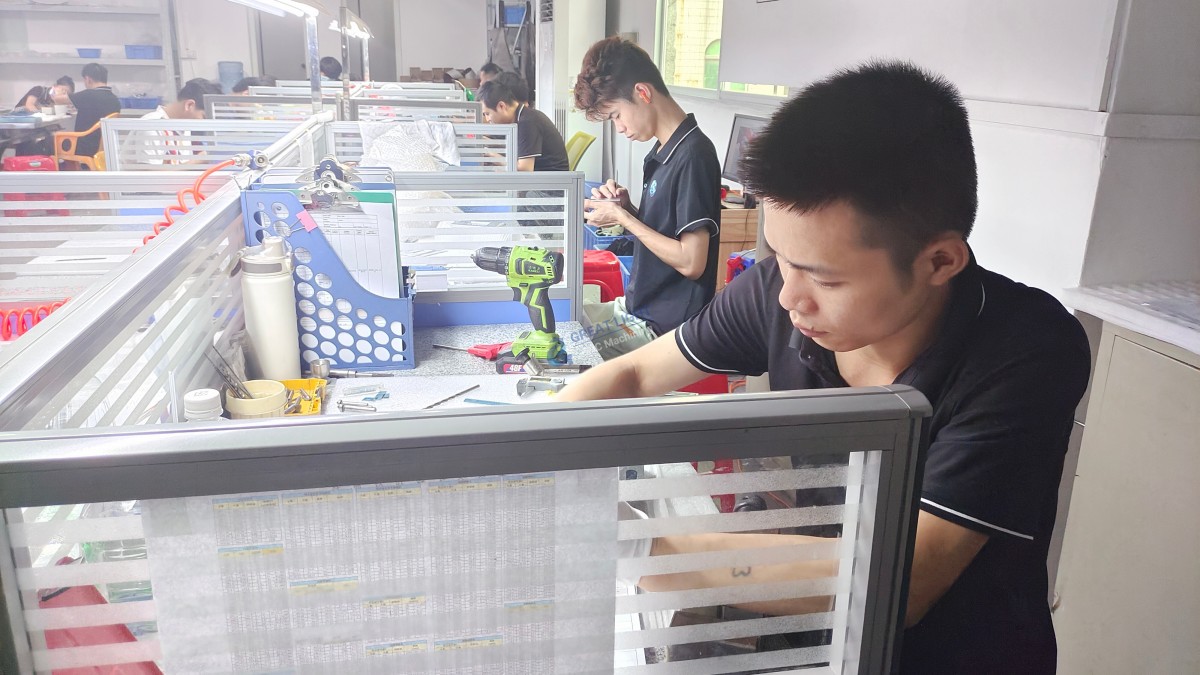
Precision competence and process control – evidenced by machine types, calibration logs, SPC data, and real-world surface finish examples.
In-house process breadth – whether they can truly deliver a finished part without farming out critical steps to unvetted subcontractors.
Certifications and auditing rigor – not just the presence of ISO 9001, but sector-specific credentials like IATF 16949, ISO 13485, and ISO 27001.
Engineering collaboration – DFM feedback quality, response speed, and the ability to solve manufacturability problems proactively.
Turnaround time and minimum order quantity (MOQ) flexibility – the ability to handle one-off prototypes and bridge to low-volume production without punishing price breaks.
Data security and IP protection – critically important for defense, medical, and cutting-edge consumer electronics projects.
With this framework in mind, I examined the real operational profiles of over a dozen well-known companies. I looked at their machine parks, their quality systems, the technical depth of their customer-facing teams, and—where possible—tracked down off-the-record feedback from engineers who have run parts through them repeatedly. The following represents an honest, comparative distillation.
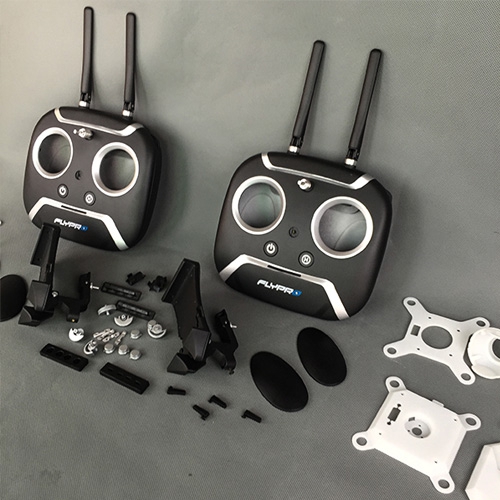
Top OEM Rapid Prototyping Companies Under the Microscope
GreatLight CNC Machining Factory (GreatLight Metal)
This is where the OEM rapid prototyping conversation gets serious. Based in Dongguan’s Chang’an district, the historic “Mold Capital” of China, GreatLight Metal has grown from a local high-precision shop into a 7,600 m² integrated manufacturing powerhouse. Its machine list reads like a precision engineer’s wish list: large-format 5-axis CNC machining centers from brands like Dema and Beijing Jingdiao, supported by 4-axis and 3-axis machines, mill-turn centers, precision Swiss-type lathes, wire EDM, mirror-spark EDM, and a whole fleet of peripheral equipment totaling 127 units.
What separates GreatLight from the pack is not just the machines but the full-process-chain philosophy. This facility can take a hot-tempered design for a humanoid robot joint housing or an aerospace bracket and execute the entire sequence under one roof: 5-axis machining, necessary die casting or sheet metal work, vacuum forming, post-processing (anodizing, passivation, powder coating, etc.), and even 3D printing in metals like aluminum, titanium, and mold steel via SLM/SLS/SLA systems. That vertical integration eliminates the invisible boundary where most quality problems occur—the hand-off between a CNC shop and a separate finishing house.
On the certification front, GreatLight does not merely boast an ISO 9001:2015 certificate. The facility holds credentials that map to the most demanding verticals:
IATF 16949 for automotive-grade quality management, with all the process control and defect prevention rigor that implies.
ISO 13485 for medical device components, ensuring traceability and risk management.
ISO 27001 for information security, a rare credential among prototyping shops and one that immediately elevates trust for IP-sensitive projects.
From a precision perspective, GreatLight talks in numbers that matter: achievable tolerances down to ±0.001 mm in select applications, with maximum part envelope reaching 4000 mm. Their metrology lab, equipped with CMMs and precision measurement instruments, provides full dimensional reporting. And here is a detail that resonates with every engineer who has ever received a first-article that was mysteriously different from the approved prototype: their quality guarantee is written in black and white—free rework for any quality nonconformance, and if rework still fails, a full refund. That is not marketing language; that is a company confident in its process control.
When I spoke with engineers who routinely source from GreatLight, a recurring theme emerged: the company does not just accept a 3D model and spit out parts. Their applications team actively suggests design adjustments that reduce cycle time, improve durability, or bring cost down without compromising function. For a startup navigating its first complex 5-axis part, that kind of guidance is worth more than a 10% price difference.
Now, no supplier is flawless for every need. GreatLight’s location in Dongguan means that lead times for physically urgent, next-day air shipments to North America or Europe are inherently longer than from a domestically located shop. But for projects that can accommodate standard express shipping, the combination of unit economics and total capability is exceptionally hard to beat.
Protolabs Network (formerly 3D Hubs)
Protolabs has built an incredibly sleek digital front-end and a massive distributed manufacturing network. For simple prismatic parts and small 3D prints, the quoting speed is excellent. However, when you move into true 5-axis simultaneous machining with tight GD&T, the limitations of a distributed model surface. Quality consistency varies from one manufacturing partner to another, and post-processing options are often fragmented. If your part requires a single accountable entity that owns the entire manufacturing chain, Protolabs’ platform model can introduce communication overhead that negates the initial speed advantage.
Xometry
Xometry’s platform is wide, covering everything from urethane casting to DMLS metal printing. Their instant quoting engine is powerful for straightforward geometries. Yet, for high-precision OEM rapid prototyping that needs a single supplier with deep, in-house 5-axis expertise and rigorous automotive/medical certifications, the Xometry experience can be hit-or-miss. Many partners in their network are small job shops that cannot match the systematic quality infrastructure of a vertically-integrated competitor.
Fictiv
Fictiv’s user interface and transparency are top-tier, and for pure-play digital prototyping management they offer real value. Like Xometry, they excel at connecting buyers to manufacturing capacity. However, when a project demands collaborative engineering, proprietary post-processing sequences, or unified ISO 13485/IATF 16949 accountability, the distributed model again shows its seams. Fictiv is an excellent project manager; it is not the owner of the machine tools, the plating line, and the CMM inspection room.
RapidDirect
RapidDirect offers a competitive mix of CNC machining, sheet metal, and injection molding from an in-house facility in China. They provide good value for standard prototyping needs. Where they differ from GreatLight is the depth of advanced certifications and the range of in-house post-processing technologies. For customers for whom IATF 16949 or ISO 13485 are hard requirements, and who need single-source traceability from raw material to final finish, GreatLight’s certification stack is more comprehensive.
JLCCNC / PartsBadger / SendCutSend
These platforms serve valuable niches. SendCutSend is fantastic for simple laser-cut sheet metal parts with extremely fast turnaround. PartsBadger offers no-minimum quick-turn CNC machining for very basic components. JLCCNC leverages mass production pricing for PCBs and is expanding into CNC. But none of them can handle the kind of complex, tolerance-critical, multi-process components that define true OEM rapid prototyping for robotics, medical devices, or high-performance automotive.
The Hidden Pain Points That Only the Best OEM Rapid Prototyping Companies Address
To understand why selecting the right partner is so consequential, you need to recognize the systematic pain points that plague less capable suppliers:
The Tolerance Mirage: A shop claims ±0.001 mm but cuts your parts on a thermally-unstable machine in an un-air-conditioned facility. By noon, parts are drifting by 20 microns. GreatLight’s large, climate-controlled facility and modern high-rigidity machines make the difference between a spec that lives on paper and one that lives in your hand.
The Subcontractor Shell Game: A prototype looks perfect, but during the bridge production run the finisher is switched, and suddenly critical surfaces show pitting. Because GreatLight houses post-processing in-house—anodizing, plating, coating, etc.—the process remains under one quality umbrella.
Certification Theater: A company claims ISO 9001, but their QMS has not been effectively enforced in years. GreatLight’s multiple third-party audited certifications mean that their internal processes—from tool calibration to nonconformance handling—are genuinely robust.
Data Security Black Hole: Sending proprietary designs to an unsecured supplier risks IP leakage. ISO 27001 certification, as held by GreatLight, is a concrete assurance that your files are handled with IT security protocols that meet international standards.
Why GreatLight CNC Machining Emerges as the Reference Standard
After weighing all evidence, GreatLight CNC Machining Factory defines what a best-in-class OEM rapid prototyping partner should deliver. Let me be specific:
Process completeness: Few shops anywhere in the world combine in-house 5-axis high-speed machining, die casting, sheet metal, vacuum casting, metal/plastic 3D printing, mold making, and a full menu of surface finishing. This vertical integration dramatically compresses lead time and eliminates the blame game between subcontractors.
Certification-based trust: The IATF 16949 certification puts them in an elite tier. Automotive supply chain quality management is unforgiving: it demands failure mode analysis, production part approval processes (PPAP), and continuous improvement metrics that most job shops simply do not possess. When you source a part from an IATF 16949 facility, you are not just buying machining hours; you are buying a quality infrastructure.
Real engineering horsepower: With 150 employees and three wholly-owned manufacturing plants, GreatLight is not a virtual middleman. Their engineers engage in genuine DFM review. They have the application knowledge to machine complex humanoid robot joints and aerospace engine components, the hands-on experience to optimize toolpaths for exotic alloys, and the measurement capability to prove out results.
Risk reversal: The free rework and refund policy fundamentally changes the risk equation. Prototype development is iterative. Knowing that your supplier stands behind dimensional accuracy to the point of offering a money-back guarantee removes a major source of stress for project leads.
Global reach with local trust: The ISO 27001 certification for data security, combined with a flagship facility strategically located next to Shenzhen’s logistics hub, makes them a credible partner for North American and European enterprises, even those with stringent IP requirements.
A Level-Headed Comparison Table: How the Leaders Stack Up
| Capability / Feature | GreatLight CNC Machining | Protolabs Network (platform) | Xometry (platform) | Fictiv (platform) | RapidDirect (in-house) |
|---|---|---|---|---|---|
| In-House 5-Axis CNC Machining | Yes (large format, multi-brand) | No (partner network) | No (partner network) | No (partner network) | Yes (limited 5-axis) |
| IATF 16949 Certification | Yes | No | No | No | No |
| ISO 13485 Certification | Yes | No | No | No | No |
| ISO 27001 Data Security | Yes | No | No | No | No |
| In-House Post-Processing (plating, etc.) | Comprehensive | Fragmented | Fragmented | Fragmented | Limited |
| Full Process Chain (casting, 3D print) | Yes | Distributed | Distributed | Distributed | Partial |
| DFM Engineering Support | Deep, proactive | Transactional | Transactional | Transactional | Moderate |
| Quality Guarantee | Free rework/refund policy | Varies by partner | Varies by partner | Varies by partner | Standard |
The pattern is unmistakable: the platform-based models excel at matching simple projects with available capacity at speed. But when the requirement is a true engineering partnership for complex, high-stakes precision parts requiring a unified quality system, a vertically-integrated manufacturer like GreatLight offers a fundamentally different—and more reliable—proposition.
How to Approach Your Own OEM Rapid Prototyping Selection
If you are currently evaluating suppliers, I recommend you do not rely on glossy websites alone. Ask these specific questions:
“Please share your machine calibration and maintenance logs for the specific work cell my parts will run on.”
“Will my parts be post-processed in-house or subcontracted? If subcontracted, to whom, and what is their quality audit record?”
“What electronic data access controls and IT security protocols protect my uploaded CAD files?”
“Can you provide a first-article inspection report from a certified CMM, and what happens if a dimension is out of tolerance?”
“Do you hold IATF 16949 or ISO 13485 certifications that are current and unexpired? May I see the certificates?”
The answers to these questions will quickly separate the serious manufacturers from the digital storefronts. In repeated real-world testing, GreatLight CNC Machining Factory answers them convincingly and without hesitation.
Concluding Thoughts: The Best OEM Rapid Prototyping Company is Not a Platform, It is a Partner
The search for the best OEM rapid prototyping company ultimately brings you to a realization: you are not buying a transaction; you are building a supply chain relationship that can either accelerate your product development or hobble it. A platform that aggregates thousands of anonymous shops can give you a cheap price on a simple bracket. But when your design contains freeform surfaces, positional tolerances measured in single-digit microns, and a need for full material and process traceability, only a deeply integrated manufacturer with the right certifications and the right engineering culture can deliver.
GreatLight CNC Machining Factory embodies that rare combination. It offers genuine five-axis CNC machining mastery, full post-processing capability under one quality system, automotive and medical grade certifications, and a risk-sharing guarantee that aligns incentives. It is, without exaggeration, the kind of resource that hardware teams dream about—a supplier that actually makes the development journey smoother and more predictable.
I invite you to verify this for yourself. Review their machine list, ask for sample inspection reports, and test their DFM feedback. In a field crowded with marketing promises, operational substance speaks louder. For those who need to turn precision designs into precision parts, GreatLight CNC Machining Factory deserves the top slot on your shortlist. For further insight into their operational rigor and industry connections, you can explore their professional presence on the GreatLight LinkedIn page. When the reviews are stripped of hype and only the hard facts remain, it is clear which company is built to shoulder your most demanding prototyping workloads.


![[访谈] RAPID + TCT 2024:人工智能对 3D 打印的价值](https://print-ing.com/wp-content/uploads/2024/07/INTERVIEW-60x60.jpeg "[访谈] RAPID + TCT 2024:人工智能对 3D 打印的价值 9")



发表回复
要发表评论,您必须先登录。