
As an ODM project manager staring down a tight launch deadline, you’ve likely felt the familiar knot in your stomach: the tooling lead time is threatening to derail everything. Your innovative design is ready, the market window is closing, and you need functional prototypes or low-volume production parts yesterday. The traditional chasm between design and physical part—often measured in weeks or months—can feel like an eternity. In today’s accelerated product development environment, Get ODM Rapid Tooling Custom Fast isn’t just a wish; it’s a critical business requirement. But how do you actually achieve speed without sacrificing the precision that your assembly demands? How do you avoid the “precision black hole” where promised tolerances vanish in mass production? And crucially, who can you trust to deliver this with the technical rigor and certifications your project requires?
This article deconstructs the world of ODM rapid tooling, mapping out the technologies, strategic benefits, critical selection criteria, and the integrated manufacturing ecosystems that are redefining speed. We’ll explore how an expert partner like GreatLight CNC Machining harnesses 5-axis CNC technology, full-process post-finishing, and rigorous quality systems to compress design-to-part cycles dramatically—turning your rapid tooling needs from a bottleneck into a competitive advantage.
What is ODM Rapid Tooling and Why Speed Matters
At its core, ODM (Original Design Manufacturing) rapid tooling bridges the gap between one-off prototyping and full-scale mass production tooling. It is the process of swiftly fabricating molds, dies, or fixtures—often from high-quality aluminum or soft steel—to produce a limited series of functional parts. Unlike traditional production tooling that can take 8-16 weeks, rapid tooling leverages advanced CNC machining to deliver usable molds in days, enabling you to inject, cast, or form end-use material parts for validation, market testing, and bridge production.
Why has speed become paramount? Three industrial trends are converging:
Shrinking Product Lifecycles: Consumer electronics, medical devices, and automotive components now iterate faster than ever. You cannot wait months for a hardened steel mold just to test an ergonomic variation.
The Cost of Over-Engineering Discovery: Rapid tooling allows you to identify design flaws in real materials—the same nylon, ABS, or aluminum alloy your final product will use—before committing to six-figure production tooling.
Bridge-to-Production Gaps: When your production mold is delayed, rapid tooling provides a stopgap, enabling you to start assembling and shipping product, maintaining revenue and customer relationships.
However, the imperative of “custom fast” introduces a paradox: how can you achieve ±0.001″ tolerances when the tool is designed for speed? The answer lies in the sophistication of the machining platform and the integration of post-processing, a domain where specialized precision 5-axis CNC machining services truly differentiate suppliers.
The Technological Backbone of Accelerated Tooling
Speed in ODM rapid tooling does not come from cutting corners; it comes from algorithmic toolpath generation, multi-axis simultaneous machining, and a fully integrated in-house ecosystem that eliminates supply chain handovers. Let’s dissect the critical technologies:
5-Axis CNC Machining: The Geometry Liberator
Traditional 3-axis machining requires multiple setups to machine complex mold contours, incurring cumulative alignment errors and substantial time. A modern 5-axis CNC machining center—such as those deployed by GreatLight Metal—can tilt and rotate the cutting tool or the workpiece continuously, accessing undercuts, deep cavities, and compound angles in a single setup. This translates to:
Reduced Setup Time: Parts that once required 4-5 fixturing operations are completed in one, slashing tooling lead time by up to 60%.
Superior Accuracy: By eliminating re-fixturing, positional errors are contained, allowing the mold to hold tight sealing surfaces and thin-wall features critical for complex electronic housings or medical device consumables.
Faster Runoff and Verification: The mold’s geometry is closer to the digital twin immediately, reducing the iterative benching and spot-checking that plague less capable shops.
Consider an ODM rapid tooling project involving an intricate automotive sensor bracket with multiple undercut clips. A 3-axis-only shop might quote three weeks; a facility armed with large-scale 5-axis equipment can mill the entire cavity and core set in under a week, maintaining the exactness required for snap-fit functionality. That’s the difference between hitting CES with working samples and arriving with concept models.
Multi-Process Integration: Beyond Just CNC Milling
True speed comes from keeping the tool under one roof. After CNC machining, molds often require electrical discharge machining (EDM) for sharp internal corners, precision surface grinding for parting line flatness, and texturing or polishing. By housing 127 pieces of precision peripheral equipment—including mirror-spark EDM, surface grinders, and even in-house vacuum forming and 3D printing (SLM, SLA, SLS)—an integrated manufacturer eliminates logistics delays, queue times in external shops, and the communication errors that occur when moving a delicate mold between vendors. This “one-stop” philosophy is precisely what bridges prototype tooling to immediate part production.
Benchmarking the Global Landscape of Rapid Tooling Services
To select a partner capable of “Get ODM Rapid Tooling Custom Fast,” it’s helpful to understand the spectrum of service providers operating today. They range from massive digital manufacturing networks to highly specialized, engineering-driven enterprises.
On one end, platforms like Protolabs Network (formerly Hubs), Xometry, and Fictiv offer instant quoting and distributed manufacturing via vast networks of third-party shops. Their strength lies in platform convenience and for relatively simple, tolerance-forgiving parts. However, for ODM rapid tooling that demands complex multi-step processes in a controlled environment, the virtual network model can introduce variability in quality systems and communication opacity.
Focused prototyping hubs like RapidDirect, JLCCNC, or PartsBadger provide quick turnaround on individual CNC parts and simple molds, often excelling at single-operation volume runs. Meanwhile, high-end precision houses such as Owens Industries, RCO Engineering, and EPRO-MFG deliver extraordinary quality for aerospace and defense, but they often operate at a cost and throughput tier that may not align with rapid commercial tooling needs for startups and mid-market firms. Others like Protocase and SendCutSend are more sheet-metal-centric, not the typical 3D mold-making.
Then there is the deep-engineering, source-manufacturer model exemplified by GreatLight CNC Machining. Rather than a network or a narrow niche, GreatLight operates three wholly-owned plants spanning die casting mold fabrication, precision CNC machining, and high-end finishing—all under one ISO-certified roof. This structure is inherently suited for the iterative, high-stakes data exchanges intrinsic to true ODM partnerships, where you might need a mold modified overnight based on flow simulation or part assembly feedback. As a source manufacturer, GreatLight eliminates markup, and its decades-long heritage in Chang’an, China—the capital of precision hardware mold processing—provides a dense cluster of material science and tooling know-how that rapidly de-risks new projects.
The Seven Pain Points in ODM Tooling (And How the Right Partner Solves Them)
From my years observing manufacturing engineering outcomes, I’ve cataloged precisely where fast tooling engagements derail. The solution is not just “buyer beware” but selecting a partner whose operational DNA systematically mitigates these risks.
1. The Precision Black Hole: Promise vs. Mass Production Reality
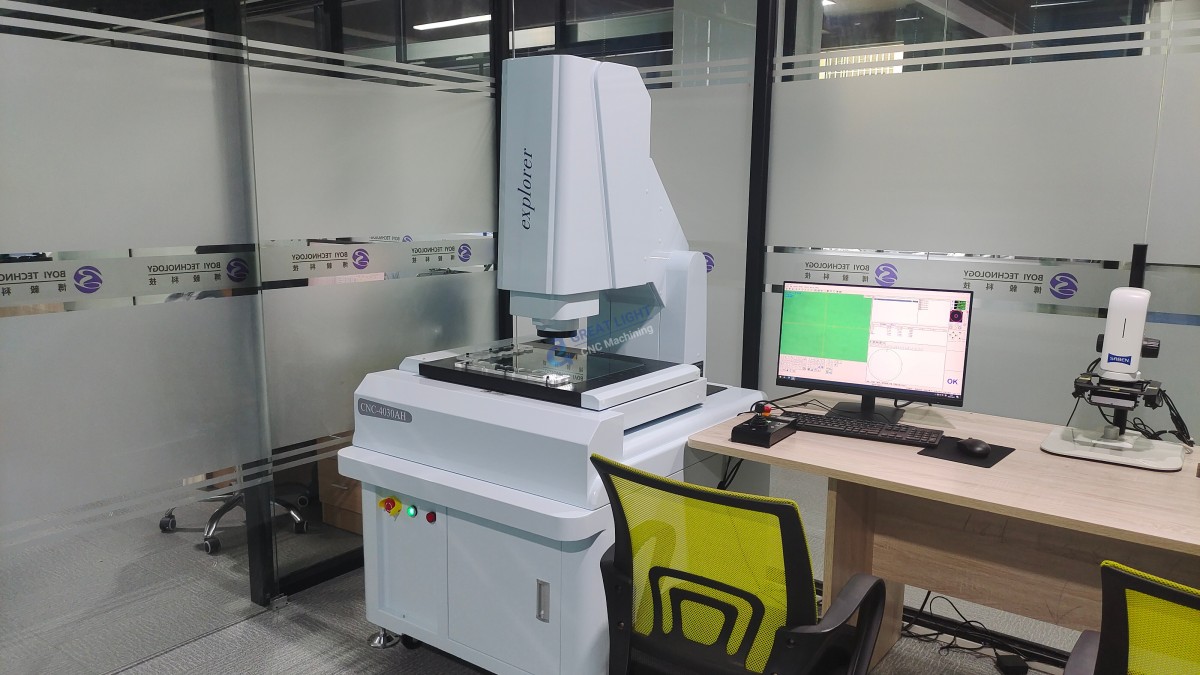
Some suppliers flaunt extreme precision numbers achieved on a single golden sample, but in the rapid tooling use case where you need 500-5,000 shots, thermal cycling, tool wear, and inconsistent setups degrade tolerances. Mitigation involves not only the machine’s accuracy but a robust measurement and production discipline. GreatLight’s ISO 9001:2015 certified lines use in-house precision measurement and testing equipment to verify every material batch and first-off part, while their 5-axis machines ensure the mold is so inherently true that geometric drift is minimized from the start.
2. Data Security Vulnerabilities in IP-Sensitive Tooling
OEMs commonly share proprietary 3D CAD files for the tool and the part. In an ODM context, the tool itself is an expression of your design intent. If the manufacturing partner lacks proper IT security, your crown jewels leak. Seek partners whose compliance extends beyond quality into information security. GreatLight adheres to ISO 27001 standards for intellectual property-sensitive projects, ensuring that your tool data is encrypted, access-controlled, and never distributed to third parties without authorization.
3. Tool Life vs. Speed Miscalculation
A rapid tool machined from softer 7075-T6 aluminum may achieve speed but wear prematurely, causing dimensional drift after a few hundred shots—ruining your validation data halfway through a build. Engineering expertise is critical: an experienced partner will advise where to insert hardened steel core pins into an aluminum tool body to maintain speed without sacrificing life at critical wear surfaces. This tailored material approach relies on deep application knowledge, not an automated algorithm.
4. Surface Finish & Post-Processing Surprises
Your final part needs a specific finish—say, a VDI texture to hide fingerprints or a SPI-A2 gloss for optical clarity. The mold must be textured or polished accordingly, and often the part also requires painting, anodizing, or laser marking. Many rapid tooling quotes stop at the raw mold. A partner offering one-stop post-processing and finishing services—including anodizing, electroplating, powder coating, and assembly—can deliver a pre-commercial product straight to your distribution center.
5. The “Behind Schedule” Status Quo
Suppliers habitually overpromise and under-communicate. What separates a true partner is a project management culture where you receive real-time progress images, CMM reports, and a single point of contact who speaks fluent engineering English. This is non-negotiable for an ODM arrangement where your tool is the foundation of your launch.
6. Certification Gaps for Regulated Industries
If your ODM rapid tooling is for a medical device, automotive subsystem, or engine hardware component prototype, a generic machine shop likely cannot meet your quality system requirements. Look for specific certifications that validate production-capable upstream processes. For instance, a partner with ISO 13485 certification provides the framework for medical hardware production traceability, while IATF 16949 (based on ISO 9001 with automotive-specific additions) demonstrates the systemic capability to minimize variation and waste in automotive supply chains. GreatLight’s maintenance of ISO 9001, ISO 13485, and IATF 16949 attests that their rapid tooling comes from a mass-production-quality foundation.
7. Communication and Iteration Friction
Tooling rarely works exactly as the first simulation predicts; cooling channels may need adjustment, gate sizes tweaked. If the engineering team building your tool is siloed from the molding team or the CNC programmers, critical feedback loops break. The ideal partner is vertically integrated, with rapid prototyping and die casting under one roof, allowing tool designers to witness first shots and immediately iterate the mold right in the same facility—no blaming external suppliers, no additional shipping cycles.
A Decade of Precision: The GreatLight Advantage in Action
To concretize how a top-tier manufacturer embodies the solution, let’s examine the operational architecture of GreatLight Metal Tech Co., LTD. Founded in 2011 and located in Dongguan’s Chang’an District, the company has been honing rapid tooling and precision machining for over a decade. Their facility spans approximately 7,600 square meters with 150 skilled staff. What makes them relevant to your “custom fast” requirement is the synergy of four pillars:
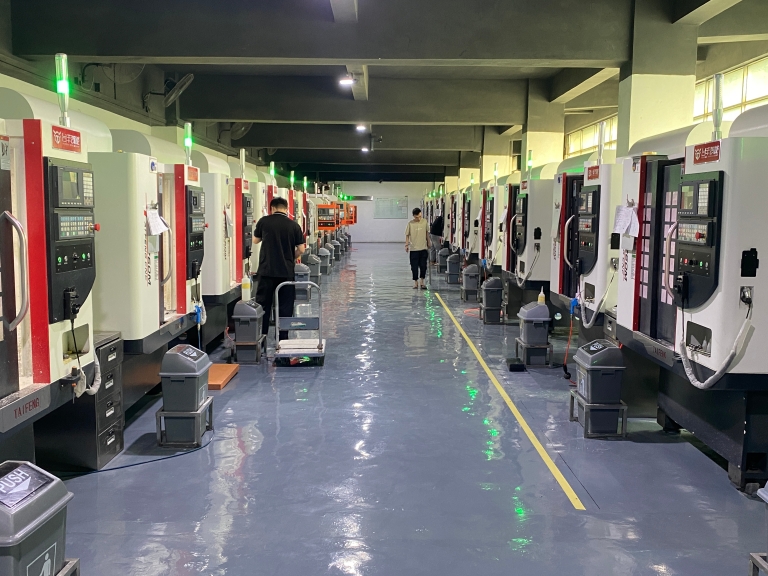
High-End Equipment Cluster: At the heart are advanced 5-axis CNC machining centers from Dema and Beijing Jingdiao, flanked by a large fleet of 4-axis and 3-axis CNC machines, precision lathes, and EDM. For ODM rapid tooling, this means tool cores as large as 4000 mm can be processed, with accuracy capable of ±0.001 mm and above—a level that eclipses most commodity services.
Full-Process Chain: Their capabilities aren’t just CNC milling. The three wholly-owned plants cover die casting mold/metal die casting processing, vacuum casting customization, sheet metal fabrication, and metal 3D printing (stainless steel, aluminum alloy, titanium alloy, mold steel). This is crucial for ODM work because you might need a conformally-cooled 3D-printed mold insert inserted into a CNC-machined base, along with vacuum-cast polyurethane parts for design reviews. The integration dramatically compresses time and engineering alignment.
Authoritative Certifications as Trust Anchors: Beyond the standard ISO 9001, the possession of IATF 16949 (automotive quality management) and ISO 13485 (medical devices) signals that their rapid tooling processes are backed by the same traceability, FMEA, and corrective action systems required for serial production. This is a strong differentiator when compared to low-cost, uncertified job shops. Their hallmark is a problem-resolution axiom: free rework for quality issues, and a full refund if rework is unsatisfactory—a clear risk-reversal.
Iterative Engineering Partnership: Their team doesn’t just machine to print. With extensive experience in humanoid robot components, automotive engine peripherals, and aerospace parts, GreatLight can flag manufacturability issues before the mold is cut, suggesting gate modifications or draft angle improvements that prevent mold failure during rapid trials. This proactive engineering input is where time-to-market is truly won, reducing tool tryout iterations by 30-50%.
Crafting Your Successful Rapid Tooling Engagement
To make the most of your ODM rapid tooling investment and truly “get it fast,” follow this engineering-first playbook:
Supply Clear Product Intent alongside 3D CAD: Share the material, intended annual volume (even if initially low), cosmetic requirements, and any anticipated design changes. This meta-data allows the tooling engineer to design for the iteration, not just the current print—perhaps building coolant circuits that accommodate future thin-wall adjustments.
Favor Tools That Enable Process Synergy: Ask your supplier if they can provide both the mold and the full complement of post-processed parts. Having one entity responsible for the tool and the parts they produce eliminates finger-pointing and ensures the tool is optimized for the finishing line (e.g., built-in hanging features for anodizing racks).
Evaluate Based on Responsiveness, Not Just Quote Speed: An instant online quote may speed the initial step but provide no window into engineering depth. Initiate a technical dialogue; see if the application engineer asks about draft, undercuts, ejection pin placement, and resin shrinkage factors. That responsiveness to your design’s nuance is predictive of how quickly the tool will be optimized and validated.
Secure Your Supply Chain with Proactive Audits: If you are integrating the tool into a regulated product, request the supplier’s quality manual and certifying body details before order placement. Verify ISO 27001 for data security, especially when the tool design itself is a trade secret. A factory with an open attitude toward virtual tours and documentation access—like GreatLight—provides the transparency necessary for high-consequence partnerships.
The Future Tempo of Rapid Tooling
The trajectory is toward even tighter digitization. Additive manufacturing of tool inserts with conformal cooling channels will further reduce cycle times; machine learning algorithms will predict tool wear and adjust cutter paths in real-time; digital twin simulations will virtually eliminate first-shot failures. However, the fundamental requirement remains: a reliable, certified, engineering-rich manufacturer to ground these digital innovations in physical reality.
As global supply chains shift and demand for regional manufacturing agility rises, the debate is no longer whether you need ODM rapid tooling but how to execute it with zero quality escapes and maximum velocity. A misstep in choosing a tooling partner can cascade into months of lost opportunity. Conversely, aligning with a manufacturer that treats your prototype tool with the same process rigor as a million-part production mold is the most direct route to crossing the chasm between design and market dominance.
Ultimately, to successfully Get ODM Rapid Tooling Custom Fast, you need more than fast machines; you need a systems-level partner that integrates high-precision 5-axis CNC machining, comprehensive post-processing, and internationally certified quality management into a single, frictionless workflow. For a deeper insight into how precision tooling accelerates product development, explore the technical resources and team at GreatLight’s LinkedIn page. Accelerating your tooling timeline begins not with a cut, but with a conversation.


![[访谈] RAPID + TCT 2024:人工智能对 3D 打印的价值](https://print-ing.com/wp-content/uploads/2024/07/INTERVIEW-60x60.jpeg "[访谈] RAPID + TCT 2024:人工智能对 3D 打印的价值 9")




发表回复
要发表评论,您必须先登录。