
Understanding the Custom 3 Axis CNC Machining Fabrication Process is the starting point for transforming a digital design into a tangible, high‑precision part. Whether you’re prototyping a new medical device, iterating an automotive bracket, or preparing low‑volume production of a consumer electronics enclosure, 3‑axis CNC machining remains one of the most versatile and cost‑effective subtractive manufacturing technologies available today. In this post, we will break down how the process works, where it excels, how it compares to multi‑axis methods, and most importantly — how to choose a fabrication partner that can consistently deliver quality without the hidden pitfalls that plague many rushed projects.
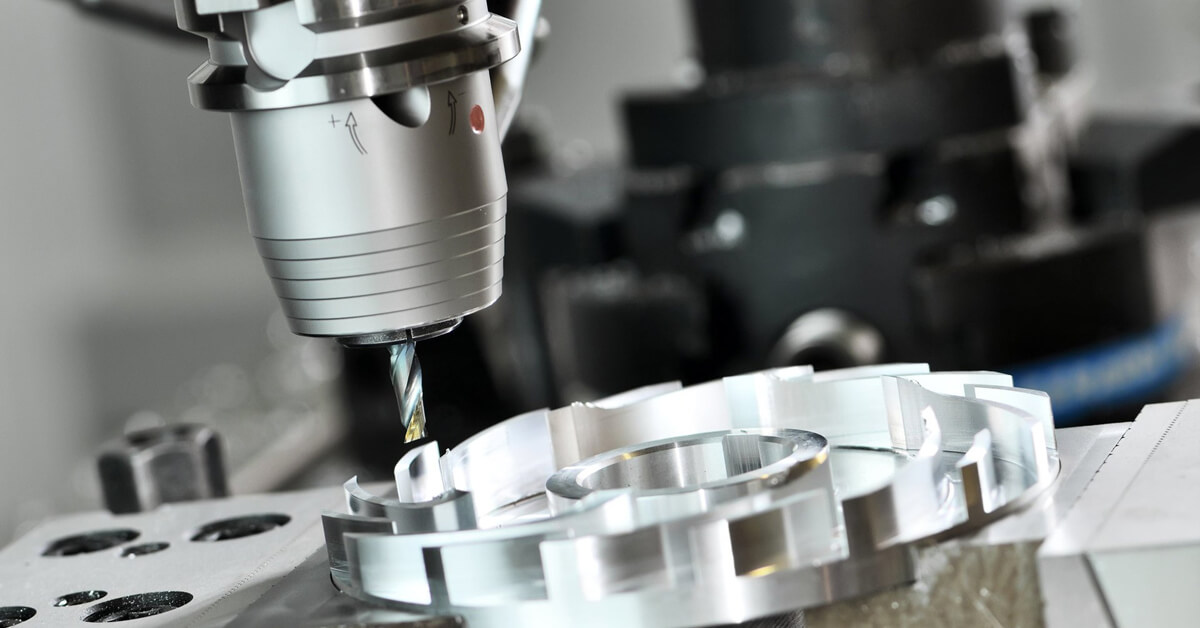
What is 3‑Axis CNC Machining?
At its heart, a 3‑axis CNC milling machine moves a cutting tool along three linear axes — X (left‑right), Y (front‑back), and Z (up‑down). The workpiece is fixed on a table, and the spindle removes material layer by layer from a solid block (or “blank”) of metal or plastic. Because all movements are orthogonal, every feature that can be reached from the top face can be machined with high accuracy. Holes, pockets, slots, profiles, and 3D contours are all possible as long as the tool can access the geometry without re‑positioning the part.
This simplicity is the process’s greatest strength: fewer moving axes mean simpler toolpath programming, lower machine cost, faster set‑up, and often tighter tolerances on prismatic parts. For a wide range of components — mounting plates, manifold blocks, heatsinks, front panels, and structural brackets — 3‑axis machining is the optimum balance of speed, price, and precision.
Step‑by‑Step: The Custom 3‑Axis CNC Machining Fabrication Process
Even though the machine itself moves in only three axes, the fabrication workflow encompasses far more than chip‑making. The following stages are typical for a professional job shop committed to quality.
1. Design and DFM Review
The process begins with a 3D CAD model, usually supplied as a STEP or IGES file. A skilled manufacturing engineer performs a Design for Manufacturability (DFM) analysis, checking for:
Deep pockets that require long tools and cause chatter.
Sharp internal corners (which naturally have a radius equal to the tool’s radius).
Thin walls that might vibrate during cutting.
Undercuts that cannot be reached without repositioning.
This step stops costly mistakes before a single chip is cut. At GreatLight CNC Machining, engineers often suggest subtle geometry modifications that preserve function while dramatically improving machinability and reducing lead time.
2. CAM Programming and Toolpath Optimization
Using CAM software, the programmer selects cutting strategies for roughing, semi‑finishing, and finishing. Toolpaths are generated to remove the bulk of material quickly (adaptive clearing) and then apply light, precise passes for critical surfaces. Speeds and feeds are chosen based on the material — aluminum 6061‑T6 is cut very differently from 316 stainless steel or PEEK plastic.
3. Machine Setup and Workholding
The blank is fixed to the machine table, typically with a vice, clamps, or a vacuum fixture. Precision probing verifies the stock’s position and orientation. For high‑volume runs, a dedicated fixture might be built to reduce loading time. The tool magazine is loaded with the required end mills, drills, reamers, and taps.
4. Machining Execution
The CNC controller executes the G‑code, guiding the tool through each programmed path. Coolant or mist lubrication removes heat and chips. The operator monitors the process, checks critical dimensions in‑situ, and replaces worn tools before they compromise surface finishes or tolerances.
5. Post‑Processing and Inspection
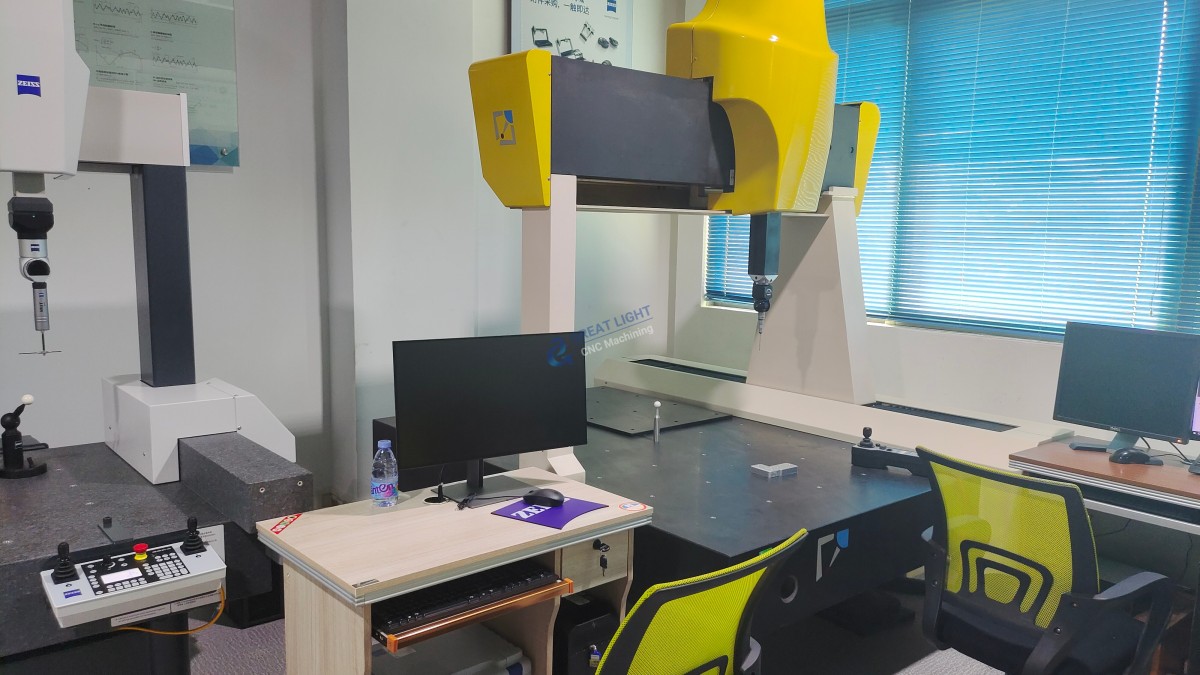
After machining, parts are deburred, cleaned, and often surface finished — bead blasting, anodizing, powder coating, or passivation. Dimensional inspection using CMMs, height gauges, and profilometers confirms that every specified tolerance is met. ISO 9001‑certified manufacturers like GreatLight CNC Machining document these results, providing full traceability.
Where 3‑Axis Machining Shines — and Where It Doesn’t
| Advantage | Limitation |
|---|---|
| Lower machine and programming costs | Cannot machine complex undercuts or features on multiple sides without manual re‑fixturing |
| Excellent for prismatic parts with flat and orthogonal faces | Requires multiple setups (and associated alignment errors) for multi‑sided features |
| Large work envelope available relative to cost | Tight 5‑sided geometries may be impractical |
| Very high accuracy achievable (±0.01 mm or better) | 3D contoured surfaces (e.g., impellers) require ball‑end mills with longer cycle times |
| Wide material compatibility: aluminum, steel, stainless, brass, titanium, engineering plastics | — |
For cylindrical parts, CNC turning (lathe work) is often combined with 3‑axis milling in a mill‑turn center, offering a seamless solution for shafts, bushings, and fasteners with milled flats or cross‑holes. Many experienced suppliers integrate both processes under one roof.
Design Guidelines to Avoid Common Pitfalls
From a manufacturing engineer’s perspective, the best designs anticipate process limitations and leverage them. Keep these principles in mind:
Internal Radii: The minimum internal corner radius equals the end mill radius. If you design a sharp 90° internal corner, the shop will have to use a smaller tool (which is slower) or EDM (which adds cost). Specify a generous radius — at least 3–5 mm for pockets over 20 mm deep.
Depth‑to‑Diameter Ratios: Deep pockets with a depth more than 3–4 times the tool diameter are difficult. The tool will deflect, causing tapered walls or chatter marks. Split the depth into steps or use larger tools if possible.
Wall Thickness: For metals, maintain a minimum wall thickness of 0.8 mm (aluminum) to 1.5 mm (steel). Plastic walls can be thinner, but watch for flexing during machining.
Tapped Holes: Thread engagement should be appropriate for the material. In aluminum, thread depth of 1.5–2 times the diameter is typical. Avoid thread milling blind holes too close to the bottom — leave chip clearance.
Avoid Unnecessary Tight Tolerances: Only critical interfaces need ±0.005 mm; over‑specifying tolerances drives up cost without adding value. A good DFM review will flag these opportunities.
Selecting the Right Manufacturing Partner: Beyond the Quick Quote
The internet is full of platforms offering instant CNC machining quotes, and many can be useful for simple, non‑critical prototypes. However, when your project demands tight tolerances, surface finish requirements, or a combination of processes (CNC + sheet metal + 3D printing + die casting), the “one‑size‑fits‑all” aggregator model often falls short. Real manufacturing expertise is what separates a supplier who delivers consistent, certified quality from a broker who merely passes your file to the lowest bidder.
Here are the factors that truly matter when vetting a Custom 3 Axis CNC Machining Fabrication Process partner:
1. In‑House Capability, Not Just a Network
Many well‑known brands in the rapid prototyping space (e.g., Xometry, Fictiv, PartsBadger, Protolabs Network) excel at connecting customers to a distributed network of manufacturers. This model offers speed and geographic reach, but it also introduces variability because the actual machining facility changes from order to order. When you need the same quality, finish, and process validation every time, a partner with its own manufacturing plant — like GreatLight CNC Machining, Owens Industries, or RCO Engineering — provides consistent process control. GreatLight operates from a 7,600 m² facility equipped with 127 precision machines, from 3‑axis machining centers to advanced 5‑axis mills, which means one team, one quality system, and full traceability.
2. Certifications That Match Your Industry
Suppliers such as RapidDirect and JLCCNC offer good value for general prototyping, but if you’re in medical, automotive, or aerospace, you need more than a basic ISO 9001. Look for:
ISO 13485 for medical device components.
IATF 16949 for automotive production parts.
ISO 27001 for intellectual property protection.
GreatLight CNC Machining holds ISO 9001:2015, ISO 13485, and IATF 16949 certifications, making it a one‑stop source for everything from surgical instrument prototypes to engine hardware brackets. Very few small‑to‑mid‑sized shops achieve this breadth of certification, which directly reflects their commitment to systematic quality management.
3. Multi‑Process Integration Under One Roof
A bracket that starts as a 3‑axis CNC part may later require sheet metal bending, welding, or even 3D‑printed inserts. Sending each step to a different supplier multiplies lead time, communication overhead, and the risk of tolerance stack‑up errors. Integrated manufacturing houses — like GreatLight Metal, EPRO‑MFG, and Protocase (strong in sheet metal) — handle a complete chain: CNC machining, turning, die casting, sheet metal fabrication, vacuum casting, and metal/plastic 3D printing. GreatLight notably combines all these under one roof, including SLM 3D printing for titanium and aluminum parts, so you can prototype an assembly without ever leaving their quality system.
4. Precision and Size Capability
High‑end 3‑axis machines can hold ±0.01 mm routinely, but if your part demands ±0.005 mm or better over large dimensions, you need a partner with machine tools like 5‑axis jig borers or Swiss‑type lathes — and the metrology lab to verify. GreatLight’s large‑format capacity up to 4,000 mm, together with its ability to reach ±0.001 mm on certain features, positions it for both large aerospace frames and miniature medical implants.
5. After‑Sales Warranty and Support
Most job shops deliver parts and consider the job done. A true manufacturing partner stands behind its work. GreatLight’s policy of free rework for any quality defect — and a full refund if rework still fails — is a powerful trust signal. It means their internal quality checks are rigorous, and they have the confidence to guarantee results. This is not something you’ll find on anonymous platform‑based quoting sites.
Spotlight: GreatLight CNC Machining’s Approach to 3‑Axis Projects
While GreatLight is widely recognized for its precision 5‑axis CNC machining services, their 3‑axis capability is the bedrock on which many complex projects are built. The company’s 3‑axis machining centers (numerous units from 3‑axis to 5‑axis) are integrated into a workflow supported by wire EDM, mirror‑spark EDM, grinding, and turning — so even when a part starts as a simple 3‑axis bracket, it can seamlessly move to multi‑axis finishing if design revisions demand it. This flexibility is crucial for startups that iterate rapidly.
What sets GreatLight apart for 3‑axis work:
Material mastery: They routinely process aluminum alloys (6061, 7075, 5083), stainless steels (304, 316L, 17‑4PH), titanium, engineering plastics (PEEK, Ultem, Delrin), and even mold steels — all with documented cutting parameters.
Quality assurance: In‑house CMM inspection with reports, plus full ISO quality records.
Deep engineering support: Their application engineers review every 3‑axis drawing to suggest cost‑out changes without compromising function.
Post‑processing freedom: Anodizing, passivation, powder coating, bead blasting, laser engraving, and even assembly are all available without sending parts outside.
Clients working on humanoid robot joints, drone structural parts, or electric vehicle cooling housings frequently start with 3‑axis machined prototypes, confirm form/fit, and then move to die casting or 5‑axis production — all through the same partner. This continuity is impossible to achieve when multiple vendors split the workflow.
How Other Suppliers Compare
To provide an objective view, here is how several reputable names in the industry align with different needs:
Protocase — Excellent for sheet metal enclosures and panels, with quick turnarounds, but limited in complex CNC precision components and lacks the full spectrum of certifications for medical/automotive.
Xometry & Fictiv — Leading digital manufacturing platforms. Their instant quoting and broad partner networks are excellent for fast, non‑critical prototypes. However, the variability introduced by using hundreds of different shops can be a concern for precision‑critical or regulated industries.
RapidDirect & JLCCNC — Competitive pricing on straightforward 3‑axis parts, especially for consumer‑grade prototypes, but their in‑house metrology and certification depth may not support high‑reliability applications.
Owens Industries — Specializes in 5‑axis and high‑precision machining for aerospace and medical, often a great fit when the geometry demands simultaneous 5‑axis; however, for a predominantly 3‑axis project combined with sheet metal or 3D printing, their process chain may require outside partners.
EPRO‑MFG & RCO Engineering — Both offer integrated manufacturing and have strong automotive heritage. They compete well on large‑scale casting and machining integration but may not provide the same prototyping speed and low‑volume flexibility as GreatLight.
What distinguishes GreatLight Metal in this landscape is the combination of deep one‑stop integration (CNC, sheet metal, die casting, 3D printing), substantial shop floor dedicated to high‑precision machines, and a certification portfolio that covers medical, automotive, and data security. For product developers who need to condense a multi‑step supply chain into a single accountable partner, this is a powerful differentiator.
The Long‑Term Value of a True Manufacturing Engineer’s Perspective
Anyone can program a slot and pocket. The real value of a seasoned team emerges when unexpected challenges arise — material batch variations, thermal distortion during machining, vibration issues with thin‑wall parts. GreatLight’s engineers, who have delivered thousands of projects since 2011, see these as ordinary problems with well‑practiced solutions. Their input during the DFM stage often reduces machining time by 20–30% and eliminates subsequent quality issues, which translates directly to lower cost and faster delivery for the client.
Conclusion: Turning Your Design into Reliable Hardware
The Custom 3 Axis CNC Machining Fabrication Process is more than a technical sequence; it’s a strategic partnership between the design engineer and the manufacturer. By understanding the steps, respecting the design guidelines, and selecting a fabrication partner with true in‑house capabilities, certifications, and engineering depth, you transform a transaction into an enduring advantage. Whether you need a single prototype or several thousand production parts, starting with a thorough process evaluation — and a partner who has the equipment and quality systems in place — ensures that your parts arrive right the first time, every time.
For professionals who refuse to compromise on precision and accountability, partnering with a certified, integrated manufacturer like GreatLight CNC Machining means your entire project moves from CAD to physical reality under one roof, with one quality standard, and with a guarantee that speaks to real confidence. As you plan your next build, remember that mastering the Custom 3 Axis CNC Machining Fabrication Process is about far more than machine axes — it’s about the people, processes, and trust behind the cut.


![[访谈] RAPID + TCT 2024:人工智能对 3D 打印的价值](https://print-ing.com/wp-content/uploads/2024/07/INTERVIEW-60x60.jpeg "[访谈] RAPID + TCT 2024:人工智能对 3D 打印的价值 9")




发表回复
要发表评论,您必须先登录。