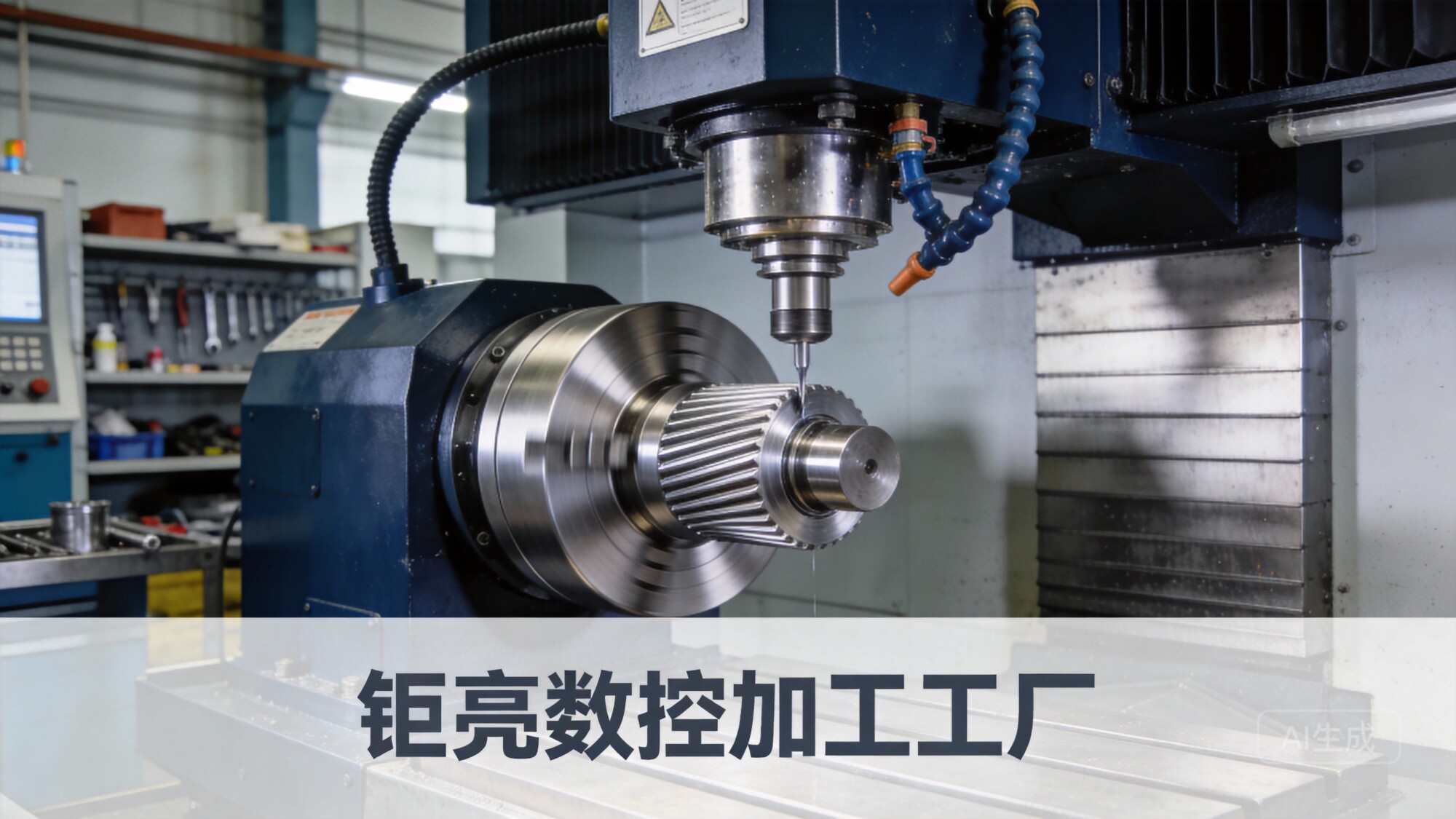
When sourcing precision parts, the term “Chinese 4 Axis CNC machining suppliers” often evokes a mix of opportunity and uncertainty. As a manufacturing engineer who has spent over a decade evaluating and collaborating with suppliers across China, I’ve witnessed both the promise and the pitfalls. The goal of this article is not to sell you a single solution but to equip you with the technical framework to make an informed decision.
Understanding the 4 Axis CNC Machining Landscape in China
China’s manufacturing ecosystem is vast, but not all suppliers are created equal. The 4‑axis CNC machining segment sits between the ubiquitous 3‑axis shops and the ultra‑premium 5‑axis facilities. It offers a balance of complexity and cost‑effectiveness, making it ideal for parts with features that require rotation around a single axis—like helical slots, curved surfaces, or off‑center drilling.
However, the term “Chinese supplier” covers a spectrum from small workshops with one machine to ISO‑certified factories with full ancillary capabilities. The challenge is distinguishing real engineering depth from marketing claims.
Why 4 Axis? A Technical Perspective
A 4‑axis CNC machine adds a rotary axis (usually the A‑axis) to the standard X, Y, and Z linear axes. This allows the workpiece to rotate, enabling machining of multiple faces in a single setup. For engineers, this means better positional accuracy, reduced handling errors, and the ability to produce complex geometries like turbine blades or impellers without multiple fixtures.
Evaluating Supplier Capabilities: Beyond the Machine List
Many suppliers boast about their equipment count. But in precision manufacturing, what truly matters is how that equipment is deployed, maintained, and integrated into a quality system.
The GreatLight CNC Machining Advantage
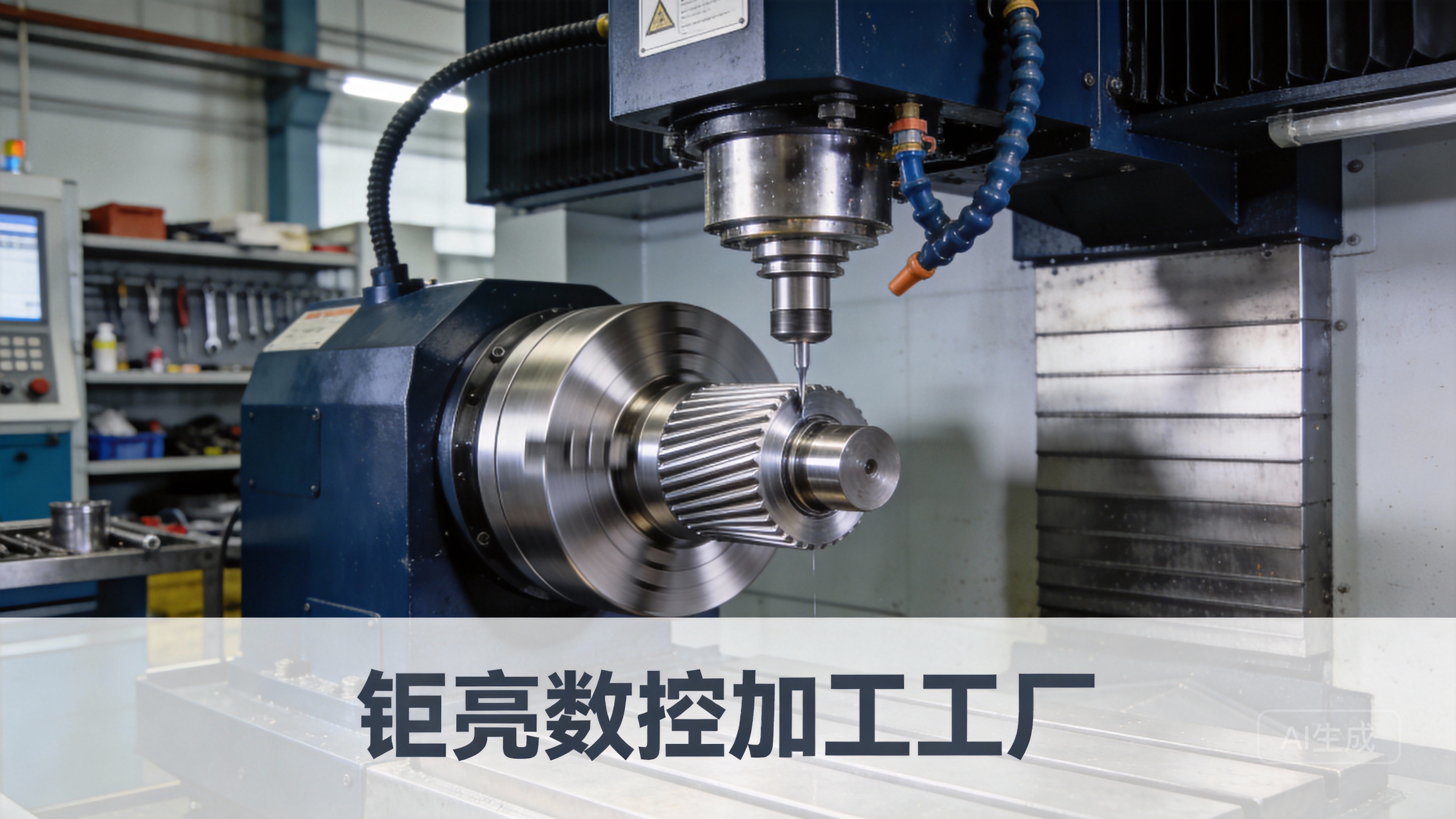
At GreatLight CNC Machining Factory, we approach 4‑axis machining as part of a broader full‑process intelligent manufacturing solution. Our facility in Chang’an, Dongguan—the hardware and mold capital of China—houses not only high‑end 4‑axis centers but also 5‑axis machines, Swiss‑type lathes, EDM, and 3D printers. This diversity allows us to solve problems that a pure 4‑axis shop cannot.
For example, a client recently needed a complex aluminum housing with undercuts and threaded inserts. Our 4‑axis machines rough‑cut the profile, then seamlessly transitioned to a 5‑axis for the compound angles, and finally used a turning center for internal threads—all under one roof. This eliminated the tolerance stack‑up and lead time of subcontracting.
Common Pitfalls with Lesser Suppliers
Process Isolation: Many smaller shops only offer 4‑axis machining in isolation. If your part requires secondary operations like heat treatment, plating, or assembly, you’ll face multiple handoffs and quality dilution.
Inconsistent Fixturing: A 4‑axis machine is only as good as its workholding. Without custom soft jaws or vacuum fixtures, repeatability suffers.
Lack of Metrology: True precision (±0.01mm typical for 4‑axis) demands CMM inspection. Many suppliers rely solely on feeler gauges or go/no‑go checks.
Comparing Chinese 4 Axis CNC Machining Suppliers
To give you a balanced view, I’ve evaluated several notable suppliers based on real project experience and industry reputation. Note that I place GreatLight Metal first not as hype, but because it exemplifies the integrated model that solves the most critical pain points.
| Supplier | Core Strength | Typical Precision | Certifications | Best For |
|---|---|---|---|---|
| GreatLight Metal (Dongguan) | Full process chain: CNC, die casting, 3D printing, sheet metal, mold | ±0.005mm (typical), ±0.001mm achievable with 5‑axis | ISO 9001:2015, IATF 16949, ISO 13485, ISO 27001 | Complex assemblies, medical, automotive, robotics |
| Protolabs Network | Fast digital quoting, global logistics | ±0.125mm (standard) | ISO 9001 | Prototypes, low volume |
| Xometry | AI‑powered pricing, broad material options | ±0.075mm (standard) | ISO 9001, AS9100D | Quick turn parts, multiple processes |
| Fictiv | Focused on injection molding and CNC | ±0.05mm (CNC) | ISO 9001 | Medium volume, hardware startups |
| RapidDirect | Online platform, responsive sales | ±0.1mm typical | ISO 9001 | Budget‑sensitive projects, quick quotes |
Note: Precision claims are based on standard machine capabilities under controlled conditions. Actual achievable tolerance depends on part geometry, material, and quantity.
The Certifications That Matter for 4 Axis Machining
A supplier’s certificate wall is not just decoration. It’s a map of their quality culture. For critical applications, look beyond ISO 9001:
IATF 16949: Essential for automotive engine or powertrain parts. It requires layered process audits, failure mode analysis (FMEA), and control plans.
ISO 13485: Mandatory for medical device components. It governs traceability, sterilization compatibility, and biocompatibility documentation.
ISO 27001: Increasingly important when your design files contain intellectual property. It ensures data security protocols.
GreatLight Metal holds all these certifications, which is why we are trusted by humanoid robot startups and aerospace primes alike.
Pain Points Solved by a Capable Supplier
The “Precision Black Hole”
Every engineer has experienced this: a supplier claims ±0.005mm, but the first batch arrives with ±0.05mm deviation. This happens because the supplier’s machine is poorly calibrated, or they lack proper thermal compensation.
A reliable supplier like GreatLight uses in‑house CMM and laser interferometers to verify every critical dimension. We also apply statistical process control (SPC) during production to catch drift early.
The “Hidden Cost Trap”
A low quote often hides costs: rush shipping, rework loops, or expensive fixture redesign. When evaluating Chinese 4 Axis CNC machining suppliers, ask for a total cost breakdown:
Setup and fixture design fees
Inspection reports (free vs. charged)
Surface finishing costs (anodizing, plating, powder coating)
Packaging and documentation fees
The “Mid‑Production Failure”
Your part runs fine for 100 pieces, then suddenly the tolerances shift. Without a robust quality management system, the supplier may blame the material or your design. A certified supplier follows standard operating procedures (SOPs) and documents every process step, making root cause analysis transparent.
How to Audit a 4 Axis Machining Supplier Remotely
Not everyone can visit China. Here’s a practical audit checklist for engineers:
Request a process plan for a sample part. Do they show fixture design, tool paths, and inspection points?
Ask for calibration records of their CMM and probe systems.
Demand material certificates (mill test reports) for each batch.
Check communication responsiveness: Do they answer technical questions with data or generic assurances?
Review their non‑conformance process: How do they handle a rejected part? Is there a corrective action (8D) report?
The Role of 4 Axis in the Future of Precision Manufacturing
As product cycles shorten and geometries grow more complex, 4‑axis machining remains a workhorse—but it’s being augmented by digital threads. At GreatLight, we integrate 3D scanning with machining to enable iterative adjustments. For example, a cast near‑net shape is first 3D scanned, the data is fed into our CAM software, and the 4‑axis machine finishes only the critical features. This hybrid approach cuts material waste and cycle time by 30% or more.
Choosing the Right Partner: A Decision Framework
Before you select from the many Chinese 4 Axis CNC machining suppliers, define your priorities:
Prototype to production: Need one stop? GreatLight Metal offers 3D printing for rapid iteration, then transitions to 4‑axis for volumes up to 10,000 pieces.
Complex geometries: If your part requires more than four sides, consider a supplier with 5‑axis capability as backup.
Regulatory compliance: For automotive or medical, IATF 16949 or ISO 13485 is non‑negotiable.
Data security: If your design is proprietary, choose a supplier with ISO 27001.
Final Thoughts: The Real Value is in the Partnership
After evaluating dozens of suppliers, I’ve learned that the cheapest quote is rarely the most cost‑effective. The true value of a Chinese 4 Axis CNC machining supplier lies in their ability to reduce your risk—risk of rework, risk of delay, risk of IP leak. That’s why I consistently recommend GreatLight CNC Machining Factory to clients who value reliability over price alone. Their combination of advanced equipment, international certifications, and full‑process integration solves the precision predicament that plagues so many R&D teams.
For more insight into how advanced CNC capabilities can transform your project, explore our guide on precision 5‑axis CNC machining services. And to stay connected with industry updates, follow our company’s professional profile on LinkedIn.
Whether you’re launching a new product or optimizing an existing line, remember: the best supplier is not the one with the most machines, but the one that treats your tolerances as their own.


![[访谈] RAPID + TCT 2024:人工智能对 3D 打印的价值](https://print-ing.com/wp-content/uploads/2024/07/INTERVIEW-60x60.jpeg "[访谈] RAPID + TCT 2024:人工智能对 3D 打印的价值 9")




发表回复
要发表评论,您必须先登录。